

2026 Best Glass Roof Patio Covers for Global Buyers?

Choosing the right Glass Roof Patio Covers system is not merely a style decision. It affects comfort, safety, maintenance, energy use, and long-term value.

Global buyers face different conditions. A coastal home may need stronger corrosion protection. A snowy region requires careful structural calculations. Hot climates demand solar-control glass, shaded edges, and effective ventilation. Rainy locations need reliable gutters, flashing, and concealed drainage paths.

Architectural daylighting expert Mary Guzowski has said, “Daylight is dynamic, not static.” Her observation matters here. Sunlight changes by season, latitude, weather, and roof orientation. A transparent patio cover can feel bright in spring, but uncomfortably hot in midsummer without suitable glazing.

Small details matter.

This guide examines the 2026 market through practical experience and technical criteria. It compares laminated, tempered, low-emissivity, tinted, and insulated glass options. It also considers aluminum frames, thermal breaks, drainage design, wind resistance, installation quality, and cleaning access.

Product claims should be checked carefully. A beautiful rendering cannot reveal water leakage, glare, or difficult maintenance. Local engineers and qualified installers remain essential, especially where snow, hurricanes, earthquakes, or heavy rainfall are possible.

No roof is perfect.

Even premium Glass Roof Patio Covers may involve compromises between transparency, heat control, price, and visual openness. Buyers should question vague performance promises and request documented testing wherever possible. This article highlights promising solutions, but it also acknowledges a practical truth: the best design depends on the building, climate, budget, and people using the space.
2026 Best Glass Roof Patio Covers for Global Buyers?

What Are Glass Roof Patio Covers and How Do They Work?

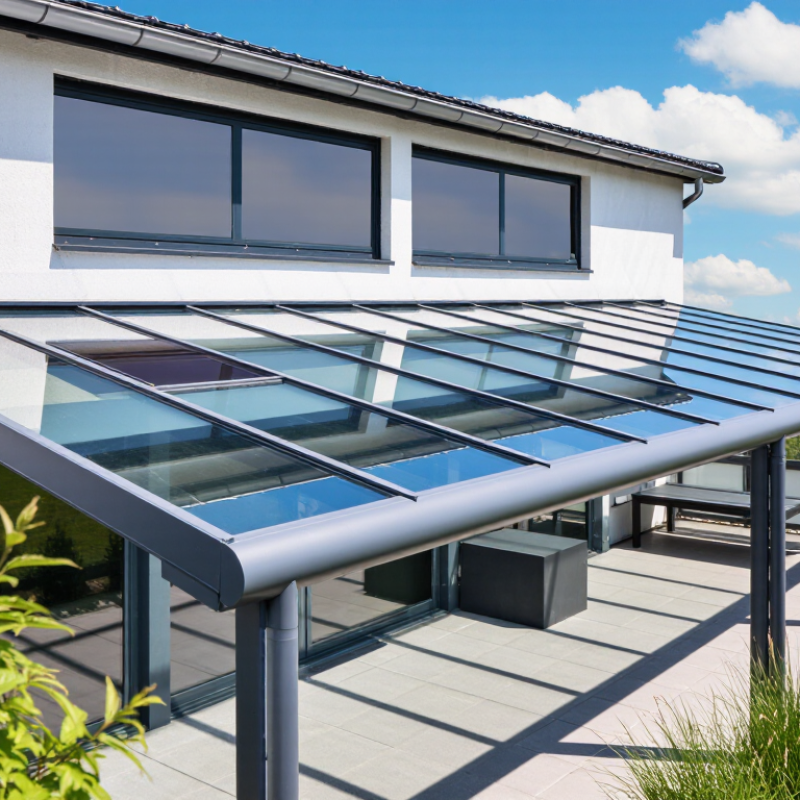
Glass roof patio covers are outdoor shelters with transparent or tinted glass panels supported by a structural frame. They extend usable patio space while allowing daylight to reach seating areas below. Most systems use laminated or tempered safety glass, aluminum framing, flashing, gutters, and controlled drainage. The roof does not simply sit above the patio. It transfers wind, rain, and sometimes snow loads into posts and foundations. Local climate and building requirements must guide the design.

The glass controls light, but it does not remove heat. Low-emissivity coatings, solar-control layers, ventilation gaps, and adjustable shading can reduce summer glare. In colder regions, insulated glass may improve comfort. Yet even advanced glazing has limits. A dark floor beneath the roof can still become uncomfortably hot.

Tips

Check drainage paths after heavy rain. Ask for documented glass specifications and load calculations. Use qualified local professionals for structural assessment and installation. Clean leaves from gutters regularly, especially beneath trees. Do not assume every glass panel has the same thermal or impact performance. That mistake can become expensive. Consider privacy, nighttime reflections, and cleaning access before selecting fully transparent panels. A slightly tinted roof may offer better daily comfort than a perfectly clear one.

2026 Best Glass Roof Patio Covers for Global Buyers

Glass roof patio covers use transparent or coated glazing panels supported by a structural frame. Sunlight enters through the roof, while coatings, insulation and ventilation help control heat, glare and indoor comfort.

The chart shows representative visible-light transmission values commonly specified for architectural glazing. Actual performance varies with glass thickness, tint, coatings, framing and climate.

Which Glass Roof Patio Cover Designs Suit Different Outdoor Spaces?

Glass roof patio covers can transform different outdoor spaces, but one design rarely suits every property. A compact urban balcony needs a slim, fixed structure with clear panels and narrow supports. This preserves daylight without making the area feel enclosed. For a large garden terrace, a wider pitched roof creates better air movement and supports dining, seating, or an outdoor kitchen. The roof angle should guide rainwater toward planned drainage points.

A retractable glass roof suits homeowners who want flexible sunlight control. It works well above patios used during changing seasons. However, moving panels require careful cleaning and regular inspection. A fixed roof is simpler and often more reliable in windy regions. Laminated safety glass can reduce injury risks if damage occurs, while coated glass may limit heat and glare. Shade still matters. External screens usually perform better than indoor curtains during strong summer sun.

For narrow side yards, a lean-to design can connect neatly with an existing wall. Check the wall condition before installation. Older masonry may need reinforcement, and poor flashing can cause hidden leaks. Coastal spaces need corrosion-resistant fittings and frequent rinsing because salt settles on frames. I have found that visual appeal can distract from practical faults. A beautiful roof may still overheat the patio or block ventilation. Measure twice. Leave enough clearance for doors, lighting, and seasonal furniture changes.

How to Choose Glass, Frames, Insulation, and Weather Protection

2026 Best Glass Roof Patio Covers for Global Buyers?

Choosing a glass patio roof starts with climate, not appearance. A sunny Mediterranean site needs solar-control glass, while colder regions need low-emissivity coatings and insulated frames. The U.S. Department of Energy reports that windows can account for 25–30% of residential heating and cooling energy use. A roof contains more exposed glass, so weak specifications become expensive quickly.

Use laminated or tempered safety glass, with thickness selected for local wind, snow, and impact loads. Ask for tested U-values, solar heat gain coefficients, and visible light transmission.

The International Energy Agency’s Buildings 2023 report states that buildings consume about 30% of global final energy and create around 26% of energy-related emissions. Better insulation matters.

Thermal breaks in aluminum frames reduce cold bridging, but they cannot repair poor installation. That part is often underestimated.

Weather protection needs layered detailing. Include sloped panels, continuous gutters, pressure-tested seals, and flashing that directs water away from walls.

In humid regions, leave a reliable drainage path for condensation. In windy coastal areas, corrosion-resistant fixings and verified uplift calculations are essential.

A roof may pass a showroom test and still fail beside a real ocean. I would also check maintenance access, replacement-glass availability, and local building approvals before ordering. Beautiful glass is not enough.

What Global Buyers Should Know About Building Codes and Safety Standards

2026 Best Glass Roof Patio Covers for Global Buyers?

A glass roof patio cover can transform an outdoor area into a bright, usable room. Yet a beautiful roof is not automatically a safe roof. Global buyers face different rules for wind, snow, rain, earthquakes, fire, and energy use. A design approved in one city may fail review elsewhere. Ask the local building authority for current permit requirements before ordering materials. Then hire a qualified structural engineer familiar with patio enclosures. Their advice should match the site, not a generic online drawing.

The glass specification deserves close attention. Use safety glazing suitable for overhead installation, with documented impact and breakage performance. Laminated glass can help retain fragments after breakage, while tempered glass offers strength and heat resistance. Local codes may require one type, or a combination. Check wind-load, snow-load, seismic, and thermal calculations for the exact location. Ask for test reports, installation instructions, and traceable compliance documents. Do not rely on the word “certified” alone. It can mean different things across markets.

Frames, fixings, drainage, and flashing also affect safety. Water should move away from walls and electrical fittings. Small details matter. Allow for expansion and contraction around glass edges. An installer should inspect seals, supports, fall protection, and site access before work begins. A common buyer mistake is overlooking maintenance access. High panels can be difficult and costly to clean. Ask how damaged glass will be isolated and replaced safely. Keep permits, calculations, inspection records, and maintenance dates together. Even careful planning can miss a site condition, so local review remains essential.

How to Plan Installation, Maintenance, Costs, and Long-Term Value

Planning a glass roof patio cover in 2026 starts with the site, not the catalogue. Measure the patio, wall height, drainage route, and daily sun exposure. Check wind, snow, rain, and temperature patterns for your region. A qualified local installer should verify structural loads and approval requirements before ordering materials. Small errors become expensive after delivery.

Use laminated or tempered safety glass with suitable coatings for heat control and easier cleaning. Ask how panels are sealed, replaced, and accessed safely. Installation usually needs accurate anchoring, level supports, controlled water runoff, and careful flashing against the house wall. Do not ignore the gutter outlet. One blocked drain can stain walls and damage paving. A written schedule should separate labor, glass, framing, foundations, permits, delivery, and future repairs.

Costs vary widely between countries, roof sizes, access conditions, and glass specifications. Compare at least three detailed quotes, not only the lowest total. Request warranty terms in writing, including labor coverage and seal failure. Maintenance may include seasonal washing, checking seals, clearing gutters, and inspecting fasteners after severe weather. I would also budget for occasional glass replacement, because “maintenance-free” is rarely realistic. The cover can improve outdoor use and property appeal, but its long-term value depends on comfort, drainage, durability, and workmanship. Revisit the design after a hot summer. The first plan may need changing.

2026 Best Glass Roof Patio Covers for Global Buyers? - How to Plan Installation, Maintenance, Costs, and Long-Term Value

Practical comparison data for selecting and budgeting a glazed patio-cover system. Figures are typical planning ranges in USD and should be verified against local engineering rules, labor rates, taxes, shipping, and site conditions.

Glass Roof Configuration Best-Suited Climate or Use Typical Installed Cost
(USD/m²)
Typical Glass Specification Estimated Installation Time Expected Service Life Annual Maintenance Requirement Thermal and Solar Performance Long-Term Value Considerations
Fixed laminated glass roof Moderate climates, sheltered patios, year-round daylight areas $450–$900
Installed; structural upgrades may cost extra
Commonly 8.76–13.52 mm laminated safety glass; low-emissivity coating recommended 3–7 working days for a typical 20–30 m² patio 25–40 years for the glazing; seals and gaskets may require earlier replacement Clean glass 2–4 times per year; inspect seals, drainage channels, and fasteners annually Good daylight; solar-control coating is important in hot climates; insulation varies by glass build-up Usually the lowest-complexity glass option; strong balance between daylight, durability, and initial cost
Double-glazed insulated roof Cold climates, four-season patios, spaces requiring improved comfort $650–$1,200
Higher frame and installation requirements
Insulating glass unit, commonly two panes with a sealed air or inert-gas cavity; safety glass required overhead 5–10 working days, depending on roof size and structural access 25–35 years for the glass unit; perimeter seals may need replacement during the life of the system Clean 2–4 times per year; inspect condensation, edge seals, flashings, and drainage annually Better winter insulation and reduced interior condensation risk than single glazing; still needs solar control in hot regions Higher upfront cost can be justified where the patio is used frequently in cold seasons or energy performance matters
Solar-control glass roof Hot, sunny, tropical, subtropical, and high-altitude locations $550–$1,050
Price depends on coating and frame system
Safety glass with a solar-control coating; low-emissivity coating may be combined with solar control 4–8 working days for a standard residential installation 25–40 years when the coating, edge seals, and drainage are correctly specified Clean 3–6 times per year in dusty, coastal, or pollen-heavy locations; inspect coating and seals Reduces solar heat gain and glare; visible-light transmission must be selected to avoid an overly dark interior Can reduce cooling demand and improve usability, but coating selection should match orientation and local climate
Retractable glazed roof system Premium outdoor rooms, variable weather, restaurants, and flexible living areas $900–$1,800+
Motorization and controls are major cost drivers
Safety glazing integrated with engineered moving panels, tracks, motors, sensors, and drainage 7–14 working days, excluding electrical work and complex structural preparation 20–30 years for the main structure; motors, controls, wheels, and seals may need periodic replacement Clean 3–6 times per year; lubricate or service moving parts as specified; inspect sensors and drainage twice yearly Excellent ventilation and seasonal flexibility; closed-roof insulation depends heavily on the glazing and frame design Highest comfort and flexibility, but lifecycle cost is greater because mechanical components require service
Frameless or minimally framed glass roof Modern architectural projects where uninterrupted views are the priority $700–$1,400
Engineering and specialist installation can be significant
Engineered laminated or insulating safety glass with concealed channels and structural supports 6–12 working days, subject to precise measurements and specialist access 25–40 years for properly engineered glazing and support components Clean 3–6 times per year; inspect concealed drainage, joints, sealants, and movement points annually Excellent daylight and visual openness; thermal performance depends on glass thickness, coatings, and air sealing Strong aesthetic value, but tolerances, drainage design, and future sealant access must be planned carefully
Glass roof with insulated opaque panels Mixed climates, large roof areas, glare-sensitive spaces, and heat-management projects $500–$1,000
Usually less glazing area than a fully transparent roof
Combination of safety glass sections and insulated solid roof panels 4–9 working days for a typical medium-sized patio 25–40 years for the roof structure; panel finishes and seals may require periodic renewal Clean glazing 2–4 times per year; clear leaves from gutters and inspect panel joints annually Better shading and heat control than a fully glazed roof; daylight is more limited but easier to manage Often provides the best cost-to-comfort ratio where full transparency is unnecessary
Planning notes: Installed-cost ranges generally cover the roof system, standard supporting frame, glazing, and ordinary installation labor. They normally exclude foundations, major structural reinforcement, electrical work, permits, access equipment, demolition, local taxes, import duties, and long-distance delivery.
Safety: Overhead glazing should be designed with safety glass and supported by a qualified professional. Wind, snow, seismic, rainwater, impact, fire, and thermal-movement requirements vary by location and must be checked against applicable local building regulations.
Maintenance: Coastal salt, airborne dust, industrial pollution, tree debris, freeze-thaw cycles, and extreme ultraviolet exposure can shorten cleaning intervals and sealant life. A professionally inspected drainage and sealing system is essential for long-term performance.

Choose a global leader for your hydraulics solutions

How can we help you?

Call to 0034 943884600 Contact us
Call us Contact us

We use cookies to ensure that we give you the best experience on our website. If you continue without changing your settings, we'll assume that you agree to receive cookies on the HINE website. For more information read our cookie policy page, click the link for more information.plugin cookies

ACEPTAR
Aviso de cookies