

Choosing the 2026 Best Odorless Silicone Tube requires more than checking a product label. Global buyers need evidence about raw materials, curing methods, dimensional stability, and application safety. A tube may smell neutral in a warehouse yet release noticeable volatiles when heated. That difference matters.
Polymer scientist James E. Mark observed, “The properties of polymers depend strongly on their molecular structure.” This principle guides our evaluation of every Odorless Silicone Tube. Platinum-cured silicone usually offers cleaner performance than poorly controlled peroxide-cured material. However, curing technology alone cannot prove quality. Buyers should request inspection reports, migration data, hardness results, and batch traceability. Ask for samples. Bend them around a stainless-steel fitting. Check recovery, surface tack, wall consistency, and odor after thermal aging.
Real purchasing decisions also depend on temperature range, pressure, transparency, reinforcement, and connector compatibility. Food-contact, medical, laboratory, and industrial projects require different documentation. Regional requirements can vary, so certificates should be verified against the destination market. A familiar logo is not enough.
Some details remain imperfect. “Odorless” is not always scientifically absolute. Human sensitivity differs, and packaging can influence first impressions. We therefore recommend testing the tube under actual operating conditions, not only at room temperature. A reliable supplier should explain limitations openly, provide controlled samples, and accept reasonable questions. This guide compares practical performance, documentation quality, and long-term value for buyers seeking dependable silicone tubing in 2026.
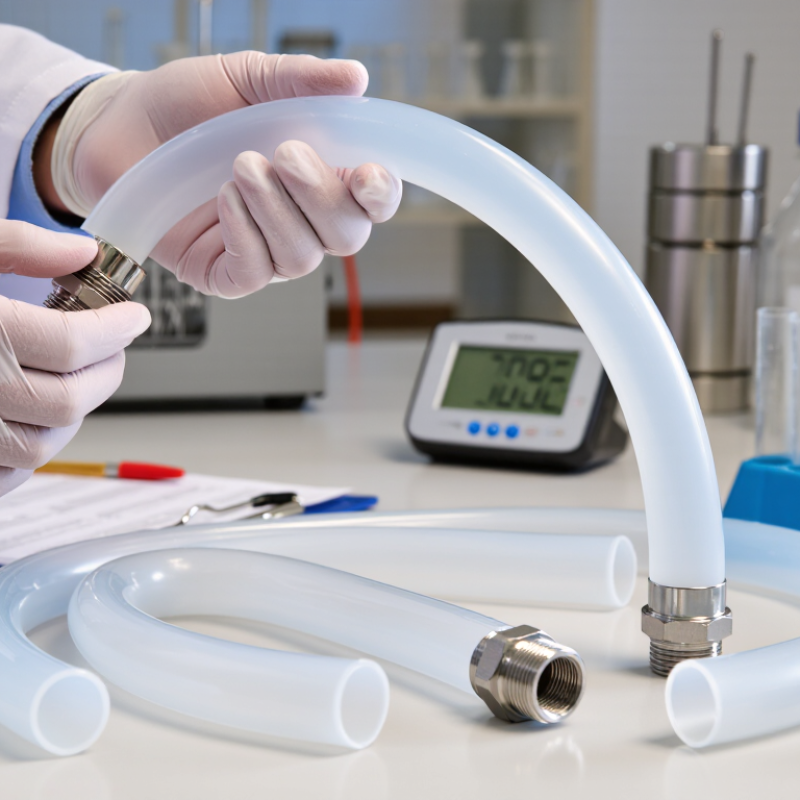
The best odorless silicone tube begins with clean, carefully selected silicone materials. Odor usually comes from residual processing chemicals, low-quality additives, or incomplete curing. A well-controlled curing process reduces volatile compounds inside the tube. Post-curing can remove remaining traces, especially after high-temperature treatment. However, “odorless” is not always absolute. Human noses differ, and storage conditions may change the result.
For global buyers, suitability involves more than a neutral smell. Check the tube’s temperature range, flexibility, wall thickness, and pressure performance. Ask for batch records, material declarations, and independent test reports when possible. Food-contact or medical applications may require different testing and documentation. Clear labeling also helps customs teams and end users handle the product correctly. A transparent supplier should explain testing methods, not only provide a simple odor claim.
Tips: Request a sample before placing a large order. Place it in a sealed glass container for 24 hours, then inspect the smell after opening. Check the tube near heat, because warmth can reveal hidden odors. Review packaging quality, too. Poor storage may introduce dust or surrounding smells. I once overlooked this detail during evaluation, and the result was less reliable than expected. Small checks matter.
Odorless silicone tubes begin with controlled raw materials, not fragrance or surface treatment. High-purity silicone elastomer should contain low levels of volatile compounds, plasticizers, and processing residues. Platinum-cured silicone often supports cleaner performance than peroxide-cured grades. However, curing chemistry alone does not guarantee zero odor.
Manufacturers should control mixing, extrusion, curing, and post-curing temperatures. A properly post-cured tube should release fewer volatile substances when opened or heated. Clean equipment matters. Dust, oils, and packaging residues can create an unexpected smell. Buyers should request batch records, material declarations, and test results for odor, extractables, and volatile compounds. Dimensional checks should include inner diameter, wall thickness, Shore A hardness, tensile strength, and compression set. Small variations can affect sealing.
Standards must match the tube’s intended use. Food-contact applications may require relevant migration testing, while healthcare applications may need biocompatibility evaluation under ISO 10993. A quality system aligned with ISO 9001 can improve traceability, but certification alone is not proof of odorless performance. Sampling plans, such as ISO 2859-based inspection, should be supported by actual production data. One overlooked issue is packaging. Silicone can absorb nearby odors during storage. Buyers should inspect sealed samples after transport, not only fresh factory samples. No test captures every condition. Temperature, ventilation, and contact materials can change results.
| Evaluation Dimension | Recommended Specification | Typical Technical Data | Buyer Verification Point |
|---|---|---|---|
| Base polymer | VMQ silicone rubber, preferably high-purity or medical-grade where the application requires it | Wide operating temperature capability; good resistance to ozone, ultraviolet radiation, moisture, and aging | Request the polymer type, formulation statement, lot traceability, and applicable compliance documents |
| Curing system | Platinum-cured silicone for low extractables and low residual odor; peroxide-cured material may be acceptable after validated post-curing | Platinum curing generally avoids peroxide decomposition residues, while odor performance still depends on additives, processing, and post-cure conditions | Confirm cure chemistry, catalyst system, post-cure temperature and time, and residual-odor test results |
| Odor performance | Neutral or very low odor after conditioning and post-curing | No universal “odorless” limit applies to every market; odor can be affected by volatile siloxanes, pigments, processing aids, packaging, and storage | Define the acceptance level, sample-conditioning procedure, panel method, and test temperature in the purchase specification |
| Hardness | Select according to sealing, flexibility, pressure, and installation requirements | Common silicone tube hardness range: approximately 30–80 Shore A; exact values depend on formulation | Specify Shore A hardness and tolerance, with testing to ASTM D2240 or ISO 48-4 |
| Temperature range | Use a validated range based on continuous exposure, peak exposure, pressure, and fluid contact | Many silicone tubes are used approximately from −50 °C to +180 °C; some formulations support short-term exposure near +200 °C | Obtain the supplier’s continuous and intermittent temperature ratings for the exact tube construction |
| Pressure capability | Use reinforced construction for elevated pressure or pulsation | Burst and working pressure vary significantly with inner diameter, wall thickness, hardness, temperature, reinforcement, and service life | Require working-pressure, burst-pressure, vacuum, bend-radius, and temperature derating data for the specified size |
| Dimensional control | Controlled inner diameter, outer diameter, wall thickness, ovality, and cut length | Tolerance depends on tube size, extrusion process, tooling, and applicable drawing requirements | Approve a dimensional drawing and inspection plan; verify dimensions using calibrated gauges |
| Mechanical properties | Balance tensile strength, elongation, tear resistance, and compression set for the application | Typical unreinforced silicone compounds may provide tensile strength around 5–12 MPa and elongation around 200–700%, depending on grade | Request lot-specific test data using ASTM D412 or ISO 37, ASTM D624 or ISO 34-1, and compression-set testing to ASTM D395 or ISO 815-1 |
| Fluid compatibility | Verify compatibility with water, air, steam, oils, fuels, solvents, cleaning agents, and process chemicals | Silicone performs well with many aqueous media and environmental exposures but may swell or lose strength in some fuels, mineral oils, and hydrocarbon solvents | Conduct application-specific immersion testing for mass change, volume change, hardness, tensile strength, and visual condition |
| Food-contact suitability | Use a formulation and manufacturing process documented for the intended food-contact market | U.S. food-contact silicone may be assessed under 21 CFR §177.2600; European compliance typically requires applicable food-contact framework, GMP, and national or regional requirements | Request a declaration of compliance, migration or extractables data, and restrictions for food type, temperature, and contact duration |
| Medical or healthcare use | Use medical-grade material only when the device risk assessment and regulatory pathway require it | Biocompatibility is application-specific and cannot be established solely by calling a tube “medical grade” | Check ISO 10993 evaluation, sterilization compatibility, extractables and leachables, change control, and batch records |
| Cleanliness and extractables | Low-particle, low-residue production with controlled washing, drying, packaging, and post-curing | Cleanliness requirements should be defined by the process, especially for pharmaceutical, laboratory, semiconductor, and sensitive fluid applications | Specify particulate limits, nonvolatile residue, total organic carbon or targeted extractables where relevant |
| Manufacturing process | Consistent extrusion, controlled curing, validated post-curing, clean cutting, and sealed packaging | Process stability influences odor, dimensions, surface quality, mechanical properties, and extractables | Review process-flow documents, inspection records, calibration controls, nonconformance handling, and change-notification procedures |
| Quality-management standard | A documented quality system appropriate to the intended industry | ISO 9001 supports general quality management; ISO 13485 is relevant to organizations supplying medical devices or related components | Verify certificate scope, validity, manufacturing site, audit status, and product-specific quality controls |
| Packaging and storage | Clean, sealed, light-protected packaging with lot identification and defined storage conditions | Keep away from contamination, excessive heat, direct sunlight, ozone sources, and incompatible chemicals | Confirm shelf life, first-in-first-out controls, packaging material, storage temperature, and transport protection |
| Global documentation | Complete technical file prepared for the destination market and end use | Core documents may include a technical datasheet, certificate of analysis, declaration of compliance, SDS, drawing, inspection report, and traceability record | Ensure documents identify the exact material, size, lot, test method, revision, and applicable regulatory limitations |
Note: “Odorless” should be treated as a measurable performance requirement rather than an inherent property of all silicone tubing. Final acceptance should be based on the exact formulation, dimensions, curing process, cleaning method, packaging condition, and intended service environment.
2026 Best Odorless Silicone Tube for Global Buyers
Odorless does not automatically mean safe. Before purchase, ask for a complete material specification, batch number, and test records. Silicone used near food, medicine, or drinking water should have suitable compliance evidence, such as FDA 21 CFR 177.2600, EU food-contact documentation, or USP Class VI testing. ISO 10993 testing may matter when the tube contacts the body. Request extractables and leachables data, especially for heated or repeated-use systems. Grand View Research’s 2024 silicone market analysis valued the global market at about USD 18.8 billion in 2023. Fast market growth can also mean uneven supplier quality.
Durability needs measurable proof. Check Shore A hardness, tensile strength, elongation, tear resistance, and compression set. ASTM D412 supports tensile testing, while ASTM D395 helps assess compression recovery. Measure burst pressure under the actual temperature and fluid conditions. A tube that survives a cold bench test may soften near a pump. Performance also depends on inner diameter tolerance, flow stability, surface smoothness, and sterilization resistance. I would not trust a “zero odor” claim without a controlled sensory test. Human smell is useful, but inconsistent.
Tips: Cut a sample and inspect the wall. Look for bubbles, gloss changes, or uneven thickness. Ask for three batch samples, not one. Compare odor after 24 hours at operating temperature. Keep a small doubt; supplier documents can be correct yet incomplete.
Reference benchmarks for evaluating safety, durability, and performance before purchase
These reference values reflect commonly specified properties for high-quality platinum-cured silicone tubing. Odor should be minimal, while tensile strength, elongation, hardness, and operating temperature should match the intended application. Actual specifications vary by grade, wall thickness, curing method, and regulatory requirements.
Global buyers need more than an odorless claim. Silicone tubing should have low volatile residues, stable elasticity, and no noticeable smell after curing. A faint odor may indicate incomplete post-curing, poor packaging, or contamination. This detail deserves testing.
The ISO Survey 2023 recorded more than one million ISO 9001 certificates worldwide. However, certification alone does not prove tube performance. Request ISO 9001 records, batch traceability, and recent test reports. For medical or food-contact use, review applicable FDA 21 CFR 177.2600, USP Class VI, EU food-contact, and REACH documentation. The certificate must match the exact material and production site. Not a generic file.
Customization should cover inner diameter, outer diameter, Shore A hardness, wall thickness, color, length, and connection design. Platinum-cured silicone often supports cleaner applications, but buyers should verify extractables, tensile strength, elongation, and compression set. A 2024 medical tubing market report projects continued demand for flexible polymer tubing, driven by healthcare and fluid-handling equipment. That growth also increases the risk of rushed qualification.
Ask suppliers for three production samples, dimensional records, CoA documents, and aging results. Confirm tolerance with actual measurements, not catalog language. Audit cleanroom controls when odor, particles, or biocompatibility matter. My practical concern is simple: “odorless” is rarely an absolute laboratory term. Define the test method, storage time, temperature, and acceptance limit before approving the supplier.
2026 Best Odorless Silicone Tube for Global Buyers
A Step-by-Step Guide to Selecting the Best Odorless Silicone Tube in 2026
Begin with the application, not the marketing label. Record temperature, pressure, fluid type, inner diameter, and bending radius. For food contact, request compliance evidence for FDA 21 CFR 177.2600 or equivalent regional requirements. Medical applications may also require ISO 10993 testing, depending on patient contact.
Check the material next. Platinum-cured silicone often offers cleaner processing than peroxide-cured grades, but “odorless” is not a test result. Ask for volatile organic compound data, extractables reports, and batch traceability. A 2024 Grand View Research report estimates the global silicone market will grow at about 7.8% annually through 2030. That growth increases choices, but not necessarily quality. I would also inspect a cut tube personally. A sharp chemical smell, oily surface, or uneven wall suggests further investigation. Small details matter.
Tips: Compare three samples under identical conditions. Flush each tube with the intended fluid, then seal it overnight in a clean glass container. Check odor, color, flexibility, and dimensional recovery the next day. Request Shore hardness, tensile strength, elongation, and temperature data from the supplier. Avoid relying only on certificates; verify the test method and report date. One practical mistake is ignoring storage conditions. Silicone can absorb surrounding odors before installation, especially in poorly ventilated warehouses.
How can we help you?
Call to 0034 943884600 Contact usWe use cookies to ensure that we give you the best experience on our website. If you continue without changing your settings, we'll assume that you agree to receive cookies on the HINE website. For more information read our cookie policy page, click the link for more information.plugin cookies
ACEPTAR