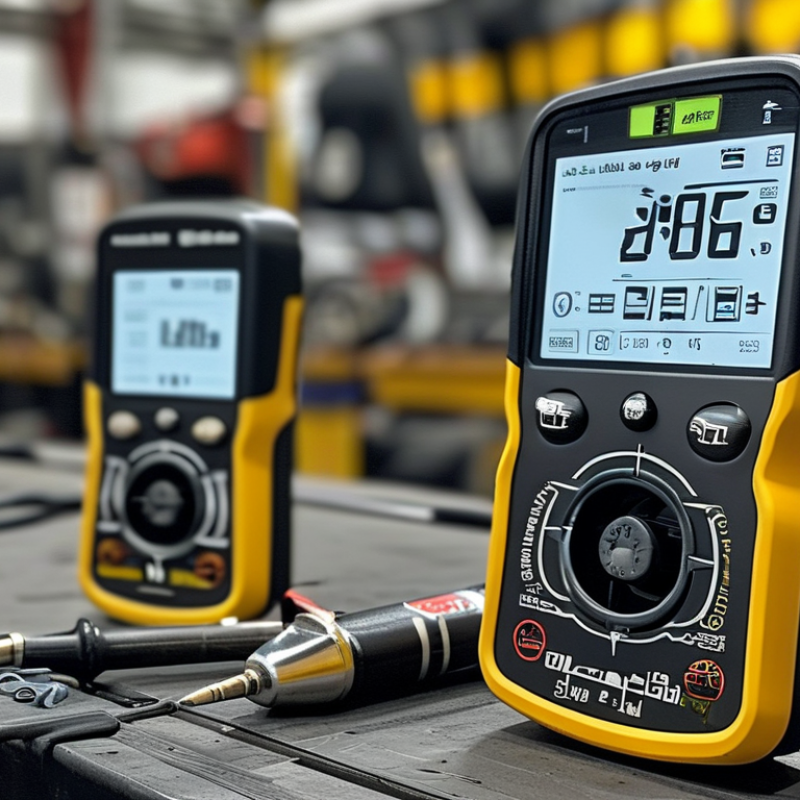
Buying a Vehicle Battery Checker in 2026 requires more than comparing screen size or advertised accuracy. Global buyers need dependable readings across different battery types, climates, and vehicle platforms. A small workshop in Dubai may test a heat-soaked AGM battery, while a northern European dealer may inspect a cold lead-acid unit. The device must cope with both conditions.
Dr. Jeff Dahn, a respected battery researcher, has emphasized, “The battery is the most important component in an electric vehicle.” His view also matters for hybrid and conventional vehicles. A reliable checker can reveal voltage, cold-cranking performance, state of health, and charging weakness before a vehicle fails unexpectedly. It can also help technicians distinguish a worn battery from a poor connection or charging-system problem.
Accuracy comes first.
This 2026 guide examines leading Vehicle Battery Checker models for international buyers. It considers test coverage, operating temperature, display clarity, data storage, language support, warranty service, and practical safety features. Bluetooth access can help fleet managers, but it should not replace professional judgment. A printed result may still be useful in a busy workshop.
No tester is perfect. Readings can change with temperature, surface charge, cable condition, and operator technique. That limitation deserves attention. Buyers should compare repeated tests and follow the manufacturer’s instructions. Some low-cost devices look impressive but provide shallow diagnostics. Others offer excellent measurements but poor software support.
The strongest choices balance technical credibility with everyday usability. They should serve technicians, dealers, fleet operators, and careful private owners. This review focuses on that balance, helping global buyers select a Vehicle Battery Checker with clearer evidence and fewer costly assumptions.
A reliable vehicle battery checker should measure more than resting voltage. In workshop inspections, I begin with voltage after the vehicle sits for several hours. A healthy, fully charged 12-volt battery often reads near 12.6 volts. Around 12.2 volts suggests partial discharge, not automatic failure. Temperature matters, too. Cold conditions can reduce available cranking power and distort quick readings. I also check the battery’s rated cold-cranking current against the tester’s result. A large difference deserves further inspection.
Internal resistance can reveal aging that voltage hides. Higher resistance usually means weaker current delivery, especially during engine start-up. A controlled load test is useful when the battery is charged and safely connected. During testing, watch for a sharp voltage drop. Some modern vehicles also require charging-system checks, including alternator output and electrical ripple. One careless clamp connection can create misleading data. I have trusted a single reading before, and that was a mistake.
Tips: Clean both terminals before testing. Confirm the correct battery type and rating. Record temperature, voltage, test current, and date. Compare results over time, not from one snapshot. Do not replace a battery only because of low voltage; it may simply need charging. Follow the tester’s instructions and vehicle safety guidance. Global buyers should also check measurement units, operating temperature limits, and support for local vehicle systems. Shortcuts save minutes, but they can hide the real fault.
2026 Top Vehicle Battery Checker for Global Buyers
Choosing a battery checker starts with the vehicle, not the device price. A small motorcycle often needs a compact 12-volt tester with motorcycle battery settings. Passenger cars may require support for flooded, AGM, or EFB batteries. These battery types do not share identical testing limits. Check whether the tool measures cold cranking amps, voltage, internal resistance, and charging performance.
For trucks, buses, and agricultural vehicles, confirm both 12-volt and 24-volt compatibility. Cable length also matters when the battery sits beneath a seat or inside a side compartment. In a busy workshop, a bright screen and clear warning messages reduce mistakes. The tester should work after cleaning loose corrosion from the terminals. Otherwise, the reading may describe the connection rather than the battery.
Hybrid and electric vehicles need extra caution. A standard checker may assess only the low-voltage auxiliary battery, not the high-voltage traction pack. Select equipment with clear voltage limits and safety instructions. Never assume one test fits every vehicle. No tester is perfect. Temperature, battery age, and recent driving can alter results. Letting a battery rest before testing can improve consistency, though real service conditions are rarely tidy. A reliable checker should offer repeatable readings, explain test results, and allow periodic verification against a known reference. The best choice is the one technicians can use correctly, repeatedly, and safely across their actual vehicle range.
| Vehicle or Battery Type | Nominal Voltage | Common Battery Chemistry | Typical Capacity or Rating | Recommended Checker Functions | Useful Test Standards | Selection and Safety Notes |
|---|---|---|---|---|---|---|
| Classic cars, motorcycles, and small equipment | 6 V or 12 V | Flooded lead-acid | Approximately 20–120 Ah; starting ratings vary by battery size | Open-circuit voltage, cranking test, charging-voltage test, and adjustable load test | SAE, EN, DIN, IEC, or JIS, depending on the battery label | Choose a checker that supports both 6 V and 12 V systems. Do not apply a 12 V test profile to a 6 V battery. |
| Passenger cars with conventional starting batteries | 12 V | Flooded lead-acid | Approximately 35–110 Ah; often about 250–900 A CCA | Conductance or electronic CCA test, state-of-charge estimate, health estimate, and alternator test | CCA, CA, EN, DIN, IEC, or JIS | Enter the rating and test standard printed on the battery. A tester should show measured value and pass, recharge, or replace guidance separately. |
| Vehicles with start-stop systems | 12 V | AGM or EFB lead-acid | Approximately 45–120 Ah; commonly about 400–1,000 A CCA | AGM/EFB identification, battery health, CCA or EN test, charging-system test, and battery replacement registration support | EN, SAE, DIN, IEC, or JIS | Use a tester with separate AGM and EFB algorithms. The vehicle may require battery adaptation or registration after replacement. |
| Heavy trucks, buses, and construction vehicles | 12 V or 24 V | Flooded lead-acid, AGM, or gel lead-acid | Approximately 70–240 Ah per battery; systems may use two 12 V batteries in series | 12/24 V automatic detection, individual battery testing, series-system diagnosis, high-current cranking test, and charging test | SAE, EN, DIN, IEC, or JIS | For a 24 V system, test each 12 V battery individually before testing the complete circuit. Avoid shorting series-connected terminals. |
| Recreational vehicles and marine starting systems | 12 V or 24 V | Flooded, AGM, or gel lead-acid | Starting batteries commonly range from 50–200 Ah; deep-cycle batteries may exceed 200 Ah | Starting-battery test, deep-cycle capacity assessment, conductance test, leakage check, and charging-system test | CCA, MCA, CA, EN, or manufacturer-marked capacity values | Marine cranking amperes and automotive CCA are not identical. Select a checker that accepts the rating printed on the battery. |
| Vehicles using auxiliary lithium batteries | 12 V or 24 V | LiFePO4 or other lithium-ion auxiliary systems | Approximately 20–300 Ah; capacity is usually specified in ampere-hours rather than CCA | Battery-voltage monitoring, current measurement, coulomb counting, temperature monitoring, and BMS communication where supported | Ah, Wh, maximum continuous current, and BMS data | Do not use a lead-acid load tester unless the lithium battery manufacturer specifically permits it. Check balancing, low-temperature charging, and BMS protection. |
| 48 V mild-hybrid vehicles | 48 V traction system plus 12 V auxiliary system | Lithium-ion or AGM, depending on system design | 48 V batteries are commonly rated by Ah and energy; the 12 V battery has a separate starting or auxiliary rating | 12 V battery test, 48 V voltage measurement, insulation awareness, temperature monitoring, and compatible diagnostic communication | Ah, Wh, system voltage, and vehicle diagnostic data | Use a checker specifically rated for 48 V systems. Do not open or probe high-voltage battery packs without approved training and protective equipment. |
| Battery-electric vehicles | 12 V auxiliary system plus high-voltage traction battery | 12 V lead-acid or lithium auxiliary battery; high-voltage lithium-ion traction battery | Traction batteries are commonly measured in kWh; auxiliary batteries are measured by Ah and starting performance | 12 V auxiliary-battery test, diagnostic-code reading, battery-management data access, isolation monitoring, and service-state verification | Ah, Wh, kWh, insulation resistance, and manufacturer diagnostic parameters | A conventional 12 V checker cannot evaluate traction-battery condition. High-voltage testing requires vehicle-specific procedures and certified equipment. |
| Hybrid vehicles | 12 V auxiliary system plus high-voltage hybrid battery | 12 V lead-acid or AGM; nickel-metal hydride or lithium-ion traction battery | Traction batteries are rated by voltage, Ah, and kWh; the auxiliary battery is tested separately | 12 V battery test, hybrid-system diagnostic communication, cell or module data review, temperature-sensor monitoring, and fault-code reading | Ah, kWh, pack voltage, cell-voltage balance, and diagnostic data | Test the 12 V battery separately from the hybrid battery. Never disconnect or service high-voltage components without the required isolation procedure. |
| Commercial delivery vans and fleet vehicles | 12 V or 24 V | Flooded lead-acid, EFB, or AGM | Approximately 70–225 Ah; heavy-duty starting ratings may exceed 1,000 A | Fast multi-standard testing, fleet record storage, barcode or QR entry, print or export function, and charging-system analysis | SAE, EN, DIN, IEC, JIS, CCA, and Ah | For fleet use, prioritize repeatable results, automatic temperature compensation, calibration verification, and data export. |
| Battery banks and stationary auxiliary systems | 12 V, 24 V, or 48 V | Lead-acid, AGM, gel, or LiFePO4 | Approximately 50–1,000 Ah or more, depending on the bank configuration | Individual-unit voltage test, internal-resistance trend, capacity test, temperature logging, and parallel-string comparison | Ah, Wh, internal resistance, conductance, and discharge-test results | Measure each battery or module before testing the complete bank. A single voltage reading cannot confirm usable capacity. |

For global buyers, a vehicle battery checker is more than a voltage meter.
It must provide repeatable readings across climates, vehicle types, and battery designs. Look for documented testing methods, calibration information, and clear operating limits. Recognized electrical safety practices, including insulation and overload protection, support safer daily use. Standards differ by market, so confirm required conformity documents before importing. A familiar appearance is not proof of quality.
Compatibility starts with the vehicle’s electrical system.
Check whether the tester supports 6V, 12V, or 24V systems. It should also recognize flooded, AGM, EFB, and other supported battery types. Measurement options may include voltage, starting performance, charge level, and battery health. Cold cranking ratings can follow different systems, such as SAE, EN, DIN, or JIS. Selecting the wrong rating may produce a misleading result.
Safety features deserve close attention.
Reverse-polarity protection, spark reduction, insulated clamps, and automatic shutdown can reduce handling risks. A bright screen helps in dim workshops, while temperature guidance improves consistency in cold regions. No checker is perfect. Readings can change after charging, driving, or surface charge buildup.
I once trusted a single test too quickly; retesting after a short rest gave a more useful answer.
Product manuals, service support, and independent test evidence remain important when comparing devices across countries.
Comparing the Top Vehicle Battery Checkers for 2026 requires more than reading screen claims. A reliable checker should identify battery voltage, starting capacity, internal resistance, and charging performance. In workshop evaluations, handheld conductance testers are the most practical for quick inspections. They work well on 12-volt batteries and usually provide results within seconds. Some models also support 24-volt systems, which helps technicians serving trucks and commercial vehicles.
A load tester gives a different kind of evidence. It applies controlled electrical demand, so weak batteries often reveal themselves through a sharp voltage drop. This method is simple and easy to verify, but it can generate heat and requires careful handling. Smart analyzers offer broader data, including estimated cold-cranking performance and battery health. Their accuracy depends on correct battery type, temperature, and rating standard, such as SAE, EN, DIN, or JIS. Incorrect settings can create confident but misleading results.
For global buyers, useful features include multilingual menus, replaceable test leads, printed reports, and clear error messages. Protection against reverse polarity is important in busy workshops. I would also check calibration support and warranty terms before comparing prices. No checker is perfect. A low reading may come from dirty terminals, a weak connection, or a discharged battery rather than permanent damage. I once trusted a fast result too quickly; a second test after charging changed the diagnosis. This small delay matters. Reliable decisions combine instrument data, visual inspection, charging history, and the vehicle’s starting behavior.
How can we help you?
Call to 0034 943884600 Contact usWe use cookies to ensure that we give you the best experience on our website. If you continue without changing your settings, we'll assume that you agree to receive cookies on the HINE website. For more information read our cookie policy page, click the link for more information.plugin cookies
ACEPTAR