

What Is the Best Circulating Pump for Heating Systems?

Choosing the best Circulating Pump for a heating system is rarely about buying the most powerful model. The right choice depends on pipe length, heat output, system resistance, water temperature, and control requirements. A small home radiator circuit may need a compact variable-speed pump. A larger underfloor heating system may require greater flow and carefully balanced zones. Pump curves matter more than attractive packaging. They show whether the unit can deliver suitable flow against real resistance. That distinction is easy to miss.

Practical evaluation should also consider noise, electricity use, maintenance access, and compatibility with the boiler or heat source. A pump that hums beside a bedroom can quickly become a daily annoyance. A highly efficient model may still perform poorly if air remains trapped in the system. Manufacturer data, installation instructions, certification, and local technical requirements should guide the final decision. A qualified heating professional can measure flow conditions and check electrical safety before installation. That adds confidence.

There is no universal winner. Even experienced installers can overlook an unusually long pipe run or a restrictive valve. I have learned that a quiet pump is not automatically the correct pump. Real systems behave differently from diagrams. Temperature changes, sludge, air, and poor balancing can alter performance. This guide compares important pump types, selection criteria, and common mistakes, helping readers make a more informed decision. The goal is dependable heat, controlled energy use, and comfortable rooms throughout the heating season.
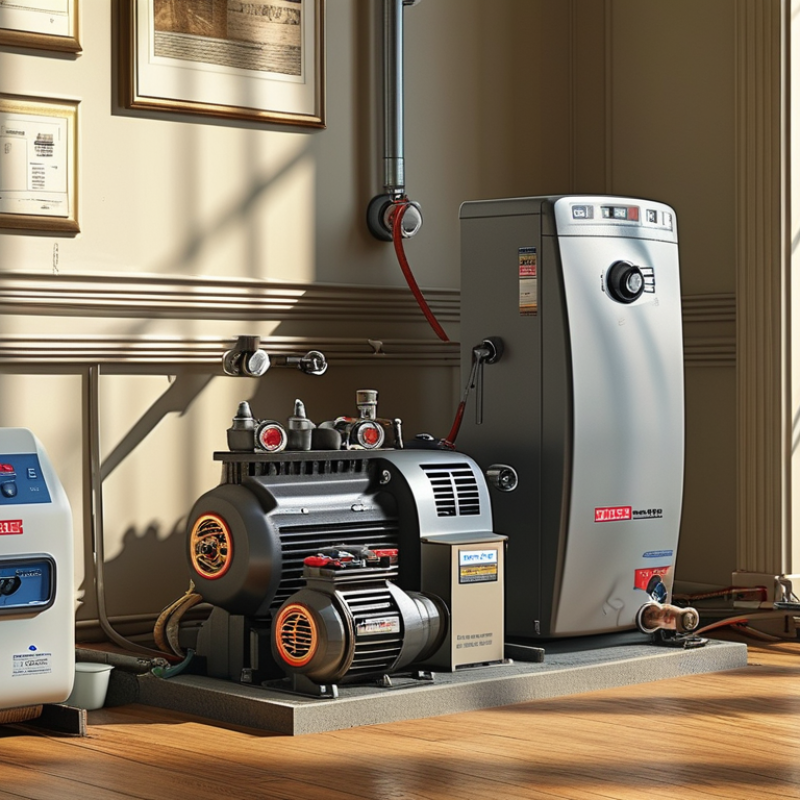
What Is the Best Circulating Pump for Heating Systems?

Types of Circulating Pumps Used in Heating Systems

What Is the Best Circulating Pump for Heating Systems?

The best circulating pump depends on the heating system’s flow rate, pipe length, and resistance. There is no single choice for every home. In practice, installers often compare wet-rotor, dry-rotor, fixed-speed, and variable-speed pumps.

Wet-rotor pumps are compact and quiet. The system fluid cools and lubricates their internal rotor. They suit many residential radiators and underfloor heating circuits. Dry-rotor pumps separate the motor from the water. They usually handle larger buildings, higher flow rates, and demanding commercial systems. Fixed-speed pumps maintain one operating level. They are simple, but they may waste electricity when heating demand changes. Variable-speed pumps adjust output as valves open or close. This can reduce noise and improve comfort, although incorrect settings can still cause weak circulation.

Tips: Measure the required flow and pump head before choosing a model. Check whether the system contains air, sludge, or excessive scale. These problems can make a good pump appear faulty. Also, match the pump to the water temperature and pipe connection size. A small error matters.

From field observations, variable-speed pumps often work well with thermostatic radiator valves. However, they are not automatically the best answer. An old system with blocked pipes may need cleaning first. I have also seen oversized pumps create rushing-water sounds. The quieter solution was sometimes a smaller pump and better balancing. Professional commissioning remains important, because pump settings are easy to overlook.

What Is the Best Circulating Pump for Heating Systems?

Typical electrical input power of circulating pump types used in heating systems

Electronically commutated variable-speed wet-rotor pumps generally provide the best balance of energy efficiency, automatic flow control, and low operating cost for residential heating systems. Fixed-speed wet-rotor pumps are simple and economical, while dry-rotor in-line pumps are better suited to larger commercial installations with higher flow requirements. The figures show representative operating values; actual power depends on system head, flow rate, temperature, and control settings.

How Heating System Requirements Determine Pump Selection

What Is the Best Circulating Pump for Heating Systems?

How Heating System Requirements Determine Pump Selection

The best circulating pump is not chosen by brand or appearance. It must match the heating system’s actual flow and pressure requirements. A small house with compact radiators may need modest circulation, while a larger home with several zones demands stronger and more flexible performance.

Start with the heat output, pipe length, radiator resistance, and number of heating circuits. A qualified installer should calculate required flow and pump head rather than rely on guesswork. For example, a two-story system with narrow pipes may create more resistance than a single-floor system with wider pipes. The difference is easy to miss.

Check the fluid temperature and system design. Underfloor heating usually needs steady, controlled circulation. Radiator systems may need different flow rates across separate zones. Variable-speed control can reduce noise and energy use when demand changes. Compatibility also matters, especially with treated water, glycol mixtures, or older metal components.

Do not oversize the pump.

An oversized unit can cause humming, valve noise, and unnecessary power consumption. An undersized unit may leave distant radiators cold. That is a practical failure, not merely a technical detail. Pump selection should also consider electrical safety, installation space, service access, and applicable local standards. I would review the calculations again before installation, because real systems often differ from drawings.

What Is the Best Circulating Pump for Heating Systems? — How Heating System Requirements Determine Pump Selection

Pump selection should be based on the required flow rate, system resistance, fluid temperature, control method, and installation conditions rather than on pump size alone.

Heating System Requirement Typical Design Condition Approximate Flow Range Typical Pump Head Recommended Pump Characteristics Important Selection Check
Small residential radiator circuit Single-zone system; water temperature commonly 60–80°C 0.5–2.0 m³/h 2–5 m Variable-speed wet-rotor circulator with proportional-pressure control Confirm the pump can maintain flow through the boiler, valves, radiators, and connecting pipework.
Multi-zone radiator system Several thermostatic or motorized zones with changing demand 1.5–5.0 m³/h 4–8 m Variable-speed pump with automatic differential-pressure adjustment Automatic pressure control helps reduce noise and excessive flow when zone valves close.
Underfloor heating manifold Low-temperature water, commonly 30–45°C; multiple loops 1.0–4.0 m³/h 3–7 m Variable-speed circulator suitable for continuous operation Check manifold resistance, loop length, mixing valve arrangement, and the maximum permitted flow temperature.
Fan-coil heating circuit Two-pipe or four-pipe circuit with frequent valve modulation 2.0–8.0 m³/h 5–12 m Electronically commutated pump with constant or proportional-pressure control Select for the coil control-valve authority and account for pressure changes as terminal units open and close.
Small commercial hydronic loop Multiple branches; moderate operating hours and variable occupancy 4.0–15.0 m³/h 8–18 m High-efficiency variable-speed pump with adjustable setpoints Use the calculated index-circuit resistance and verify motor input, control compatibility, and standby requirements.
Large commercial heating distribution Central plant serving several air-handling units or building zones 10–50 m³/h 15–35 m End-suction, inline, or vertical multistage pump selected for the duty point Evaluate duty/standby configuration, minimum flow, pipe velocity, cavitation margin, and building-management-system control.
High-temperature primary circuit Boiler or process-heating loop; temperatures may exceed 90°C 2.0–30.0 m³/h 6–25 m Temperature-rated pump with compatible seals, bearings, and insulation arrangement Verify the maximum fluid temperature, pressure rating, seal materials, expansion-tank pressure, and minimum inlet pressure.
Glycol-based heating loop Freeze protection or heat-recovery system; glycol concentration varies Calculated water flow × 1.05–1.20 Calculated resistance × 1.10–1.30 Pump selected for the increased viscosity and reduced heat capacity of the mixture Use the actual glycol concentration and operating temperature when calculating flow, head, motor load, and pressure loss.
Solar-assisted heating circuit Variable solar-loop temperature with possible stagnation conditions 0.5–6.0 m³/h 4–15 m Solar-rated pump with high-temperature fluid compatibility and weather-resistant controls Check thermal-fluid compatibility, stagnation temperature, controller sensors, air separation, and protection against dry running.
Open or vented heating system Atmospheric expansion tank; water quality may vary System-specific System-specific Corrosion-resistant pump with suitable materials for the water chemistry Confirm pump location, static pressure, air management, water treatment, and protection from frequent air ingress.

Key Performance Factors: Flow Rate, Head, Efficiency, and Noise

Choosing the best circulating pump starts with measured demand, not the largest available motor. Flow rate should match the heating load and temperature difference. A practical formula is Q = P ÷ (4.186 × ΔT), with Q in litres per second. For a 10 kW system operating at a 20°C difference, the required flow is about 7.2 litres per minute. That number can change after balancing, pipe replacement, or radiator adjustments. Real buildings are rarely perfect.

Head must overcome pipe friction, valves, fittings, and heat emitters. An undersized pump may leave the farthest radiator cold. An oversized pump wastes electricity and can create valve hiss. The Hydraulic Institute recommends keeping centrifugal pumps near their best efficiency point, rather than operating at the curve’s extremes. Efficiency also deserves careful checking. European Commission Ecodesign Regulation 641/2009 sets an energy efficiency index limit of 0.23 for covered glandless circulators. A lower electrical draw is valuable, but only when the pump still delivers stable flow.

Noise is often the detail homeowners notice first. CIBSE Guide B commonly uses NR 25–30 as a quiet-room design range, so pump selection should consider operating sound, vibration, and air removal. Variable-speed control can reduce pressure when thermostatic valves close. However, controls cannot fix poor pipe sizing. Ask for tested performance curves, sound data, and efficiency figures at the actual duty point. That is more reliable than choosing by connection size alone.

Comparing Popular Circulating Pump Technologies

What Is the Best Circulating Pump for Heating Systems?

Comparing popular circulating pump technologies starts with the heating system itself. The best choice depends on flow demand, pipe resistance, water quality, and control requirements.

Fixed-speed pumps Fixed-speed pumps remain practical in small, predictable systems. They are simple, familiar, and often easier to troubleshoot. However, they may waste electricity when thermostatic valves close. That weakness is easy to overlook.

Variable-speed electronically controlled pumps Variable-speed electronically controlled pumps adjust output as demand changes. In a multi-zone home, they can reduce pressure noise and lower operating energy. Their sensors respond to changing valve positions and system resistance. Installation still matters. Incorrect settings can cause slow radiators, unstable temperatures, or unnecessary cycling. More technology does not guarantee better performance.

Wet-rotor pumps keep the motor cooled by the circulating fluid. They suit many residential systems and usually operate quietly. Dry-rotor designs can handle larger commercial loads, but they often need more space, maintenance, and careful alignment.

I once assumed higher capacity always meant stronger performance. That judgment was incomplete. Oversized pumps can create humming pipes and excessive flow, while undersized pumps leave distant rooms cold.

A qualified installer should measure system resistance, check fluid compatibility, and confirm electrical protection before selecting the pump.

The heating curve deserves attention, too. Small adjustments can matter.

How to Choose the Best Circulating Pump for Your System

What Is the Best Circulating Pump for Heating Systems?

How to Choose the Best Circulating Pump for Your System

Choosing the best circulating pump starts with the heating system, not the pump catalogue. Check the required flow rate, pipe length, elevation changes, and total resistance. A small home radiator loop may need far less capacity than an underfloor heating manifold. More power is not automatically better. An oversized pump can create noise, waste electricity, and cause uneven room temperatures.

I measure the system’s heat demand and compare it with the pump’s performance curve. The selected operating point should sit near the efficient middle range. Check the fluid temperature, connection size, seal material, and available electrical supply. For older systems, dirty water and air can affect performance. A pump with automatic speed control may adjust better when thermostatic valves open or close. Keep it quiet.

Installation details matter. The pump shaft should follow the manufacturer’s required position, and isolation valves can simplify future servicing. I also check for trapped air after filling the circuit. One mistake I made was choosing a pump from pipe diameter alone. The fit looked correct, but the head pressure was insufficient for the farthest rooms. That experience changed my process. I now record pressure readings, listen for vibration, and confirm actual temperatures at several emitters. A qualified heating professional should review the final selection, especially in high-temperature or complex systems.

Choose a global leader for your hydraulics solutions

How can we help you?

Call to 0034 943884600 Contact us
Call us Contact us

We use cookies to ensure that we give you the best experience on our website. If you continue without changing your settings, we'll assume that you agree to receive cookies on the HINE website. For more information read our cookie policy page, click the link for more information.plugin cookies

ACEPTAR
Aviso de cookies