10 Best DTH Boring Machines for Global Buyers?
Choosing the right Dth Boring Machine requires more than comparing horsepower, drilling depth, or purchase price. Global buyers must examine rock conditions, hole diameter, compressor demand, maintenance access, operator safety, and local parts support. A machine working efficiently in Australian iron ore may perform poorly on fractured limestone in Southeast Asia. Small details matter. Dust control matters.
Industry reports show why this decision deserves careful research. Grand View Research valued the global mining equipment market at approximately USD 135.8 billion in 2023, with continued growth expected through 2030. MarketsandMarkets also identifies rising automation, energy efficiency, and remote monitoring as important trends in drilling equipment. However, these reports often combine several equipment categories. DTH-specific figures can vary considerably. That limitation should not be ignored.
Helena Hedblom, President and CEO of Epiroc, has stated, “We are passionate about driving the transformation toward a more sustainable mining and infrastructure industry.” Her comment reflects a growing buyer priority: productivity must be measured alongside fuel use, emissions, noise, and service life. In practical field evaluations, a reliable Dth Boring Machine should start consistently, maintain stable penetration, and produce clean, manageable cuttings. Not every impressive specification survives harsh jobsite conditions.
This guide reviews ten leading machines for international buyers. It compares drilling performance, mobility, automation, operating costs, and after-sales support. Some conclusions remain dependent on application data. That is unavoidable. Real geology is rarely predictable.
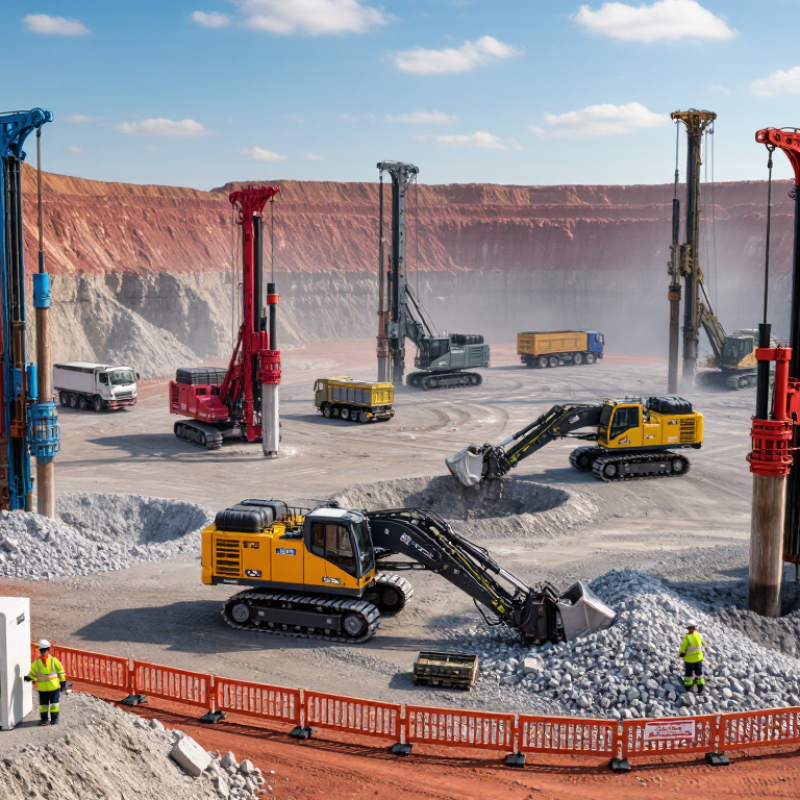
What DTH Boring Machines Are and How They Work
Down-the-hole (DTH) boring machines drill with the hammer inside the borehole. Compressed air travels through the drill pipes and strikes a piston near the bit. The bit breaks rock at the face, while return air carries cuttings upward. This design transfers impact energy directly to hard ground. It can reduce energy loss compared with surface-mounted percussion systems.
Performance depends on rock strength, fracture patterns, hole diameter, and air pressure. A 2024 U.S. Geological Survey report recorded global iron ore production at about 2.5 billion metric tons in 2023. That scale reflects continued demand for reliable drilling in mining and infrastructure projects. DTH equipment is also used for water wells, foundation work, and ground investigation. The machine must match the formation, not merely the project budget.
Field operators commonly check penetration rate, fuel use, dust control, rod wear, and compressor capacity. A 2024 report from the Global Mining Guidelines Group emphasizes consistent maintenance and risk control across drilling operations. Still, published performance figures can be optimistic. Actual output may fall sharply in broken rock or wet formations. Buyers should request test data from comparable ground, including bit life and daily drilled meters. A practical trial often reveals more than a polished specification sheet.
Ten Leading DTH Boring Machines for Global Buyers
Ten Leading DTH Boring Machines for Global Buyers
Global buyers often compare ten practical DTH boring machine configurations. Crawler-mounted rigs suit uneven quarry roads and remote foundations. Truck-mounted rigs reduce transport time between urban projects. Compact hydraulic rigs work well in narrow construction zones. High-torque rotary rigs handle deeper, harder formations. Low-clearance rigs fit tunnels and underground service areas. Automated rod-changing rigs improve drilling consistency and reduce manual handling. Water-well rigs support long-hole drilling with stable flushing systems. Quarry rigs prioritize dust control and repeated production cycles. Geothermal rigs need accurate alignment and dependable cooling. Multi-purpose rigs offer flexibility, but they may sacrifice speed.
Selection should begin with rock strength, hole diameter, depth, and available compressor capacity. Field experience shows that matching the hammer to the formation prevents excessive wear. Check feed force, mast stability, rotation torque, and rod compatibility. A reliable machine should also provide accessible filters, clear gauges, and protected hydraulic lines. Local service support matters, especially where replacement parts need weeks to arrive. Noise and dust controls should meet the destination’s workplace requirements. No ranking is perfect. A powerful rig may become inefficient on a small residential site.
Tips: Ask for verified drilling records from similar ground conditions. Inspect welds, hose routing, and maintenance access before purchase. Test emergency stops and control response in person. Do not judge value from horsepower alone. Fuel use, downtime, tooling costs, and operator training can change the real budget. I would also request a short field trial, because brochures rarely reveal difficult ground behavior.
10 Best DTH Boring Machines for Global Buyers? - Ten Leading DTH Boring Machines for Global Buyers
Typical published specification ranges for DTH drilling machine categories. Actual performance depends on geology, tooling, compressor capacity, and operating conditions. | No. | Machine Category | Recommended Applications | Hole Diameter | Maximum Drilling Depth | Drill Rod | Air Pressure | Feed Force | Transport Weight | Best Buying Advantage |
| 1 | Compact Crawler DTH Rig | Water wells, farm wells, and light construction | 90–165 mm | 80–120 m | 76–89 mm | 1.0–1.7 MPa | 25–40 kN | 2.5–4.5 t | Easy access on small or uneven sites |
| 2 | Medium Water-Well DTH Rig | Domestic, agricultural, and community water wells | 115–220 mm | 150–220 m | 89–102 mm | 1.2–2.1 MPa | 35–55 kN | 5–8 t | Balanced depth, mobility, and operating cost |
| 3 | Deep-Well Crawler DTH Rig | Municipal wells, industrial water supply, and geothermal exploration | 152–305 mm | 250–350 m | 102–114 mm | 1.7–2.5 MPa | 55–80 kN | 9–14 t | Higher pullback and longer rod-handling capacity |
| 4 | Truck-Mounted DTH Rig | High-mobility water-well and geotechnical drilling | 115–305 mm | 200–400 m | 89–114 mm | 1.4–2.5 MPa | 45–90 kN | 12–25 t | Fast relocation between widely separated projects |
| 5 | Quarry and Mining DTH Rig | Bench drilling, aggregate production, and controlled blasting | 90–165 mm | 25–45 m per hole | 76–89 mm | 1.2–2.5 MPa | 35–65 kN | 8–16 t | Stable drilling on hard rock and production benches |
| 6 | Open-Pit Mining DTH Rig | Large-scale bench drilling and mining blast-hole preparation | 152–229 mm | 30–60 m per hole | 114–140 mm | 1.7–2.8 MPa | 60–110 kN | 18–35 t | High productivity and strong dust-management options |
| 7 | Geotechnical DTH Crawler Rig | Foundation investigation, slope stabilization, and anchor holes | 90–178 mm | 60–180 m | 76–102 mm | 1.0–2.0 MPa | 30–60 kN | 4–10 t | Precise positioning and versatile drilling angles |
| 8 | Low-Profile Underground DTH Rig | Underground mining, tunnel services, and confined-space drilling | 90–165 mm | 40–120 m | 76–89 mm | 1.2–2.1 MPa | 25–55 kN | 5–12 t | Short overall height and articulated maneuverability |
| 9 | Rotary-DTH Combination Rig | Mixed formations, overburden, casing advancement, and water wells | 152–406 mm | 180–350 m | 102–140 mm | 1.4–2.8 MPa | 50–100 kN | 12–24 t | One platform for changing ground conditions |
| 10 | High-Pressure DTH Exploration Rig | Mineral exploration, deep investigation, and hard-rock drilling | 115–254 mm | 300–500 m | 89–114 mm | 2.0–3.5 MPa | 70–120 kN | 14–28 t | Deep reach and efficient penetration in competent rock |
Buyer note: Select the rig by matching hole size, required depth, rock strength, available compressor capacity, access conditions, service support, and local emissions regulations.
Matching Machine Types to Different Drilling Applications
Choosing among the 10 best DTH boring machines starts with the ground, not the brochure. Down-the-hole systems suit hard rock, quarry faces, water wells, and foundation work. Their hammer works near the bit, improving energy transfer at depth. However, one machine cannot serve every site equally well. A compact crawler fits narrow construction areas, while a heavy rig handles deep holes and large diameters. Check compressor output, drill pipe size, feed force, and transport limits before comparing prices.
For fractured rock, select a rig with stable rotation and efficient hole cleaning. In dense granite, a high-pressure hammer can maintain penetration, but it may increase air consumption. Water-well projects often need strong dust control and accurate vertical alignment. Bench drilling may require angle adjustment and quick rod changes. I have seen buyers choose excessive power for small sites. It worked technically, but setup time and fuel costs became difficult to justify. The “best” machine is often a compromise.
Tips:
- Match the bit diameter to the required hole and casing.
- Confirm local service support and spare-part availability.
- Test the compressor under real working conditions, not ideal specifications.
- Ask operators to review visibility, controls, and vibration.
- Keep a record of penetration speed and maintenance intervals.
- No chart is perfect. Site trials still matter.
Buying, Operating, and Maintaining a DTH Boring Machine
Buying a DTH boring machine starts with geology, not catalog speed. Match the hammer, bit diameter, rod length, and compressor output to the planned hole. Ask for tested air consumption at working pressure, not a flattering maximum figure. The U.S. Department of Energy’s Improving Compressed Air System Performance sourcebook notes that leaks can waste 20–30% of compressor output in poorly maintained systems. That percentage changes fuel costs quickly. Check spare-part availability, dust-control provisions, transport limits, and operator training before signing a purchase order. A cheap rig can become expensive when one worn shank delays a remote project.
During operation, keep the mast aligned and apply steady feed pressure. Excessive pressure can damage threads, while insufficient pressure causes bouncing and poor energy transfer. Watch return air, cuttings, vibration, and rod temperature at the face. Stop early when flushing weakens. It may indicate a blocked passage, wet ground, or a failing compressor. Respirable silica deserves serious attention. OSHA’s construction standard sets a 50 micrograms per cubic meter permissible exposure limit and a 25 micrograms action level, measured over eight hours. Water injection, enclosure, and suitable respiratory controls should follow a documented exposure assessment.
Maintenance is practical, repetitive, and easy to postpone. Drain moisture from air receivers, clean intake filters, inspect hoses, lubricate the hammer, and measure thread wear each shift. Record pressure, penetration rate, fuel use, and bit life. Compare trends, not isolated numbers. MSHA reported 40 mining fatalities in the United States during 2023, reminding managers that production targets cannot replace controls. A perfect checklist does not exist. The weak point is often a rushed inspection, especially after a night shift. Keep maintenance intervals tied to operating hours and ground conditions, then revise them when field evidence disagrees.
10 DTH Boring Machine Selection Profiles for Global Buyers
The chart compares representative hole diameters commonly used with down-the-hole (DTH) drilling equipment across major applications. Actual performance depends on rock hardness, drill bit design, compressor capacity, drilling depth, ground water, and operating practices. Use these industry-typical values as an initial guide when buying, operating, or maintaining a DTH boring machine.