What Are the Best Electric Mini Trucks in China?
China’s compact electric work-vehicle market is built around practical jobs: moving produce through narrow lanes, carrying tools between sites, or making short urban deliveries. The best Electric Mini Trucks are not always the most powerful or stylish. They are the ones that suit a buyer’s routes, payload, charging access, and daily schedule. Small details matter. A low loading height can save effort, while a tight turning radius helps in crowded courtyards.
Professor Ouyang Minggao, a Tsinghua University automotive engineer and electric-vehicle specialist, has emphasized matching vehicle technology to real-world needs. A useful summary of that principle is simple: choose for the work, not the brochure. This guide compares leading Chinese models through that practical lens, looking at usable range, rated cargo capacity, battery options, cabin comfort, charging, and after-sales support. Specifications can vary by trim and model year, so buyers should confirm figures with manufacturers and local dealers.
There is no perfect truck for every operator. A vehicle suited to a short, predictable delivery loop may disappoint on longer routes or rough surfaces. We will point out those trade-offs, not hide them. Still, comparisons have limits. Test-drive shortlisted models with a representative load, check turning and loading space, and consider where the vehicle will charge overnight. The goal is a clear, grounded shortlist—not a promise that one model fits everyone.
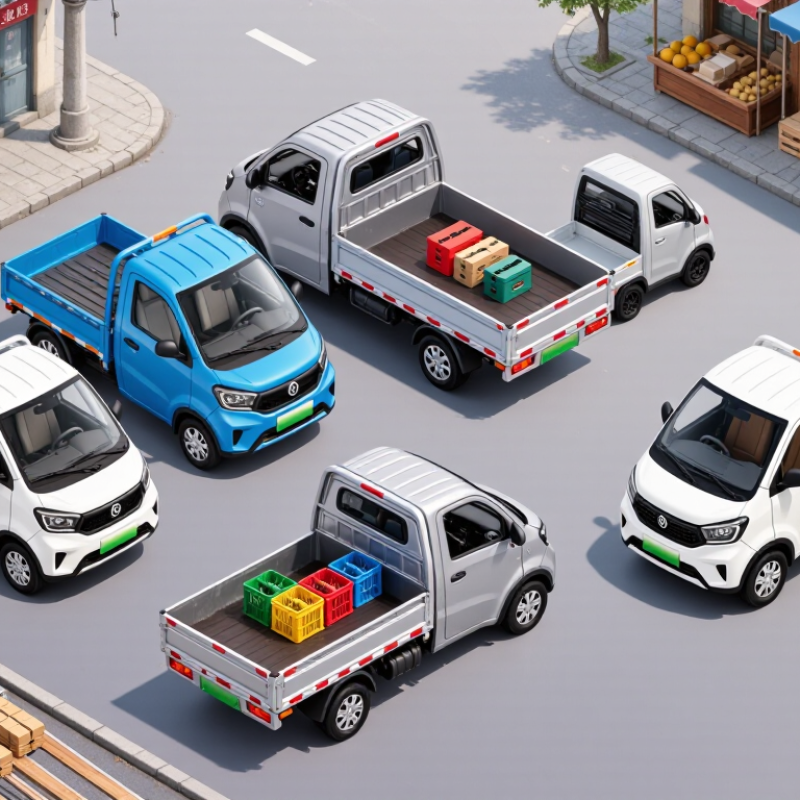
Define China’s Electric Mini-Truck Class by MIIT Vehicle Type and Weight
In China, “electric mini-truck” is often a market description, not a precise MIIT vehicle class. The useful starting point is the vehicle’s approved type and specifications in MIIT’s published product records. Look for its vehicle category, dimensions, gross vehicle mass, curb mass, and rated payload. Check the paperwork.
A common technical reference is the N1 goods-vehicle category, with a maximum mass of up to 3.5 tonnes. That threshold does not mean every vehicle advertised as a mini-truck is automatically N1. Nor does “mini” tell you how much cargo it can safely carry. Compare the approved rated payload with the vehicle’s curb mass and gross mass; these figures answer different questions. A compact cab and short cargo bed can look nimble, yet leave little room for bulky loads.
For a fair comparison, match vehicles with the same approved category and similar payload, then check bed dimensions and battery specifications. Those details matter on a narrow delivery lane or at a loading dock. Marketing labels can be inconsistent, and I would not rely on one alone. Verify the exact model designation against the MIIT record before treating two trucks as direct alternatives.
What Are the Best Electric Mini Trucks in China?
Define China’s Electric Mini-Truck Class by MIIT Vehicle Type and Weight
“Mini truck” is a market description, not a separate official weight class. Under the N-category vehicle classification framework, N1 vehicles have a maximum gross vehicle mass of 3.5 tonnes; N2 vehicles are over 3.5 tonnes and up to 12 tonnes. The chart shows gross vehicle mass, not payload. Check each vehicle’s MIIT-approved type and registration documents to confirm its category.
Measure Market Scale: CAAM Reported 449,000 NEV Commercial-Vehicle Sales in 2023
What Are the Best Electric Mini Trucks in China?
CAAM reported 449,000 sales of new-energy commercial vehicles in China in 2023. That figure signals growing market scale, but it covers multiple vehicle types—not mini trucks alone. It should not be treated as a mini-truck sales count. The China Association of Automobile Manufacturers’ annual industry data offers a useful market-level benchmark, not a model-by-model comparison.
For buyers, the best electric mini truck depends on its daily job. A delivery vehicle making short urban trips may benefit from a compact turning radius and reliable depot charging. A truck carrying heavier loads needs careful checks on rated payload and real-world range. Published range figures can be optimistic; frequent stops, air conditioning, and cold mornings may reduce usable distance. The CAAM total cannot tell us which vehicle performs best on a particular route. That distinction matters.
Tips: Map a typical workday before comparing specifications. Record the loaded distance, stop count, and charging window. Then ask for operating data under similar conditions. Small details matter.
Industry totals are impressive, but they do not settle the buying decision. A little skepticism helps.
What Are the Best Electric Mini Trucks in China? — Measuring Market Scale
| Indicator | 2023 figure | Scope and interpretation |
| New-energy commercial-vehicle sales | 449,000 vehicles | China-wide total across commercial-vehicle categories; it is not a mini-truck-only count. |
| Total commercial-vehicle sales | 4.031 million vehicles | Provides the broader market context for the commercial-vehicle segment. |
| NEV share of commercial-vehicle sales | About 11.1% | Calculated as 449,000 divided by 4.031 million; rounded to one decimal place. |
| Mini-truck-specific sales in this headline statistic | Not separately specified | The reported total covers multiple commercial-vehicle types, so it cannot by itself rank electric mini trucks or identify a best model. |
Source: China Association of Automobile Manufacturers (CAAM), 2023 industry sales figures. The NEV commercial-vehicle total is a market-scale indicator, not a mini-truck-only sales figure.
Compare Leading Models Using MIIT-Rated Range, Payload, and Battery Capacity
Choosing the best electric mini truck in China starts with three figures: MIIT-rated range, rated payload, and battery capacity. Check the exact variant, not just the model name, because cab layout, tires, and battery options can change the figures. Numbers need context.
MIIT-rated range offers a consistent comparison, but it is not a promise of daily distance. Frequent stops, a heavy load, cold weather, and use of heating can reduce practical range. For a delivery route with repeated short trips, compare the listed range with your actual kilometers and leave a sensible reserve. A spreadsheet can still mislead.
Payload matters just as much. A truck carrying stacked produce or tool cases may reach its limit sooner than its compact body suggests. Compare each model’s rated payload with the weight of cargo, occupants, and any fitted equipment. Battery capacity helps explain the trade-off: a larger pack may support more range, but can add cost and weight. Confirm whether published capacity is gross or usable, and verify figures against the MIIT entry for that vehicle version. I would double-check this detail; it is easy to overlook.
Assess Charging Access: China Had 2.73 Million Public Charging Piles in 2023
China had 2.73 million public charging piles in 2023. For electric mini-truck buyers, that figure suggests public charging is widely established, but a national total cannot show what is available near a particular market, workshop, or delivery route. A truck making short urban trips may return to its depot each evening, making a reliable overnight charger more useful than a fast-charging site across town. Check local maps around parking spots and regular stops. Look closely at connector compatibility, charging power, and whether the truck can fit comfortably in the charging bay.
Numbers need context. A listed charger may be occupied, unavailable, or awkward to reach with a loaded vehicle. When comparing mini trucks, consider how quickly each can charge and whether its range suits your actual route, not just a brochure estimate. If possible, ask a local operator about peak-time queues and test the route with a realistic load. The 2023 figure is a useful baseline, not a promise of convenient access today. Small details matter: a cable that barely reaches can turn a quick stop into a delay.
Match Truck Capabilities to Payload, Route Length, and Urban Delivery Needs
Choosing an electric mini truck starts with the cargo, not the advertised range. Estimate the heaviest routine load, then include the driver, tools, and any fitted cargo body. A refrigerated box, for example, adds weight before a single crate is loaded. Check the rated payload after configuration, not just the bare chassis figure. Leave some headroom. Constantly operating at the limit can affect handling, tire wear, and energy use. A neat spreadsheet can still mislead; weigh a typical loaded vehicle if the numbers seem unclear.
Route length should include the return trip, traffic diversions, and time spent idling or making deliveries. Frequent stops and cold weather can reduce practical range, so avoid planning around a best-case test figure. For a short, predictable neighborhood route, a smaller battery may suit the job and leave more payload capacity. Longer shifts need a realistic charging plan and a reserve for unexpected delays. That matters. In narrow streets, compare vehicle width, turning radius, mirror clearance, and loading height. A low step and easy-to-open side access can save effort at each stop. Test the truck on a representative route, with a realistic load; one trial may not reveal every seasonal or scheduling problem.