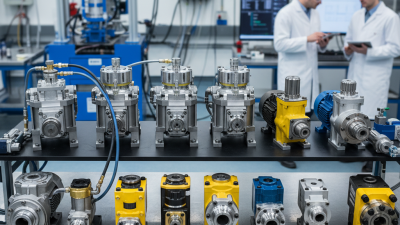

Choosing among the 10 Best Hydraulic Pump Repair Services Worldwide requires more than comparing prices or advertised turnaround times. A dependable provider must understand pressure loss, contamination, cavitation, seal failure, and incorrect assembly. Real expertise appears in the workshop. Look for clean repair areas, calibrated test benches, documented inspections, and technicians who can explain each failure clearly.
Dr. John Watton, a respected fluid-power author and engineer, states, “A repair is only successful when performance is verified under real operating conditions.” This principle guides our evaluation. The companies discussed here are considered through practical criteria, including OEM training, diagnostic experience, parts availability, warranty support, and international service capability. Some providers excel with axial-piston pumps. Others perform better with vane or gear units. The difference matters.
A quiet pump can still be inefficient.
This overview also recognizes an uncomfortable reality: no repair service is perfect for every machine, region, or budget. A factory-authorized center may offer stronger documentation, while an independent specialist may provide faster communication and more flexible solutions. Neither option should be accepted blindly. Before choosing hydraulic pump repair, ask how the unit will be tested, which components will be replaced, and whether the final report includes measured flow, pressure, temperature, and leakage. Those details can reveal more than polished marketing language.
Hydraulic pump repair services support factories, farms, ports, mines, and construction sites worldwide. Common services include fault diagnosis, seal replacement, bearing renewal, shaft repair, and complete pump overhauls. Technicians inspect pressure loss, unusual noise, fluid contamination, and temperature changes before opening the unit. Small leaks matter. They often reveal deeper wear.
Specialists handle gear, vane, and axial-piston pumps with different testing methods. On-site repair reduces transport delays when heavy equipment stops working. Workshop repair allows cleaner assembly, precision measurement, and controlled pressure testing. Many providers also offer component remanufacturing, emergency support, maintenance contracts, and failure analysis. Their global role depends on reliable logistics, trained personnel, calibrated tools, and clear technical reports. Regional operating conditions matter too. Dust, humidity, salt air, and poor fluid maintenance can change repair decisions.
Experienced technicians compare measured results with manufacturer tolerances and site requirements. They should record replaced parts, test pressures, leakage rates, and recommended service intervals. Independent inspection can strengthen trust, especially for critical machinery. No repair process is flawless. A rushed seal replacement may pass today and fail next month. I have found that careful cleaning often prevents repeat damage, although teams sometimes underestimate it. Reliable services explain risks honestly, preserve usable components, and advise when replacement is safer than repair. Clear communication helps global customers make practical decisions across different languages, climates, and operating conditions.
When comparing international hydraulic pump repair specialists, inspect evidence, not polished websites. The U.S. Department of Energy’s Operations & Maintenance Best Practices Guide reports that predictive maintenance can reduce maintenance costs by 25–30% and downtime by 35–45%. These figures are not guaranteed, but they show why diagnosis matters.
Ask whether technicians record pressure, flow, temperature, leakage, and vibration before disassembly. A serious workshop should provide calibration records, test-bench results, and clear photographs of damaged components. ISO 4406 cleanliness codes can help verify contamination control during assembly. Check technician training, quality procedures, and traceable replacement parts. Experience matters most when a pump fails intermittently.
Response time also needs measurement. Request typical inspection hours, repair lead times, export packaging standards, and warranty terms. The DOE guide suggests predictive programs can deliver an eight-to-twelve-fold return on investment, yet poor data can distort that result. A low quote may hide repeated failures or weak testing. I would ask for anonymized case histories, not promises. No scorecard is perfect. Currency, language, shipping rules, and local service coverage can change the real cost. A useful evaluator records every answer, then compares specialists against the same technical checklist.
A coastal European workshop specializes in axial-piston pumps used in shipyard cranes. Technicians record case-drain flow, shaft wear, and pressure stability before recommending repairs. A North American provider handles mobile excavator pumps and offers teardown photographs with every inspection report. Its test bench checks performance under changing loads, not only at factory pressure.
A Southeast Asian center focuses on agricultural machinery. It cleans contaminated components in controlled rooms and replaces seals according to measured wear. The process is practical. Traceability matters.
A Middle Eastern service provider repairs pumps exposed to high heat and abrasive dust. Its technicians inspect filtration systems, alignment, and oil temperature history. An Australian workshop supports mining equipment, using hardness testing for damaged rotating groups.
A Central European specialist rebuilds compact industrial pumps and documents torque settings during assembly. A South American provider serves forestry fleets, where rapid parts sourcing can reduce equipment downtime.
An East Asian workshop combines ultrasonic cleaning with digital flow testing. A South Asian provider concentrates on older hydraulic systems and carefully matches replacement parts with original dimensions. An African regional center offers field inspections before transporting heavy pumps to its laboratory.
These ten profiles show different strengths, but none should be judged by turnaround time alone. A clean repair can still fail when contamination returns. That weakness deserves honest discussion.
Good providers explain limits, preserve test records, and invite questions about warranty conditions.
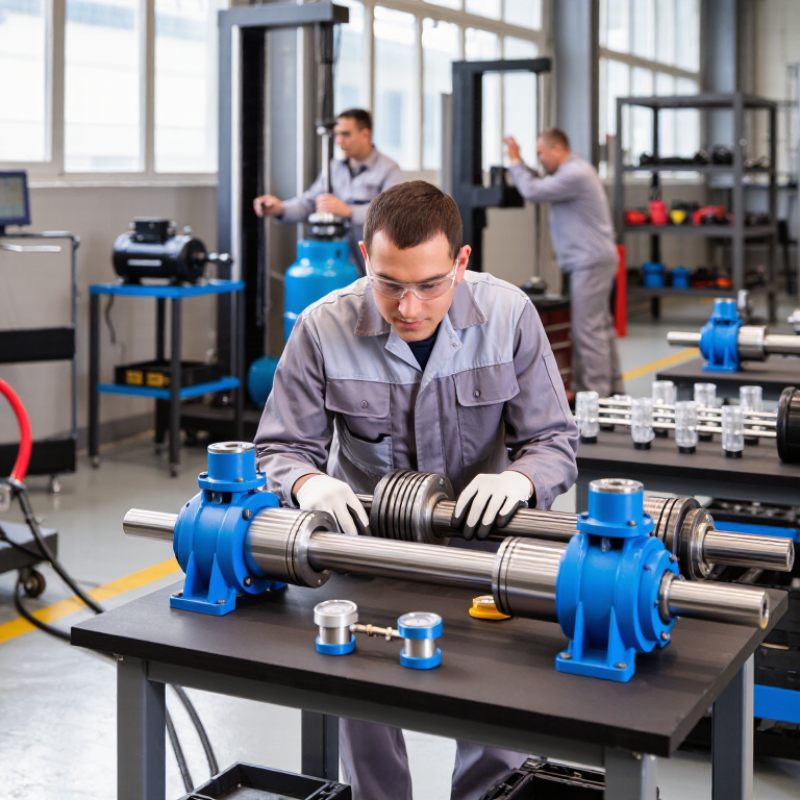
Reliable hydraulic pump repair begins with controlled disassembly, not guesswork. Technicians photograph port positions and mark rotating components before cleaning. This prevents assembly errors later. Parts are washed in filtered solvent, then inspected under bright light. Micrometers, bore gauges, and surface plates reveal wear that sight alone can miss.
Common repairs include replacing seals, bearings, bushings, valve plates, and damaged shafts. Light scoring may require polishing, lapping, or precision honing. Severe damage can demand shaft machining or component replacement. A calibrated test bench then checks pressure, flow, leakage, noise, and temperature. Particle counters and flushing rigs help remove contamination from repaired systems. Small debris can ruin a carefully rebuilt pump.
Quality depends on more than skilled hands. A dependable service records measurements, part traceability, torque values, and test results. Clean assembly areas should control dust and moisture. Calibration certificates should cover gauges and sensors.
Procedures can align with ISO 9001 principles and hydraulic safety practices such as ISO 4413. These references support consistency, but they do not replace judgment. No workshop diagnoses every failure perfectly. Sometimes the first assumption is wrong.
Reviewing oil samples, operating history, and maintenance records can expose the real cause. A repaired pump should leave with clear limits, warranty conditions, and practical installation instructions.
10 Best Hydraulic Pump Repair Services Worldwide?
Selecting a hydraulic pump repair service requires evidence, not polished promises. Ask whether technicians have documented experience with your pump type, operating pressure, and fluid conditions. A reliable provider should inspect the pump, measure wear, and explain the failure clearly. Photographs, test results, and a written repair scope show professional discipline.
Check the workshop’s testing equipment. A repaired pump should undergo pressure, flow, leakage, and temperature checks before returning to service. Ask about replacement parts, calibration records, warranty terms, and emergency response times. For international support, confirm shipping procedures, language coverage, time-zone availability, and local technical assistance. A distant workshop may offer excellent skills but create costly delays.
References matter, but they are not enough. Speak with customers who operate similar machinery in dusty, wet, or high-cycle environments. I have learned that low quotes often hide limited testing or reused components. Even experienced technicians can misdiagnose contamination when the reservoir is not sampled. Request a root-cause report, not only a repaired pump. The best service also examines filters, hoses, valves, alignment, and fluid cleanliness. That broader inspection can prevent another failure, although it may increase the initial invoice. A clear provider explains that trade-off before work begins.
| Rank | Service Coverage Profile | Primary Pump Types | Typical Repair Scope | Diagnostic & Testing Capability | Typical Turnaround | Emergency / Field Support | Typical Warranty Range | Best Suited For |
|---|---|---|---|---|---|---|---|---|
| 1 | North America — Full-Service Remanufacturing Workshop | Gear, vane, axial-piston, and radial-piston pumps | Complete disassembly, cleaning, dimensional inspection, replacement of wear parts, assembly, and calibrated performance testing | Pressure, flow, speed, temperature, leakage, and efficiency testing on a hydraulic test bench | 5–15 business days for standard repairs | Available through selected service networks | 6–24 months, depending on scope and operating conditions | Mobile equipment, manufacturing plants, construction fleets, and industrial systems |
| 2 | Western Europe — Precision Industrial Repair Center | Variable-displacement piston, vane, and gear pumps | Precision machining, shaft and housing inspection, control-compensator service, seal replacement, and full reconditioning | Documented test results with flow-versus-pressure verification and contamination-control procedures | 7–20 business days | Planned on-site troubleshooting commonly available | 12–24 months for qualifying repairs | High-duty industrial machinery requiring repeatable performance |
| 3 | East Asia — High-Volume Hydraulic Service Facility | Gear, vane, piston, and compact mobile-equipment pumps | Rapid inspection, seal and bearing replacement, rotating-group service, and replacement of damaged internal components | Bench testing for pressure, flow, noise, vibration, and external leakage | 3–10 business days for common pump configurations | Fast-response support in major industrial areas | 6–12 months in typical service agreements | Fleet operators and facilities with high repair volumes |
| 4 | Middle East — Heavy-Duty Mobile Equipment Specialist | Axial-piston, bent-axis, gear, and vane pumps | Failure analysis, contamination assessment, replacement of worn rotating groups, pressure-control inspection, and commissioning support | Load simulation, hot-oil testing, pressure-compensator checks, and post-installation verification | 7–18 business days, subject to parts availability | 24-hour response may be available for contract customers | 6–18 months | Mining, oilfield support, ports, cranes, and construction equipment |
| 5 | South Asia — Cost-Effective Reconditioning Service | Gear, vane, and common axial-piston pumps | Cleaning, seal-kit replacement, bearing renewal, shaft repair, cylinder-block inspection, and basic reconditioning | Pressure and flow testing with before-and-after performance records | 5–14 business days for standard units | Local field service commonly available | 3–12 months, depending on replacement parts used | Price-sensitive repairs, agricultural equipment, and general industrial applications |
| 6 | Australia and New Zealand — Remote-Site Support Provider | Mining, agricultural, mobile, and industrial piston pumps | Workshop repair, planned component replacement, oil-contamination diagnosis, installation assistance, and commissioning | Performance testing under simulated operating loads and hydraulic-oil cleanliness checks | 10–25 business days, depending on location and freight | Strong remote-site and scheduled maintenance support | 12–24 months for documented remanufacturing work | Remote mines, farms, infrastructure projects, and large mobile fleets |
| 7 | Latin America — Industrial and Agricultural Pump Workshop | Gear, vane, axial-piston, and low-to-medium displacement pumps | Component inspection, seal replacement, shaft and bearing service, housing evaluation, and functional testing | Pressure, flow, leakage, and rotational-direction checks | 7–21 business days | Regional field support generally available | 6–12 months | Agriculture, food processing, general manufacturing, and municipal equipment |
| 8 | Central and Eastern Europe — Component-Level Repair Specialist | Vane, gear, piston, and servo-controlled pumps | Detailed failure analysis, servo and control-valve service, precision measurement, grinding, and component replacement | Calibrated test benches with pressure, flow, displacement, and control-response measurements | 10–20 business days | Technical support often provided remotely and on site | 12–18 months | Machine tools, plastics equipment, steel processing, and automated production lines |
| 9 | Africa — Fleet Maintenance and Hydraulic Repair Service | Gear, vane, piston, and pump-motor assemblies | On-site diagnosis, workshop reconditioning, seal and bearing replacement, hose-system inspection, and installation support | Portable diagnostic equipment plus workshop pressure and flow testing | 7–21 business days, depending on parts logistics | Mobile service is particularly valuable for remote fleets | 3–12 months | Construction, quarrying, agriculture, transport, and utility fleets |
| 10 | Global Multi-Region — Independent Hydraulic Testing and Repair Network | Broad coverage of gear, vane, piston, and specialty pumps | Inspection, failure reporting, repair or replacement recommendations, remanufacturing, installation, and preventive-maintenance planning | Standardized test reports, contamination analysis, pressure-flow curves, and efficiency verification | 5–20 business days, depending on pump complexity | Best suited to multinational maintenance programs | 6–24 months, subject to written service terms | Companies seeking consistent repair procedures across multiple countries |
How can we help you?
Call to 0034 943884600 Contact usWe use cookies to ensure that we give you the best experience on our website. If you continue without changing your settings, we'll assume that you agree to receive cookies on the HINE website. For more information read our cookie policy page, click the link for more information.plugin cookies
ACEPTAR