

Choosing the China Best Heat Sealing Cover Tape Supplier requires more than comparing prices or browsing polished websites. The right supplier must understand sealing temperature, adhesive behavior, carrier film strength, and the demands of automated packaging lines. A reliable manufacturer should explain these factors clearly, not hide behind vague claims.
Heat Sealing Cover Tape protects sensitive electronic components inside carrier tapes. During production, it must seal firmly, peel smoothly, and avoid leaving adhesive residue. A small mismatch can cause lifted covers, damaged components, or feeding errors. These problems often appear beside the machine, not in a product brochure.
Packaging engineer and author Walter Soroka famously said, “Packaging is the silent salesman.” His point remains useful here. A cover tape silently protects product quality, supports efficient handling, and influences customer confidence. The tape may look simple. It is not.
Experienced buyers should examine material certificates, sealing-window data, peel-force consistency, sample performance, and production traceability. They should also ask how the supplier controls coating thickness and roll tension. Factory visits can reveal details that samples cannot. Watch the winding process. Inspect the edges.
No supplier is perfect. Even strong manufacturers may have inconsistent communication or limited customization. That deserves honest attention. The best partner is not merely the cheapest exporter. It is the supplier that tests carefully, documents results, responds quickly, and improves when a problem appears.
This guide explores how to evaluate Chinese Heat Sealing Cover Tape manufacturers. It focuses on practical evidence, technical capability, quality control, and long-term supply reliability. The goal is simple: choose with confidence, but keep questioning.
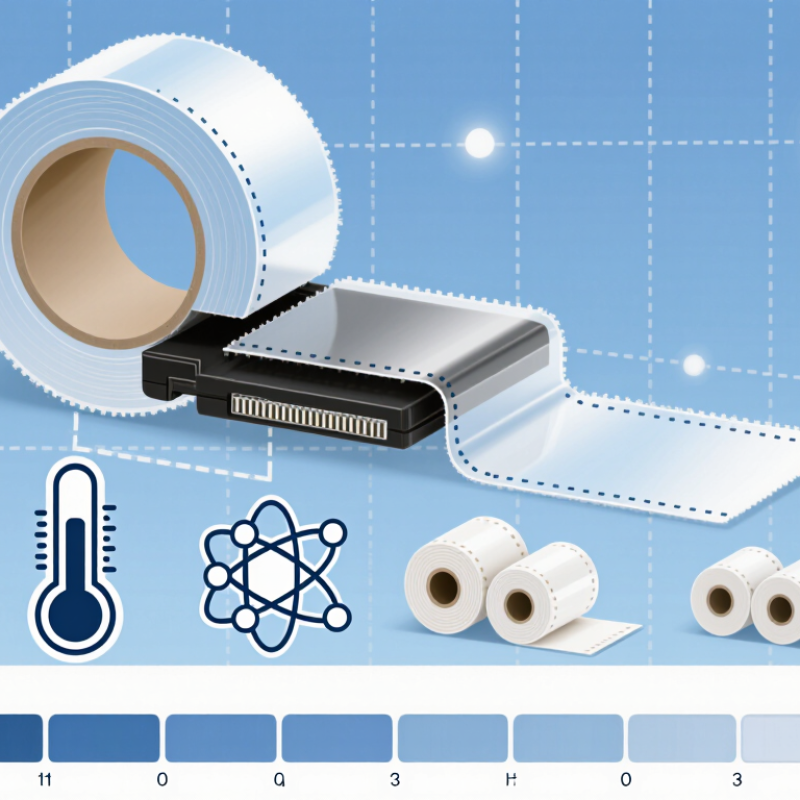
A heat sealing cover tape supplier provides the sealing layer used on carrier tapes for electronic components. It protects parts from dust, moisture, and movement during transport. The supplier should understand sealing temperature, peel force, antistatic control, and storage conditions. This is more than selling adhesive film.
Grand View Research estimated the global semiconductor packaging market at about US$38 billion in 2023. Continued capacity growth increases the need for stable component packaging. The EIA-481 standard also guides carrier tape and cover tape performance. It commonly specifies peel-force control, often around 0.1 to 1.3 N, depending on the application.
A reliable supplier should provide test data, lot traceability, and technical support. In production, uneven peeling can leave adhesive residue or eject small components. That problem is easy to underestimate. I would request samples from several production lots, not just one attractive sample.
Tips: Confirm sealing temperature with your actual carrier tape. Check peel force at the stated test speed and angle. Ask for humidity and aging results. Also inspect tape width, static performance, and release stability. A low price can look attractive, but inconsistent sealing may create higher line losses. Some specifications still need customer-side validation. No supplier can replace real machine testing.
China Best Heat Sealing Cover Tape Supplier? Which Materials and Specifications Matter Most?
Selecting a heat sealing cover tape starts with the component, not the supplier’s price. Polyolefin-based tapes suit many standard electronic parts and offer balanced sealing performance. Polyester-based films provide stronger dimensional stability and better resistance to heat. Antistatic or dissipative layers are essential when static-sensitive components are handled. The wrong surface can trap dust, scratch parts, or increase peeling force.
EIA-481-D guidance commonly evaluates peel strength around 0.1–1.3 N, measured at controlled speed and temperature. That range is useful, but it is not universal. Small chips, connectors, and moisture-sensitive packages may need different settings. A 2024 electronics packaging market assessment projected roughly 6% annual growth through 2030, increasing pressure for stable automated packaging. Width, thickness, seal temperature, peel angle, and release coating deserve equal attention. Ask for batch data.
In practical trials, inspect the tape after sealing at the actual line speed. Check whether the edge lifts after storage. A clear film may improve visibility, while an opaque film can protect light-sensitive components. Recyclability claims also require verification; a multilayer construction may complicate recycling. I have seen tapes pass laboratory tests but fail after humidity exposure. That is why supplier qualification should include peel testing, aging tests, and real carrier-tape compatibility. Suppliers should provide certificates, test methods, and traceable lot records. Datasheets alone are insufficient.
Evaluating a China-based heat sealing cover tape manufacturer requires more than comparing prices. Start with process evidence. Ask for coating-weight records, peel-strength results, sealing-window tests, and lot traceability. A reliable supplier should explain how temperature, pressure, and dwell time affect sealing performance. This is practical experience, not brochure language.
Check the manufacturer’s quality system and testing equipment. Their laboratory should measure peel force, seal integrity, dimensional tolerance, and antistatic performance. Request recent test samples from different production lots. One perfect roll proves very little. SEMI reported that global semiconductor materials sales reached about 67.1 billion dollars in 2023, despite an annual decline. This volatility makes stable material control especially important (SEMI, Semiconductor Materials Market Data, 2024). The supplier should also understand moisture-sensitive device handling under IPC/JEDEC J-STD-033.
Review capacity with caution. A factory may claim high monthly output, yet outsource coating or slitting. Ask who performs each step, how rejected rolls are controlled, and whether production records can be audited. Verify export experience, packaging protection, and response time for technical complaints. Independent inspection can confirm roll length, splice frequency, adhesion, and carton conditions before shipment.
Cost still matters, but the cheapest tape can create feeder jams, residue, or component loss. Smithers’ global packaging research continues to identify performance consistency as a major purchasing factor in technical packaging. The report is broader than cover tape, so its findings need careful interpretation. That limitation matters. A thoughtful supplier should welcome small trial orders, clear acceptance criteria, and honest discussion of failure risks.
China Best Heat Sealing Cover Tape Supplier? What Quality Standards and Testing Should Be Expected?
A reliable heat sealing cover tape supplier should provide measurable quality data, not only attractive samples. Check tape width, thickness, adhesive coating, and winding consistency across several production rolls. Each batch should include a certificate of analysis and traceable lot information. Small variations can affect component protection and automatic feeding.
Testing should reflect real packaging conditions. Measure peel strength at the stated sealing temperature, pressure, and dwell time. Test release force after sealing, because excessive force may disturb small components. Inspect the seal under magnification for adhesive transfer, wrinkles, gaps, or edge lifting. Run aging tests under heat and humidity. Antistatic performance should also be verified when electronic components require controlled surface resistance.
Ask for documented test methods and calibrated equipment. Standards may include resistance testing, dimensional inspection, and material compliance records. However, a single laboratory result is not enough. Production trials should use the customer’s sealing machine, carrier material, and operating speed. A perfect first test can mislead. I have seen tapes pass bench testing but fail during fast, continuous feeding. Storage conditions matter too: sealed packaging, moderate temperature, and controlled humidity help preserve performance. Some suppliers overlook this detail. That deserves careful review.
| Quality Dimension | What Should Be Checked | Typical Acceptance Expectation | Recommended Method or Reference | Supplier Evidence to Request |
|---|---|---|---|---|
| Material Construction | Base film, heat-seal coating, adhesive system, release layer, and compatibility with the carrier tape pocket material. | Uniform multilayer construction without delamination, coating voids, visible particles, wrinkles, or blocking. | Material specification, cross-section review, microscopy, and incoming visual inspection. | Technical data sheet, material declaration, and approved sample roll. |
| Tape Width and Thickness | Width, thickness, tolerance, edge condition, and roll length. | Dimensions must match the approved drawing and packaging-machine requirements; practical tolerances are often agreed in the purchase specification rather than assumed from a general standard. | Calibrated digital micrometer, optical width measurement, and roll-length verification. | Dimensional inspection report and calibration records. |
| Heat-Sealing Temperature Window | Minimum and maximum sealing temperature, dwell time, pressure, and sealing-jaw compatibility. | A clearly defined process window that produces a continuous seal without melting, shrinkage, residue, pocket deformation, or excessive opening force. The exact window is product-specific. | Design-of-experiments sealing trials using the intended carrier tape and equipment. | Recommended temperature, dwell time, pressure, and machine-setting guide. |
| Peel Force | Opening force, peel consistency, peel angle, peel speed, and seal-width influence. | Stable peel force within the buyer-defined range, with smooth opening and no sudden tearing, stringing, adhesive transfer, or component ejection. Many electronic-packaging specifications use approximately 0.1–1.3 N as a reference range, subject to package size and construction. | EIA-481-series packaging practice or an agreed internal method; report peel angle and speed. | Peel-force curves, test conditions, average, minimum, maximum, and variation data. |
| Seal Integrity and Leak Resistance | Continuous sealing, channel leaks, pinholes, edge lifting, and seal failure after handling. | No visible open channels or leakage under the agreed inspection and handling conditions; the seal should remain intact during transport and feeder operation. | Visual inspection, dye penetration where suitable, burst or pressure testing, and seal-strength testing adapted from ASTM F88/F88M when applicable. | Seal-integrity report with sample size, failure classification, and photographs. |
| Mechanical Strength | Tensile strength, elongation, tear resistance, and resistance to web breakage during high-speed feeding. | No web breaks, edge splitting, or excessive elongation during application, winding, storage, or automated peeling. | ASTM D882 or ISO 527 for tensile properties, with machine-direction and cross-direction results where relevant. | Raw test data, specimen direction, conditioning environment, and equipment calibration status. |
| Optical Cleanliness and Appearance | Haze, transparency, coating streaks, gels, black specks, scratches, wrinkles, and splice quality. | Clear and uniform appearance suitable for visual inspection of components; no contamination that could obscure component position or affect sealing. | Controlled visual inspection, transmitted-light inspection, and haze measurement when transparency is critical. | Defect catalog, inspection standard, allowable defect limits, and roll-inspection records. |
| Electrostatic Properties | Surface resistance, charge generation, charge decay, and interaction with ESD-protected packaging areas. | Electrical behavior must match the ESD-control plan. For dissipative materials, buyers commonly specify a controlled surface-resistance range such as 106 to below 1011 ohms, but the required limit must be agreed for the application. | ANSI/ESD STM11.11, IEC 61340-5-1, and the purchaser’s ESD packaging specification. | Surface-resistance results, humidity conditions, measurement voltage, and ESD compliance statement. |
| Storage and Aging Stability | Shelf life, blocking, coating migration, peel-force drift, seal-strength drift, and performance after temperature or humidity exposure. | No unacceptable blocking, brittleness, curling, coating transfer, or significant change in sealing and peeling performance during the declared shelf life. | Accelerated aging and environmental conditioning based on the intended storage profile; compare before-and-after peel and seal data. | Shelf-life statement, recommended storage conditions, FIFO guidance, and aging-test report. |
| Chemical and Regulatory Compliance | Restricted substances, heavy metals, halogens where required, SVHC content, and material traceability. | Conformance with the destination market and the purchaser’s restricted-substance list; declarations should cover every layer, ink, adhesive, and core material. | RoHS Directive 2011/65/EU and amendments, IEC 63000 technical documentation, and REACH Regulation requirements where applicable. | RoHS and REACH declarations, third-party screening reports, SDS where applicable, and full material composition statement. |
| Packaging and Traceability | Roll identification, lot number, production date, length, winding direction, splice marking, and protection from dust and moisture. | Every roll should be traceable to raw materials, production conditions, inspection results, and shipment records. | Lot-traceability audit and packaging inspection against the approved purchase specification. | Certificate of analysis, lot code explanation, inspection record, and nonconformance procedure. |
| Quality Management System | Document control, corrective action, calibration, process control, incoming inspection, and final-release procedures. | A documented, auditable system with controlled specifications and consistent batch-to-batch performance; ISO 9001 certification is a useful indicator but does not replace product testing. | ISO 9001-based quality-system audit and customer-specific process audit. | Valid certificate, recent audit summary, control plan, calibration list, and corrective-action examples. |
Note: Acceptance limits for heat-sealing cover tape depend on tape construction, carrier-tape material, component size, sealing equipment, and application speed. Final limits should be confirmed through a documented sample-approval and process-validation program.
Choosing a supplier starts with your packaging process, not a price list. Cover tape must match the carrier, sealing temperature, peel force, and storage conditions. In production, a small mismatch can cause lifted seals, component loss, or feeder jams. Ask for technical data, batch records, and samples from regular production.
The Smithers report, The Future of Global Packaging to 2028, values the worldwide packaging market at over 1 trillion US dollars, showing the scale of quality expectations. For electronic packaging, supplier evaluation should include peel-strength testing under ASTM D3330 or an agreed internal method. Request results at different temperatures and dwell times. One number is not enough. Check ESD performance, cleanroom controls, roll dimensions, and adhesive residue. I would also verify whether the supplier can provide certificates of analysis for every lot. That detail is often overlooked.
A reliable factory should explain its seal window clearly. It should support trial runs using your actual carrier tape and equipment. ISO 9001 certification helps, but it does not replace process evidence. Review complaint handling, corrective-action records, and delivery consistency. The Global Semiconductor Alliance reported continued growth in advanced electronics demand, increasing pressure on packaging reliability. Still, the cheapest supplier may appear attractive during sampling. My own assessment would remain cautious. A perfect sample cannot prove stable mass production.
How can we help you?
Call to 0034 943884600 Contact usWe use cookies to ensure that we give you the best experience on our website. If you continue without changing your settings, we'll assume that you agree to receive cookies on the HINE website. For more information read our cookie policy page, click the link for more information.plugin cookies
ACEPTAR