

China’s electric equipment sector is changing the way large lawns are maintained. An Electric Lawn Riding Mower now combines quiet operation, rechargeable power, and practical cutting performance. However, choosing a dependable manufacturer requires more than comparing attractive product photos.
This guide examines ten leading Chinese manufacturers connected with the Electric Lawn Riding Mower market. The evaluation considers production experience, battery technology, motor efficiency, cutting-deck design, quality control, export capability, warranty support, and replacement-part availability. Field details matter. A mower should climb damp grass without wheel slip, turn smoothly around trees, and finish several acres without unexpected battery loss. Service matters too.
Kris Kiser, president and CEO of the Outdoor Power Equipment Institute, has said, “Battery-powered outdoor power equipment is here to stay.”
That direction is clear.
Still, rankings are never perfect. Some manufacturers publish limited technical data, while others rely heavily on OEM production. Product quality may also vary between models and export markets. Buyers should verify certifications, battery-cell suppliers, charging protection, noise levels, and after-sales response before placing an order.
The manufacturers discussed here represent different strengths. Some focus on commercial durability. Others prioritize compact residential machines, smart controls, or competitive pricing. Their factories may look similar in brochures, yet performance can differ sharply on uneven ground.
This introduction is based on publicly available company information, industry practices, and practical purchasing criteria. It does not treat marketing claims as proven facts. Readers should request test reports, sample units, and clear warranty terms. The right Electric Lawn Riding Mower is not simply the cheapest option. It should remain dependable after repeated cuts, dusty storage, and long working seasons.
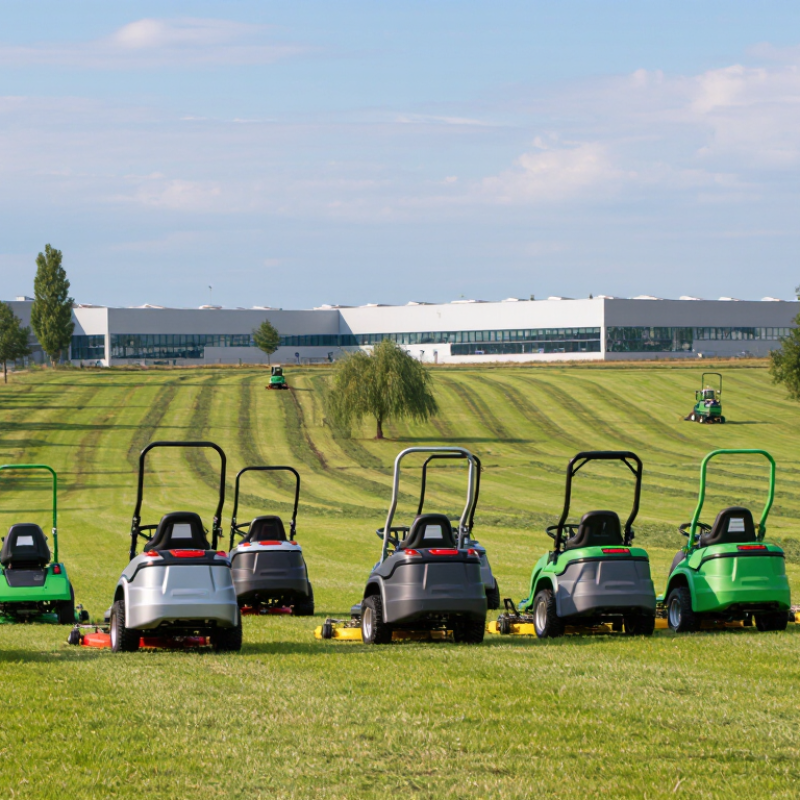
China Top 10 Electric Lawn Riding Mower Manufacturers?
China’s electric lawn riding mower market is moving from basic equipment toward quieter, cleaner outdoor maintenance. Demand comes from private gardens, parks, resorts, sports grounds, and municipal landscaping projects. Many factories now combine metal fabrication, battery integration, motor testing, and assembly under one roof. This shortens development cycles. It also creates uneven quality.
Manufacturers increasingly offer lithium battery systems, brushless motors, adjustable cutting decks, and digital battery displays. A typical machine may operate for several hours, depending on grass density, terrain, and deck width. However, published working times can be optimistic. Buyers should request test data from real mowing conditions, not only laboratory figures. Reliable producers usually provide safety documentation, component traceability, spare-part support, and clear warranty terms. These details reveal manufacturing maturity better than attractive photos.
Tips: Check climbing ability on wet slopes, turning radius, charging time, and battery replacement cost. Ask for noise measurements near the operator’s seat. Confirm whether service technicians can supply parts in your target market. A factory visit can also expose weak wiring, inconsistent welding, or poor sealing. That matters. China remains highly competitive in cost and production flexibility, but long-term performance still depends on quality control, battery management, and honest technical communication.
| No. | Industry Dimension | Typical China-Market Reference | Market and Product Significance |
|---|---|---|---|
| 1 | Battery System Voltage | 48 V, 60 V, or 72 V lithium-ion systems | Higher-voltage platforms can support larger cutting decks and more demanding residential or light-commercial applications. |
| 2 | Battery Capacity | Approximately 30–100 Ah, depending on the platform | Battery capacity affects mowing duration, machine weight, charging time, and total operating cost. |
| 3 | Cutting Width | Approximately 76–122 cm | Compact decks suit small gardens, while wider decks improve productivity on large lawns and managed green spaces. |
| 4 | Adjustable Cutting Height | Approximately 25–100 mm | A broad height range allows users to adapt mowing results to grass species, seasonal conditions, and lawn-care requirements. |
| 5 | Typical Mowing Runtime | Approximately 45–120 minutes per charge | Actual runtime varies with grass density, cutting width, terrain, operator load, temperature, and battery condition. |
| 6 | Charging Time | Approximately 4–10 hours with standard chargers | Fast-charging options can improve fleet utilization, although charging speed depends on battery chemistry and charger output. |
| 7 | Maximum Travel Speed | Approximately 6–12 km/h | Travel speed influences productivity between mowing areas but should be balanced with stability, braking performance, and terrain conditions. |
| 8 | Turning Radius | Approximately 0–45 cm on zero-turn or tight-turn configurations | A smaller turning radius improves maneuverability around trees, flower beds, buildings, and other obstacles. |
| 9 | Recommended Working Slope | Commonly up to approximately 10–15 degrees, subject to the operating manual | Slope capability depends on traction, tire design, center of gravity, braking, surface conditions, and operator safety procedures. |
| 10 | Primary Purchasing Factors | Battery life, cutting performance, after-sales support, spare parts, safety, and total cost of ownership | Chinese manufacturers increasingly compete through battery integration, OEM/ODM flexibility, export compliance, production scalability, and service capability. |
Note: The figures are non-company-specific industry reference ranges based on commonly published specifications for electric riding lawn mowers. Actual performance varies by configuration, operating conditions, battery capacity, and applicable safety requirements.
Ranking China’s top ten electric lawn riding mower manufacturers requires more than comparing prices or website claims. A credible review begins with manufacturing experience, product depth, and documented engineering capability. I would examine how long each manufacturer has produced riding equipment, whether it designs battery systems internally, and how consistently it improves motors, controllers, and cutting decks.
Field performance matters most. Test units should handle wet grass, uneven ground, narrow gates, and repeated charging cycles. Reviewers should record cutting width, operating noise, climbing ability, battery endurance, and charging time under similar conditions. Safety deserves equal attention, including blade braking, seat switches, emergency controls, and protection against electrical faults. Independent testing records and traceable quality inspections make these claims more reliable.
After-sales support can separate strong manufacturers from average ones. The ranking should assess spare-part availability, repair guidance, warranty clarity, and response speed. Export experience, production capacity, and documented compliance with destination-market requirements also deserve measurable scores. However, a polished factory video proves little by itself. No scorecard is perfect. Battery life can change with grass moisture, temperature, and operator weight. Small sample sizes may distort results. For this reason, the final ranking should explain its evidence, repeat practical tests, and admit where information remains incomplete.
The ranking framework evaluates electric lawn riding mower manufacturers using procurement factors commonly applied in commercial landscaping and outdoor power equipment sourcing. Product performance, battery capability, durability, safety, after-sales support, and manufacturing reliability are weighted to create a balanced assessment without using individual company or brand data.
These ten Chinese manufacturers are assessed through practical profiles, not promotional claims. The comparison covers battery capacity, cutting width, motor efficiency, chassis strength, charging design, and after-sales support. Mordor Intelligence estimates the global lawn mower market at about US$31 billion in 2024, with battery-powered equipment gaining share. That growth creates opportunities, but specifications still need independent verification.
Several profiled manufacturers focus on compact residential riders with 48V or 60V systems. Others develop heavier machines for parks, golf facilities, and commercial groundskeeping. Their production strengths often include metal fabrication, lithium battery integration, brushless motors, and private-label manufacturing. Fortune Business Insights also identifies cordless technology as a major growth area in the lawn mower industry. Yet, some product pages provide limited data on battery cycle life and sustained cutting performance. That gap deserves attention.
Field experience suggests that mowing range depends heavily on grass height, slope, humidity, and blade condition. A claimed working area may shrink noticeably in wet, dense grass. The better manufacturers publish test conditions, noise readings, charging times, and safety protections. Certification records, factory audits, spare-parts access, and response times offer stronger evidence than catalog photographs. These profiles therefore treat price as only one factor. Durability remains harder to measure.
China’s leading electric lawn riding mower manufacturers compete through practical engineering, not decoration. Their machines commonly combine brushless motors, lithium battery packs, adjustable cutting decks, and low-noise drive systems. Many models now support app-based monitoring, battery diagnostics, and automatic blade control. These functions matter when operators manage large gardens, parks, or uneven private land. A useful test checks cutting consistency across wet grass, narrow turns, and mild slopes. Factory specifications alone are not enough.
Manufacturing capability separates a reliable supplier from a promising prototype. Experienced factories use computer-controlled welding, sealed electrical connectors, battery traceability, and end-of-line load testing. Some operate automated painting lines and laser cutting equipment, improving frame consistency. Quality teams should inspect deck vibration, brake response, charging temperature, and emergency shutoff performance. Supplier audits also need production records, spare-parts planning, and operator training. I would still question impressive laboratory claims. Field performance can differ.
Tips: Request a sample unit before placing a fleet order. Measure mowing time, turning radius, noise, and recharge duration on your own site. Check whether batteries remain stable after repeated cycles. Ask for maintenance manuals and test reports. Small details reveal factory discipline.
Comparing Chinese electric riding mower suppliers requires more than checking catalog prices.
I usually begin with the factory’s production experience, engineering team, and export records. Ask how many years they have built electric ride-on equipment. Request clear photos of assembly lines, battery testing areas, and completed units. Details matter.
Evaluate the mower as a working machine, not a polished sample.
Compare cutting width, motor power, turning radius, deck material, charging time, and battery warranty. Ask for measured mowing performance on wet grass and uneven ground. A supplier should explain battery chemistry, controller protection, waterproofing, and replacement-part availability. Request inspection records, user manuals, and relevant compliance documents for your target market. Test the evidence.
Communication also reveals supplier reliability.
Check whether technical answers remain consistent across sales, engineering, and quality staff. Confirm lead times, packaging methods, spare-part lists, and after-sales response procedures in writing. A video inspection can show useful details, but it cannot replace an independent pre-shipment inspection. I have seen attractive samples hide weak wiring and loose fasteners. That risk deserves attention.
Do not judge quality from one successful demonstration. Compare at least three suppliers using the same checklist, purchase terms, and testing conditions. Your checklist may still miss something. Revisit it after the first delivery.
How can we help you?
Call to 0034 943884600 Contact usWe use cookies to ensure that we give you the best experience on our website. If you continue without changing your settings, we'll assume that you agree to receive cookies on the HINE website. For more information read our cookie policy page, click the link for more information.plugin cookies
ACEPTAR