

China Top 10 Laser Spare Parts Suppliers in 2026

Choosing Laser Spare Parts suppliers in China is not only about price. A cutting head may look compatible, yet a slightly different lens diameter or connector can interrupt production. No small detail.

This guide introduces ten suppliers to consider in 2026, covering components such as protective windows, nozzles, ceramic rings, sensors, and laser-source modules. It focuses on practical buying factors: product range, material specifications, model compatibility, customization, documentation, and after-sales support. A clear drawing, part number, or machine model can make a quotation far more useful. Ask about coating details and inspection records, too.

Supplier claims deserve careful checking. Catalogues change, and one company may be strong in optics but limited in electronic components. The list is a starting point, not a universal ranking. Buyers should confirm current stock, lead times, warranty terms, and compatibility directly with each supplier. If possible, test a sample before placing a larger order. That is less convenient, but often wiser. A low price can lose its appeal when a lens arrives with unclear specifications or inconsistent packaging. Even a well-prepared comparison cannot remove every risk. Verify the details that matter to your machine and workload.
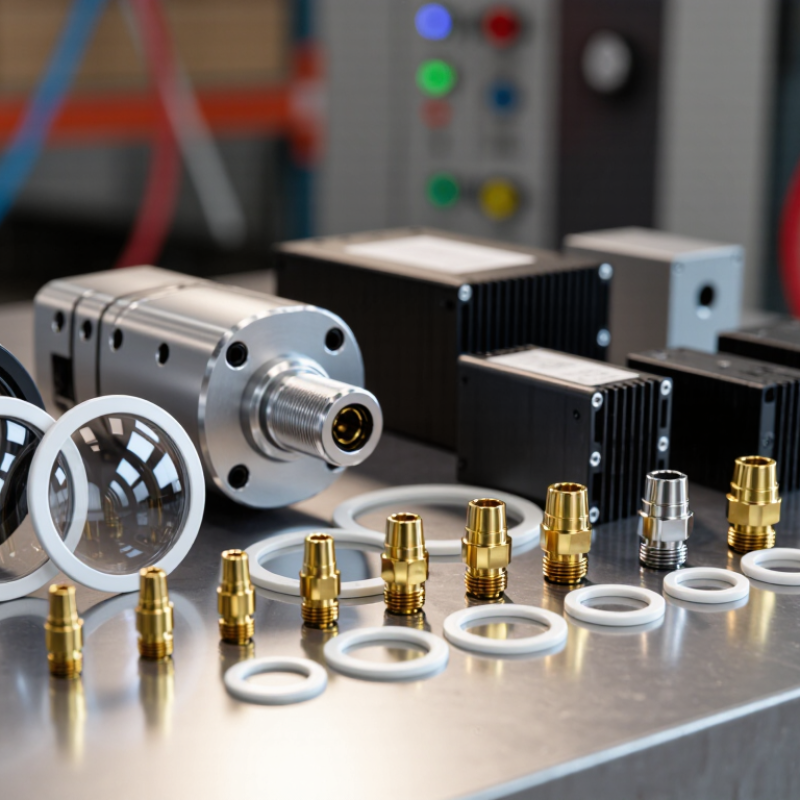
China Top 10 Laser Spare Parts Suppliers in 2026

How Laser Spare Parts Fit into Industrial Laser Systems

Laser spare parts are functional links in the beam-delivery and process-control chain, not just replacements stored on a shelf. A protective window shields the focusing optic from spatter; a worn nozzle can disturb assist-gas flow and produce uneven cut edges. Filters, seals, sensors, and chiller components also help maintain stable operating conditions. Small parts matter.

Fortune Business Insights estimated the global laser technology market at $20.29 billion in 2023 and projected $43.15 billion by 2032 in its 2024 market report. That growth points to a larger installed base needing dependable maintenance. In practice, technicians should match parts to wavelength, power rating, dimensions, coating, and cooling requirements. A physically similar optic may still perform poorly if its coating or specification differs. Check the machine documentation.

Good spare-parts planning starts with failure patterns, not guesswork. Track window changes, nozzle wear, filter pressure, and chiller alarms by operating hours and material type. Keep critical consumables near the cell, but avoid overstocking sensitive optics that may degrade through poor storage. A clean-looking window can still lose transmission. Inspection records help, though they are not perfect; operators may miss gradual changes between scheduled checks.

Criteria for Comparing Chinese Suppliers in 2026

In 2026, compare suppliers using traceable specifications, not catalogue claims. Ask for part numbers, compatible machine models, material grades, and dimensional tolerances. For a focusing lens, confirm the coating range and inspect the edge finish under consistent light. Small details matter.

Check whether the supplier can provide batch records, inspection reports, and clear warranty terms. Request samples made through the same production route as regular orders. Measure them with your own gauges, then test them under normal operating conditions. Ask how stock is managed and how quickly critical parts can be replenished. Response time matters when a nozzle or collimator fails mid-shift.

Technical support is another useful comparison point. A capable team should explain installation limits, cleaning methods, and likely causes of early wear without promising impossible service life. Compare lead times, packaging, export documents, and the process for handling defects. Video calls can clarify a lot, though they cannot replace a physical sample. Price still counts, but the cheapest quote may conceal inconsistent tolerances or weak packaging. One test is never enough. Keep notes across several orders; performance can vary, and even a careful checklist misses things. That is worth admitting.

China’s Top 10 Laser Spare Parts Suppliers in 2026

China’s Top 10 Laser Spare Parts Suppliers in 2026 should be assessed by more than price and catalog size. Grand View Research’s Laser Technology Market report estimated the global market at USD 20.3 billion in 2023, with an expected 8.2% compound annual growth rate from 2024 to 2030. This expansion raises demand for dependable replacement optics, cutting nozzles, protective windows, filters, and motion-system components. Small tolerances matter.

A useful comparison of ten Chinese suppliers should check documented compatibility, material specifications, inspection records, and realistic lead times. Ask for measurements such as nozzle-orifice diameter and lens coating details, not just a broad “fits your machine” claim. Request sample inspection images and batch traceability where available. Fit is not enough. A part can appear correct yet perform poorly under heat, dust, or repeated cleaning.

Service matters on the factory floor. Suppliers should explain how they handle defective parts, urgent shipments, and changes between production batches. The ISO quality-management framework can guide process questions, but certification alone does not prove a component will suit a specific laser system. A polished catalog can hide limited technical support; buyers should verify response times before ordering. Supplier rankings also deserve caution: the best choice depends on machine configuration, operating hours, and local stock—not a single universal score.

China Top 10 Laser Spare Parts Suppliers in 2026

The table compares ten common supplier profiles in China’s laser spare-parts market. It is a category-based buying guide, not a verified company ranking. Product availability and compatibility vary by equipment model; confirm specifications with the supplier before ordering.

No. Anonymous supplier profile Typical spare parts Common application Key details to verify
1 Laser optics specialist Protective windows, focusing lenses, collimating lenses, mirrors Fiber, CO₂, and other laser systems, depending on optical design Material, diameter, thickness, focal length, wavelength range, coating, and damage threshold
2 Laser cutting-head consumables supplier Nozzles, ceramic rings, protective windows, seals Fiber laser cutting Head model, nozzle thread and bore, ceramic dimensions, window size, and gas-pressure requirements
3 CO₂ laser consumables supplier CO₂ optics, mirrors, lenses, tubes, and electrode-related parts CO₂ engraving and cutting equipment Optical wavelength and dimensions; for tubes, rated output, length, cooling, and electrical requirements
4 Laser source service-parts supplier Source-specific modules, connectors, cables, and service components Fiber and other industrial laser sources Exact source model, revision, interface, operating limits, and whether installation requires authorized service
5 Motion-system components supplier Linear guides, bearings, belts, couplings, and motors Laser machine axes and gantry systems Dimensions, load rating, accuracy class, mounting pattern, motor specifications, and control compatibility
6 Laser cooling equipment supplier Chillers, pumps, filters, hoses, and temperature sensors Cooling circuits for laser sources and machine optics Required heat-removal capacity, flow rate, temperature range, coolant, voltage, and connection size
7 Laser electrical and control-parts supplier Power supplies, sensors, cables, relays, and control modules Laser machine electrical cabinets and signal systems Input voltage, current, signal type, connector pinout, safety rating, and machine-control compatibility
8 Fume extraction and filtration supplier Filter cartridges, pre-filters, fans, ducts, and seals Laser cutting and marking work areas Filter dimensions, filtration stages, airflow requirement, dust type, and replacement interval specified for the application
9 Pneumatic and gas-delivery parts supplier Valves, regulators, fittings, hoses, and pressure sensors Assist-gas and machine pneumatic circuits Gas compatibility, pressure range, flow capacity, fitting standard, seal material, and cleanliness requirements
10 Laser marking and scanning-system parts supplier Scan lenses, mirrors, cables, mounts, and selected scanner components Galvo-based laser marking and processing systems Working field, wavelength, lens mount, optical aperture, scan-head interface, and calibration requirements

Selection note: Request drawings or datasheets, confirm the machine and part revision, and check material certificates, inspection records, warranty terms, and shipping conditions where relevant. Optical and electrical parts should be matched to the equipment’s specified wavelength, power, interfaces, and operating conditions.

Products, Technologies, and System Compatibility

For a 2026 supplier comparison, assess the parts behind the machine’s performance, not just the catalogue. Common items include focusing lenses, protective windows, nozzles, sensors, and power supplies. Check wavelength, power rating, coating, dimensions, and thermal limits. A lens designed for one wavelength may absorb energy or overheat at another. Small mismatch, costly downtime.

Technology trends also shape sourcing. Fiber, CO₂, and ultrafast systems require different optical and electrical specifications. MarketsandMarkets’ Laser Processing Market report estimated a market value of USD 6.7 billion in 2023 and projected USD 11.9 billion by 2030. That expansion raises the value of dependable replacement parts, but market growth alone does not verify supplier quality. Request inspection records, material specifications, and traceable batch documentation.

Compatibility deserves a practical test. Confirm connector type, control signals, cooling requirements, mounting dimensions, and firmware or communication protocols before ordering. Ask suppliers for drawings and tolerance ranges, then compare them with the machine manual. A part can fit physically and still perform poorly. I would also check availability of calibration support and replacement lead times. Specifications can look complete, yet omit details that matter on a hot production line.

Laser Spare Parts Compatibility: Common Source Wavelengths

These are typical nominal wavelengths for UV, fiber, and CO₂ lasers—not supplier rankings or market-share figures. Spare parts such as optics and protective windows must be suitable for the laser’s wavelength and system specifications.

Factors to Consider When Sourcing Laser Spare Parts in China

Sourcing laser spare parts in China starts with fit, not the lowest quote. Confirm the laser type, wavelength, power range, and exact part number before requesting prices. For optics, check diameter, thickness, coating, and mounting direction. A lens may fit its holder yet perform poorly if its coating does not suit the wavelength. Small details matter.

Ask suppliers for drawings, inspection records, and clear product photos. For critical parts, request a sample and test it under normal operating conditions before placing a larger order. Check how the supplier identifies batches and handles defective items. Ask for written warranty terms, production lead times, and packaging details. A fragile mirror needs more than a thin layer of foam. Ask for evidence.

Communication quality is part of the evaluation. Send a concise specification sheet and see whether the supplier flags missing measurements or compatibility risks. Compare quotations on the same technical basis; a low price can exclude testing or protective packaging. It is tempting to trust a polished catalogue, but catalogue descriptions may not reveal tolerances or stock status. Still, no checklist catches everything. Keep records of samples, test results, and agreed specifications so repeat orders are easier to verify.

Choose a global leader for your hydraulics solutions

How can we help you?

Call to 0034 943884600 Contact us
Call us Contact us

We use cookies to ensure that we give you the best experience on our website. If you continue without changing your settings, we'll assume that you agree to receive cookies on the HINE website. For more information read our cookie policy page, click the link for more information.plugin cookies

ACEPTAR
Aviso de cookies