

China Top 10 Weld Fixture Tooling Manufacturers?

China’s top 10 Weld Fixture Tooling manufacturers are worth comparing for more than price. A fixture may look simple on a factory floor: a steel base, locating pins, clamps, and a robot torch moving through a repeatable path. Yet a small alignment error can affect weld quality, cycle time, and rework. Fit is everything. Small errors matter.

This introduction sets up a practical comparison of suppliers serving automotive, machinery, and other fabrication sectors. It considers engineering capability, customization, material and machining quality, delivery support, and experience with automation. The list should be treated as a buyer’s starting point, not a universal ranking; supplier strengths vary by project, region, and production volume. Taiichi Ohno, the Toyota production engineer, is often credited with the reminder, “Without standards, there can be no improvement.” That principle applies here: clear drawings, agreed inspection criteria, and repeatable acceptance tests make supplier comparisons more meaningful. Ask how a manufacturer controls datum accuracy, documents fixture changes, and supports commissioning after delivery. Request evidence, not broad promises. A polished sample is useful, but long-term performance matters more. This guide will help readers examine leading Chinese manufacturers with those questions in mind. It also leaves room for a less comfortable point: even a capable supplier may be a poor fit when communication, maintenance, or local support falls short. A careful shortlist beats a confident guess.
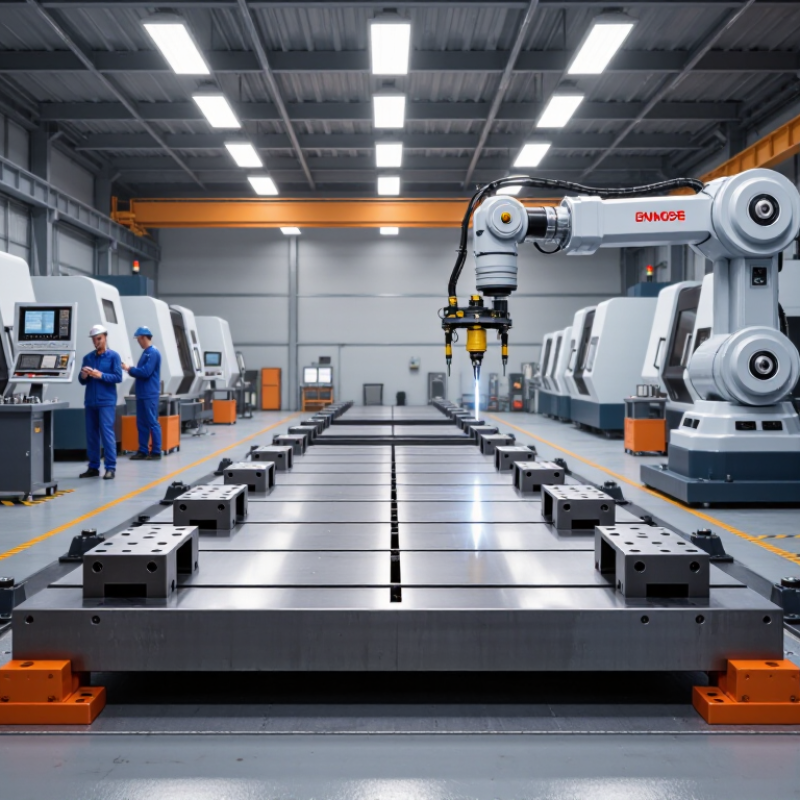
China Top 10 Weld Fixture Tooling Manufacturers?

What Weld Fixture Tooling Does in China’s Welding Supply Chain

In China’s welding supply chain, weld fixture tooling links part design, fabrication, and final assembly. It holds components in repeatable positions while operators or automated systems make each weld. A well-designed fixture controls location, angle, and clamping pressure, helping reduce distortion and rework. It also helps production teams keep batches consistent.

Small gaps matter. A few millimeters of movement can shift a bracket, door frame, or structural subassembly out of alignment.

Tooling makers work with drawings, material thicknesses, weld sequences, and expected production volumes. They may build checking gauges, modular fixtures, or dedicated stations, depending on the part and required cycle time. In a busy factory, quick loading and clear access for the welding torch matter as much as rigidity. Sensors and locating pins can confirm part presence, but they do not replace process checks. Some fixture weaknesses appear only after repeated use. That deserves honest review.

Tips

Confirm datum points with the engineering team before fixture release. Test clamp access using the actual welding gun, not only a drawing. Record changeovers and wear; small maintenance notes can prevent larger alignment problems.

How the 3-2-1 Locating Principle Controls Part Positioning

China Top 10 Weld Fixture Tooling Manufacturers?

How the 3-2-1 Locating Principle Controls Part Positioning

The 3-2-1 principle gives a workpiece six defined contact points. Three supports establish the primary plane and prevent rocking. Two locators on a second plane control side movement. One locator on the third plane sets the final position. Together, these contacts constrain the part’s six degrees of freedom. This makes setup repeatable before welding begins.

On a fixture table, three hardened pads might support a steel panel. Two side buttons align its edge, while one end stop controls its lengthwise position. Clamps hold the panel against those locators; they should not force a poorly seated part into place. That matters. In practice, this rule is not magic: burrs, gaps, and heat distortion can still shift a weldment. A part that sits correctly when cold may move as welds cool, so check critical dimensions after welding.

Tips: Keep locator faces clean, and verify contact with a feeler gauge or a light hand check. Place clamps near the locating points without blocking the torch. Avoid adding extra hard stops casually; they can overconstrain the part. Small errors grow. A little setup friction is easy to overlook, but it can show up as inconsistent fit-up across a production run.

Which ISO 3834 and ISO 9001 Criteria Help Screen Suppliers

When comparing weld fixture tooling manufacturers, treat ISO certificates as a starting point, not proof of capability. ISO’s 2022 Survey of Management System Certifications recorded 1,265,216 ISO 9001 certificates worldwide. That scale makes scope checks essential: confirm the certificate covers the actual design, fabrication, or welding site you plan to use. A paper certificate alone cannot show whether a fixture will hold position under production heat.

ISO 3834 focuses on quality requirements for fusion welding of metallic materials. Ask which part applies and request evidence matched to your project: qualified welding procedures, competent personnel, material traceability, inspection records, and control of nonconformities. Look closely at a sample weld record. Can the supplier link its material batch, procedure, welder, and inspection result? Small gaps matter.

ISO 9001 adds a broader test of process control. Review how the supplier handles drawing revisions, outsourced processes, calibration, corrective actions, and delivery risks. Ask to see a recent change-control example, with customer approval where required. Then compare the documents with the shop floor: are gauges labelled, and do operators use the latest fixture drawing? It can be awkward to challenge a polished audit file. Do it anyway. Neither standard guarantees dimensional accuracy; request measured trial-fixture results against your tolerances.

Weld Fixture Tooling Supplier Screening: ISO 3834 & ISO 9001

Suggested screening priorities for evaluating manufacturers serving the Chinese market—not a ranking of companies or a measure of market performance.

The percentages are illustrative weights for a buyer’s evaluation rubric, not scores prescribed by either standard. ISO 3834 addresses welding quality requirements; ISO 9001 provides quality-management-system requirements. Confirm the applicable ISO 3834 part and scope, and separately assess fixture design, build quality, and performance.

China’s Top 10 Weld Fixture Tooling Manufacturers: Profiles and Capabilities

China’s weld-fixture tooling sector serves demanding automotive and industrial production lines. A useful profile of ten manufacturers should compare engineering depth, not just factory size. Look for capabilities in body-in-white fixtures, robotic welding cells, modular locating systems, checking gauges, and production-line integration. Fit matters. A fixture must hold panels firmly, allow repeatable clamping, and leave enough clearance for the welding torch.

Demand is substantial. The International Federation of Robotics reported 276,288 industrial robots installed in China in 2023, representing 51% of global installations. The China Association of Automobile Manufacturers reported 30.16 million vehicles produced in China that year. These figures help explain investment in automated welding and precision tooling, though they do not measure fixture demand directly. That distinction matters.

When comparing manufacturer profiles, ask whether teams provide 3D design, simulation, prototype validation, and documented dimensional checks. Review how they manage locator wear and fixture changes between vehicle models. Ask for practical evidence, such as repeatability records or commissioning procedures. Catalog claims can look cleaner than shop-floor reality. Some suppliers may excel at complex custom cells but offer slower changeovers; others may deliver modular tooling with less application support. Independent evaluations should verify performance under actual production conditions.

How to Compare Suppliers by Accuracy, Automation, and After-Sales Support

China Top 10 Weld Fixture Tooling Manufacturers?
How to Compare Suppliers by Accuracy, Automation, and After-Sales Support

When comparing Chinese weld fixture tooling suppliers, look beyond quoted tolerances. Ask how they measure locating-pin positions and verify repeatability across multiple fixture cycles. Request inspection records and a trial using parts similar to yours. A fixture may look precise on a drawing but behave differently after clamps heat up. Small details matter. Check datum references, clamp access, and whether operators can load parts consistently.

Automation should fit your production, not just look impressive in a presentation. Ask suppliers to explain sensor checks, control-system interfaces, changeover steps, and how faults are handled. Watch a sample cycle if possible. Can an operator recover safely from a misloaded part? Can the fixture support both current and planned models? A highly automated system may still create delays if troubleshooting depends on one specialist. I would not judge automation by robot count alone.

Tips: Ask for a clear service plan before placing an order. Confirm response times, spare-part availability, commissioning support, and operator training. Request drawings, maintenance instructions, and a named technical contact. Compare answers in writing, not only during sales meetings. Some support details can be vague, so ask follow-up questions. A short video call with the engineering team may reveal more than a polished brochure.

China Top 10 Weld Fixture Tooling Manufacturers? - How to Compare Suppliers by Accuracy, Automation, and After-Sales Support

No. Comparison Dimension What to Compare Evidence to Request Suggested Evaluation
1 Fixture repeatability Positioning repeatability under the intended loading, clamping, and production conditions. Repeatability test report, measurement method, sample size, and test conditions. Compare measured results with the drawing and process requirements.
2 Datum and locating strategy How the fixture establishes datums and locates parts while accounting for part variation. Fixture layout, datum scheme, locator specifications, and tolerance stack-up review. Check that locating points are clear, accessible, and consistent with the part design.
3 Inspection and calibration Methods used to verify fixture geometry and maintain measurement traceability. Inspection records, calibration certificates where applicable, and measurement-equipment list. Confirm that inspection methods match the required tolerances.
4 Weld distortion control Support, clamping sequence, access, and design provisions intended to manage heat-related distortion. Weld sequence proposal, process review, trial-build findings, and adjustment plan. Review against the part material, joint design, and welding process.
5 Automation readiness Compatibility with robots, sensors, safety systems, and the intended production cycle. Interface drawings, I/O list, robot-access study, and automation scope definition. Verify interfaces and responsibilities before design approval.
6 Clamping and sensing Clamp type, clamp-state confirmation, part-presence detection, and error-proofing provisions. Pneumatic or electrical schematics, sensor list, and control sequence description. Assess safe operation, fault detection, and ease of troubleshooting.
7 Build and acceptance process Design reviews, tryout stages, acceptance criteria, and handling of identified issues. Project schedule, acceptance checklist, inspection plan, and issue-resolution procedure. Agree on measurable acceptance criteria before purchase.
8 Documentation and change control Completeness of drawings, bills of materials, operating instructions, and revision management. Sample documentation package and documented engineering-change process. Check that records support maintenance and future modifications.
9 After-sales response Availability of technical support, response channels, spare parts, and on-site service terms. Written service-level terms, support hours, escalation path, and spare-parts policy. Compare commitments in writing rather than relying on verbal assurances.
10 Total cost and delivery risk Tooling price, engineering scope, shipping, installation, training, spare parts, and schedule assumptions. Itemized quotation, delivery milestones, exclusions, warranty terms, and payment schedule. Compare quotations on the same technical scope and acceptance basis.

Note: This is a supplier-comparison checklist, not a verified ranking of manufacturers. Request project-specific evidence and compare suppliers against the same part data, technical scope, and acceptance criteria.

Choose a global leader for your hydraulics solutions

How can we help you?

Call to 0034 943884600 Contact us
Call us Contact us

We use cookies to ensure that we give you the best experience on our website. If you continue without changing your settings, we'll assume that you agree to receive cookies on the HINE website. For more information read our cookie policy page, click the link for more information.plugin cookies

ACEPTAR
Aviso de cookies