Why Choose a 100g Dac Cable for Your Networking Needs?
In today's fast-paced digital world, reliable networking is essential. The choice of cables significantly impacts network performance. Among the many options available, the 100g Dac Cable stands out. It offers high-speed data transmission and low latency. This cable is particularly useful for data centers and enterprises with heavy data needs.
Using a 100g Dac Cable ensures minimal interference. It is designed for high-density environments where performance matters. Users appreciate its efficiency in large-scale networking. However, not all networks may fully leverage its capabilities. Some might find it cost-prohibitive. Exploring every aspect before investing is crucial.
Choosing the right cable can make or break your network's efficiency. The 100g Dac Cable combines speed and reliability, making it an attractive option. But consider your specific requirements before making the switch. Weigh the benefits and potential downsides. A thoughtful decision will lead to improved network performance.
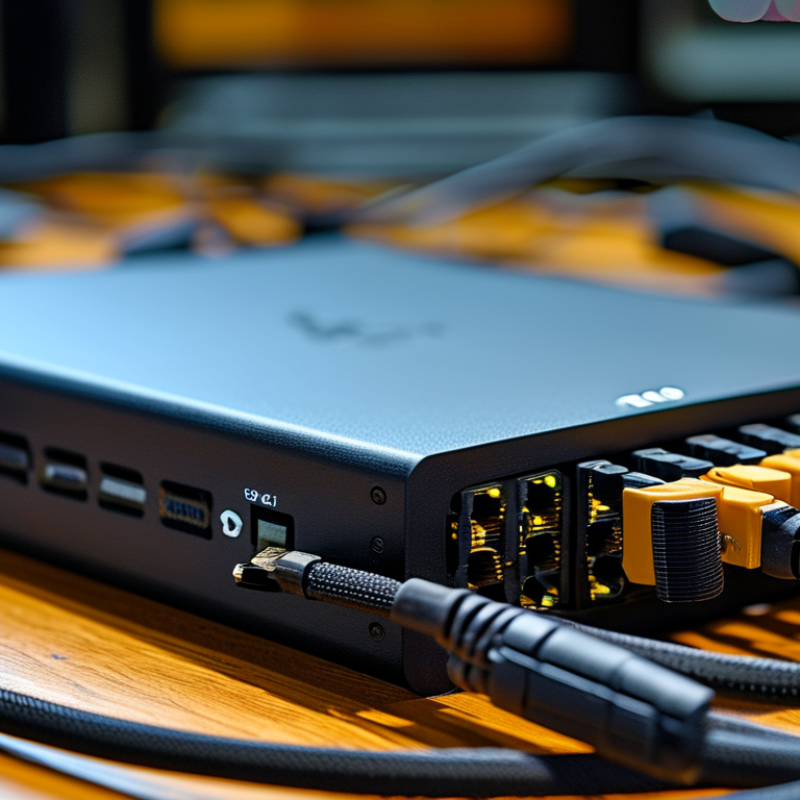
Understanding the Basics of DAC Cables for Networking
In today’s rapid tech landscape, understanding DAC (Direct Attach Copper) cables is essential for optimized networking. These cables are widely used for connecting switches, servers, and storage devices. DAC cables offer speed benefits and cost efficiency, crucial for businesses aiming for high performance without overspending. Commonly available in 100g configurations, they can efficiently transmit data over short distances, making them ideal for data centers.
When selecting a DAC cable, consider the length. Maintaining shorter lengths ensures better signal integrity. Using a cable longer than necessary can lead to performance degradation. Additionally, ensure compatibility with your existing hardware. Not every DAC cable works seamlessly with every device, so double-check specifications before purchasing.
Tip 1: Always test cables in your network environment before full deployment. Some cables might not perform as expected under load.
Tip 2: Be aware of heat generation. DAC cables can generate more heat compared to fiber optics. Regular monitoring can help avert overheating issues.
Tip 3: Explore used or refurbished options to save costs. However, ensure they come from reputable sources to guarantee reliability. Your network’s integrity depends on the quality of your cables.
The Advantages of 100g DAC Cables Over Traditional Options
When it comes to high-speed networking, 100G DAC cables offer several advantages over traditional copper or fiber options. The first notable benefit is their cost-effectiveness. These cables provide high bandwidth at a lower price, making them an appealing choice for organizations looking to maximize their budgets. In environments where numerous connections are needed, 100G DAC cables shine, providing efficient solutions for data centers and enterprise networks.
Another advantage is their ease of installation. Unlike fiber optic cables, DAC cables do not require complex termination processes. This simplicity reduces installation time and potential errors, streamlining the overall deployment. Their compact design also allows for flexibility in tight spaces, which can be critical in server rooms with limited real estate.
However, despite these benefits, there are considerations. DAC cables can have limited distance capabilities compared to fiber optics. They usually perform best at shorter distances, typically under 100 meters. This limitation could impact decisions in larger network setups. A balance must be struck between cost and performance to ensure the selected solution meets specific networking needs.
Benefits of 100G DAC Cables Compared to Traditional Options
The bar chart illustrates the advantages of using 100G DAC cables over traditional options in key performance areas. The ratings (on a scale of 1 to 10) highlight that 100G DAC cables generally outperform traditional solutions in terms of lower power consumption and reduced latency, making them a preferred choice for modern networking needs.
Key Features to Look for in a 100g DAC Cable
When considering a 100g DAC cable for your networking needs, certain features are crucial. Look for high-quality connectors. These ensure a stable and efficient connection. The choice of material matters too. Copper cables often deliver superior speed and performance compared to fiber optics, especially over short distances.
Another important aspect is the cable length. Shorter cables usually reduce signal loss. However, if you need a longer reach, ensure the cable maintains its performance. Some cables can experience degradation over longer runs, which might be a drawback.
Evaluate the cable's flexibility. A flexible cable can make installations easier in tight spaces. Also, check for durability. A robust cable can withstand the wear and tear of daily use. Many users overlook this, but the right choice can prevent costly replacements later on.
Network Performance: How 100g DAC Cables Enhance Speed and Reliability
When it comes to network performance, 100G DAC cables deliver exceptional speed and reliability. These passive copper cables support high data transfer rates, ideal for data-intensive applications. Users enjoy low latency, which is crucial for real-time communications and cloud services. In a competitive business environment, every millisecond counts.
One tip for selecting a 100G DAC cable is to consider cable length. Shorter cables, typically less than 5 meters, reduce signal loss significantly. Opting for the right length can enhance overall performance. Additionally, ensure that your hardware supports 100G capabilities. Compatibility is critical for seamless data transmission.
Another consideration is the environment where the cables will be deployed. If your setup is in a high-interference area, investing in higher-quality DAC cables may be beneficial. While these cables offer many advantages, they can also be limited in range. Reflecting on these trade-offs is essential when planning your networking strategy.
Real-World Applications of 100g DAC Cables in Networking Environments
In modern networking environments, 100G Direct Attach Copper (DAC) cables provide critical advantages. These cables are commonly used in data centers for high-performance connectivity. Their compact size allows for easier cable management. This is essential in areas where space is limited. Many network engineers prefer DAC cables for their reliability in short-distance connections.
In addition, DAC cables support a high bandwidth capacity, making them ideal for applications that demand rapid data transfer. For instance, when servers need to communicate quickly, using DAC cables can significantly reduce latency. They are also more cost-effective compared to fiber optic solutions for short runs. However, professionals must carefully assess installation conditions and cable lengths to optimize performance.
Despite these advantages, there are potential drawbacks. The heat generated by DAC cables can affect performance if not managed properly. Additionally, they may not be suitable for every environment. Long distances or harsh conditions could necessitate alternative solutions. The decision to use 100G DAC cables should consider both current and future networking demands.
Why Choose a 100g Dac Cable for Your Networking Needs? - Real-World Applications of 100g DAC Cables in Networking Environments
| Application Area | Use Case | Benefits | Typical Distance | Cost-effectiveness |
| Data Centers | Server-to-Switch Connections | High bandwidth, low latency | Up to 7 meters | Lower cost compared to optical cables |
| High-Performance Computing | Cluster Interconnects | Efficient data transfer | Up to 5 meters | Reduced deployment costs |
| Telecommunications | Backhaul Connections | Robust signal integrity | Up to 5 meters | Cost-efficient for short distances |
| Broadcasting | Live Event Streaming | Instantaneous communication | Up to 3 meters | Affordable for temporary setups |