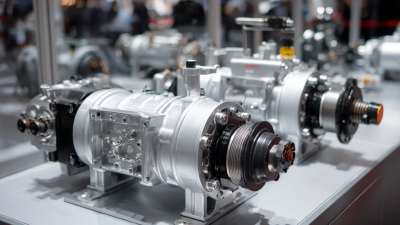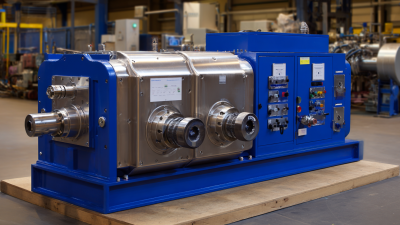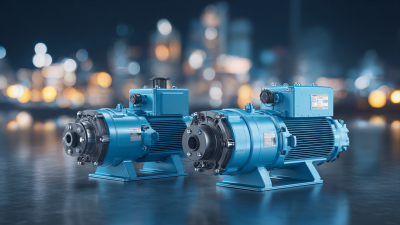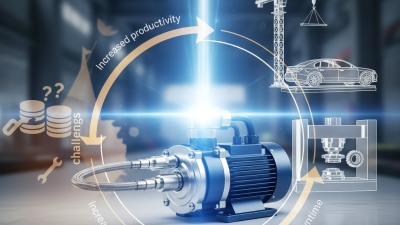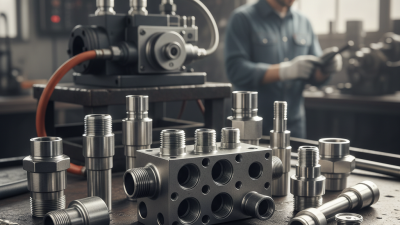

In today's demanding industrial landscape, the electric hydraulic pump has become an essential tool. Many professionals recognize its value. As John Thompson, a leading expert in hydraulic systems, states, "Electric hydraulic pumps provide efficiency and precision for modern applications." This speaks to their growing importance.
Electric hydraulic pumps are celebrated for their ability to offer consistent power and control. They cater to various industries, from construction to manufacturing. The shift towards electric options reflects a need for sustainability and reliability. Traditional pumps often depend on fossil fuels, raising concerns about environmental impact.
Yet, not every application suits an electric hydraulic pump perfectly. Users must consider factors like power requirements and operational environment. While the benefits are clear, there remain challenges in transitioning from conventional systems. This is a critical aspect to evaluate for successful implementation.
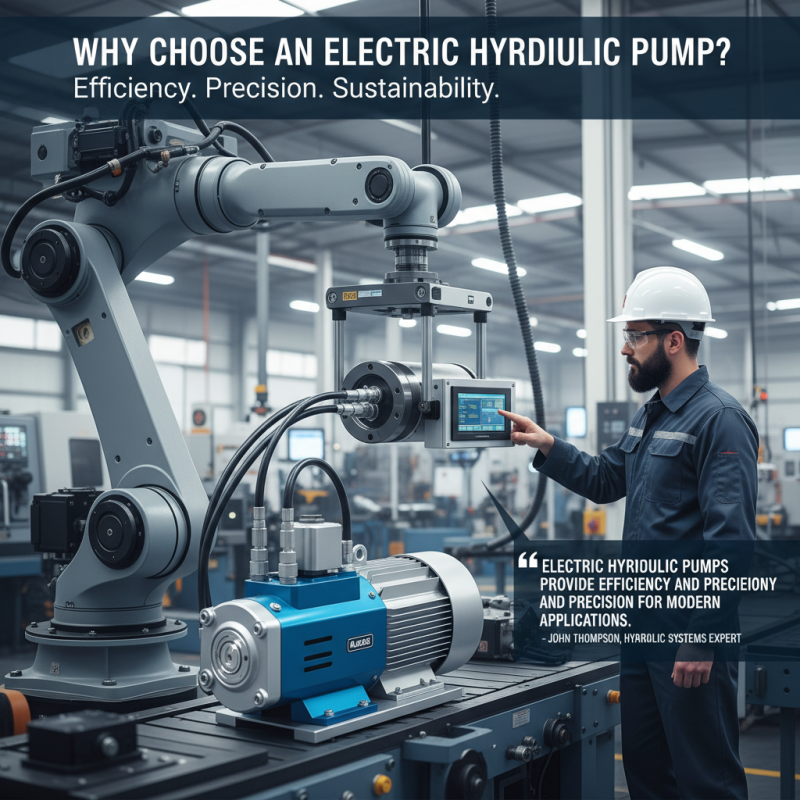
Electric hydraulic pumps are becoming popular for various applications. They offer several advantages over traditional hydraulic options.
One significant benefit is their energy efficiency. These pumps consume less power, making them a more sustainable choice. They can operate on standard power sources, eliminating the need for complex motor setups.
Another advantage is their compact design. Electric hydraulic pumps are typically smaller than traditional pumps. This makes them easier to install in tight spaces. Maintenance is generally simpler as well.
Fewer moving parts mean fewer chances for mechanical failure. Moreover, they produce less noise, creating a better working environment.
However, these pumps do have limitations. In extreme conditions, their performance may decline. Power outages can halt operations, leading to downtime. Users must consider these factors. Despite these challenges, the benefits of electric hydraulic pumps often outweigh the drawbacks. They represent a shift toward more efficient, user-friendly solutions.
Electric hydraulic pumps are transforming various industries today. They offer precise control and high efficiency. These features make them ideal for construction, manufacturing, and automotive sectors. According to a study by MarketsandMarkets, the hydraulic pump market is expected to grow significantly, reaching $34.5 billion by 2025. This growth is driven by the demand for energy-efficient solutions.
In construction, electric hydraulic pumps often power equipment like excavators and cherry pickers. These pumps reduce noise pollution, making urban projects more manageable. Furthermore, they have lower operational costs compared to traditional hydraulic systems. The automotive industry also benefits greatly. Electric hydraulic pumps are key in electric vehicles for improved performance and reliability.
However, not everything is perfect. Some users find electric systems less robust in extreme conditions. Dependence on electricity can be a drawback where power outages occur. So, while electric hydraulic pumps demonstrate clear advantages, potential users must weigh these factors carefully.
| Industry | Key Application | Advantages of Electric Hydraulic Pumps |
|---|---|---|
| Manufacturing | Metal Forming | Compact design, energy efficient |
| Construction | Excavation Machinery | High power output, reliable operation |
| Automotive | Automotive Repair | Precise control, low maintenance |
| Agriculture | Tractor Power Systems | Environmentally friendly, quiet operation |
| Aerospace | Aircraft Control Systems | High reliability, excellent performance |
| Marine | Boat Lifting Systems | Compact size, water resistant |
Electric hydraulic pumps are gaining popularity in various applications due to their efficiency and versatility. Understanding how these pumps work can help you make informed choices. The mechanism starts with an electric motor, which powers a hydraulic pump. This converts electrical energy into mechanical energy, creating hydraulic pressure to perform tasks.
One significant feature of electric hydraulic pumps is their quiet operation. Unlike traditional pumps, they generate less noise. This is particularly useful in enclosed spaces. However, users should pay attention to potential overheating. Proper ventilation is essential to maintain optimal performance.
Tips: Ensure that the pump is compatible with your specific needs. Regular maintenance checks can prevent unexpected failures. Experiment with different settings to find the most efficient operation. Proper setup can lead to better results and longevity. Using these pumps can be a learning curve, but they often yield impressive output.
When selecting an electric hydraulic pump, several key factors must be considered. First, the system pressure is crucial. Most applications require pumps that can sustain specific pressure levels. For example, many hydraulic systems operate between 1,500 and 3,000 psi. Choosing a pump that can't maintain this pressure may lead to system failures, inefficiencies, or even safety hazards.
Another important factor is flow rate. The required flow rate will depend on the application's demands. Industry reports suggest that most construction and manufacturing tasks require varying flow rates, typically between 2 and 10 gallons per minute (GPM). An undersized pump may struggle during peak loads, resulting in slower operation and possible downtime.
Power source also plays a significant role. Many electric hydraulic pumps can operate on standard household voltage, while others require three-phase power. This can complicate installation in certain environments. Furthermore, environmental conditions like temperature and humidity should be considered, as they can affect pump efficiency and lifespan. Each application is unique, and failure to address these factors may lead to financial losses or project delays.
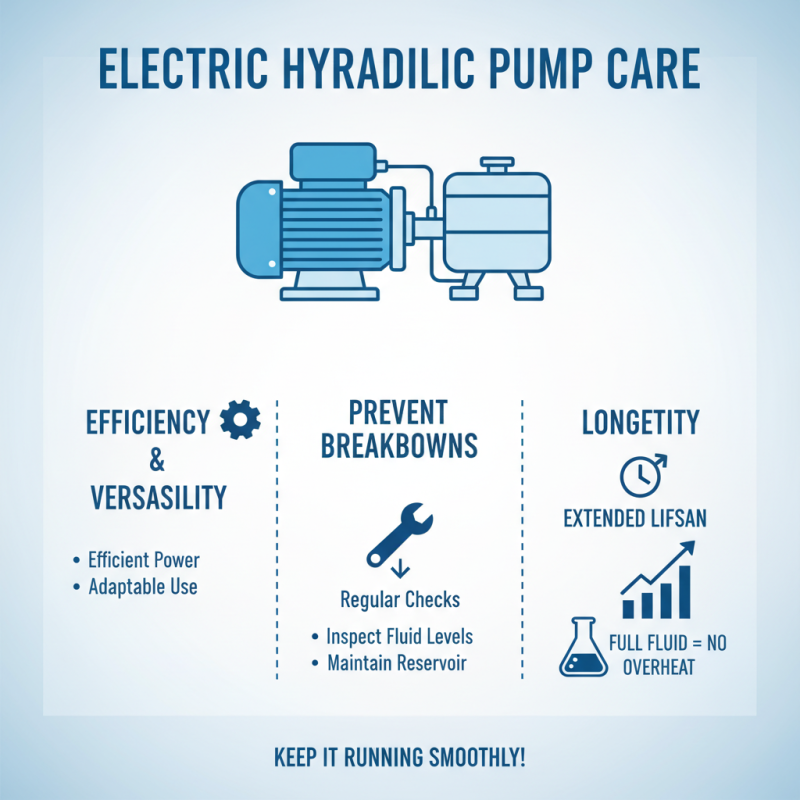
Electric hydraulic pumps are efficient and versatile. However, they require proper maintenance to ensure longevity. Regular checks can prevent unexpected breakdowns. Start by inspecting the fluid levels. Low levels can lead to overheating. Always keep the reservoir filled.
Another important aspect is cleaning. Dust and debris can interfere with functionality. Wipe down your pump regularly, paying attention to vents and filters. A blocked filter can reduce efficiency. Check for leaks as well. Small leaks can become bigger problems if not addressed.
Routine maintenance checks are essential. Listen for unusual sounds during operation. These may indicate underlying issues. Don’t ignore strange noises. They could lead to more significant repairs later. Keep a maintenance log to track your pump’s health. It helps identify patterns and potential failures. Actively caring for your pump will reward you with reliable performance.
How can we help you?
Call to 0034 943884600 Contact usWe use cookies to ensure that we give you the best experience on our website. If you continue without changing your settings, we'll assume that you agree to receive cookies on the HINE website. For more information read our cookie policy page, click the link for more information.plugin cookies
ACEPTAR