

A Garden Shed can become a calm, useful corner—or an expensive box that never quite fits. The difference often starts before you compare prices. Measure the space, list what you will store, and picture how you will reach each item on a wet Tuesday. A mower needs a wider doorway than a stack of cushions. Small details matter.
Garden-building consultant Mark Hensley offers a practical rule: “Choose your shed for the jobs it must do, not the picture in the brochure.” That means weighing material, floor strength, ventilation, security, and upkeep against your garden and budget. Timber can look warm beside a fence, but it needs regular care. Metal may need less maintenance, while resin can be easier to clean. None is perfect. Local weather and installation quality can change the result.
This guide explores the decisions that shape a good purchase in 2026: size and placement, materials, foundations, storage features, costs, and long-term maintenance. Expect straightforward checks, not magic answers. A level base matters. So does space to open the door. Think about sunlight, drainage, and the view from your kitchen window. Then compare options with those needs in mind. A shed should serve your garden, not dominate it. It is easy to underestimate what you will store—and how quickly clutter returns. That deserves a second look.
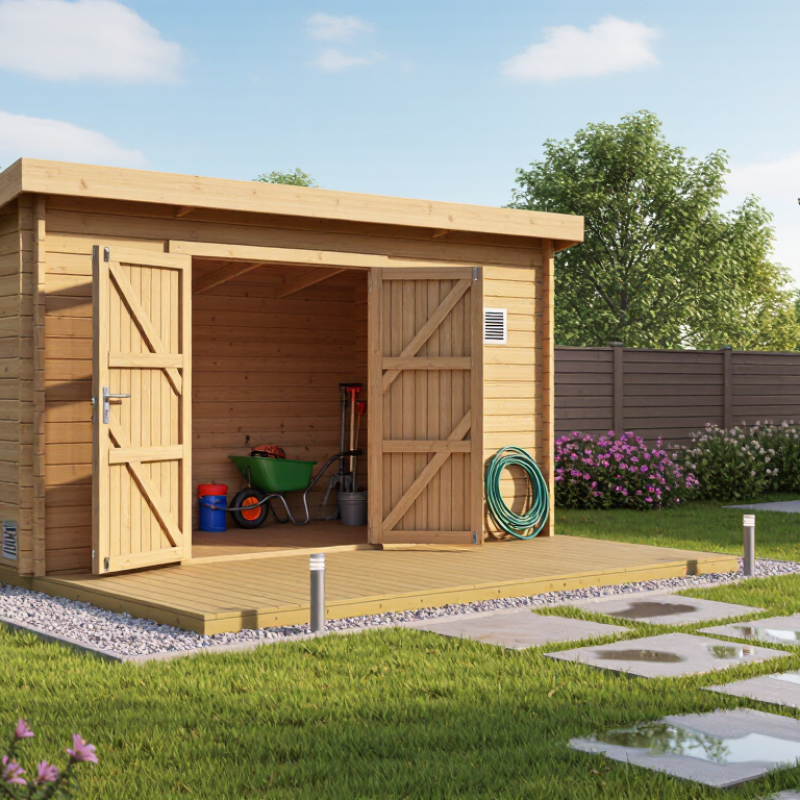
Before comparing shed styles, list what the shed must hold. A few garden tools need less room than a mower, bicycles, potting supplies, and winter cushions. Measure bulky items, including handle widths and wheel clearance. Then add space to move around them. A shed can fit on paper yet feel cramped when its door opens. Measure twice. If shelves are planned, note their depth and height before choosing the interior layout.
Next, measure the usable garden area, not just the patch that looks empty. Mark the proposed footprint with string or cardboard, then walk around it and check the door’s approach. Leave practical clearance for maintenance and access; local site conditions may affect how much is sensible. Look for slopes, soft ground, overhanging branches, and places where rainwater collects. Check that the shed will not block a path or shade a planting bed you value. Leave room. A slightly smaller shed may work better than one that crowds the garden, though it can mean storing some items elsewhere. It is easy to underestimate how often you will need to reach the back corner. A simple sketch with measurements can reveal that problem before installation.
Choosing a shed starts with the weather it must endure, not its paint color. Timber is easy to repair and customize, but it needs airflow and regular checks for peeling finish or soft corners. The USDA Forest Products Laboratory’s Wood Handbook notes that wood-decay fungi generally need moisture content around 20% or higher. Keep timber off damp soil, and avoid placing it where roof runoff pools.
Galvanized steel resists rot and suits a simple, low-maintenance design, but scratched coatings can expose metal to corrosion. Condensation may also form inside when warm, moist air meets a cool roof. Resin sheds do not rust, though thin panels can flex in strong winds, and sunlight may gradually weather some plastics. Small detail, big difference: check panel thickness, roof support, and the maker’s wind rating before buying.
Compare those ratings with local exposure, not a vague “all-weather” claim. NOAA’s 1991–2020 Climate Normals provide 30-year averages for temperature and precipitation, useful clues for checking rain and seasonal extremes. In wet areas, prioritize raised flooring, drainage, and roof overhangs; in windy locations, verify anchoring and door security. I’d still inspect the base closely: a sturdy roof cannot compensate for a shed sitting on uneven, waterlogged ground.
The 2023 National Gardening Survey estimated that 80% of U.S. households gardened in 2022. That activity deserves practical storage, not just a photogenic shed. Measure the mower, wheelbarrow, and longest-handled tools before choosing a footprint. Measure twice. Leave room to turn around. A shed that fits the yard but blocks its own shelves is frustrating.
Sketch the layout on paper, then mark it on the ground with stakes. Put heavy equipment near the entrance, with frequently used hand tools at waist height. Keep a clear central path instead of filling every corner. The survey also reported $47.8 billion in U.S. gardening spending for 2022, but a larger shed is not automatically better. It can consume useful planting space.
Access matters on muddy days. Choose a door wide enough for your widest item, and check its swing against fences, beds, and snowbanks. The U.S. Access Board’s 2010 ADA Standards specify a 32-inch minimum clear opening for accessible doors. Treat that as a useful planning benchmark, not a blanket shed requirement. Consider a low threshold, firm approach, and handles that work with gloves. One caveat: test the layout with actual tools before ordering. A tape measure can miss awkward turns.
| Nominal Footprint | Floor Area | Practical Layout | Suggested Clear Door Opening | Suitable For | Planning Tip |
|---|---|---|---|---|---|
| 6 × 4 ft (1.8 × 1.2 m) | 24 sq ft (2.2 m²) | Keep long-handled tools on one wall; use hooks or shallow shelves to preserve floor space. | About 30–36 in (76–91 cm) | Hand tools, small containers, and compact gardening supplies. | Measure the largest item before choosing this compact footprint; floor area alone does not account for shelf depth. |
| 8 × 6 ft (2.4 × 1.8 m) | 48 sq ft (4.5 m²) | Place shelving along one long wall and leave a central route for moving equipment. | About 36 in (91 cm) | Garden tools, a push mower, and a few bicycles or storage bins, depending on their dimensions. | Check that the door position allows bulky items to pass without moving shelves or stored equipment. |
| 8 × 8 ft (2.4 × 2.4 m) | 64 sq ft (5.9 m²) | Use perimeter shelving with a clear central area, or divide the space into storage and potting zones. | About 36–48 in (91–122 cm) | Mixed garden equipment, bicycles, seasonal supplies, or a small potting bench. | Allow space for the door to swing, if applicable, and keep frequently used items near the entrance. |
| 10 × 8 ft (3.0 × 2.4 m) | 80 sq ft (7.4 m²) | A long-wall bench or shelving can leave room for equipment storage and a usable passage. | About 48 in (122 cm) for wider equipment | A push mower, larger tools, bicycles, and a modest work surface. | Consider double doors when equipment is too wide for a single opening; verify the actual clear opening in product specifications. |
| 10 × 12 ft (3.0 × 3.7 m) | 120 sq ft (11.1 m²) | Separate work and storage areas, with shelving around the perimeter and a clear route from the doorway. | About 48–60 in (122–152 cm) for bulky items | More extensive equipment storage, a larger bench, or multiple activity zones. | Plan ventilation and lighting for work areas, and check local rules for placement, foundations, and permits. |
Planning note: Footprints are nominal examples, and usable interior space may be smaller because of wall thickness, framing, or roof supports. Door-opening figures are practical suggestions, not universal standards; confirm the clear opening and your local site requirements before purchase.
Before comparing roof styles or storage capacity, check local rules. The 2021 International Residential Code exempts certain one-story detached accessory structures up to 200 square feet from building permits. That model-code threshold is not universal; local adoption and conditions vary. Ask your building department about permits, setbacks, easements, and drainage requirements. Also confirm overhead clearance and utility-line locations. Take a tape measure outside: a shed that fits on paper may block a gate or sit too close to a fence. Measure twice.
Prepare firm, level ground before delivery. Remove sod, check the slope, and use a compacted gravel base or a suitable concrete foundation for your soil and shed design. The USDA Forest Products Laboratory’s Wood Handbook notes that decay fungi generally need wood moisture content around 20% or higher. Keep the floor off wet ground, and make sure runoff can move away from the base. A level-looking lawn can still collect water after a storm; that is easy to overlook. For installation, compare a delivered, assembled shed with a kit you build yourself. Check truck access, assembly space, who prepares the base, and what the installer excludes. Delivery is not site prep.
A shed’s sticker price is only the opening figure. Angi’s 2025 shed cost guide puts average construction cost near $3,600, with size, materials, and site preparation driving wide variations. Ask for an itemized quote covering the base, delivery, anchoring, and assembly. A level gravel pad may cost less than a concrete slab, but poor drainage can leave the floor damp after heavy rain. Small details add up.
Compare warranties by coverage, not headline length. Check whether the roof, floor, and structure have different terms, and whether upkeep is required to keep coverage valid. A long warranty may exclude water damage caused by neglected gutters or ground contact. Annual maintenance also has a real cost: inspect seams, tighten hardware, clear leaves, and touch up exposed wood. I have seen owners overlook this work; it is easy to do.
Tips: Put the shed’s full costs in a simple five-year estimate. Include expected repairs and replacement parts. Photograph the delivery area and measure gates before ordering. Ask the seller for warranty exclusions in writing. A cheaper model can still be the better choice, but only if its materials suit your climate and you can maintain them.
Compare estimated upfront and 10-year maintenance costs for common shed materials.
For a typical 8 × 10 ft shed, this illustrative U.S. budget model estimates purchase and basic installation at $1,800 for resin, $1,400 for metal, and $2,400 for wood. Ten-year maintenance allowances are $300, $500, and $1,200, respectively. Actual costs depend on size, site preparation, climate, and product. Check each product’s warranty terms and exclusions; warranty length and coverage vary, and normal maintenance may be required to keep coverage valid.
How can we help you?
Call to 0034 943884600 Contact usWe use cookies to ensure that we give you the best experience on our website. If you continue without changing your settings, we'll assume that you agree to receive cookies on the HINE website. For more information read our cookie policy page, click the link for more information.plugin cookies
ACEPTAR