

How to Choose a Circular Knitting Machine in 2026?

Choosing a Circular knitting machine in 2026 means matching the machine to the fabric you actually plan to sell. A fine-gauge single jersey line and a heavy rib program need different configurations. Start with the yarn range, fabric structures, target diameter, gauge, and expected order sizes. Then compare feeder count, usable speed, changeover time, needle availability, and service support. A high headline speed is not the whole story. Stable output and fewer defects matter more on a real production floor.

Market context can help frame the decision. Textile Exchange’s Materials Market Report 2024 estimates that global fiber production reached 124 million tonnes in 2023, and could approach 160 million tonnes by 2030 if current trends continue. This is a fiber-market estimate, not a forecast for knitting-machine sales. Still, it points to a large and changing materials landscape. Your machine should handle the yarns and fabric specifications your customers require, including planned recycled or blended inputs, where applicable. Ask suppliers to run your actual yarn on a sample machine. Check fabric weight, loop consistency, downtime, energy use, and waste—not just brochure figures. Request references from mills making comparable fabrics, and confirm local technician and spare-parts coverage. A tidy comparison table helps. It can also hide assumptions. Before committing, review the test conditions and calculate total cost over the machine’s expected working life.
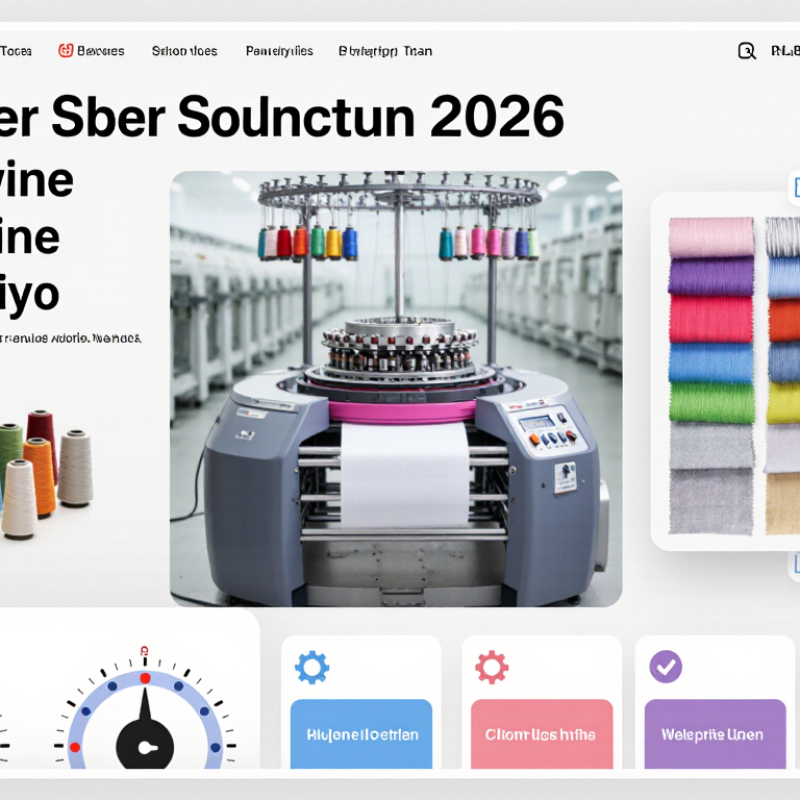
How to Choose a Circular Knitting Machine in 2026?

Define Your Knitting Projects and Production Needs

How to Choose a Circular Knitting Machine in 2026?

Define Your Knitting Projects and Production Needs

Start with the fabric, not the machine specifications. A machine suited to lightweight, fine-gauge shirts may not handle bulky ribbed cuffs or dense winter knitwear efficiently. Write down the fabrics, structures, and finished dimensions you expect to produce. Include a real sample, if available. Its weight, stretch, and stitch definition can reveal needs that a product description might miss.

Then estimate output honestly. How many pieces or meters do you need per shift, and how often will designs change? A larger cylinder or more feeders may support higher output, but frequent small runs can make setup and adjustment time more important. Small batches matter. Consider who will operate the machine, too. If one operator must change yarns, monitor tension, and inspect fabric, a theoretical production rate may be difficult to sustain.

Match the machine’s diameter, gauge, and feeding arrangement to your target products and yarn range. Ask suppliers for sample fabric made with comparable yarn, then check for dropped stitches, uneven loops, and width variation after washing. Request operating and maintenance details, including typical setup time and parts that need regular replacement. I would not choose from one successful sample alone; results can vary with yarn condition and operator settings. A short production trial is a better basis for investment than a specification sheet by itself.

How to Choose a Circular Knitting Machine in 2026: Match Cylinder Diameter to Your Project

How to use this chart: Cylinder diameter helps determine the approximate circumference of knitted fabric produced as a tube. Values are calculated as diameter × π. Use your required finished fabric width and project type to shortlist machine sizes, then confirm usable fabric dimensions with the manufacturer: stitch structure, yarn, machine setup, and finishing can all affect the final fabric.

Compare Machine Types, Diameters, and Gauges

How to Choose a Circular Knitting Machine in 2026?

Compare Machine Types, Diameters, and Gauges

Start with the fabric, not the machine catalog. Single-jersey machines make lightweight, often curl-prone fabric for T-shirts. Rib machines create stretchier cuffs and bodywear; interlock machines produce a more stable, usually heavier double-knit fabric. Small-diameter machines suit socks and narrow tubular goods. Large-diameter machines are commonly used for wider fabric tubes that can be opened and finished later. ITMF’s 46th International Textile Machinery Shipment Statistics report recorded a 17% year-on-year decline in global shipments of large circular knitting machines in 2023. That is useful market context, not a reason to buy or delay a purchase.

Diameter affects tube circumference and the fabric width available after opening. Gauge describes needle spacing: a higher gauge generally means finer stitches, but yarn thickness and machine setup also matter. A fine-gauge cylinder can struggle with bulky yarn. A coarse setup may leave lightweight fabric too open. Ask suppliers for sample fabric made with your intended yarn, then check weight, stretch, and appearance after washing. A specification sheet cannot predict every yarn’s behavior. That part is easy to underestimate.

Tips: Confirm the finished fabric width, not just cylinder diameter. Compare the required gauge with your yarn and target fabric, and request a production trial. Leave room for imperfect results; even a promising sample may behave differently at full speed.

Assess Materials, Stitch Options, and Output Capacity

Start with the materials that will run through the machine. A rigid frame and accurately finished cylinder help keep needles aligned during repeated cycles. Check that the machine supports your yarn types and that tension adjustments are easy to reach. Fine yarn may expose uneven feeding; thicker yarn can strain an unsuitable setup. Small details matter.

Stitch options should match the products you actually plan to make. Confirm whether the machine can produce plain tubes, ribbing, or selected patterns, and ask what changes each style requires. More settings are useful only if operators can switch them reliably. I would not treat one attractive sample as proof. It may hide slow changeovers or inconsistent tension.

For output capacity, compare finished pieces per shift, not just the machine’s stated speed. Cylinder diameter, feed count, stitch complexity, yarn changes, and maintenance pauses all affect real production. Run a timed test using your intended yarn and stitch, then inspect several pieces for dropped stitches and uneven edges. A short trial can still mislead, so repeat it after adjustments and record the results.

Check Controls, Accessories, and Compatibility

When choosing a circular knitting machine in 2026, test its controls with the fabrics you actually plan to make. Can operators adjust stitch length, speed, and yarn feed without stopping production? A clear display and accessible settings help, but menus can still slow down a busy shift. Small details matter. The Ellen MacArthur Foundation’s 2017 report, A New Textiles Economy, found that clothing production doubled from 2000 to 2015 while average garment use fell by 36%. That pressure makes repeatable settings and quick changeovers useful—not just impressive features.

Inspect the accessories and confirm what is included: needles, sinkers, spare parts, setup tools, and documentation. Then check compatibility with your yarn types, required gauge, cylinder diameter, and finishing workflow. Textile Exchange’s Materials Market Report 2024 estimates global fiber production reached 124 million tonnes in 2023 and could rise to 160 million tonnes by 2030. Growing material volumes make reliable supply and maintenance planning worth checking early. Ask for a sample knit using your own yarn, and record the settings needed to reproduce it. Test it first. I once assumed a familiar-looking control panel would be easy to learn; it wasn’t. Ask operators to try the interface before purchase, and verify that local technicians can source compatible wear parts.

How to Choose a Circular Knitting Machine in 2026? - Check Controls, Accessories, and Compatibility

Check Area What to Compare Questions to Ask or Verify Why It Matters
Machine Type Single jersey, rib, interlock, or another machine configuration. Does the machine produce the fabric structures required for your planned products? Different configurations are designed for different fabric constructions; one machine may not cover every fabric type.
Needle Gauge Needle spacing or gauge, considered alongside the intended yarn and fabric. Is the gauge suitable for the yarn counts and fabric weights you plan to knit? Gauge affects the number of needles in a given space and influences the fabric’s structure and appearance.
Cylinder Diameter Available cylinder diameter and the machine’s intended production range. Will the machine’s working width or circumference suit the tubular fabric dimensions you need? Cylinder size affects the dimensions of fabric produced around the machine.
Control System Manual adjustments, electronic controls, speed settings, and any programmable functions. Can operators set and repeat the required machine parameters? Are instructions and training available? Clear, repeatable controls can make setup and production changes easier to manage.
Speed and Adjustment Operating-speed range and the method for adjusting speed or stitch settings. Can settings be adjusted safely for the yarn, fabric, and production process? Appropriate settings help operators manage fabric quality and machine operation; maximum speed alone does not determine suitability.
Needles and Sinkers Required needle and sinker types, quantities, and replacement availability. Are the correct parts included, and can compatible replacements be sourced over time? These are working components that form and control stitches; correct specifications are essential for the machine configuration.
Yarn Compatibility Supported yarn materials, yarn counts, feeding method, and number of yarn feeds. Has the supplier confirmed compatibility with the specific yarns and cones you intend to use? Yarn properties and feeding requirements can affect machine setup and the resulting fabric.
Accessories and Feeders Yarn feeders, yarn carriers, take-down equipment, lint or dust collection, and other supplied items. Which accessories are included, optional, or required for your intended production? Accessories can affect feeding, fabric take-down, operating convenience, and the total purchase cost.
Accessory Compatibility Part numbers, mounting points, dimensions, and machine-specific connection requirements. Will each accessory fit the exact machine model and configuration? Request written confirmation. Similar-looking parts may not be interchangeable; checking specifications helps avoid unsuitable purchases.
Power and Installation Voltage, frequency, phase, power demand, floor space, and installation requirements. Do the machine’s electrical and site requirements match your workshop or factory? Electrical supply and installation conditions need to be suitable before the machine can be operated.
Maintenance and Support Maintenance schedule, technical documentation, training, and access to service parts. Are manuals, maintenance guidance, and support available for the machine configuration? Routine inspection and access to accurate service information support ongoing operation.
Acceptance Testing Sample fabric, operating checks, included accessories, and written delivery specifications. Can the supplier demonstrate the requested fabric and confirm the machine’s delivered configuration? Testing against your requirements helps confirm that the machine and supplied items match the purchase specification.

Evaluate Price, Maintenance, and Manufacturer Support

When comparing circular knitting machines, look beyond the purchase price. Ask for a written quotation that separates the machine, feeders, setup, training, and recommended spare parts. Then estimate the cost of a stopped shift: labor continues, delivery dates move, and fabric may need inspection. A low quote can hide costly gaps. Small details matter.

Maintenance access and service support affect ownership costs. Check how quickly technicians can respond, whether remote troubleshooting is available, and which parts are stocked locally. Ask to inspect the maintenance schedule and confirm what operators can safely handle themselves.

The U.S. Department of Energy’s Operations & Maintenance Best Practices Guide reports that predictive maintenance can save 8–12% compared with preventive maintenance, and 30–40% compared with reactive maintenance. Those figures cover industrial equipment broadly, not knitting machines, so treat them as directional.

Before choosing, request references from mills using similar gauges, yarns, and production volumes. Ask those operators about repeat faults, parts lead times, and the clarity of service instructions. Put response times, training, and warranty exclusions in writing. I would also budget for one unexpected repair; no spreadsheet captures every stoppage. Compare suppliers using the same checklist, then weigh total operating cost against the support actually promised.

Choose a global leader for your hydraulics solutions

How can we help you?

Call to 0034 943884600 Contact us
Call us Contact us

We use cookies to ensure that we give you the best experience on our website. If you continue without changing your settings, we'll assume that you agree to receive cookies on the HINE website. For more information read our cookie policy page, click the link for more information.plugin cookies

ACEPTAR
Aviso de cookies