How to Choose the Best Concrete Burnishing Pads for Your Project?
When it comes to achieving the perfect finish on your concrete surfaces, the choice of Concrete Burnishing Pads is crucial. According to expert Mike Johnson, a leading figure in concrete flooring solutions, "Selecting the right burnishing pad can elevate your project from ordinary to extraordinary." His insight emphasizes the importance of understanding different pad types available in the market.
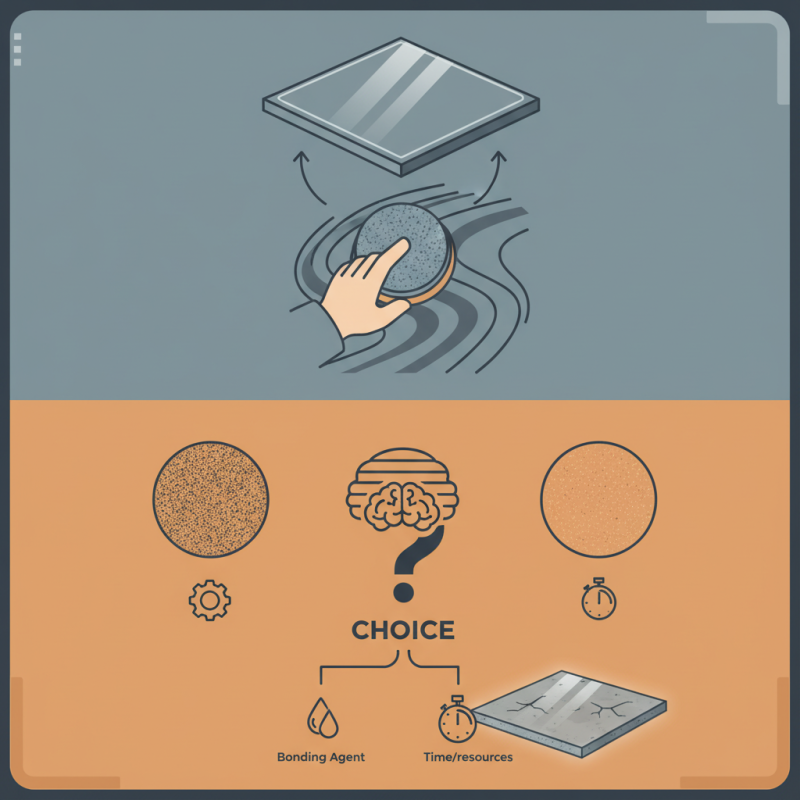
Concrete Burnishing Pads come in various materials, each suited for specific tasks. The right pad can significantly affect the final appearance and durability of the surface. Properties like grit size and bonding agent influence performance. A well-chosen pad can save time and resources, while a poor choice may lead to disappointing results.
However, choosing the best Concrete Burnishing Pads isn’t always straightforward. With numerous options, it can be overwhelming. Sometimes, even seasoned professionals need to reassess their choices. Make sure to consider your project's unique needs and the environment in which you are working. Failing to do so could result in a finish that doesn’t meet your standards.
Understanding Concrete Burnishing Pads: Types and Uses
When considering concrete burnishing pads, understanding the types and uses is vital. These pads come in various materials, each suited for different applications. For example, resin pads are popular for achieving a glossy finish on concrete surfaces. They excel in polishing while minimizing scratches. In contrast, diamond pads are ideal for heavy-duty projects. They offer durability and effectiveness in grinding down rough surfaces. Industry reports indicate that diamond pads can last up to five times longer than traditional options.
The selection of burnishing pads directly impacts the project’s outcome. Performance depends on factors like grit size and pad density. For smooth results, finer grits are recommended. Studies reveal that using the appropriate density can enhance the longevity of both the pad and the concrete surface. Some users have noted varied experiences with each type. It is essential to choose wisely, as the wrong pad can lead to disappointing results.
In practice, experimenting with different pads helps refine your process. Some may discover that their initial choice of pad was not optimal. Continuous improvement and adaptation are key. Understanding the nuances of each type will ultimately lead to a better finish and extended lifespan of concrete surfaces.
Assessing Your Project Requirements: Size, Texture, and Finish
When choosing concrete burnishing pads, understanding your project requirements is crucial. The size of the pad should match the dimensions of your workspace. Larger pads cover more area quickly, but smaller pads allow for precision in tighter spots. In some cases, a mix may be necessary to achieve the best results. Assessing whether you need a 14-inch or a 20-inch pad can significantly impact your efficiency.
Texture plays a vital role in the final finish of your concrete. Different textures will yield varied degrees of shine and smoothness. For example, a finer pad enhances gloss, while a coarser option may be more suitable for surface preparation. It’s essential to choose a texture that aligns with your desired outcome. Experimenting with a few options can lead you to the best fit, but this may require extra time and resources.
The finish is not just what you see; it’s about durability too. A shiny finish may look appealing but can show every scratch and imperfection. A more matte finish hides flaws better, but may not have the same aesthetic appeal. Reflect on your priorities—will you sacrifice some shine for longevity? Finding the perfect balance can be challenging and requires careful consideration of these factors.
Choosing the Right Grit Level for Optimal Performance
Selecting the right grit level for concrete burnishing pads is essential for achieving the desired finish on your concrete surface. The grit level refers to the size of the abrasives used in the pad. Generally, lower grit pads (around 50-100) are suitable for heavy grinding and initial polishing. They remove rough surfaces and prepare the concrete for finer grits. Higher grits (200-3000) are used for achieving a shiny, smooth surface. A study conducted by the American Concrete Institute indicates that using a sequential grit progression improves overall surface quality significantly.
It's important to consider the specific needs of your project. For instance, if you're working with cured concrete, starting with a medium grit pad around 200 may be ideal. However, using a pad that is too coarse can lead to unnecessary scratches and imperfections, requiring additional polishing steps. Data from construction surveys suggests that 30% of contractors face challenges due to incorrect grit selections, often resulting in wasted time and resources.
Always test a small section before committing to a full burnishing process. Feedback from industry professionals highlights that this can prevent costly mistakes. Additionally, maintaining a keen eye on pad wear and replacing them when necessary ensures that performance remains optimal throughout the project. This kind of diligence may seem labor-intensive, yet the benefits are undeniable.
Choosing the Right Grit Level for Optimal Performance
Compatibility with Burnishing Machines: Key Considerations
When selecting concrete burnishing pads, compatibility with burnishing machines is a crucial factor. Different machines require specific pad types. For optimal results, it’s essential to check the manufacturer's specifications. According to a report from the Concrete Industry Research Institute, nearly 40% of burnishing issues stem from using mismatched pads and machines.
Choosing the right pad can lead to significant improvements in performance. For instance, there is a notable difference between pads designed for high-speed and low-speed machines. High-speed machines need pads that can endure greater friction and heat. In contrast, low-speed machines often work well with softer pads. Industry experts emphasize that the right pairing can boost the sheen and longevity of concrete floors.
Installation can also pose challenges. Pads ought to fit securely to avoid wobbling during use. Misalignment not only affects the finish but can also damage the machine. Safety should be a priority; poorly fitting pads can become a hazard. Understanding your equipment's requirements ensures effective results. Making informed choices elevates your project’s success.
Budgeting for Quality: Price Ranges and Value Analysis
When selecting concrete burnishing pads, understanding the budget is crucial. Quality pads range from $20 to $100 each, depending on material and durability. Professional industry reports indicate that investing in high-quality pads can provide better longevity and performance. For example, a well-made diamond polishing pad can last up to 10 times longer than lower-quality options. This suggests that a higher upfront cost may ultimately save money on replacements.
Tips: Consider your project's scope. For large areas, a mid-range pad may suffice. For intricate finishing, opt for premium pads. It's essential to balance cost and quality to avoid frequent replacements, which can be more expensive over time.
Budget-conscious buyers should also analyze the value of the pads. Lower-priced options can seem appealing but often result in inconsistent results. Training and expertise of the workers using these pads also play a role. Investing in better pads may enhance their effectiveness. A study showed that users reported a 30% increase in satisfaction with higher-quality pads. Quality cannot be overlooked in this aspect.