

How to Choose the Best Striping Removal Equipment in 2026?

Choosing the best Striping Removal Equipment in 2026 starts with the pavement, not the sales brochure. FHWA’s Highway Statistics 2022 reports roughly 4.2 million miles of public roads in the United States. That scale makes durable, maintainable pavement markings a practical concern for agencies and contractors. FHWA’s 11th Edition MUTCD, published in 2023, also emphasizes that traffic control devices must be maintained for effective visibility. Removal work therefore needs to clear obsolete lines without leaving confusing remnants or damaging the surface.

The right machine depends on the marking material, pavement condition, removal width, and project pace. Grinding can be productive on suitable surfaces, while water-based or abrasive methods may fit other constraints. No method is automatically best. A city crew removing a narrow thermoplastic stripe has different needs from a contractor clearing long paint lines on asphalt. Compare removal rate, dust and debris control, operator visibility, maneuverability, maintenance access, and the quality of the surface after a test pass. A neat product sheet can still mislead. Field conditions matter.

This guide uses FHWA guidance and practical selection criteria to compare equipment types, operating costs, and job-site trade-offs. It also flags a difficult point: aggressive removal may save minutes but create costly pavement repairs. Buyers should verify performance on a representative test area and review manufacturer claims against documented field results. The best choice is the one that removes markings consistently, protects the substrate, and fits the crew’s real working conditions—not just the ideal demonstration.
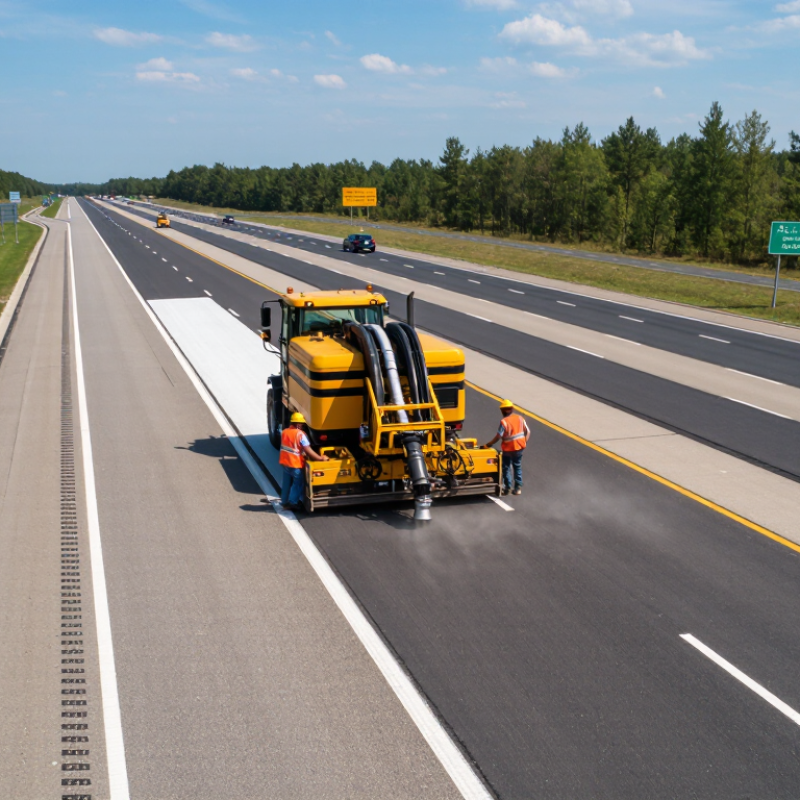
How to Choose the Best Striping Removal Equipment in 2026?

Define the Striping Removal Task and Site Conditions

Before comparing striping removal equipment, define exactly what must come off. A thin, faded traffic line requires a different approach from thick thermoplastic markings or several paint layers. That distinction matters. Measure the markings’ total length and width, and note whether removal must be complete or merely reduce their visibility. Record the pavement type, too. Asphalt can scar under aggressive cutting, while concrete may tolerate a different working pressure. A small test area can reveal more than a brochure.

Describe the site as carefully as the marking. Note slopes, cracks, loose aggregate, drainage grates, curbs, and nearby fixtures. On a narrow road, maneuverability may matter more than peak removal speed. In a large, open lot, work rate and debris handling may become stronger priorities. Check access for the machine and where removed paint, dust, or slurry can be collected. Small details matter.

Weather and operating windows also shape the task. Damp pavement can affect traction and cleanup, while wind may carry dust toward people or parked vehicles. Identify pedestrian routes, active traffic, and noise-sensitive areas before choosing a removal method. A common planning mistake is estimating only the marked surface; setup, edge work, and cleanup take time as well. These estimates are rarely exact, so leave room for a slower test pass and adjust the plan after seeing how the pavement responds.

Compare Striping Removal Methods and Equipment Types

Grinding uses rotating abrasive heads to remove paint or thermoplastic markings. It suits many paved surfaces and allows operators to control removal depth. However, worn segments can leave uneven lines, while dry grinding may create substantial dust. A shrouded machine with effective vacuum collection helps manage debris.

Shot blasting propels small steel media at the marking, then collects it for reuse. It can remove coatings efficiently and leave a textured surface, but the result depends on machine settings and pavement condition. Thin or damaged asphalt may be roughened more than intended. Waterjet equipment uses high-pressure water, which can limit airborne dust and heat. The trade-off is slurry management and the need to keep the work area controlled. Not always simple.

Scarifiers use cutting tools to chip away thick markings. They can work well on stubborn material, but may leave grooves that need attention before new lines are applied. Match equipment to the coating, pavement, and required finish—not just the job’s square footage. A small test patch can reveal hidden layers or surface damage. It takes extra time, and the first test may still miss a problem. Check dust or slurry controls, replacement-tool availability, and operator training before choosing a machine.

Evaluate Performance, Safety, and Environmental Requirements

Choosing striping removal equipment starts with the pavement, not the catalog. Asphalt, concrete, and older coatings respond differently to grinding, shot blasting, or water-based removal. Match the method to the marking thickness and required finish. A narrow sidewalk job may favor a compact machine, while long lane markings demand steady production and manageable changeovers. Check removal speed, working width, edge control, and how often operators must stop to clear debris. Run a test patch on the actual surface. Numbers can mislead.

Safety deserves equal weight. Look for effective dust collection, guarded moving parts, emergency stops, and controls operators can reach without awkward movement. Silica-containing dust can be a serious concern when disturbing concrete, so verify the equipment’s dust-control setup and follow the site’s exposure-control plan. Consider noise, vibration, visibility, and lifting points during a full shift, not just a brief demonstration. Provide suitable training and protective equipment. Small details matter.

Environmental requirements vary by site. Dry methods may create airborne dust; wet methods can produce slurry that needs controlled collection and disposal. Ask how the machine handles debris, water use, and exhaust, then confirm these choices fit the project’s requirements. Compare total operating costs, including filters, abrasives, water, and cleanup. A quieter, cleaner machine may still remove markings too slowly. That trade-off is easy to miss. Test results should guide the purchase, even when they challenge the original plan.

Match Equipment Capacity and Power to Project Needs

How to Choose the Best Striping Removal Equipment in 2026?

Match Equipment Capacity and Power to Project Needs

For a small parking-lot refresh, a compact walk-behind grinder may be easier to steer around curbs and islands. Larger road projects often need a wider cutting path and sustained motor power. Do not choose by advertised speed alone. Removal rates change with paint thickness, pavement texture, and overlapping passes. A machine that clears a broad stripe quickly can still leave uneven edges on rough asphalt. Test a representative section first.

Match power to the site, not just the machine. Electric equipment can suit enclosed or noise-sensitive areas when the available supply supports its load. Gas-powered units offer mobility, but operators must plan for fuel, ventilation, and routine checks. Compare duty cycle, tool wear, dust collection, and time spent moving between work zones. A high-capacity unit may sit idle if access is tight or crews cannot feed it steadily. Specs can miss that.

Tips: Estimate daily square footage, then allow time for setup and cleanup. Check the power source and breaker capacity before delivery. Run a small test area, inspect the pavement, and adjust speed or tooling before scaling up. Slightly slower is sometimes better.

Assess Costs, Maintenance, and Long-Term Equipment Support

The purchase price is only the first line in a striping-removal equipment budget. Compare fuel or power use, operator hours, consumables, transport, and scheduled service across a typical year. FHWA life-cycle cost guidance recommends weighing initial costs against future operating and maintenance costs. Apply that logic to your own workload: a machine used daily may justify a higher upfront cost, while occasional jobs may not. Deloitte’s predictive-maintenance analysis reports potential maintenance-cost reductions of about 10% across industrial settings. Treat that as a broad benchmark, not a striping-machine guarantee. Actual savings depend on service access, operator habits, and local working conditions.

Tips: Ask for a written maintenance schedule, parts lead times, and technician response times. Price common wear items, such as cutting tools and filters. Check whether routine servicing can be done in your yard. Small details matter.

Long-term support can protect uptime, but promises need specifics. Ask how long critical parts remain available and whether service staff can diagnose faults remotely. Check the warranty exclusions carefully; labor, travel, and wear components may be treated differently. If possible, inspect a unit after a full work shift. Look for dust buildup, loose fittings, and awkward access around service points. One weak spot in many buying decisions is relying on a short demonstration. It may not reveal maintenance delays or the cost of repeated tool changes. Keep a simple log of hours, repairs, and consumables during the first season, then compare actual ownership costs with the quote.

How to Choose the Best Striping Removal Equipment in 2026? - Assess Costs, Maintenance, and Long-Term Equipment Support

Comparison is qualitative. Purchase, rental, operating, and service costs vary by machine size, configuration, local labor rates, and availability of parts.
Equipment type Typical removal method Relative cost profile Routine maintenance Long-term support checks Best suited to
Walk-behind diamond grinder Abrades markings with rotating diamond tooling; dust-control attachments are commonly available. Moderate equipment cost; ongoing spend on diamond segments, filters, and dust-collection components. Inspect tooling and guards, clean dust paths, check drive components, and replace filters as required. Confirm availability of compatible tooling, filters, belts, and repair parts; check that the machine can be serviced locally. Small to medium jobs, detail work, and sites where controlled, localized removal is important.
Ride-on or larger planetary grinder Uses multiple rotating heads and abrasive tooling to remove markings over broader pavement areas. Higher purchase, transport, and operating costs; productivity may offset these costs on frequent, larger projects. Maintain the engine or power system, inspect heads and tooling, and service dust collection and moving components. Check technician coverage, diagnostic support, parts lead times, operator training, and transport requirements. Contractors handling recurring, larger-scale removal work with adequate transport and trained operators.
Mechanical scarifier or planer Uses impact cutters or milling tools to chip or cut markings and surface material. Moderate to high operating cost; cutter wear and potential pavement repair can add to project cost. Inspect cutters, drums, bearings, and guards; replace worn cutting components and manage debris. Verify access to cutter assemblies and wear parts, plus training on depth control and surface protection. Thicker or stubborn markings where a more aggressive removal method is acceptable.
Shot blaster Projects abrasive media at the surface and collects much of it through an enclosed blasting and recovery system. Higher system and setup cost; abrasive media, wear parts, and dust-control needs affect operating cost. Check blast wheel and liners, media flow, recovery system, seals, and dust collector; replenish and screen media as specified. Confirm supply of compatible media and wear parts, service for the recovery system, and support for dust-control components. Projects requiring a prepared surface as well as marking removal, subject to pavement and project specifications.
High-pressure water-jet system Uses a high-pressure water stream; some systems include vacuum recovery for wastewater and removed material. High system and water-management costs; total cost depends on recovery, disposal, and site logistics. Inspect pumps, hoses, seals, and nozzles; maintain filtration and recovery equipment, and follow safe depressurization procedures. Check pump repair capability, nozzle and seal availability, operator training, and local wastewater handling requirements. Sites where water-based removal is suitable and water recovery, disposal, and traffic control can be managed.

Selection tip: Compare total ownership cost—not just purchase price—including transport, consumables, labor, downtime, dust or wastewater controls, training, and access to replacement parts.

Choose a global leader for your hydraulics solutions

How can we help you?

Call to 0034 943884600 Contact us
Call us Contact us

We use cookies to ensure that we give you the best experience on our website. If you continue without changing your settings, we'll assume that you agree to receive cookies on the HINE website. For more information read our cookie policy page, click the link for more information.plugin cookies

ACEPTAR
Aviso de cookies