How to Choose the Right Cold Rolled Coil for Your Project?
Choosing the right Cold Rolled Coil for your project is crucial. This material is widely used in various applications. Its unique properties make it suitable for many industries. However, not all Cold Rolled Coils are created equal.
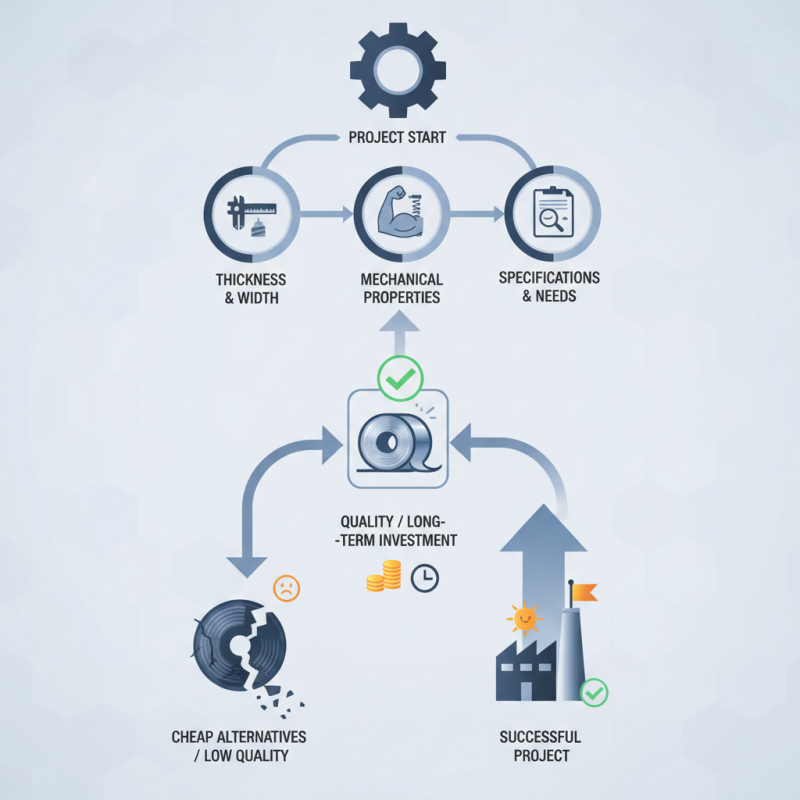
Consider what you need before making a decision. Think about the thickness, width, and mechanical properties that suit your project. You may overlook essential details, leading to the wrong choice. It's vital to remain aware of your needs and specifications.
In some cases, it’s easy to underestimate the significance of quality. Cheap alternatives may seem appealing but can lead to issues later on. Reflect on the long-term impact of your choice. Investing time in research will pay off in the end.
Understanding Cold Rolled Coil: Key Characteristics and Applications
When choosing a cold rolled coil, it's essential to understand its key characteristics. Cold rolled coils are made through a process that reduces thickness and improves surface quality. They typically have a smooth finish, which makes them ideal for applications requiring aesthetic appeal. The tighter tolerances achieved during production can significantly impact functionality.
These coils are widely used in construction and automotive industries. They provide strength and durability, essential for structural components. However, the choice often depends on specific project needs. Thickness, width, and coil weight are factors to consider carefully. Overlooking these details can lead to inefficiencies and increased costs.
Cold rolled coils also have limitations. They can be prone to rust if not coated properly. This vulnerability should not be ignored. Also, their brittleness may require special handling during fabrication. Recognizing these nuances helps in making informed decisions. It is often wiser to consult with experts before proceeding.
How to Choose the Right Cold Rolled Coil for Your Project?
| Characteristic | Description | Applications |
| Thickness | Typically ranges from 0.1 mm to 3 mm | Used in automotive parts, appliances, and furniture |
| Surface Finish | Can be smooth, matte, or textured based on requirements | Suitable for decorative applications and consumer goods |
| Mechanical Properties | High strength with excellent ductility | Ideal for structural components and machinery |
| Coating Options | Can be available with protective coatings | Useful in outdoor applications and environments prone to corrosion |
| Tolerance | High tolerance levels ensuring precision in dimensions | Critical in manufacturing and engineering applications |
Assessing Thickness and Gauge: Impact on Project Requirements
Choosing the right cold rolled coil for your project can greatly affect its success. Thickness and gauge are critical factors. The thickness of the coil influences its strength, durability, and overall performance. A thicker coil may offer more structural integrity, making it ideal for heavy-duty applications. However, it may also add weight. In contrast, a thinner coil is lighter and easier to work with but might lack the necessary strength for certain projects.
Gauge is another important consideration. A lower gauge number indicates a thicker material. Conversely, higher gauge numbers signify thinner coils. Understanding the specific requirements of your project is vital. It’s easy to overlook these details, but they play a significant role in the final outcome. If the gauge is too high, the material may bend easily. This could lead to failures down the line.
While you may have a specific thickness in mind, testing and prototyping can reveal surprising results. Sometimes, what seems like the best option may not perform as expected. Being open to adjustments based on real-world testing can ensure you find the most suitable coil for your needs. It’s crucial to balance your project’s demands with the properties of the materials you choose.
Material Composition: Choosing the Right Steel Alloy for Performance
When selecting cold rolled coils, the material composition is critical. Different steel alloys offer varying properties. For example, carbon content can increase strength but reduce ductility. A study by the Steel Recycling Institute notes that low-carbon steels (0.05% to 0.25% carbon) are highly workable, making them ideal for applications like automobile manufacturing. They can be deep-drawn without cracking.
In contrast, medium-carbon steels (0.25% to 0.60% carbon) provide a balance of strength and toughness. This type is often used in demanding applications. However, it may be less ductile. If you require maximum hardness, high-carbon steels (0.60% and above) might be the answer, but expect greater brittleness. This can lead to failures if not properly accounted for.
Altering alloying elements can enhance performance. Elements such as manganese and chromium improve hardness and strength. According to ASTM standards, the right mixture can significantly impact durability. Yet, mixing for optimal performance is a tricky business. Balancing cost, availability, and mechanical properties often leaves room for doubt. Consideration must be given to the trade-offs involved in each choice.
Surface Finish Options: Aesthetic and Functional Considerations
When selecting a cold rolled coil, the surface finish plays a pivotal role. The appearance and texture can influence both the aesthetics and functionality of your final product. Options include mirror finishes, brushed textures, and matte surfaces. Each offers a unique look, making your choice important.
Tips: Consider the end application of your product. If it's decorative, a mirror finish might be ideal. For functional uses, a matte surface can reduce glare and scratches.
Different finishes impact corrosion resistance too. A smooth surface often has better protection, while textured surfaces might trap contaminants. Think about maintenance needs when deciding. It’s crucial to balance between looks and practicality, as some finishes may require more care.
Don’t overlook potential imperfections in the finish.
These can affect the overall quality of your project. Make sure to inspect samples closely. Remember, the right choice will reflect your project’s goals and expectations.
Cost-Effectiveness: Analyzing Pricing Trends in Cold Rolled Steel Markets
Understanding pricing trends in the cold rolled steel market is vital for project success. Prices can fluctuate significantly. For instance, a report from the World Steel Association indicated that cold rolled steel prices rose by nearly 15% year-over-year in 2022. This trend reflects the changing dynamics of supply and demand.
The shift in costs often depends on global market conditions. Unstable energy prices and material shortages play a role. In February 2023, the average price for cold rolled steel was projected around $1,100 per ton, marking an increase. This rise can make budgeting challenging for construction projects.
Buyers must analyze their options carefully. Spot pricing can showcase sudden spikes. However, long-term contracts may provide stable rates. Buyers need to consider their purchasing strategy. Some may not realize the impact of these choices until after project delays occur. Keeping abreast of market reports can offer some clarity in these uncertain times.