

How to Choose the Right Oilfield Mud Pump

Choosing the right Oilfield Mud Pump is a practical decision, not a simple equipment purchase. Pump performance affects drilling speed, pressure stability, fluid circulation, and maintenance costs. A pump that looks suitable on paper may struggle with abrasive mud, high temperature, or long operating cycles. Field conditions matter.

This guide examines the factors experienced drilling teams usually review before selection. These include flow rate, discharge pressure, liner size, power source, fluid properties, and expected duty cycle. It also considers duplex and triplex designs, spare-parts availability, vibration control, and ease of inspection. Manufacturer specifications provide a useful starting point, but they should not replace site testing or qualified engineering review.

Details make the difference. A pump working beside a dusty rig may need stronger sealing protection. A unit handling dense, sand-laden mud may require more frequent valve and liner checks. Operators should compare certified performance data, service records, warranty terms, and support response times. Safety procedures and applicable industry standards must guide installation and operation.

There is no universal best choice. That assumption can be wrong. A high-capacity pump may waste energy on a smaller rig, while an undersized model can create damaging pressure demands. This introduction helps readers question convenient claims and connect technical specifications with real drilling requirements. The final decision should reflect verified data, experienced judgment, and the actual conditions where the Oilfield Mud Pump will operate.
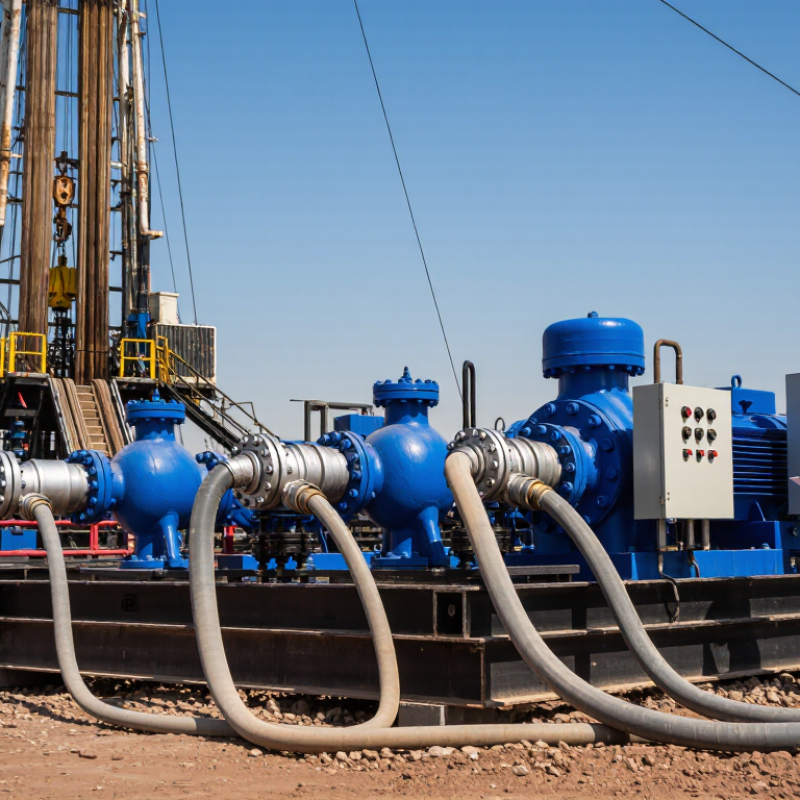
How to Choose the Right Oilfield Mud Pump

Define the Role and Operating Requirements of an Oilfield Mud Pump

How to Choose the Right Oilfield Mud Pump

An oilfield mud pump circulates drilling fluid through the surface system, drill string, and wellbore. This flow carries rock cuttings upward and helps cool and lubricate the drilling tools. It also supports hydrostatic pressure management during drilling operations. The pump must deliver steady flow under demanding pressure, not merely produce a high peak rate. In the field, unstable pressure can create vibration, poor hole cleaning, and unnecessary equipment stress.

Define the operating requirement before comparing pump designs. Record the target flow rate, discharge pressure, fluid density, viscosity, temperature, and solids concentration. Confirm the expected duty cycle, including long periods at high load. Check available power, installation space, suction conditions, and maintenance access. A pump working near its limit may appear efficient, but it leaves little margin for changing formations or heavier drilling fluid. Pulsation control and accurate pressure monitoring also deserve attention.

A practical specification should include both normal and exceptional conditions. Review liner wear, valve access, spare-part needs, and inspection intervals with experienced drilling personnel. Ask how the pump performs after hours of abrasive service. That answer may matter more than a catalog rating. My first estimate is rarely perfect; field data often exposes overlooked friction losses or changing fluid properties. Leave a realistic safety margin, then verify it through documented calculations and controlled commissioning. Small details matter.

How to Choose the Right Oilfield Mud Pump

Define the Role and Operating Requirements of an Oilfield Mud Pump

Mud pumps circulate drilling fluid through the drill string and annulus to remove cuttings, cool the bit, control formation pressure, and maintain wellbore stability. The chart shows representative planning targets for common drilling conditions.

Select a pump by matching the required flow rate and discharge pressure, then verify hydraulic horsepower, liner and piston configuration, fluid density, solids content, stroke rate, and the required operating margin. Actual values must be confirmed through the well hydraulics program and equipment specifications.

Compare Pump Types, Configurations, and Displacement Methods

Choosing an oilfield mud pump starts with the required flow, pressure, and drilling fluid behavior. Triplex pumps use three plungers, producing smoother discharge and lower pulsation. They suit high-pressure drilling and frequent operating changes. Duplex pumps use two pistons and often provide strong, simple serviceability. However, their discharge pulsation can be higher without proper dampening. Centrifugal pumps work differently. They move fluid through rotating energy rather than fixed chamber displacement. That makes them useful for mixing, charging, and low-pressure transfer. That difference matters.

Positive-displacement pumps deliver a measured volume during each stroke. Their output depends on liner diameter, stroke length, and running speed. Larger liners increase displacement but may reduce pressure capability. Smaller liners can support higher pressure, yet they may limit flow. Variable-frequency drives allow speed adjustment, but careless changes can increase liner wear and vibration. Centrifugal pumps respond more strongly to system resistance. Their flow may fall when the discharge line becomes restricted. Do not compare flow ratings alone.

Configuration details often decide real performance. Review the power-end rating, fluid-end material, valve design, pulsation dampener, and available maintenance space. In field inspections, I check suction hose movement, pressure fluctuations, and liner temperature. Small air leaks can cause unstable suction and misleading pressure readings. Mud density also changes the pump’s workload. A pump sized for clean water may struggle with abrasive, solids-heavy mud. A perfect selection rarely exists. Leave operating margin, but avoid excessive capacity that wastes power. The best choice should match the drilling program, crew skills, maintenance schedule, and actual mud properties.

How to Choose the Right Oilfield Mud Pump - Compare Pump Types, Configurations, and Displacement Methods

Pump Type Displacement Method Typical Configuration Representative Flow Range* Representative Pressure Range* Main Advantages Typical Limitations and Applications
Triplex Reciprocating Pump Positive displacement
Single-acting plungers; three discharge strokes per crank revolution.
Three cylinders arranged around a crankshaft; replaceable liners and fluid-end valves. Approximately 500–2,000 gal/min
(1,900–7,600 L/min)
Approximately 5,000–10,000 psi
(345–690 bar), depending on size and liner selection.
  • Good balance of flow, pressure, size, and maintenance.
  • Lower pulsation than a duplex pump.
  • Widely suited to high-pressure drilling circulation.
Pulsation dampeners are still required for smooth standpipe flow. Common choice for land and offshore drilling rigs where high pressure and dependable continuous circulation are required.
Duplex Reciprocating Pump Positive displacement
Double-acting pistons; each cylinder produces discharge on both piston directions.
Two cylinders with double-acting fluid ends, suction and discharge valves on each cylinder end. Approximately 300–1,500 gal/min
(1,100–5,700 L/min)
Approximately 3,000–7,500 psi
(207–517 bar), depending on design and operating speed.
  • Strong, proven design with high displacement per cylinder.
  • Can provide substantial flow from a compact pump package.
  • Suitable for many conventional drilling and workover duties.
Higher discharge pulsation than triplex or quintuplex designs and more fluid-end sealing points. Requires careful maintenance of piston rods, packing, valves, and liners.
Quintuplex Reciprocating Pump Positive displacement
Single-acting plungers; five discharge strokes per crank revolution.
Five-cylinder power and fluid ends with replaceable liners or plungers, depending on the design. Approximately 500–2,500 gal/min
(1,900–9,500 L/min)
Approximately 7,500–10,000 psi
(517–690 bar), with some designs rated outside this range.
  • Lower flow pulsation than duplex pumps.
  • High flow and pressure capability in a relatively compact footprint.
  • Well suited to demanding deep, extended-reach, and high-pressure wells.
More cylinders and fluid-end components can increase inspection and spare-parts requirements. Selection should consider local maintenance capability and the availability of qualified service personnel.
Centrifugal Mud Pump Dynamic displacement
An impeller adds velocity to the drilling fluid and converts part of it into pressure.
Single-stage or multistage impeller assembly with open, semi-open, or enclosed impeller configurations. Approximately 500–3,000 gal/min
(1,900–11,400 L/min)
Approximately 50–500 psi
(3.5–34.5 bar), depending on impeller diameter and speed.
  • Continuous, relatively smooth flow.
  • Simple operation and effective for transferring or mixing drilling fluid.
  • Useful as a charging or auxiliary pump for reciprocating mud pumps.
Not normally used to generate the high standpipe pressures required for primary drilling circulation. Performance decreases when viscosity, solids concentration, or suction conditions become unfavorable.
Electric-Drive Reciprocating Mud Pump Positive displacement
Usually triplex or quintuplex; an electric motor and variable-speed drive control the crankshaft.
AC motor, variable-frequency drive, reduction gearing, power end, fluid end, suction manifold, and discharge manifold. Typically matched to the selected triplex or quintuplex fluid end; commonly 500–2,500 gal/min. Typically matched to the fluid end; commonly 5,000–10,000 psi.
  • Precise speed and flow control.
  • Good compatibility with automated drilling controls.
  • Can reduce local emissions when supplied by an appropriate electrical system.
Requires adequate electrical infrastructure, cooling, controls, and protection systems. The drive arrangement changes the power source, but the pressure and flow limits remain governed mainly by the fluid-end design.
Diesel-Driven Reciprocating Mud Pump Positive displacement
Usually triplex or duplex; a diesel engine supplies mechanical power through a transmission or compound drive.
Diesel engine, clutch or transmission, power end, fluid end, suction system, discharge manifold, and pulsation dampener. Typically matched to the selected pump package; commonly 300–2,000 gal/min. Typically matched to the fluid end; commonly 3,000–10,000 psi.
  • Suitable for remote locations without a stable grid connection.
  • Flexible deployment and established field service practices.
  • Can be configured as a self-contained pumping package.
Requires fuel handling, exhaust management, engine cooling, and more frequent engine-related maintenance. Noise and emissions may affect site planning and permitting.

*The flow and pressure figures are representative selection ranges, not universal ratings. Actual performance depends on liner or plunger diameter, stroke length, crankshaft speed, drilling-fluid density and viscosity, solids content, suction conditions, fluid-end materials, and the pump manufacturer's certified operating envelope. For a safe selection, verify the required flow, maximum working pressure, hydraulic horsepower, duty cycle, pulsation control, and available power source.

Evaluate Pressure, Flow Rate, Power, and Efficiency Requirements

How to Choose the Right Oilfield Mud Pump

Start with the formation, not the horsepower. Pressure and flow rate should match the well plan, drilling-fluid density, nozzle program, and expected circulating losses.

Calculate hydraulic horsepower with P × Q ÷ 1,714 , using pressure in psi and flow in gallons per minute. A 5,000 psi system at 800 gpm requires about 2,334 hydraulic horsepower.

After accounting for mechanical and volumetric losses, the installed drive should provide practical reserve capacity. API Specification 7K offers a useful safety and equipment framework, but site conditions still require engineering review.

Efficiency deserves equal attention. The U.S. Department of Energy’s Pumping System Assessment Tool indicates that suitable pumping systems may reduce energy use by 20% or more through improved controls, sizing, and maintenance.

Mud pumps face abrasive solids, pulsation, seal wear, and changing fluid properties. Therefore, compare efficiency at realistic operating points, not only at the nameplate rating.

Track discharge pressure, stroke rate, liner condition, and motor load during field trials. Small inefficiencies become expensive over long drilling campaigns.

Keep the assumptions visible. A pump selected for peak pressure may waste power at normal circulation rates. A pump selected too closely may struggle after fluid density rises.

That trade-off is easy to underestimate. Review duty cycles, standby requirements, spare-fluid capacity, and local power limitations.

The IADC Drilling Manual and API guidance support disciplined selection, yet neither replaces measured site data. Field measurements can disagree with design sheets. That is normal. Recheck the model.

Check Materials, Durability, Maintenance, and Safety Features

When choosing an oilfield mud pump, inspect wetted parts before comparing flow rates. The fluid end faces abrasive solids, pressure cycling, and corrosive chemicals. Forged alloy steel, replaceable liners, and properly rated valves deserve close attention. Request material certificates, hardness results, and pressure-test records. API Specification 7K provides recognized requirements for drilling equipment. Match every document to the actual pump. Do not accept “heavy duty” as evidence.

Durability also depends on maintenance access. Check whether technicians can change liners, valves, and packing without awkward lifting or extended downtime. The U.S. Department of Energy’s Operations and Maintenance Best Practices guide reports that predictive maintenance may reduce maintenance costs by 25–30%. It may also reduce downtime by 35–45%. Install vibration, temperature, and discharge-pressure monitoring where practical. A higher pressure rating can still be the wrong choice.

Safety features should be physical, visible, and testable. Look for guards, pressure-relief protection, pulsation dampeners, emergency shutdowns, and clear isolation points. IOGP’s Safety Performance Indicators reports continue to identify line-of-fire exposure as a recurring high-potential risk. Keep operators away from discharge lines during testing. Field experience shows that small leaks often become serious distractions. A spreadsheet can still mislead. Compare seal life, spare-part availability, inspection intervals, and failure history, not only purchase price. Crew feedback is useful, but it should be recorded and checked against maintenance data.

Select a Pump Based on Cost, Compatibility, and Field Conditions

Choosing the right oilfield mud pump starts with total ownership cost, not the purchase price.

A cheaper pump may require more frequent liner changes, higher fuel consumption, or costly unplanned repairs. Downtime hurts. Build a five-year estimate using energy use, spare parts, labor, transport, and expected maintenance hours. The IEA’s Oil 2024 report projects global oil demand rising from 102.2 million barrels per day in 2023 to 105.4 million by 2029. Longer equipment service life therefore matters during extended drilling programs.

Compatibility must be checked against the complete circulation system.

Compare required flow, discharge pressure, mud density, temperature, solids concentration, liner size, and power source. API Spec 7K provides recognized requirements for drilling and well-servicing equipment, but certification alone does not prove suitability for every rig. A pump rated for 5,000 psi may still perform poorly if suction piping causes excessive pulsation. Measure actual operating conditions. Do not trust assumptions.

Field conditions often decide the final selection.

Remote pads need simple maintenance, accessible wear parts, and lifting points that match available handling equipment. High altitude reduces engine performance, while freezing temperatures can affect seals, valves, and lubricants. Water shortages may increase mud viscosity and solids loading. EIA drilling data shows how quickly activity can shift between major U.S. regions, so a fixed specification can age badly.

My own selection logic is not perfect: I once weighted maximum pressure too heavily and underestimated suction stability. That mistake made the larger pump less useful.

Choose a global leader for your hydraulics solutions

How can we help you?

Call to 0034 943884600 Contact us
Call us Contact us

We use cookies to ensure that we give you the best experience on our website. If you continue without changing your settings, we'll assume that you agree to receive cookies on the HINE website. For more information read our cookie policy page, click the link for more information.plugin cookies

ACEPTAR
Aviso de cookies