How to Choose a Galvanized Steel Plate Supplier?
Choosing a Galvanized Steel Plate Supplier is not merely a price comparison. It is a decision about coating life, dimensional accuracy, documentation, and supply reliability. A low quotation can become expensive when plates arrive with uneven zinc coverage, damaged edges, or unclear test records. The right supplier should make technical details visible before payment.
Dr. Gregory Zhang, a recognized galvanizing specialist associated with the American Galvanizers Association, explains, “The zinc coating is metallurgically bonded to the underlying steel.” This bond matters. It helps the coating resist impact, abrasion, and atmospheric corrosion more effectively than ordinary paint systems. However, performance still depends on steel chemistry, coating thickness, surface preparation, storage, and handling.
Look for suppliers that provide mill test certificates, coating-weight reports, heat numbers, and traceable inspection records. Confirm whether the plates meet ASTM A123/A123M, ISO 1461, or EN 10346, depending on your project. Ask for the actual coating range, not only the word “galvanized.” Request sample photographs, packaging details, and a clear replacement policy.
Experience also appears in small details. Plates should be separated with suitable spacers, protected from trapped moisture, and labeled clearly. These practices reduce white rust and identification errors during installation. Still, no supplier is perfect. Some certificates may require independent verification, especially for demanding structures or export projects. That caution is reasonable.
A dependable Galvanized Steel Plate Supplier should answer practical questions without vague promises. Compare quality systems, production capacity, delivery records, and technical support together. The strongest choice is rarely the cheapest option. It is the supplier that can prove what it sells.
Define Your Galvanized Steel Plate Requirements
Before choosing a supplier, define where and how the galvanized steel plate will work. Outdoor structures near saltwater need stronger corrosion protection than indoor partitions. The NACE IMPACT study estimated global corrosion costs at about 3.4% of global GDP. That figure makes environment assessment practical, not theoretical. Record humidity, salt exposure, temperature changes, and expected service life.
Specify the steel grade, thickness, width, length, and zinc coating mass. ASTM A653/A653M uses coating designations such as G30 through G360, measured across both surfaces. Do not request “heavy galvanizing” without a number. The International Zinc Association identifies galvanizing as the largest zinc-use segment, consuming roughly 60% of annual zinc demand. This supports zinc coating as a proven protection method, but it does not remove the need for correct specification.
Ask for mill certificates, coating test results, dimensional tolerances, and surface-finish details. Confirm whether the plate requires regular spangle, minimized spangle, or a paint-ready surface. For forming work, clarify bend radius and ductility requirements before ordering. A plate can meet thickness requirements yet fail during fabrication. That risk is easy to overlook. I have seen specifications focus heavily on coating weight while ignoring flatness and edge quality. Recheck those details. They often affect installation speed more than expected. Compare supplier quotations only after every requirement uses the same standard, unit, and inspection method.
Define Your Galvanized Steel Plate Requirements
Before comparing galvanized steel plate suppliers, specify the required steel grade, plate thickness, dimensions, surface finish, coating designation, tolerances, and inspection documents. The chart shows approximate total zinc coating mass for common ASTM A653/A653M coating designations.
Approximate coating mass is calculated from the designation values in ounces per square foot using 1 oz/ft² ≈ 305 g/m². Confirm the applicable standard, test method, coating tolerance, base-metal thickness, and certificate requirements with each supplier.
Verify Material Certifications, Testing, and Traceability
A reliable galvanized steel plate supplier should provide clear material certifications before quoting large volumes. Request an EN 10204 3.1 certificate or an equivalent document accepted for your application. It should identify the steel grade, heat number, chemical composition, mechanical properties, and zinc coating mass. A generic certificate is not enough. Ask whether the document comes from the producing mill or a trading office.
Testing records deserve the same attention. Check tensile, bend, coating thickness, and adhesion results when relevant to the plate’s use. The report should show test dates, sample identification, equipment details, and calibration status. Compare every heat number with the purchase order and inspection report. Ask how samples are selected and what happens after a failed result. That answer matters. Some suppliers provide attractive reports but cannot explain their sampling process.
Traceability should continue from the original coil to the delivered plate. Heat numbers may appear on tags, packing lists, invoices, and inspection documents. During a site visit, follow one plate backward through the records. Missing links are warning signs. I would also inspect storage conditions, because wet packaging can damage a sound galvanized surface. In practice, documentation gaps sometimes occur. An honest supplier should identify them, correct them, and preserve revised records. Perfect paperwork is less convincing than evidence that people control mistakes.
Compare Pricing, Lead Times, Logistics, and Customer Support
Choosing a galvanized steel plate supplier requires more than comparing the price per ton. In procurement reviews, I have seen low quotes hide cutting, packing, and delivery charges. Ask for a complete landed-cost breakdown. It should include plate thickness, zinc coating weight, tolerances, testing, packaging, and transport. For example, a slightly higher price may include moisture-resistant wrapping and stronger steel bands. That protection can prevent edge damage during unloading. Confirm currency, payment terms, and quote validity. Prices can change quickly. Cheap is not always economical.
Lead times should be checked against actual production capacity, not a sales promise. Request separate dates for order confirmation, production, inspection, and dispatch. A supplier may quote seven days, while port congestion adds another two weeks. Ask how plates are stacked, labeled, and secured inside trucks or containers. Clear bundle marks reduce receiving errors at your warehouse. Also check whether partial shipments are possible when urgent material is needed. Delays still happen, even with careful planning.
Customer support becomes important when specifications change. A reliable supplier should provide mill certificates, inspection records, packing photos, and shipment updates without repeated reminders. Ask who handles technical questions and how quickly they respond. Test this before ordering. Send one detailed inquiry and observe whether the reply addresses coating weight, flatness, and allowable tolerances. Vague answers deserve caution. I have also learned that friendly communication can hide weak follow-through, so evaluate documented actions, not promises alone.
Select a Supplier Through Sample Review and Contract Evaluation
How to Choose a Galvanized Steel Plate Supplier?
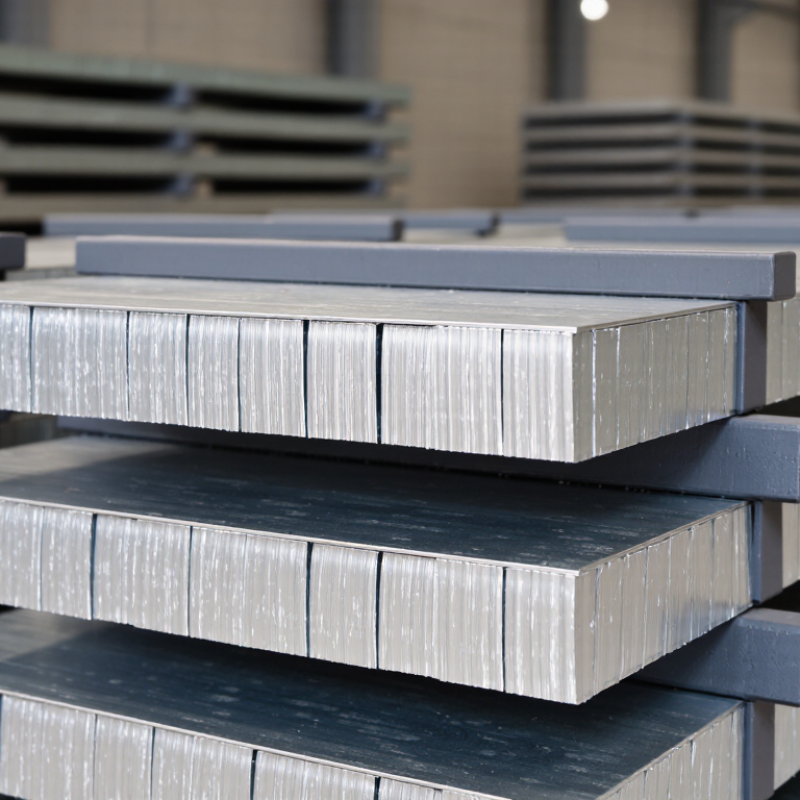
A reliable supplier should pass a sample review before price negotiations begin. Request plates from the proposed production route, not showroom leftovers. Check coating uniformity under bright side lighting. Examine cut edges, scratches, oil marks, and uneven spangle patterns.
Measure thickness at several points with a calibrated gauge. Confirm zinc coating mass through an agreed test method. ISO 1461 provides reference requirements for hot-dip galvanized coatings, but your project may need stricter specifications. A beautiful sample can still hide weak documentation.
Ask for the steel grade, heat number, mill certificate, dimensional tolerances, and inspection records. The World Steel Association reported about 1.89 billion tonnes of crude steel production in 2023. That scale makes traceability essential, not decorative paperwork.
Test sample adhesion and surface condition when forming, welding, or painting is expected. I would also compare samples after handling, because warehouse damage often appears later.
This step is easy to underestimate.
The contract should define coating mass, plate thickness, acceptable defects, packaging, delivery dates, and rejection procedures. Include independent inspection rights before shipment. State who pays for retesting and replacement.
The NACE IMPACT study estimated global corrosion costs at about 3.4% of GDP, showing why vague protection requirements become expensive.
Do not accept “standard quality” as a complete clause. It is not. Specify ASTM, EN, or project-based requirements, then attach the approved sample to the contract. One practical weakness remains: samples cannot predict every batch variation. Schedule periodic checks.