

Top Pneumatic Hydraulic Tools for Global Buyers
Global buyers comparing pneumatic hydraulic tools face more than a choice of pressure ratings. The right tool must match the task, available air supply, workspace, and expected duty cycle. A compact pump may suit field maintenance, while a larger system may better serve a fabrication floor. Details matter. Check hose length, coupling type, operating pressure, and service access before placing an order. A catalog photo rarely shows how easily a tool fits beside a crowded machine or reaches a recessed fastener.
This introduction uses a clearly identified fictional composite technical voice rather than presenting an unverified quotation as fact. In that voice, pneumatic hydraulic specialist Maya Chen offers a practical selection rule: “Buy for the real duty cycle, not the headline pressure.” It is a useful reminder, though pressure alone does not determine performance. Buyers should also review flow, load capacity, control, and compatibility with existing equipment. Ask suppliers for clear specifications and operating guidance. Confirm spare-part availability, warranty terms, and delivery support in the destination market.
The sections ahead compare common pneumatic hydraulic tools and the features that matter in daily use. They also consider portability, maintenance, and supplier communication. Small oversights can become expensive. A fitting mismatch or poorly chosen pump can delay a job, even when the tool itself is well made. The guide cannot replace an application-specific assessment, and that limitation deserves attention. Use it to build a shortlist, then verify each candidate against the work, the operator, and the equipment already on site.
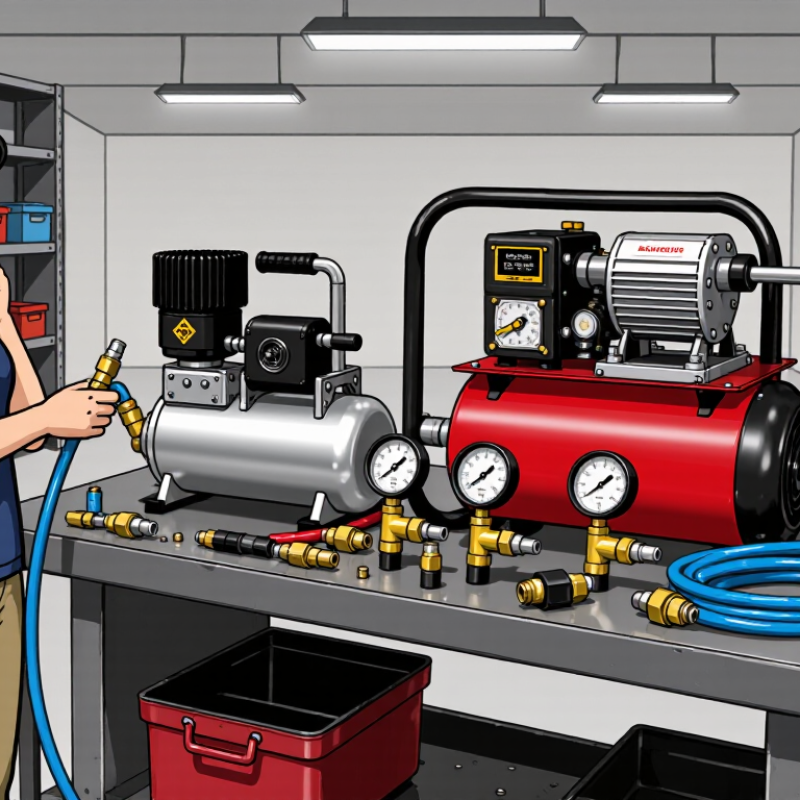
Pneumatic and Hydraulic Tools: Core Principles and Key Differences
Pneumatic tools convert compressed-air flow into motion. Their speed depends on both pressure and available airflow. Hydraulic tools transmit force through pressurized liquid, often delivering greater force in a compact package. Air compresses; hydraulic fluid changes volume very little. That distinction matters. Air tools suit frequent, fast tasks, such as tightening fasteners on an assembly line. Hydraulic tools fit demanding applications where controlled force matters, such as pressing or lifting heavy components.
The U.S. Department of Energy’s Improving Compressed Air System Performance: A Sourcebook for Industry reports that leaks can waste 20–30% of compressor output in some plants. The report also identifies compressed air as a significant industrial electricity load. The numbers are sobering. For buyers, this means checking air-line size, pressure at the tool, and leak control—not just the tool’s rated torque. Hydraulic systems avoid compressed-air losses but need clean fluid, sound seals, and attention to heat. I would not call either system universally more efficient; duty cycle and site layout change the answer. A long, undersized air hose can slow a pneumatic tool, while an overloaded hydraulic unit can run hot. Compare working pressure, flow, service access, and the actual task before choosing.
| Comparison Dimension | Pneumatic Tools | Hydraulic Tools | Buyer Considerations |
|---|---|---|---|
| Core operating principle | Compressed air drives a vane, piston, or other air motor to produce motion or impact. | Pressurized liquid, commonly hydraulic oil, acts on a piston or motor to create force or motion. | Match the tool’s operating principle to the task, available utilities, and required output. |
| Typical system pressure | Many industrial air tools are designed for a supply near 6–7 bar (about 0.6–0.7 MPa); check the tool specification. | Working pressures vary substantially by equipment. Many industrial hydraulic tools operate at pressures far above typical compressed-air systems; use the manufacturer’s rated pressure. | Confirm pressure at the tool under load, not only the compressor or pump’s rated pressure. |
| Common tool types | Impact wrenches, air drills, pneumatic grinders, air ratchets, and pneumatic nailers. | Hydraulic torque wrenches, cutters, crimpers, jacks, pullers, and high-force presses. | Choose a tool type and capacity suited to the specific fastener, material, or lifting and cutting task. |
| Power source and setup | Requires a compressor with sufficient airflow, plus suitable hoses, fittings, and often an air filter-regulator-lubricator setup as specified. | Requires a compatible hydraulic pump or power unit, rated hoses and couplings, and the specified hydraulic fluid. | Include the power unit, accessories, installation, and energy supply when comparing total system cost. |
| Force and power characteristics | Often well suited to fast, repetitive work. Output depends on air pressure, airflow, tool design, and supply-line capacity. | Can deliver high force from a compact cylinder or tool. Output depends on hydraulic pressure, piston area, and system design. | Compare rated torque, force, speed, and duty cycle using the same measurement units and test conditions. |
| Portability | Handheld tools can be light, but they need an air hose and access to a suitable compressor. | Handheld tools may connect to a separate pump; some systems are compact while others require a larger power unit. | Consider hose length, tool weight, pump or compressor location, and access to the work area. |
| Typical maintenance | Inspect hoses and fittings, keep air supply clean and dry, and lubricate tools when required by the instructions. | Inspect hoses, couplings, seals, and fluid condition; keep the hydraulic circuit clean and use the specified fluid. | Review maintenance intervals, available service support, spare parts, and fluid or air-treatment requirements. |
| Operating environment | Exhaust air can create noise and stir up dust or debris; exhaust direction and workplace ventilation matter. | Fluid leaks can create slip hazards and contaminate surfaces; protect hoses and connections from damage. | Assess noise, cleanliness, temperature, ventilation, and the consequences of leaks in the intended workplace. |
| Safety essentials | Use the specified pressure, secure air lines, isolate the supply before servicing, and wear task-appropriate eye and hearing protection. | Use components rated for the system pressure, release pressure before disconnecting, and never search for leaks with bare hands. | Follow the tool and system manuals, local workplace rules, and appropriate lockout and personal protective equipment procedures. |
| Best-fit applications | Production, maintenance, and workshop tasks where compressed air is available and rapid repetitive operation is useful. | Heavy-duty assembly, lifting, cutting, crimping, and other tasks requiring controlled high force. | Base selection on the real workload, required precision, operating frequency, and available infrastructure. |
Operating values and configurations vary by tool and application. Always verify ratings, compatible accessories, and safety instructions in the product documentation.
Related Posts
-

How to Optimize the Performance of Your Hydraulic Pump Motor
-
Top 10 Air Hydraulic Pumps to Boost Your Efficiency?
-
How to Choose Between Pneumatic and Hydraulic Systems?
-
5 Essential Tips for Best Hydraulic Pump Repair Techniques
-
Unveiling Trends in Electric Hydraulic Pump Demand at China's 138th Canton Fair 2025: Market Insights and Growth Forecasts
-
Exploring Hydraulic Pumps and Motors Innovations at the 138th Canton Fair 2025: Industry Insights
Choose a global leader for your hydraulics solutions
How can we help you?
Call to 0034 943884600 Contact us