

What is Siemens Motor Module and How Does It Work?

In an increasingly electrified world, the Siemens Motor Module stands out as a cornerstone of efficient power management. This technology integrates seamlessly into various industrial applications, enhancing performance and reducing energy consumption. According to the International Energy Agency (IEA), electric motors account for nearly 45% of global electricity consumption. This statistic underscores the importance of optimizing motor systems, a task the Siemens Motor Module is well-equipped to handle.

Renowned industry expert Dr. Elena Gros, a lead engineer at Siemens, stated, "The Siemens Motor Module is designed not just for efficiency, but for smart integration in modern industrial frameworks." Her insight reflects the module's ability to adapt and respond to the unique demands of diverse operational environments. The compact design and intelligent control mechanisms ensure that these modules optimize energy use while maintaining peak operational standards.

Yet, with advancements come challenges. The installation and maintenance of the Siemens Motor Module require skilled personnel, highlighting a gap in workforce training. Investing in education for technicians becomes vital to fully harness the benefits of this technology. Balancing efficiency with skill acquisition is crucial for the industry's future, as companies aim to lead in this electrifying transition.
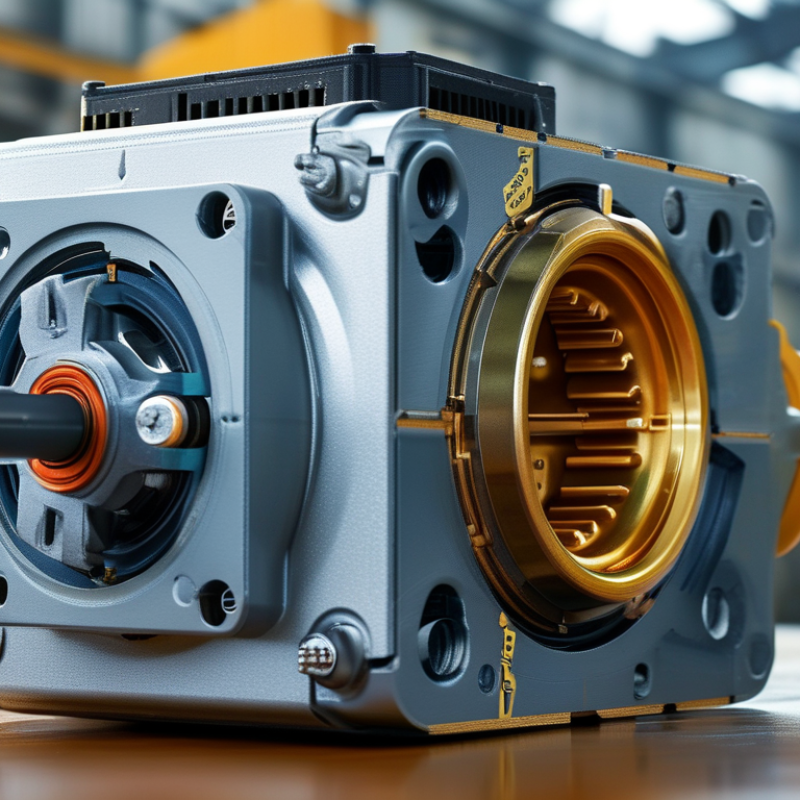
What is Siemens Motor Module and How Does It Work?

What is a Siemens Motor Module?

The Siemens Motor Module is an advanced system designed to enhance motor performance and efficiency. It integrates seamlessly with various types of motors, providing precise control and monitoring. This combination allows for improved operation in various industrial settings, enhancing productivity and reducing energy consumption.

The module typically includes features like an inverter, which converts direct current (DC) into alternating current (AC) for motor operation. This conversion is crucial as it allows motors to run at variable speeds, adapting to different needs. Additionally, the module often contains sensors that provide real-time feedback, ensuring optimal performance. Users may find that mastering these features requires some learning and adjustment.

While the technology is robust, there are instances where users may face challenges. For example, the configuration process can be complex for those unfamiliar with motor controls. This highlights the importance of thorough training and understanding of the system. Engineer insights indicate that proper maintenance is vital for maximizing the life cycle of the module. Embracing the machine's full potential often demands ongoing education and experience.

Key Components of Siemens Motor Module

The Siemens Motor Module comprises vital components that work together for efficient operation. At its core are the motor, controller, and cooling unit. The motor functions as the driving force, converting electrical energy into mechanical motion. This process requires precise control, which is where the controller plays a crucial role. It interprets signals and ensures the motor runs at optimal efficiency.

Another essential part is the cooling unit. It maintains the temperature of the motor and controller, preventing overheating. Overheating can lead to failures. An effective cooling system extends the module's lifespan and performance.

Tips: Regular maintenance is crucial. Check connections and clean components to maintain performance. Understanding each part's function will help troubleshoot issues. Remember, a well-maintained module is more reliable. Always monitor temperature levels to avoid unexpected breakdowns.

Performance Analysis of Siemens Motor Module

How Siemens Motor Module Operates

The Siemens Motor Module is a key component in industrial automation. It integrates seamlessly with electric motors, providing efficient control. Understanding its operation is essential for optimizing machinery performance.

The Motor Module functions by receiving commands from a control system. It regulates the power supply to the motor, adjusting speed and torque. This process enhances energy efficiency. The module employs advanced algorithms to monitor motor performance in real-time. It detects abnormalities and adjusts settings automatically. Such capabilities significantly minimize energy waste.

Tips: Regularly inspect connections and wiring. Ensure clean and dry environments to improve longevity. Overheating can lead to malfunction, so monitor temperature levels. Any unusual noises could indicate issues. Always address these promptly to avoid extensive damage. Keeping a maintenance schedule can help avert problems.

What is Siemens Motor Module and How Does It Work?

Feature Description
Purpose To control and optimize electric motor performance in various applications.
Components Includes power electronics, control algorithms, and feedback systems.
Operation Monitors motor parameters and adjusts power supply for optimal performance.
Efficiency Enhances motor efficiency by reducing energy losses.
Applications Used in industrial automation, HVAC systems, and electric vehicles.
Integration Can be integrated with various control systems for enhanced functionality.
Monitoring Provides real-time monitoring and diagnostics to ensure reliability.

Applications of Siemens Motor Module in Industry

Siemens Motor Modules play a crucial role in modern industrial applications. They efficiently integrate motors with a control system. This integration results in improved performance, energy efficiency, and reduced installation complexity. Industries ranging from manufacturing to robotics benefit greatly from this technology.

In manufacturing, these modules drive conveyor systems. They ensure precise speed control for various processes. This enhances productivity and minimizes downtime. In robotics, the motor modules provide reliable and accurate movement. This accuracy is vital for automation tasks, such as assembly lines. The use of Siemens Motor Modules can lead to significant cost savings over time.

Tips: Regular maintenance is essential for optimal performance. Ensure that all connections are secure. Furthermore, monitoring the module's temperature can prevent overheating. Always consult with an expert when making upgrades. This can help in avoiding potential issues.

Benefits of Using Siemens Motor Module in Automation

The Siemens Motor Module has become a vital component in modern automation systems. Its design enhances efficiency and performance across various industries. According to a recent industry report, automation technology can boost productivity by up to 30%. This module supports smoother operation and energy savings, directly impacting the overall cost-effectiveness.

One notable benefit is the integration of sophisticated control technology. The Siemens Motor Module offers precise motor control which leads to minimized downtime. Research indicates that effective motor control can reduce energy consumption by as much as 25%. Companies adopting this technology have reported improved performance metrics. There's also the advantage of simplified installation, streamlining the process for engineers.

Despite these benefits, challenges exist. Implementing new technology requires training and adjustment. Some users may find the initial setup complex, leading to potential delays. Continuous support and updates are necessary to fully utilize the advantages. The effectiveness of the Siemens Motor Module depends on proper integration within an existing system. Addressing these challenges first will make transitions smoother.

Choose a global leader for your hydraulics solutions

How can we help you?

Call to 0034 943884600 Contact us
Call us Contact us

We use cookies to ensure that we give you the best experience on our website. If you continue without changing your settings, we'll assume that you agree to receive cookies on the HINE website. For more information read our cookie policy page, click the link for more information.plugin cookies

ACEPTAR
Aviso de cookies