Top 10 Types of Deep Boring Machines for Global Buyers?
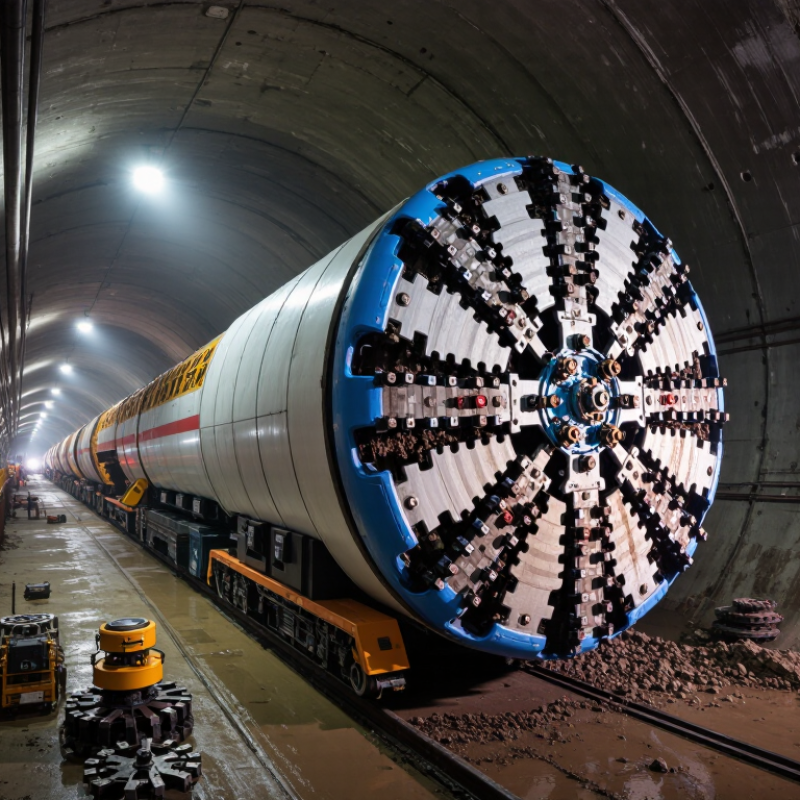
Global infrastructure is moving underground, from metro extensions beneath crowded cities to utility corridors under hard rock. Fortune Business Insights identifies urban rail, road tunnels, and water infrastructure as major drivers of the tunnel boring machine market. Reports from the International Tunnelling and Underground Space Association also show growing interest in safer, lower-impact underground construction. These trends make machine selection more technical than a simple price comparison. A suitable Deep Boring Machine must match ground conditions, tunnel diameter, required depth, cutter configuration, torque, thrust, and project length.
Elon Musk once described a boring machine as “six to seven times slower than a snail.” The remark was deliberately provocative, but it exposes a real industry problem: productivity still depends on engineering details, maintenance, and logistics. Our guide examines ten major machine types, including Earth Pressure Balance, slurry, hard-rock, double-shield, and microtunneling systems. Each section considers practical applications, geological suitability, operating strengths, and common procurement risks. Data sheets can look impressive. Field performance may differ.
Experienced contractors often remind buyers that geology changes faster than forecasts. Dr. Martin Herrenknecht, founder of Herrenknecht AG, has repeatedly stressed that tunneling technology must be adapted to project conditions; this principle guides the comparison here. Still, no universal ranking exists. A machine that performs efficiently in stable granite may struggle in water-bearing clay. Buyers should verify independent test records, service coverage, spare-parts access, operator training, and total lifecycle cost. This overview is useful, but it cannot replace a site investigation or an engineer’s judgment.
What Deep Boring Machines Are and How They Work
Deep boring machines create accurate, narrow holes where ordinary drilling becomes unstable. They are used for hydraulic cylinders, molds, energy components, and large shafts. A boring bar removes material from an existing hole, rather than cutting a full opening from solid stock. This difference improves control.
The machine rotates the workpiece, the cutting tool, or both. A guided boring bar travels through the hole while coolant carries heat and chips away. Common systems include gun drilling, BTA boring, ejector boring, and trepanning. Each method suits a different diameter, depth, and material. Gun drilling often uses a single cutting edge and high-pressure coolant. BTA systems remove chips through the boring bar itself. Simple in theory. Messy in practice.
Grand View Research estimated the global machine tools market at approximately USD 86 billion in 2023, with continued growth expected through the decade. That demand reflects tighter requirements for repeatability, surface finish, and reduced material waste. MarketsandMarkets also identifies automation and digitally monitored machining as major industry trends. Buyers should examine actual hole depth-to-diameter ratios, not only spindle power. A 1,000-millimeter hole can behave very differently in steel and aluminum. ISO 230-2 positioning tests can support accuracy checks, but they cannot replace a production trial. Tool vibration, coolant pressure, and operator setup still matter. One overlooked factor is chip evacuation. It often decides whether a deep bore succeeds.
Key Specifications Global Buyers Should Compare
Top 10 Types of Deep Boring Machines for Global Buyers?
Key Specifications Global Buyers Should Compare
When comparing deep boring machines, buyers should match the machine to hole diameter, depth, material, and production volume. Common options include gun boring, trepanning, horizontal, vertical, jig, CNC, multi-spindle, and special-purpose machines. The other two types may be configured for heavy components or narrow, high-precision holes.
Start with measurable capacity. Check the minimum and maximum boring diameter, maximum depth, spindle speed range, spindle torque, and feed force. A machine rated for 2,000 millimeters may not hold accuracy near its maximum reach. Real cutting conditions matter more than catalog figures.
Ask for test data.
Accuracy should cover straightness, roundness, surface finish, and repeatability. Confirm how each value was measured. Coolant pressure and chip evacuation are critical during long boring cycles. Poor flow can leave scratches inside the hole. Compare motor power, energy use, tool compatibility, workpiece weight, and table dimensions. Automatic tool changing can reduce labor, but it may add maintenance points. That trade-off is easy to underestimate.
Review control functions, guarding, operator access, and emergency systems. Global buyers should also verify voltage, documentation, training, spare-part availability, and remote service response. Installation needs deserve attention. Floor strength, foundation depth, shipping size, and local technical support can change the final cost significantly. In practice, buyers sometimes focus too heavily on spindle power. That is not always wise. A balanced machine with stable guidance may produce better holes than a larger, less rigid system. Test samples and inspection records provide stronger evidence than promises.
Top Ten Types of Deep Boring Machines
Top Ten Types of Deep Boring Machines
Deep boring machines serve cylinders, hydraulic parts, molds, and energy components. Selection depends on diameter, depth, tolerance, and material behavior. Gun drilling machines suit small holes with high straightness. BTA machines remove chips through the boring bar. Ejector systems support stable cutting in long passages. Single-tube systems simplify medium-volume production. Trepanning machines create large holes while saving material. Deep-hole honing machines improve surface finish after drilling. Horizontal boring machines handle heavy workpieces with strong support. Vertical boring machines suit large, short components and easier loading. CNC deep-hole drilling centers combine drilling, probing, and automatic tool changes. Skiving and roller-burnishing machines refine hardened bores efficiently.
The 2024 Gardner World Machine Tool Survey reported global machine-tool consumption above 80 billion US dollars in 2023. This scale reflects continuing investment in accurate metalworking equipment. The International Federation of Robotics recorded 541,302 industrial robot installations worldwide in 2023. That figure supports automated loading and inspection around deep boring lines. ISO 230-2 testing helps verify positioning accuracy. ISO 286-2 supports tolerance planning for finished bores. In practice, a gun drill may outperform a larger system on narrow holes. A BTA machine may fail commercially when setup time is excessive. Coolant pressure, chip evacuation, and bar stiffness deserve measurement, not guesswork. A perfect ranking is impossible. Operators should test one sample part before approving a complete production route.
Applications, Materials, and Industry Suitability
Top 10 Types of Deep Boring Machines for Global Buyers?
Applications, Materials, and Industry Suitability
Deep boring machines include gun drilling, BTA drilling, ejector drilling, trepanning, counterboring, skiving, honing, and CNC deep-hole systems. Each design manages chips, coolant, tool stiffness, and hole accuracy differently. Gun drilling suits small diameters in hydraulic blocks and aerospace components. BTA systems handle larger holes in cylinders, landing-gear parts, and energy equipment. Trepanning removes less material around wide bores. That can reduce machining time.
Material choice changes the buying decision. Carbon steel is productive, but stainless steel creates more heat and work hardening. Nickel alloys demand rigid tooling and controlled cutting speeds. Aluminum machines quickly, yet long chips can block narrow passages. The World Steel Association reported about 1.89 billion tonnes of crude steel production in 2023. This enormous volume supports broad demand for steel-processing equipment, but it does not prove every factory needs a high-capacity boring line.
Industry suitability depends on more than diameter. Medical components need clean coolant control and documented traceability. Oilfield parts require deep, straight bores under heavy loads. Mold manufacturers often prioritize surface finish and repeatability. A 2024 U.S. Geological Survey report recorded global mined copper production near 22 million tonnes in 2023, supporting continued investment in copper-processing infrastructure. Still, report figures are not machine specifications. Buyers should test the actual alloy, hole depth, tolerance, and chip form before approval. One overlooked variable is enough.
Top 10 Types of Deep Boring Machines for Global Buyers
Representative upper working diameter by machine type, with typical applications and material suitability.
| Machine Type | Typical Applications | Common Materials |
| Gun Drilling Machine | Fuel passages, hydraulic blocks, dies and molds | Tool steel, alloy steel, aluminum, titanium |
| BTA Deep-Hole Boring Machine | Large hydraulic cylinders, oilfield components, die sleeves | Carbon steel, alloy steel, stainless steel |
| Ejector Drilling Machine | Long shafts, aerospace parts and precision bores | Alloy steel, stainless steel, nickel alloys |
| Trepanning Machine | Large-diameter holes, tubes, cylinders and forgings | Steel forgings, cast iron, stainless steel |
| CNC Deep-Hole Drilling Machine | Automotive, aerospace and general precision machining | Steel, aluminum, titanium, nickel alloys |
| Horizontal Deep-Boring Machine | Long workpieces, hydraulic cylinders and machine-tool parts | Steel, cast iron, stainless steel |
| Vertical Deep-Boring Machine | Heavy rings, turbine parts, large molds and energy equipment | Cast iron, carbon steel, alloy steel |
| Deep-Hole Honing Machine | Cylinder finishing, hydraulic bores and engine components | Hardened steel, cast iron, stainless steel |
| Skiving and Roller-Burnishing Machine | High-finish hydraulic and pneumatic cylinder bores | Carbon steel, alloy steel, stainless steel |
| Deep-Hole Counterboring Machine | Stepped bores, precision housings and pressure components | Steel, cast iron, aluminum, bronze |
Note: Diameter values are representative upper working capacities commonly associated with each machine category; actual limits depend on machine configuration, tooling, workpiece length, material hardness and required bore accuracy.
Buying Criteria, Safety Standards, and Supplier Evaluation
Top 10 Types of Deep Boring Machines for Global Buyers?
Global buyers often compare gun-drilling, BTA, trepanning, horizontal boring, vertical boring, tunnel boring, raise-boring, shaft-sinking, microtunneling, and directional boring machines. Selection should follow material, hole diameter, depth-to-diameter ratio, tolerance, coolant demand, and site conditions. Grand View Research estimated the global tunnel boring machine market at about USD 7.6 billion in 2023, with infrastructure investment supporting continued growth. That momentum can pressure buyers into rushed decisions.
Start with risk controls, not brochure speed. ISO 12100 requires documented hazard identification and risk reduction. ISO 13849-1 helps evaluate safety-related control systems, while IEC 60204-1 addresses machine electrical equipment. In the United States, OSHA 29 CFR 1910.212 requires suitable machine guarding. Check interlocked doors, emergency stops, chip containment, coolant filtration, lockout points, and guarding around rotating tools. Measure twice.
Supplier evaluation needs evidence. Request load-test records, dimensional inspection reports, maintenance intervals, spare-parts lead times, software revision control, and operator training records. Ask for references using similar alloys and hole depths. A factory video is not proof. The International Labour Organization estimates nearly 3 million work-related deaths annually, reminding buyers that safety cannot be traded for output. A polished audit can still miss weak commissioning support. Require acceptance testing with your actual workpiece, documented tolerances, noise readings, and recovery procedures after tool failure. Supplier transparency matters more than impressive promises.