

Choosing among China’s top Dental Equipment Tools manufacturers requires more than comparing product prices. Dental clinics, laboratories, and distributors need dependable equipment that performs consistently under daily pressure. A dental handpiece may look polished in a catalog, yet its vibration, cooling performance, and maintenance needs become clear only during real procedures. Small details matter.
This guide examines leading Chinese manufacturers through practical and professional criteria. These include product design, manufacturing experience, quality-control systems, material selection, sterilization compatibility, and after-sales support. We also consider certifications, factory capabilities, warranty policies, and the availability of replacement parts. Reliable suppliers should explain technical specifications clearly and provide traceable documentation. They should not rely on impressive claims alone.
A strong manufacturer understands clinical workflow. Their tools should fit comfortably in the operator’s hand, connect safely with existing systems, and remain stable after repeated cleaning cycles. Service response also matters when a compressor, scaler, or curing light fails unexpectedly. That is not theoretical.
However, no ranking is perfectly neutral. Product quality may vary between model series, production batches, and export markets. Some information may change as companies update factories, certifications, or distribution networks. Buyers should verify current documents, request samples, and speak with existing users before making a final decision. Price remains important, but the cheapest option can create higher costs through downtime and repairs. This overview offers a practical starting point, not an unquestionable verdict.
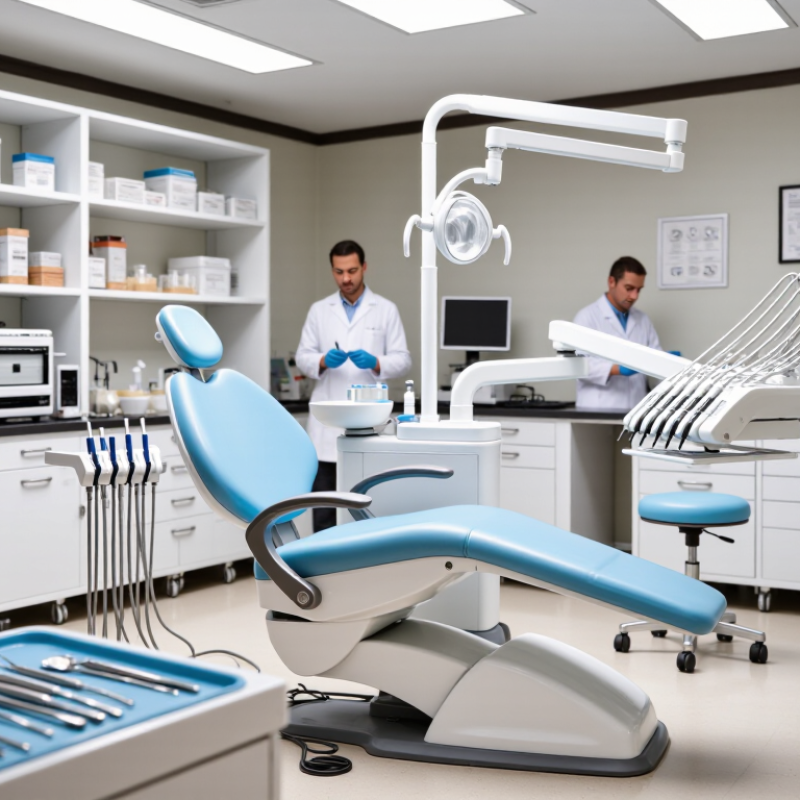
A top Chinese dental equipment manufacturer should offer safe, traceable, and clinically useful products. The category includes dental chairs, imaging systems, sterilizers, handpieces, compressors, and laboratory tools. WHO’s Global Oral Health Status Report 2022 estimates that 3.5 billion people live with oral diseases worldwide. This demand increases the need for dependable equipment, not merely attractive prices.
Selection should begin with regulatory capability. Verify applicable NMPA registration, ISO 13485 quality management certification, technical files, and production audits. Export experience also matters. A supplier should provide installation records, calibration instructions, spare parts, and responsive technical support. Look closely at warranty terms. Weak after-sales service can stop a busy clinic for days.
Clinical performance deserves more weight than factory size. Review independent test reports, electrical safety results, sterilization validation, and evidence from real dental practices. The International Organization for Standardization’s ISO Survey 2023 shows the continuing global importance of certified management systems, but certification alone cannot prove product quality. That distinction is easy to miss.
No ranking is perfect. Procurement teams should compare five-year ownership costs, including maintenance, consumables, training, and downtime. Ask for sample documentation before signing. Some manufacturers communicate well during sales, then respond slowly after delivery. That risk needs honest attention. A practical shortlist may contain fewer than ten manufacturers, especially when clinical evidence is limited.
China’s dental equipment manufacturing industry has expanded from basic instruments to integrated clinical systems. It serves hospitals, private clinics, laboratories, and dental education centers. Core products include dental chairs, imaging devices, sterilization units, handpieces, laboratory furnaces, and surgical instruments. Production often combines precision machining, electronic control systems, and medical-grade materials. This balance requires disciplined testing.
A credible top-ten comparison should examine more than factory size or export volume. It should assess product consistency, engineering experience, after-sales support, and regulatory documentation. ISO 13485-based quality systems are valuable indicators, but certificates alone prove little. Buyers should review calibration records, traceability procedures, electrical safety tests, and sample inspection reports. Ask for service response times.
Factory visits can reveal practical details. Clean assembly areas, labeled components, stable packaging, and controlled storage suggest operational maturity. In contrast, unclear inspection records may create avoidable risks. Not every large supplier delivers the same reliability. Smaller manufacturers may offer flexible customization, yet their documentation can be uneven. That deserves careful review.
The industry is also moving toward digital imaging, cloud-connected workflows, quieter compressors, and energy-efficient equipment. These developments improve convenience, but software security and maintenance training need equal attention. Product claims should be checked against real clinical use, not only catalog language. A useful supplier comparison remains evidence-based, transparent, and open to revision. Industry rankings can change quickly.
China’s leading ten dental equipment manufacturers show a wide range of technical strengths. This shortlist considers export experience, ISO 13485 quality systems, product breadth, and documented clinical support. The ranking is not absolute. Public data can be incomplete.
One manufacturer specializes in digital panoramic and cone-beam imaging systems, with compact scanners for smaller clinics. Another focuses on treatment chairs, emphasizing ergonomic positioning and easy-clean surfaces. A third produces steam sterilizers, where cycle records and temperature stability matter most. The fourth develops electric handpieces with low vibration and replaceable components. The fifth supplies CAD/CAM milling units for same-day restorations. A sixth concentrates on orthodontic tools and laboratory accessories. The seventh serves endodontic practices with apex locators and motorized preparation systems. The eighth manufactures dental compressors and suction units, where noise control is a practical concern. The ninth combines laboratory furnaces with ceramic-processing equipment. The tenth provides basic examination and lighting systems for public and private clinics.
Demand remains substantial. The World Health Organization’s Global Oral Health Status Report 2022 estimates that oral diseases affect nearly 3.5 billion people worldwide. China’s expanding private clinics and hospital dental departments create steady equipment demand. Market research from Grand View Research also identifies digital imaging and CAD/CAM as fast-growing segments. However, growth does not guarantee clinical value. Buyers should verify service response, spare-part availability, software compatibility, and sterilization documentation. Some supplier claims still need independent testing. That deserves attention.
China’s dental equipment manufacturers produce a broad range of tools for diagnosis, treatment, sterilization, and laboratory work. Their product lines often include dental chairs with integrated delivery systems, LED operating lights, intraoral cameras, and ultrasonic scalers. Many factories also develop digital imaging equipment, including panoramic units, cone-beam computed tomography systems, and compact X-ray sensors.
Digital dentistry is another important area. Intraoral scanners capture detailed tooth surfaces for aligners, crowns, and implant planning. CAD/CAM milling machines can shape ceramic blocks beside the treatment room. Some manufacturers also supply sintering furnaces, 3D printers, and resin-processing systems for dental laboratories. Endodontic motors, apex locators, curing lights, and electric handpieces support more controlled procedures. Small details matter, such as stable torque, cooling airflow, and readable displays.
From practical purchasing experience, performance should be checked beyond a product brochure. Buyers should review calibration records, electrical safety documentation, sterilization compatibility, and replacement-part availability. A manufacturer with clear user manuals and responsive technical training is usually more dependable. Price remains important, but the cheapest handpiece may create higher maintenance costs later. I would not treat every catalog claim as proof. Real clinic trials can reveal noise, vibration, software delays, or awkward cleaning points. Some equipment still needs better interface design. That weakness deserves honest attention.
| No. | Dental Equipment Category | Key Products and Tools | Core Technologies | Typical Technical Features | Main Clinical Applications | Common Compliance References |
|---|---|---|---|---|---|---|
| 1 | Dental Treatment Units | Patient chairs, delivery systems, operating lights, assistant consoles, cuspidors, and foot controls | Electromechanical chair adjustment, integrated instrument control, LED illumination, and ergonomic modular design | Motorized positioning, programmable chair settings, waterline systems, multi-function syringes, and instrument trays | General dentistry, restorative procedures, endodontics, and oral surgery | ISO 13485 quality systems; applicable electrical safety requirements such as IEC 60601-1 |
| 2 | High-Speed and Low-Speed Handpieces | Air-turbine handpieces, contra-angle handpieces, straight handpieces, and electric micromotors | Air-turbine rotation, electric micro-motor control, ceramic or precision bearings, and internal cooling | High rotational speed, fiber-optic illumination options, anti-retraction valves, spray cooling, and autoclavable construction | Tooth preparation, caries removal, polishing, crown preparation, and minor oral procedures | ISO 14457 for dental handpieces; sterilization compatibility according to the device instructions |
| 3 | Dental Air Compressors and Suction Systems | Oil-free compressors, air dryers, vacuum pumps, saliva ejectors, and central suction units | Oil-free piston compression, membrane or adsorption drying, vacuum generation, and noise reduction | Clean compressed air, moisture control, thermal protection, bacterial filtration, and continuous or intermittent suction | Dental units, handpieces, air abrasion, evacuation, and multi-chair clinic infrastructure | ISO 8573-1 for compressed-air quality classification; applicable electrical and pressure-equipment requirements |
| 4 | Dental Sterilization Equipment | Steam autoclaves, ultrasonic cleaners, sealing machines, instrument washers, and sterilization monitoring accessories | Pre-vacuum steam sterilization, temperature-pressure control, drying cycles, and automated cycle monitoring | Typical steam cycles around 121–134°C, digital records, chemical indicators, safety locks, and traceability functions | Reusable handpieces, surgical instruments, dental trays, and heat-resistant clinical devices | ISO 17665 for moist-heat sterilization; EN 13060 for small steam sterilizers where applicable |
| 5 | Dental X-Ray and Digital Imaging Systems | Intraoral X-ray units, portable dental X-ray devices, panoramic systems, cephalometric units, and digital sensors | Digital radiography, CMOS or CCD image sensors, image processing, panoramic scanning, and cone-beam computed tomography | Adjustable exposure parameters, low-dose imaging modes, image enhancement, DICOM connectivity, and positioning aids | Diagnosis, implant planning, orthodontics, endodontics, oral surgery, and maxillofacial assessment | IEC 60601-2-65 for dental X-ray equipment; IEC 60601-2-44 for computed tomography equipment where applicable |
| 6 | Intraoral Scanners | Intraoral optical scanners, scanning tips, calibration accessories, and digital impression software | Structured light or optical imaging, real-time stitching, three-dimensional surface reconstruction, and CAD/CAM data export | Full-arch scanning, color capture on selected systems, wireless or wired connectivity, and open STL or PLY export options | Crowns, bridges, orthodontics, aligners, implant planning, and digital study models | IEC 60601-1 where applicable; software lifecycle and risk-management practices such as IEC 62304 and ISO 14971 |
| 7 | CAD/CAM Dental Milling and Manufacturing Systems | Dental milling machines, sintering furnaces, dust extraction units, and digital design software | Computer-aided design, computer-aided manufacturing, multi-axis milling, zirconia sintering, and digital workflow integration | Three-, four-, or five-axis machining, wet or dry milling, automated tool changing, and material-specific processing profiles | Dental crowns, bridges, veneers, inlays, onlays, implant abutments, and temporary restorations | Applicable machinery safety requirements; ISO 14971 and relevant material-specific dental standards |
| 8 | Endodontic and Implant Motors | Endodontic motors, apex locators, surgical motors, contra-angle attachments, and implantology handpieces | Electronic torque control, reciprocating and rotary file motion, apex measurement, and programmable treatment modes | Adjustable speed and torque, auto-reverse functions, irrigation support, foot-pedal operation, and rechargeable power systems | Root-canal preparation, working-length determination, implant osteotomy, and oral surgical procedures | IEC 60601-1; applicable dental handpiece, measurement, sterilization, and medical-device risk-management requirements |
| 9 | Dental Lasers and Light-Curing Equipment | Diode lasers, soft-tissue laser systems, curing lights, whitening lights, and protective accessories | Semiconductor laser emission, blue-light LED curing, pulsed or continuous-wave control, and optical-fiber delivery | Adjustable power and exposure time, wavelength-specific operation, thermal management, radiometer functions, and curing-mode selection | Soft-tissue management, periodontal procedures, photobiomodulation, composite curing, and selected whitening procedures | IEC 60825-1 for laser safety; ISO 10650 for powered polymerization activators where applicable |
| 10 | Dental Laboratory and Auxiliary Equipment | Dental laboratory furnaces, casting units, model trimmers, sandblasters, pin drills, vibrators, and polishing systems | Thermal processing, induction or resistance heating, vacuum or pressure casting, precision grinding, and laboratory dust extraction | Programmable temperature profiles, controlled heating and cooling, vibration adjustment, water recycling, and particulate filtration | Removable prosthetics, fixed restorations, orthodontic appliances, model fabrication, and finishing procedures | Applicable machinery, electrical safety, electromagnetic compatibility, and occupational dust-control requirements |
China Top 10 Dental Equipment Tools Manufacturers?
Comparing Chinese dental equipment manufacturers requires more than checking a ranking list. Start with product fit, manufacturing experience, and technical documentation. Ask whether the factory produces dental chairs, imaging systems, handpieces, or sterilization units in-house. A factory tour, live video inspection, and production photographs can reveal more than a polished catalog.
Check quality systems carefully. Request relevant certificates, test reports, material specifications, and product traceability records. Confirm that documents match the exact model you plan to import. Review electrical safety, infection-control design, and compatibility with your local requirements. Do not accept a certificate with unclear issuing details. Small details matter.
Supplier reliability appears after the purchase. Compare warranty length, response time, spare-parts availability, installation guidance, and training support. Ask for a sample unit when practical, then inspect noise, water leakage, control buttons, packaging, and cleaning access. A low quotation may hide expensive replacement parts or slow communication. One weakness in this process is obvious: sample testing cannot predict every production batch. Include batch inspection terms, clear acceptance standards, and payment protection in the contract. References from clinics or distributors can provide useful evidence, but they should be verified independently.
The chart presents a practical 100-point evaluation framework for comparing Chinese dental equipment manufacturers and suppliers. Regulatory compliance and clinical performance receive the highest weight, followed by after-sales service, total cost of ownership, manufacturing quality, and export support. These are evaluation criteria rather than company-specific rankings or brand data.
How can we help you?
Call to 0034 943884600 Contact usWe use cookies to ensure that we give you the best experience on our website. If you continue without changing your settings, we'll assume that you agree to receive cookies on the HINE website. For more information read our cookie policy page, click the link for more information.plugin cookies
ACEPTAR