

A Glass Manufacturing Machine is not a single device. It is a coordinated production system, from batch feeding and furnace control to forming, annealing, cutting, and inspection. A small temperature shift can change a sheet’s thickness. A misaligned roller may leave marks that appear only under bright light. Details matter.
This guide examines ten manufacturers serving different parts of the glass industry. It considers equipment range, process expertise, automation, service support, and suitability for specific production needs. A company known for float-glass lines may not be the right choice for bottle forming or precision laboratory glass. Rankings also depend on region and project scale, so treat any top-ten list as a starting point, not a final verdict.
Sir Alastair Pilkington’s work transformed flat-glass production. A fair paraphrase of its engineering lesson is: “Reliable glass production depends on controlling the process, not just building the machine.” That is a useful lens for comparing manufacturers. Ask how equipment handles heat, line speed, inspection, and routine maintenance. Ask, too, what happens when a component wears sooner than expected. Catalogues rarely show that part.
The strongest choice is rarely the machine with the longest specification sheet. It is the one that fits the product, workforce, and operating conditions. This comparison aims to clarify those trade-offs, while recognizing that supplier claims still need independent verification. Industry is never perfectly tidy. Neither is this decision.
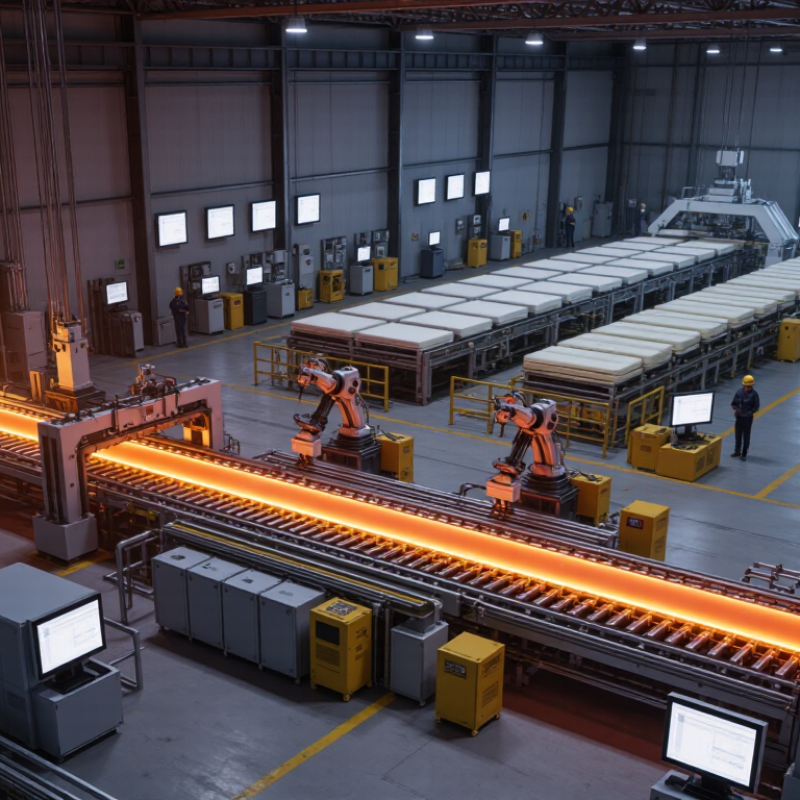
Glass manufacturing machines coordinate each stage, from raw-material preparation to final inspection. A batch mixer combines silica sand, soda ash, and other materials in measured proportions. The furnace then heats the mixture until it becomes molten glass. Temperature drift can affect viscosity, so operators monitor furnace conditions closely.
At the forming stage, machines shape molten glass into bottles, jars, or flat sheets. Container lines use molds and timed air pressure; flat-glass lines typically draw or float glass into continuous sheets. Small changes matter. After shaping, an annealing lehr cools the glass gradually to reduce internal stress. If cooling is uneven, products may crack later, even when they look sound.
Inspection equipment checks for flaws such as bubbles, uneven thickness, and surface cracks. Cutting and edge-finishing machines prepare sheet glass for its intended dimensions. Sensors can catch defects quickly, but they do not replace experienced checks or routine maintenance. A machine setting that works on one production run may need adjustment on another. That variability is easy to underestimate. Careful calibration, clean molds, and clear process records help keep output consistent, though no production line is perfectly predictable.
Glass manufacturing starts with batch equipment: silos, weigh feeders, and mixers meter sand, soda ash, limestone, and recycled cullet. Small dosing errors can change color or viscosity. The furnace then melts the mix, often near 1,500°C for common soda-lime glass, as documented in the European Commission’s Glass Manufacturing BREF. This stage needs careful temperature control and steady fuel supply. It also dominates energy use. The BREF estimates that adding 10% cullet can reduce melting energy by roughly 2–3%, though results depend on furnace conditions and feed quality.
Hot glass moves to forming machines, where gob feeders and molds shape bottles, jars, or flat sheets. Timing matters: a slight mismatch can produce uneven walls or costly rejects. Not every line runs cleanly. Annealing lehrs cool products gradually, easing internal stress; rapid cooling can leave glass vulnerable to cracking later. Downstream equipment varies by product. Container lines use inspection systems to detect checks, bubbles, and dimensional faults, while flat-glass plants rely on cutting tables and edge-processing machines. The European Commission’s Glass BREF details these process stages, but equipment settings still require adjustment to each recipe, product thickness, and production rate. A sensor can flag a defect. It cannot explain every cause.
When comparing global glass-machine manufacturers, assess process capability, verified output, energy use, service coverage, and upgradeability—not brochure speed alone. The IEA’s Energy Efficiency 2023 report estimates that industry accounts for about 37% of global energy consumption. That makes furnace efficiency and measurable energy data important selection criteria. The European Commission’s Glass Manufacturing BREF also treats melting, forming, and emissions control as connected process areas. Ask suppliers for test results using your glass type, product dimensions, and operating conditions.
Tips: Request a factory acceptance test and a written performance baseline. Check spare-part lead times, technician response times, and operator training. Compare energy per tonne of usable product, not just furnace ratings.
A sound evaluation includes line availability, changeover time, reject rates, control-system compatibility, and maintenance access. Inspect sample equipment or reference installations where possible; record what was measured and under what conditions. Guarantees can be difficult to compare when test methods differ. That gap deserves scrutiny. One imperfect but useful check is to ask how the supplier investigates performance shortfalls after installation, and who pays for corrective work. Also examine whether the machine can handle future product changes without a full line replacement.
This overview presents ten anonymous capability profiles, not a verified ranking of named companies. A furnace-line manufacturer designs melting systems and controls heat distribution; operators watch refractory wear and fuel use closely. A forming-equipment specialist builds machines that shape molten glass into bottles or containers. Its value shows in stable production and fewer faulty pieces. A float-line supplier coordinates furnaces, tin baths, and annealing lehrs. These lines demand careful temperature control. A press-and-blow machinery maker serves producers needing consistent container shapes, though changeovers can still take time.
A tempering-system manufacturer supplies heating and quenching equipment for stronger flat glass. Even small temperature differences can affect results. A laminating-line builder integrates film feeding, heating, and pressing. Clean rooms and steady handling matter. An insulating-glass equipment maker assembles sealed window units, with spacer alignment affecting performance. A cutting-and-edging specialist provides tables, cutters, and grinders for accurate sizing. The edge finish is easy to overlook.
A coating-line manufacturer applies functional layers to glass, where uniform coverage is essential. An inspection-automation supplier uses cameras and sensors to find bubbles, scratches, or shape defects. A recycling and material-handling equipment maker supports cullet sorting, batch delivery, and safe plant movement. Buyers should compare service access, spare-part lead times, energy data, and trial results—not brochure claims alone. Some machines look impressive in demonstrations. Real production is less tidy.
| Profile | Country of Origin | Primary Equipment Focus | Representative Equipment | Glass Types and Applications | Value-Chain Stage |
|---|---|---|---|---|---|
| 01 | Switzerland | Container-glass forming and production-line systems | Glass-forming machines, feeders, inspection equipment, and production-line solutions | Glass containers for food, beverages, and pharmaceuticals | Melting-to-forming, inspection, and production-line support |
| 02 | Germany | Container-glass forming technology | Individual-section forming machines, gob distribution systems, and related controls | Glass bottles and jars for packaging | Gob delivery, forming, and hot-end process control |
| 03 | Germany | Glass-melting furnaces and plant engineering | Furnaces, forehearths, combustion systems, and process-control equipment | Container glass and other industrial glass products | Batch melting and glass conditioning |
| 04 | Germany | Industrial glass furnaces and thermal systems | Glass-melting furnaces, forehearths, and furnace-rebuilding solutions | Container, flat, and specialty glass, depending on plant configuration | Melting, refining, and conditioning |
| 05 | Germany | Batch-house systems and raw-material handling | Batch chargers, weighing and mixing systems, conveyors, and cullet-handling equipment | Container, flat, and specialty glass production | Raw-material preparation and delivery to the furnace |
| 06 | Italy | Flat-glass and container-glass machinery | Glass-cutting lines, edging and processing machines, and container-glass forming equipment | Architectural, automotive, and packaging glass | Forming and downstream glass processing |
| 07 | Austria | Flat-glass processing lines | Cutting, insulating-glass, laminating, and automated handling systems | Architectural and window glass | Cutting, finishing, assembly, and line integration |
| 08 | Italy | Flat-glass processing machinery | Glass edging, bevelling, drilling, and machining equipment | Architectural, furniture, and interior glass | Edgework and secondary processing |
| 09 | Italy | Glass machining and fabrication equipment | CNC machining centres, cutting systems, and automated glass-processing solutions | Architectural, furniture, and technical glass | Cutting, drilling, milling, and finishing |
| 10 | China | Glass tempering and heat-treatment equipment | Horizontal tempering furnaces and heat-treatment systems | Architectural, automotive, and appliance glass | Thermal strengthening and safety-glass production |
Manufacturer identifiers are anonymized. Profiles cover distinct equipment segments; the order is illustrative and does not represent a market-share ranking.
Comparing the top 10 glass manufacturing machine manufacturers worldwide requires more than checking production speed. Their technologies may include furnace controls, forming equipment, annealing systems, and automated inspection. The key question is how well these systems work together on a real production floor. A fast forming line can still lose output when mold changes take too long or inspection equipment rejects sound glass.
Capacity figures deserve careful reading. Ask whether a quoted daily output reflects a specific container size, continuous operation, or ideal conditions. Energy use, changeover time, maintenance access, and spare-part availability can matter as much as headline capacity. Small details count. A reachable service engineer and a stocked critical component may prevent hours of downtime.
Market reach is not just the number of countries served. Compare local technical support, installation experience, operator training, and response times across the regions where a factory runs. Manufacturers with broader networks may offer easier support, while smaller providers can sometimes tailor equipment more closely to a plant’s needs. That trade-off is easy to overlook. Public specifications rarely show the full cost of integration, so buyers should verify performance against their own product mix, labor conditions, and operating records.
Comparing technology, capacity, and market reach
The 0–100 values are normalized comparative indices, not reported production figures or audited rankings. They summarize broad differences in equipment capabilities, manufacturing scale, and geographic presence; supplier identities are intentionally omitted.
How can we help you?
Call to 0034 943884600 Contact usWe use cookies to ensure that we give you the best experience on our website. If you continue without changing your settings, we'll assume that you agree to receive cookies on the HINE website. For more information read our cookie policy page, click the link for more information.plugin cookies
ACEPTAR