

Top 10 Plumber Tools for Professional Buyers

Professional plumbing work depends on more than experience and a well-stocked van. It depends on choosing reliable equipment for pressure, access, safety, and repeat use. This is where Plumber Tools become a purchasing decision, not a simple shopping list. A basin wrench must reach behind crowded sinks. A pipe cutter must produce clean, square cuts. An inspection camera should provide usable images in dark, wet spaces.

The U.S. Bureau of Labor Statistics projects about 44,000 annual openings for plumbers, pipefitters, and steamfitters from 2023 to 2033. That demand reflects ongoing construction, maintenance, and replacement work. It also increases pressure on professional buyers to reduce downtime. The U.S. Environmental Protection Agency’s WaterSense program promotes efficient water systems and qualified plumbing practices. These priorities make accurate testing, controlled installation, and dependable hand tools increasingly important.

This guide examines the top 10 Plumber Tools for professional buyers. It considers durability, field ergonomics, measurement accuracy, maintenance needs, and total cost of ownership. Product specifications matter, but they do not tell the entire story. A lightweight tool may reduce fatigue, yet fail under daily commercial use. A premium model may last longer, but its warranty and replacement parts deserve equal attention. We may sometimes overvalue brand reputation. That is worth questioning. The strongest buying decision usually combines manufacturer evidence, technician feedback, safety guidance, and real jobsite performance. Each selected tool should earn its place before the van leaves the workshop.
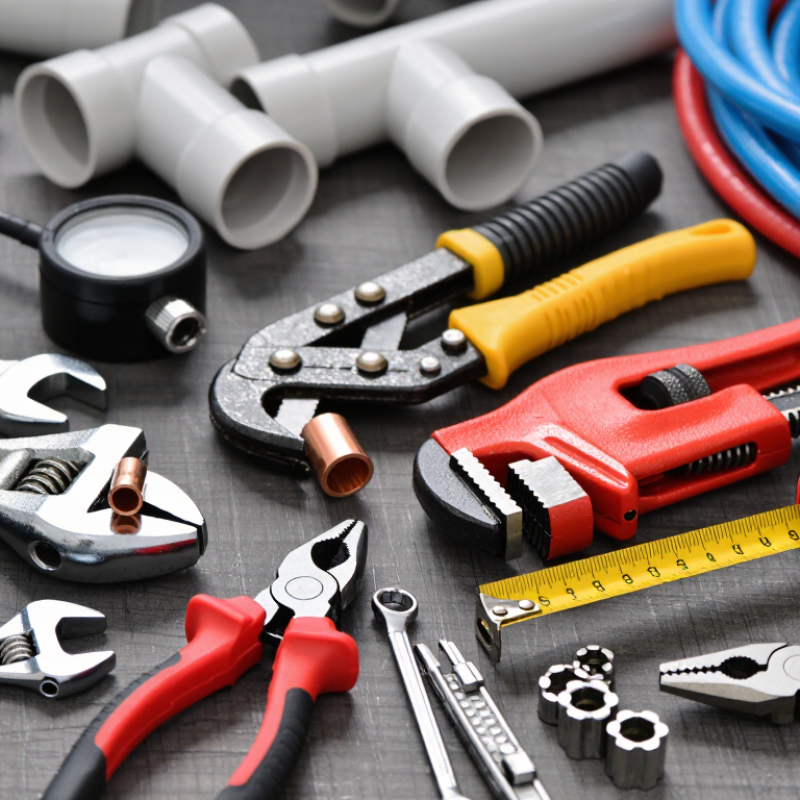
Top 10 Plumber Tools for Professional Buyers

Professional-Buyer Criteria: OSHA 29 CFR 1926.301, ISO 6789, and TCO

Professional plumbers need tools that survive wet shafts, crowded cabinets, and repeated force. Under OSHA 29 CFR 1926.301, hand tools must remain in safe condition. Handles should stay secure, cutting edges should remain sharp, and damaged tools should leave service. Inspect a pipe wrench before climbing a ladder. Check jaw wear, handle cracks, and oil that could reduce grip. Inspect every tool. Small defects become serious when both hands are occupied.

For torque-controlled work, ISO 6789 gives buyers a disciplined reference for hand torque tools. Look for stated measurement units, adjustment range, serial traceability, and calibration records. The standard supports verification and calibration practices, but it does not make every tool suitable for every joint. Match the tool to the fitting, fastener, and required torque. A click that sounds right is not proof. Test results matter more.

Total cost of ownership, or TCO, should include purchase price, calibration intervals, repair time, replacement parts, training, and lost production. A cheaper tool may cost more after one dropped fitting or missed inspection. Keep a simple log beside the tool cabinet. Record issue dates and failed checks. I have underestimated downtime before. That mistake changed our buying criteria. Choose tools with clear service support, readable markings, and practical storage. Review field feedback after ninety days, because spreadsheets rarely show slippery gloves, cramped access, or rushed handovers.

Top 10 Tool Categories by Plumbing Task, Pipe Material, and Jobsite Risk

Professional plumbing buyers should organize tool purchasing around real job demands, not tool popularity. Drain cleaning requires hand augers, inspection cameras, and controlled water pressure. Threading work needs accurate cutters, reamers, and torque tools. Leak repairs benefit from deburring tools, press equipment, and calibrated test gauges. Small details matter. A poorly reamed pipe can damage a seal and create another service call.

Pipe material changes the correct tool category. Copper needs clean-cutting tools and smooth deburring. PEX requires reliable cutters, expansion tools, and connection gauges. Steel demands stronger threaders, pipe vises, and cutting wheels. Plastic pipe needs tools that prevent crushing or uneven cuts. One tool rarely performs equally well across every material. I have seen crews save money on cutters, then lose time correcting rough joints.

Jobsite risk should influence the final purchase decision. Confined spaces call for compact tools, bright task lighting, and clear inspection equipment. Wet areas require insulated handles and equipment rated for damp conditions. Overhead work increases the value of lightweight designs and secure storage. Dust, noise, heat, and unstable flooring also affect tool selection. Check calibration records, replacement parts, and operator training before approval. Price alone is an unreliable guide. A better process reviews failure points, worker fatigue, and the cost of one preventable leak. Clearance is sometimes overlooked. That mistake deserves more attention.

Cutting and Threading Tools: Capacity, Accuracy, and ASME B1.20.1 Compliance

Professional buyers evaluating the top plumber tools should examine cutting capacity before comparing prices. A cutter must handle the required pipe range, wall thickness, and material without excessive force. On a busy site, a dull wheel leaves a rough edge and slows every connection.

Threading tools demand tighter control. Dies should create clean, uniform threads with consistent pitch and taper. For pipe threads, buyers should verify alignment, die condition, and cutting oil compatibility. Small errors can produce leaks. Very small errors matter.

ASME B1.20.1 provides the dimensional framework for general-purpose inch pipe threads. However, a tool does not prove compliance by itself. Operators should inspect thread length, crest quality, and engagement with a calibrated gauge. Records of gauge checks add useful traceability during quality reviews.

Capacity labels can be misleading. A machine may accept a large pipe, yet struggle with harder steel or thin-wall tubing. Field testing on representative materials gives better evidence. I have found that setup accuracy often matters more than advertised power. That is easy to overlook.

Professional teams should also assess die replacement time, chip control, and repeatability between operators. A clean work area helps, but it cannot correct poor calibration. Even experienced technicians occasionally overcut a thread when rushing. That mistake deserves review, not concealment. A practical purchasing decision balances range, accuracy, serviceability, and verified thread results.

Top 10 Plumber Tools for Professional Buyers - Cutting and Threading Tools: Capacity, Accuracy, and ASME B1.20.1 Compliance

No. Tool Category Primary Function Typical Capacity Suitable Materials Accuracy / Control Point ASME B1.20.1 Relevance Professional Buying Considerations
1 Heavy-Duty Wheel Pipe Cutter Cleanly cuts threaded or unthreaded pipe with a cutting wheel. Approximately 1/8 to 6 in nominal pipe, depending on frame configuration. Carbon steel, galvanized steel, stainless steel, and ductile iron models vary by wheel type. Square cut depends on pipe alignment, wheel condition, and controlled feed pressure. The cutter does not define thread geometry; the cut end must be prepared before threading to ASME B1.20.1 requirements. Check wheel material, replacement-wheel availability, minimum wall thickness, and access clearance.
2 Compact Ratcheting Pipe Cutter Cuts pipe in restricted spaces where a full-size cutter cannot rotate. Commonly about 1/8 to 2 in nominal pipe. Copper, brass, aluminum, plastic-coated metal, and selected steel applications. Controlled ratchet travel helps maintain a consistent cut, but does not replace end squaring or deburring. Relevant only as a preparation step; NPT dimensions are controlled by the threading equipment and inspection method. Evaluate minimum operating radius, cutter-wheel life, grip in wet conditions, and replacement parts.
3 Chain Pipe Cutter Cuts large-diameter or difficult-to-access pipe using multiple cutting wheels. Typically about 2 to 12 in nominal pipe; larger systems are available. Cast iron, ductile iron, clay, concrete, and selected steel pipe, subject to wheel specification. Multiple wheels distribute load and support a circumferential fracture or cut when correctly tensioned. Normally used before joining or repair; it does not produce or verify ASME B1.20.1 threads. Confirm pipe-material compatibility, chain length, wheel count, maximum wall thickness, and operator force.
4 Tube Cutter Produces a controlled cut on small tubing for water, gas, and instrumentation work. Commonly 1/8 to 1-1/8 in outside diameter, depending on model. Copper, brass, aluminum, thin-wall stainless steel, and plastic-coated tubing with suitable wheels. Designed for a clean, near-square cut with limited material deformation when feed pressure is controlled. ASME B1.20.1 applies to tapered pipe threads, not ordinary tube cuts; threaded adapters require separate verification. Review burr control, wheel compatibility, minimum tube diameter, and suitability for soft materials.
5 Pipe Reamer and Deburring Tool Removes internal and external burrs after cutting to improve flow and threading preparation. Hand tools commonly cover approximately 1/8 to 2 in pipe or tubing. Copper, brass, aluminum, steel, stainless steel, and plastic models vary by blade design. Uniform chamfering and burr removal reduce thread-starting interference and improve die engagement. Supports preparation for NPT threading but does not establish taper, pitch, crest, or root dimensions. Select blade geometry for the material and avoid excessive chamfering that can reduce usable thread length.
6 Manual Ratchet Threader Cuts external pipe threads with interchangeable dies and a hand-operated ratchet. Commonly 1/8 to 2 in nominal pipe; some systems extend to 3 or 4 in. Primarily carbon steel and galvanized steel; dies for stainless steel require suitable geometry and lubricant. Thread accuracy depends on die quality, die-head alignment, pipe support, lubrication, and correct starting technique. Use NPT dies identified for ASME B1.20.1 thread form and verify the finished thread with an appropriate gauge. Compare die material, die replacement cost, ratchet direction, portability, and required working clearance.
7 Portable Power Threader Mechanically drives a die head for faster on-site external pipe threading. Typically about 1/2 to 2 in nominal pipe; capacity depends on the die head. Steel, galvanized steel, and stainless steel when matched with the correct dies and cutting oil. Consistent rotational speed improves repeatability, while alignment and die condition control thread quality. ASME B1.20.1 compliance depends on the installed NPT die set, setup, and final inspection—not the motor alone. Assess torque, overload protection, spindle speed, portability, oiling method, and electrical or battery requirements.
8 Stationary Power Threading Machine Cuts, reams, and threads pipe in a fixed workshop or fabrication environment. Common configurations cover approximately 1/8 to 2 in, 1/8 to 4 in, or up to 6 in nominal pipe. Carbon steel, galvanized steel, stainless steel, and other machinable pipe materials. Rigid workholding, controlled spindle speed, automatic oiling, and guided die heads improve repeatability. Select die heads specifically marked for NPT and inspect finished threads against ASME B1.20.1 requirements. Prioritize rated capacity, motor power, chuck and guide design, oil recovery, floor space, and service access.
9 Interchangeable NPT Die Head Forms external tapered pipe threads when fitted to a compatible hand or power threader. Typical die sets range from 1/8 to 2 in NPT; larger die heads are available for selected machines. High-speed tool steel or alloy-steel dies are selected according to pipe material and production volume. Thread form, pitch, taper, and effective thread length depend on die design, calibration, and correct installation. The die head should be specified for NPT thread dimensions and checked with calibrated plug or ring gauges. Verify compatibility, die identification, material grade, resharpening policy, and availability of complete replacement sets.
10 NPT Thread Plug and Ring Gauge Set Inspects internal and external tapered pipe threads after cutting or threading. Available for standard NPT sizes from small instrument connections to large nominal pipe sizes. Hardened gauge steel with a documented calibration system for production inspection. Provides a functional pass/fail check of thread size, taper, pitch, and engagement position within gauge limits. Directly supports verification of NPT threads manufactured to ASME B1.20.1; gauge class and calibration status must be controlled. Confirm nominal size, thread designation, gauge class, calibration interval, storage protection, and inspection records.

Buyer’s note: Capacities shown are typical ranges for professional tool configurations and may vary by die head, cutting wheel, material, and machine setup. ASME B1.20.1 applies to inch tapered pipe threads; compliance should be confirmed through correctly specified NPT tooling, controlled setup, and calibrated inspection gauges.

Joining Tools: Press, Solder, and PEX Systems Under ASTM and NSF/ANSI 61

Top 10 Plumber Tools for Professional Buyers

Joining tools deserve careful purchasing because joint failure can damage walls, floors, and customer trust. The U.S. Environmental Protection Agency estimates household leaks waste nearly one trillion gallons of water annually. A weak connection can become part of that hidden loss. Buyers should inspect press tools, soldering equipment, and PEX systems as complete joining solutions, not isolated products.

Press systems need controlled jaw alignment, repeatable force, and clear calibration records. For copper applications, buyers should review compatibility with applicable ASTM requirements, including ASTM B88 tubing and ASTM F3226 press-connect fittings. Soldering tools require stable heat, clean preparation, approved flux, and solder conforming to ASTM B32. Flame control matters in cramped spaces. It is easy to underestimate that detail.

PEX purchasing requires closer material checks. ASTM F876 and ASTM F877 address PEX tubing and system performance, while ASTM F1960 covers cold-expansion joining methods. Components contacting drinking water should meet NSF/ANSI/CAN 61 health-effects requirements. Certificates must match the exact material, size, and use condition. “Certified” alone is not enough. That assumption needs checking. Field teams should also verify insertion depth, ring position, tool wear, and pressure-test results. A perfect-looking joint may still be poorly prepared. Professional buyers should leave room for that uncomfortable possibility.

Inspection and Purchase Decisions: Three-Year TCO, Warranty, and Calibration Data

Top 10 Plumber Tools for Professional Buyers

For professional buyers, a tool’s purchase price is only the opening figure. Three-year total cost of ownership should include consumables, calibration, repairs, training, batteries, and downtime. An inspection camera may seem affordable, yet damaged cables and unavailable replacement parts can change its real cost. Record expected service intervals before approving the purchase. Our first estimate was too optimistic because we ignored technician travel time.

Warranty terms require close reading. Confirm coverage periods, excluded wear parts, shipping responsibilities, and repair turnaround times. A longer warranty is not always better if claims require complicated documentation. Ask for written service procedures and keep invoices, serial numbers, and inspection reports together. These records strengthen future claims and support responsible asset management.

Tips: Request calibration certificates for pressure testers, electronic locators, and measurement devices. Check the stated accuracy, reference standard, calibration date, and recommended interval. Test a sample tool under realistic site conditions before buying ten units. Small differences in readings can create expensive callbacks. Also compare annual calibration fees with replacement costs. A tool that needs frequent adjustment may remain useful, but its performance history must be visible. Some purchasing teams still rely on supplier promises instead of recorded data. That is a preventable weakness.

Article Source:

Choose a global leader for your hydraulics solutions

How can we help you?

Call to 0034 943884600 Contact us
Call us Contact us

We use cookies to ensure that we give you the best experience on our website. If you continue without changing your settings, we'll assume that you agree to receive cookies on the HINE website. For more information read our cookie policy page, click the link for more information.plugin cookies

ACEPTAR
Aviso de cookies