

Choosing among China’s top 10 Studio Ring Light suppliers requires more than comparing prices. A reliable supplier should provide stable color temperature, high color rendering, low flicker, strong heat control, and consistent assembly quality. These details become visible during real use. Skin tones may look gray. Shadows may become harsh. A plastic housing may loosen after repeated adjustments.
Portrait photographer Peter Hurley has often expressed a practical lighting principle: “Light is everything.” His view is especially relevant for content creators, beauty studios, livestreamers, and product photographers. A Studio Ring Light is not merely a bright circular lamp. It shapes facial detail, reduces unwanted shadows, and influences how professional an image appears. Small differences matter.
This guide examines ten China-based suppliers through a buyer-focused lens. It considers product range, LED performance, dimming control, mounting systems, customization, packaging, certifications, warranties, and communication quality. Factory experience also matters. A polished website is not proof of dependable production. Samples should be tested beside a calibrated camera and a familiar subject. This is sometimes overlooked.
The ranking is not absolute. Supplier strengths can change with production batches, component costs, and export service. Some companies may excel at affordable creator kits, while others suit studios requiring stronger stands and longer operating hours. That distinction deserves attention. Buyers should request current specifications, sample units, test reports, and after-sales terms before placing large orders. Even this approach has limits, because long-term reliability cannot be fully confirmed from one shipment. Yet careful comparison can reduce surprises and support a more informed Studio Ring Light purchasing decision.
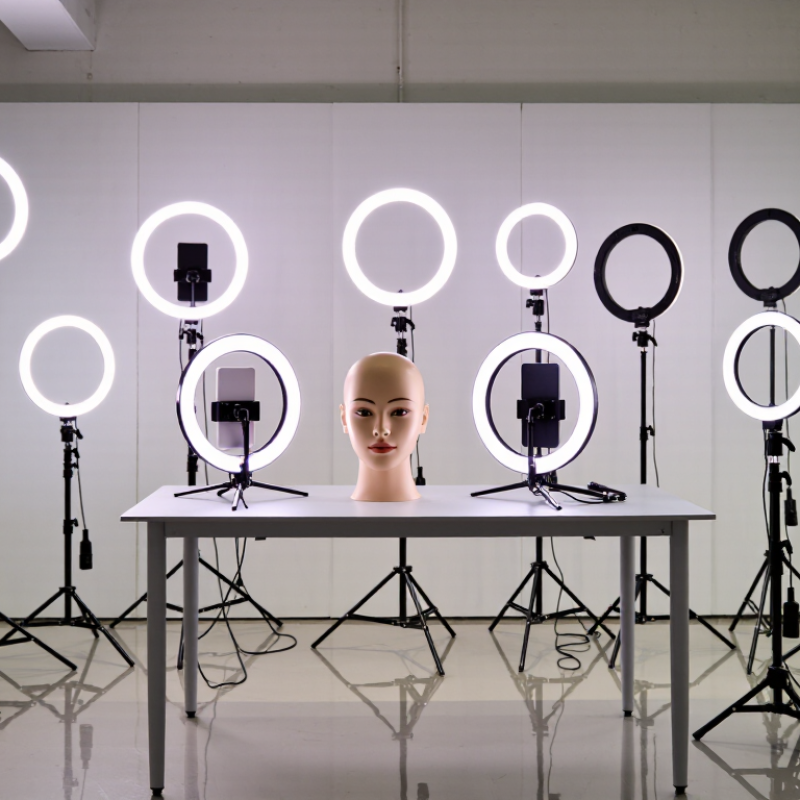
A studio ring light is a circular LED fixture designed to place soft, even light around a camera lens. It reduces harsh shadows on faces, products, and small details. Many models offer adjustable brightness and color temperature for different studio conditions. Color rendering matters because poor LEDs can make skin tones look gray or product colors inaccurate. A stable stand, quiet cooling system, and secure phone or camera mount also affect daily use. Small details matter.
Supplier selection matters because specifications do not always reflect real performance. Ask for measured brightness, color-rendering data, flicker information, and expected service life. Request a sample before ordering large quantities. Test it at low brightness, full power, and several color settings. Check whether the adapter fits your local electrical requirements. A reliable supplier should provide clear manuals, replacement parts, inspection records, and responsive technical support.
During a small product shoot, I once selected a light with impressive brightness but a weak mounting joint. The light looked excellent for one afternoon. Then the joint loosened and interrupted the setup. That mistake cost time. I also learned that warm customer service cannot replace consistent quality control. Review production experience, sample results, packaging, delivery records, and warranty terms together. Published data may be incomplete, so independent testing remains valuable. A dependable supplier explains limitations instead of promising perfect results.
China Top 10 Studio Ring Light Suppliers?
Evaluating China’s studio ring light suppliers requires more than comparing online prices. MarketsandMarkets estimates the global LED lighting market will grow from about USD 78 billion in 2023 to over USD 118 billion by 2028. This growth increases supplier choices, but also increases quality differences. Request a current product sample, factory audit evidence, and measurable test results before negotiating volume.
Check illuminance at a fixed distance, color temperature stability, CRI, TLCI, flicker, heat control, and dimming accuracy. A serious supplier should provide test reports linked to the exact model, not a similar product. IEC 62471 guidance is useful for reviewing photobiological safety, while ISO 9001 records can indicate controlled production. Ask for a 30-minute burn-in test. Watch the power adapter, cable joints, and mounting threads closely.
The housing may look polished.
Still, appearance is weak evidence. Compare three samples under identical camera settings, then inspect brightness after continuous operation. The U.S. Department of Energy has repeatedly highlighted LED efficiency and thermal management as key performance factors. However, supplier claims may omit flicker measurements or downgrade components during mass production. Include approved samples, inspection standards, replacement terms, and packaging photos in the purchase contract. I would also keep a small pilot order. It costs more initially, but it can expose unstable color output, noisy fans, or loose controls before a large shipment.
A practical procurement framework showing the recommended weighting of key supplier evaluation criteria.
Quality and product consistency should receive the highest weighting because they directly affect lighting performance, durability, and return rates. Certification, lead time, customization capability, minimum order quantity, and after-sales support help buyers compare suppliers beyond price alone.
China’s top ten studio ring light suppliers should be compared by product strengths, not catalog size. A practical shortlist starts with high-output suppliers for interviews, tutorials, and small sets. Their key strengths include stable brightness, 3200K–5600K color adjustment, and CRI ratings above 95. Other suppliers focus on compact travel models, flexible phone mounts, or silent cooling systems. Some provide larger 18–22-inch panels with soft diffusion, reducing harsh shadows on skin.
Research supports this demand. Grand View Research reported that the global LED lighting market reached approximately USD 78.6 billion in 2023, with continued growth expected through 2030. Meanwhile, Mordor Intelligence identifies energy efficiency, smart controls, and connected lighting as major market drivers. These trends favor suppliers offering remote control, app integration, USB-C power, and memory settings. Product strength also depends on testing. Buyers should request flicker measurements, power stability data, photometric reports, and sample units before placing volume orders. Paper specifications can look impressive.
China’s strongest supplier profiles usually divide into ten practical categories: high-output studio specialists, portable lighting makers, RGB-focused developers, beauty-light manufacturers, broadcast equipment producers, OEM factories, smart-control suppliers, budget-volume manufacturers, modular-system builders, and export-oriented quality teams. Each category serves a different studio need. A low-cost model may perform well for short videos but disappoint during eight-hour production days. That weakness matters. Factory audits, production consistency, warranty handling, and verified compliance documents deserve equal attention. Market reports offer direction, but real samples reveal the uncomfortable details.
When comparing China’s top 10 studio ring light suppliers, examine measurable performance, not only appearance. A reliable model should offer adjustable brightness, stable color temperature, high CRI, low flicker, and efficient heat control. The U.S. Department of Energy states that LED lighting uses at least 75% less energy and lasts up to 25 times longer than incandescent lighting. However, a high CRI number is not the whole truth. Ask for test results, flicker measurements, power stability, and performance after extended operation.
Certifications should match your destination market. Request CE, RoHS, FCC, or applicable safety approvals, plus ISO 9001 production records. For commercial buyers, verify whether test reports belong to the exact model. Some suppliers present factory-wide certificates, which may not cover every product. That detail is easy to miss. Service quality also matters. Compare sample availability, OEM and ODM support, packaging customization, spare parts, warranty terms, lead times, and response speed. A supplier offering IES files and photometric data shows stronger technical discipline.
Tips: Test three samples at identical settings. Record color temperature, brightness, fan noise, and surface heat after two hours. Use a camera to check visible banding at different shutter speeds. The IEA’s tracking work continues to show LEDs as a major efficiency opportunity, but real savings depend on driver quality and usage. I would also request a written inspection standard. It prevents friendly promises from replacing evidence.
| Rank | Anonymized Supplier Profile | Typical Ring-Light Range | Diameter Options | Color Temperature | CRI / TLCI | Dimming & Controls | Power Options | Common Certifications | OEM / ODM Services | Typical MOQ | Typical Lead Time | Warranty Practice |
|---|---|---|---|---|---|---|---|---|---|---|---|---|
| 1 | Profile A – Professional Studio Specialist | Bi-color and RGB studio lights | 18–22 in | 3,200–5,600 K | CRI 95+ / TLCI 95+ | 1–100% dimming; onboard and remote control | AC adapter; optional V-mount or NP-F battery support | CE, RoHS; destination-market testing available | Private label, firmware customization, packaging design | 100–300 units | 25–40 days after approval | 12 months for manufacturing defects |
| 2 | Profile B – High-Volume OEM Manufacturer | Entry-level and mid-range LED ring lights | 8–18 in | 3,000–6,500 K | CRI 80–95 | 10–100% dimming; wired controller | USB, USB-C, or AC adapter | CE, FCC, RoHS options depending on model | Logo printing, color-box packaging, accessory bundling | 300–1,000 units | 20–35 days after deposit | 6–12 months, depending on channel |
| 3 | Profile C – Content-Creator Lighting Specialist | Desktop, tripod, and streaming ring lights | 6–18 in | 2,700–6,500 K | CRI 90–95 | 10–100% dimming; Bluetooth or app options | USB-A, USB-C, and AC adapter options | CE, FCC, RoHS commonly requested | Custom mounts, phone holders, color packaging, manuals | 100–500 units | 15–30 days for standard models | 12 months with spare-parts support |
| 4 | Profile D – Photography and Video Lighting Factory | High-output bi-color ring lights | 18–24 in | 2,700–6,500 K | CRI 95+ / TLCI 95+ | 0–100% dimming; LCD or digital display | AC power; dual battery plate available | CE, RoHS, FCC; EMC reports available by project | Optical redesign, heat-management changes, custom brackets | 50–200 units | 30–45 days after sample confirmation | 12 months; paid extended warranty may be available |
| 5 | Profile E – Smart Lighting Integrator | RGB, RGBW, and app-controlled models | 10–20 in | 2,500–9,000 K plus RGB modes | CRI 90–95; varies by RGB mode | App, remote, onboard, and music-sync controls | USB-C or AC adapter | CE, FCC, RoHS; wireless testing may be required | App interface, Bluetooth firmware, custom control presets | 300–1,000 units | 35–60 days for software customization | 12 months; firmware support period should be confirmed |
| 6 | Profile F – Portable and Battery-Powered Supplier | Compact, foldable, and travel models | 6–16 in | 3,000–6,500 K | CRI 85–95 | 10–100% dimming; onboard buttons | USB-C rechargeable battery or power bank | CE, FCC, RoHS; battery transport documents required | Battery capacity, folding structure, travel-case design | 200–800 units | 25–45 days | 6–12 months; battery coverage should be specified |
| 7 | Profile G – Beauty and Salon Equipment Supplier | Large-diameter daylight and beauty lights | 18–22 in | 3,200–5,600 K | CRI 90–95 | 10–100% dimming; handheld remote | AC adapter; stable floor stand included | CE, RoHS; local electrical approval varies by market | Stand design, caster options, salon-specific packaging | 50–300 units | 20–40 days | 12 months for light and power components |
| 8 | Profile H – Retail and E-Commerce Supplier | Consumer-focused kits with tripod and holder | 8–18 in | 3,000–6,500 K | CRI 80–90 | 3 color modes; 10–100% dimming | USB or AC adapter | CE, FCC, RoHS commonly requested | Retail packaging, barcode labels, product photography | 100–500 units | 15–30 days | 6–12 months depending on sales channel |
| 9 | Profile I – Industrial Design and Custom Project Supplier | Custom-size professional lighting systems | 12–36 in | 2,700–6,500 K or fixed CCT | CRI 95+ available for selected LEDs | DMX, 0–10 V, PWM, or proprietary control | AC power; project-specific battery design | CE, RoHS, EMC, and safety testing based on destination | 3D design, tooling, prototype development, engineering validation | 20–100 units | 45–90 days for new designs | Project-specific warranty and service-level agreement |
| 10 | Profile J – Export-Oriented Contract Manufacturer | Standard and customized ring-light assemblies | 10–24 in | 3,000–6,500 K | CRI 85–95 | Onboard, wired remote, or Bluetooth options | USB-C, AC adapter, or battery plate | CE, RoHS, FCC, UKCA, or other market-specific reports | Inspection plans, drop-test packaging, documentation support | 200–1,000 units | 25–50 days | 12 months; after-sales terms should be written into the contract |
Comparing China’s top ten studio ring light suppliers requires more than checking price and factory photos. Start with measurable light quality. Ask for independent test reports showing CRI, TLCI, color temperature accuracy, illuminance, and flicker performance. The U.S. Department of Energy reports that quality LEDs can achieve over 100 lumens per watt, but efficiency alone cannot guarantee pleasing skin tones. Request a sample and test it at your working distance. Check the face, not only the specification sheet.
Thermal control matters during long filming sessions. The International Energy Agency’s 2024 lighting analysis confirms LEDs now dominate many lighting applications because of their efficiency and long service life. However, a compact ring light may still overheat when its housing is poorly designed. Ask suppliers about heat sinks, fan noise, LED binning, and brightness stability after two hours. A useful supplier should explain these details clearly. Vague answers are costly.
Evaluate minimum order quantity, sample fees, lead time, replacement parts, packaging, and warranty terms. Request factory audit evidence and product certification relevant to your market. Do not accept copied test reports. A supplier offering five-year warranty language may still provide weak after-sales support. I would compare three samples under the same camera settings. My earlier mistake would be trusting a polished catalog too quickly. The cheapest quotation is rarely the cheapest studio decision.
How can we help you?
Call to 0034 943884600 Contact usWe use cookies to ensure that we give you the best experience on our website. If you continue without changing your settings, we'll assume that you agree to receive cookies on the HINE website. For more information read our cookie policy page, click the link for more information.plugin cookies
ACEPTAR