

Choosing a Barometric Chamber For Sale is not just a matter of comparing prices. Global buyers need to match chamber capacity, pressure range, and test requirements before requesting a quotation. A unit designed for small components may not suit a full-size assembly. Check the usable interior dimensions, not only the external footprint. Space matters.
Ask suppliers how pressure is controlled and measured, and whether calibration records are available for the sensors. Review the control interface, data-export options, and emergency procedures with the people who will operate the equipment. A clear specification is useful. A vague promise is not.
Shipping and support also deserve attention. Confirm installation requirements, power supply, packing arrangements, spare-part availability, and the expected response time for technical assistance. Import duties and local certification needs can differ by destination, so buyers should verify them with qualified local advisers. These details can change the final cost.
No single chamber is right for every laboratory or production line. Compare documented performance against your actual test profile, and request a demonstration or reference where practical. A polished brochure cannot show every operating limitation. That is worth remembering. The best purchasing decision comes from asking specific questions, checking the answers, and leaving room for factors that a quotation may not reveal. For international buyers, dependable communication before purchase can be as important as the equipment itself.
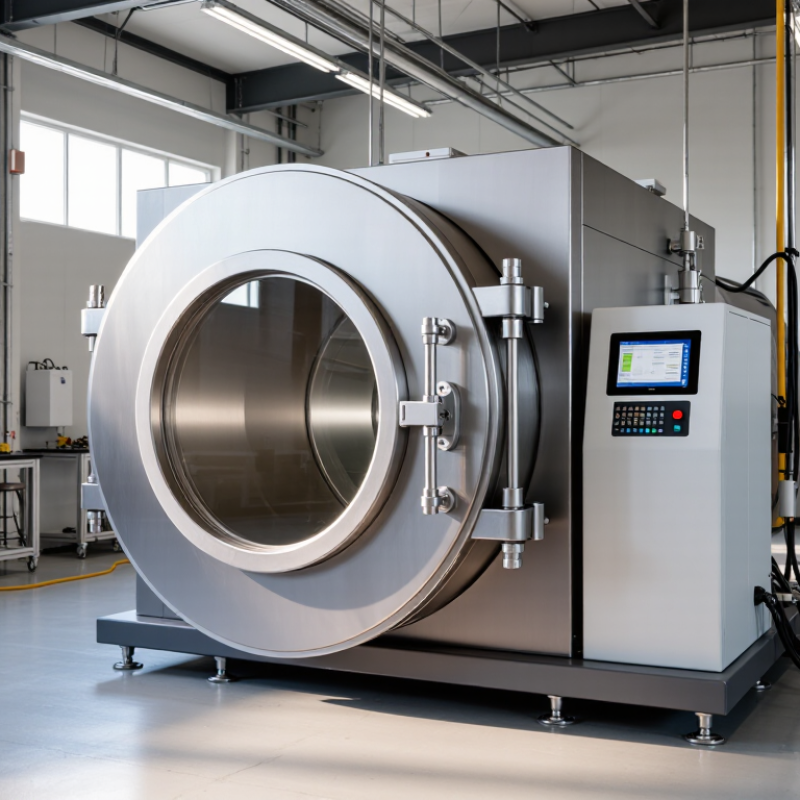
A barometric chamber is a sealed enclosure that controls air pressure around a person, product, or instrument. Sensors monitor pressure while pumps and valves adjust the air inside. Lower pressure can simulate conditions at elevation; the chamber does not physically move upward. Pressure is not altitude. The relationship is approximate and depends on atmospheric conditions.
The International Standard Atmosphere in ISO 2533:1975 gives reference pressures of 101.325 kPa at sea level and about 74.7 kPa at 2,500 metres. These values help engineers set repeatable test points, rather than predict every real-world condition. Inside a chamber, a controller compares sensor readings with the target and adjusts pressure gradually. A test may reveal enclosure leaks, sensor drift, or packaging deformation. Small leaks matter.
For aircraft cabin design, 14 CFR 25.841 generally limits cabin pressure altitude to 8,000 feet under normal operating conditions. That is a regulatory design reference, not a universal chamber setting. Buyers should match chamber size, pressure range, ramp rate, and measurement accuracy to the test method. Ask how often sensors are calibrated and whether results are traceable to recognized standards. A tidy pressure curve can still hide uneven conditions near a fixture, so sensor placement deserves attention.
Hypobaric chambers lower internal pressure to simulate altitude. They are common in aerospace testing, cabin-equipment checks, and human-performance research. ISO 2533:1975, Standard Atmosphere, sets pressure at about 54.0 kPa at 5,000 metres and 26.5 kPa at 10,000 metres. These reference points help engineers specify test profiles and verify pressure sensors. A good unit needs stable decompression, accurate monitoring, and safe return to ambient pressure. Small leaks matter.
Hyperbaric chambers raise pressure above ambient conditions. Their design emphasizes pressure-vessel strength, controlled pressurization, and clear monitoring of pressure and temperature. Industrial models may test sealed components, sensors, or materials; their operating range should match the specimen and test protocol. Combined environmental chambers add temperature or humidity control, letting teams examine how pressure and climate interact. They can be useful, but add setup complexity. Not every buyer needs that. One detail is easy to overlook: chamber volume affects recovery time and operating cost, so compare usable internal space, not just external dimensions. Ask suppliers for calibration records, uniformity data, and a sample test cycle before purchase.
Research teams use barometric chambers to study how reduced air pressure affects materials, sensors, and biological samples. A controlled pressure profile can help researchers compare results across repeatable test conditions. Small details matter. Sample placement, pressure-change rate, and sensor calibration can all influence measurements.
In industry, chambers support testing of electronics, packaging, and instruments intended for changing elevations. Engineers may monitor display behavior, seal integrity, or component performance as pressure falls and rises. A test log should record pressure, temperature, humidity when controlled, and dwell time. Not every chamber fits. Buyers should confirm usable volume, operating range, recovery time, and data-recording features against their actual test plan.
Healthcare applications often involve evaluating medical devices and supplies under specified pressure conditions. For example, teams may assess whether monitoring equipment or sealed packaging performs consistently during simulated transport. These tests require documented procedures and qualified oversight; a chamber does not replace clinical evaluation. Results need context. Chamber capability varies, and published specifications should be checked against independent calibration records where available. For global purchasing, confirm local power requirements, installation support, and calibration services before choosing a system. A low purchase price can look attractive, but downtime and service access deserve equal attention.
For global buyers comparing a barometric chamber, begin with the intended test conditions. Check the operating pressure range, usable chamber volume, and pressure-change rate. These figures affect whether equipment can reproduce a test profile without overloading samples or extending cycle times. Ask how uniformity is measured across the chamber, not just at one sensor. A small temperature or pressure difference can matter when several items are tested together.
Review the control system and safety features in practical detail. Look for independent pressure sensors, clearly visible alarms, door interlocks, and a controlled emergency vent. Confirm what happens after a power failure: does the chamber hold, vent, or stop in another defined state? Not just pressure. Ask for calibration records, maintenance intervals, and documented test results. Compare the stated safety standards with the chamber’s intended use, and verify that certificates cover the complete configuration rather than one component.
A polished specification sheet can still leave gaps. Request a sample test report and a clear description of acceptance limits. Check whether the supplier explains sensor accuracy, inspection access, and operator training. These details can be easy to overlook during procurement. I would also question unusually broad performance claims until the test method is clear; even careful comparisons have blind spots. A short technical review with the people who will operate the chamber can reveal practical needs that a buying checklist misses.
Standard-atmosphere pressure decreases with altitude. Use these approximate reference values to understand the pressure range a chamber may need to reproduce; they are not product ratings.
Buyer note: Compare the required absolute-pressure range, control accuracy, pressure-change rate, uniformity, chamber volume, and safety interlocks. IEC 60068-2-13 and MIL-STD-810H Method 500.6 describe low-pressure test approaches; the applicable test profile and edition should be confirmed for each project.
Buying a barometric chamber worldwide means comparing more than chamber volume and maximum altitude. Ask suppliers for pressure range, usable dimensions, leak-rate data, sensor accuracy, calibration records, and factory acceptance results. Request drawings showing the chamber door, viewing window, and service clearances. Small details matter. A unit that fits the crate may not fit through your laboratory doorway.
Shipping deserves equal attention. UNCTAD’s Review of Maritime Transport 2024 reports that over 80% of world trade by volume travels by sea, making transit planning central to equipment procurement. The World Bank’s 2023 Logistics Performance Index assessed 139 economies across customs, infrastructure, shipment quality, and delivery timeliness. Use these indicators as context, not a guarantee for one shipment. Confirm packaging, insurance, delivery terms, customs documents, and who handles unloading before ordering. Installation also needs a written plan: floor loading, electrical supply, ventilation, anchoring, and commissioning checks. Ask whether technicians can attend onsite or guide setup remotely. Support can look excellent on paper. Who answers when a seal leaks on Friday? Compare response times, spare-part availability, and training hours. I would still verify local service capacity directly; a polished quotation cannot prove it.
| Buying factor | What to specify or verify | Practical buyer considerations | Recommended action |
|---|---|---|---|
| Test purpose and standards | Define whether the chamber is for low-pressure simulation, altitude testing, or a combined environmental test. Identify the applicable test method and revision. | IEC 60068-2-13 covers low air pressure testing. MIL-STD-810H Method 500.6 addresses low-pressure testing; the required procedure depends on the product and test plan. | Share the required pressure profile, ramp rates, dwell times, load, and test procedure with suppliers before requesting a quotation. |
| Pressure range and control | Confirm minimum and maximum absolute pressure, control accuracy, stability, uniformity, ramp control, and measurement range. | Pressure capability and performance depend on the chamber design, sensor, control system, sample load, and operating conditions. Ask for documented specifications across the intended range. | Request a pressure-versus-time demonstration or acceptance test using conditions representative of your application. |
| Chamber size and payload | Provide the largest sample dimensions, fixture details, quantity per run, and required internal working space. | Usable volume may be smaller than the external chamber dimensions. Fixtures, cables, and airflow or thermal requirements can affect loading and test performance. | Request internal and external drawings, door-opening dimensions, payload limits, and recommended sample clearances. |
| Temperature and other functions | State whether temperature control, humidity control, electrical feedthroughs, or other interfaces are required alongside pressure testing. | Combined capabilities can change the equipment configuration, utilities, validation needs, and price. Not every low-pressure chamber provides temperature or humidity control. | Ask suppliers to identify included functions, optional features, operating limits, and any interactions between test conditions. |
| Supplier capability and documentation | Review technical specifications, drawings, control-system details, safety information, references, and factory acceptance procedures. | Compare suppliers against the same written requirement. Confirm which items are standard, optional, excluded, or subject to site conditions. | Request a compliance matrix and a written list of deviations before placing an order. |
| Shipping and import | Confirm packed dimensions and weight, shipping method, delivery terms, insurance, customs documents, and unloading requirements. | Freight and import costs vary by destination, shipment size, route, and delivery terms. The buyer may need to arrange customs clearance, duties, a loading dock, or lifting equipment. | Obtain a destination-specific freight quotation and verify doorways, elevators, floor access, and unloading arrangements in advance. |
| Site readiness and utilities | Check electrical supply, grounding, cooling or ventilation needs, floor capacity, installation clearance, and any vacuum-system exhaust requirements. | Utility requirements are model-specific. Installation access and local electrical standards should be checked against the supplier’s site-preparation guide. | Request a site-preparation checklist and confirm the proposed installation location with facilities and safety teams. |
| Installation and commissioning | Clarify who handles positioning, connection, startup, operator training, acceptance testing, and commissioning documentation. | On-site service availability and travel requirements differ by destination. Remote guidance may not replace installation or commissioning needed for a particular setup. | Include the scope, schedule, travel costs, acceptance criteria, and training deliverables in the purchase agreement. |
| Calibration and traceability | Specify calibration requirements for pressure and any other controlled measurements, including the required range and documentation. | Where accreditation is required, check that the calibration provider’s ISO/IEC 17025 accreditation scope covers the relevant measurement and range. | Confirm calibration certificates, traceability, uncertainty, and recalibration recommendations before ordering. |
| Warranty, service, and spare parts | Review warranty coverage, response process, service location, remote support, software updates, and spare-part availability. | Coverage, exclusions, service response times, and parts lead times are supplier- and contract-specific and should not be assumed from the equipment description alone. | Obtain written warranty terms and a service plan that identifies contact routes, escalation steps, and expected support coverage in your region. |
| Total ownership cost | Compare purchase price with freight, import charges, installation, utilities, calibration, maintenance, consumables, and expected service costs. | The lowest initial quote may not include the same configuration, delivery scope, training, documentation, or after-sales support as competing offers. | Evaluate comparable quotations using a total-cost checklist and confirm all inclusions and exclusions in writing. |
How can we help you?
Call to 0034 943884600 Contact usWe use cookies to ensure that we give you the best experience on our website. If you continue without changing your settings, we'll assume that you agree to receive cookies on the HINE website. For more information read our cookie policy page, click the link for more information.plugin cookies
ACEPTAR