

China Top Carbon Monoxide Detector Manufacturers
China has become an important manufacturing base for Carbon Monoxide Detector products used in homes, hotels, workshops, and commercial buildings. Its suppliers range from experienced alarm specialists to factories focused on connected safety devices. This variety creates opportunity, but it also demands careful evaluation. A low price alone does not prove dependable protection.
Reliable manufacturers usually demonstrate practical engineering experience. They can explain sensor technology, alarm thresholds, battery performance, enclosure design, and production controls in clear language. Their products may include electrochemical sensors, loud audible alarms, visual indicators, test buttons, and low-battery warnings. Some models connect with mobile applications or building management systems. Those features sound useful. They still require proper testing.
This guide examines China’s leading manufacturers through product capability, quality management, certifications, customization support, and after-sales service. It considers how suppliers handle calibration, sample approval, firmware updates, and batch consistency. Factory audits, technical documents, and independent test reports can reveal more than polished brochures. Buyer feedback also matters, especially when it describes long-term performance in humid kitchens or cold warehouses.
No supplier is perfect. Even a respected manufacturer may have weaknesses in documentation or response time. That detail deserves attention. Buyers should compare product specifications with the conditions where the detector will operate. They should also verify applicable regional requirements before purchase. A dependable Carbon Monoxide Detector is not merely a small white alarm on a wall. It is a safety device that must sense danger, sound clearly, and continue working when people are asleep. This overview offers a practical starting point, not a substitute for professional verification.
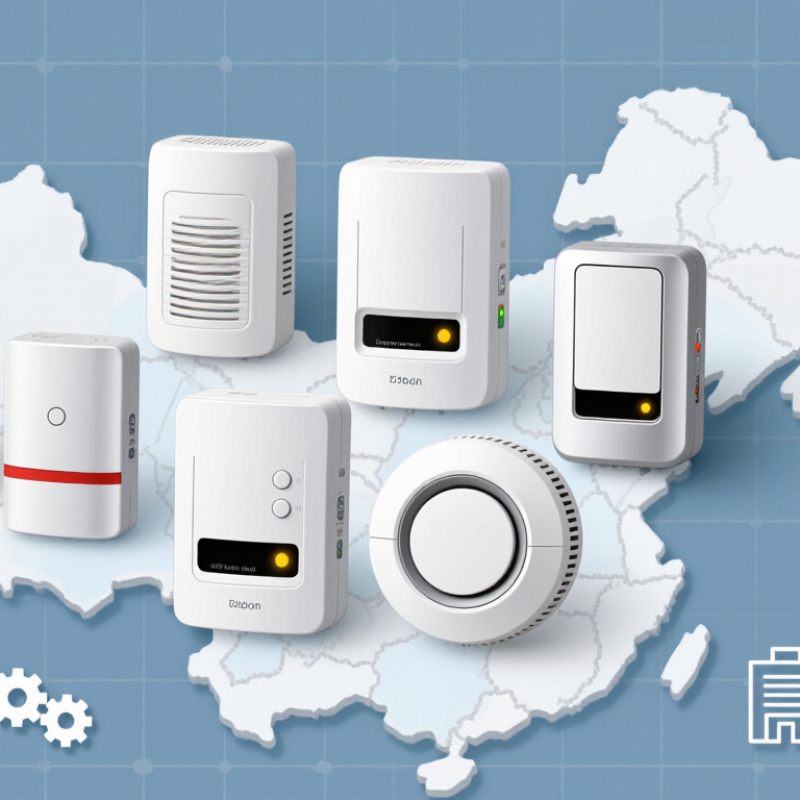
China’s Carbon Monoxide Detector Industry: Scope and Market Role
China’s carbon monoxide detector industry covers household safety, commercial buildings, industrial sites, and export markets. Its role extends beyond device production. It supports sensor development, circuit design, calibration, testing, and after-sales service.
Manufacturers commonly build electrochemical detectors for stable, sensitive measurements. Some models connect with alarms, mobile platforms, or building management systems. Production lines often include gas testing chambers, battery checks, and repeated alarm verification. In practical installations, placement matters as much as hardware. A detector near a sleeping area can provide faster warning, while poor ventilation may affect readings.
The sector also serves construction projects, hotels, rental housing, and heating equipment suppliers. Export-oriented factories must consider different certification systems, language requirements, and electrical standards. Quality control should include sensor aging tests and low-battery alerts. Small details matter.
The market is not flawless. Low-cost products can create pressure on testing accuracy and long-term reliability. Some buyers still compare prices before checking calibration records or alarm volume. That choice may be understandable, but it deserves reflection. Field experience shows that a detector needs regular testing, clear instructions, and timely battery replacement. Connectivity can improve supervision, yet it cannot replace correct installation or user response. China’s industry is therefore becoming a broader safety infrastructure, not merely an assembly market.
China Top Carbon Monoxide Detector Manufacturers - China’s Carbon Monoxide Detector Industry: Scope and Market Role
| Industry Dimension | Typical Scope in China | Relevant Technical or Regulatory Reference | Market Role and Practical Importance |
|---|---|---|---|
| Residential safety | Apartments, houses, rental properties, kitchens, garages, and rooms containing fuel-burning appliances | Household carbon monoxide alarms are generally designed around safety requirements covered by GB 15322.2 for combustible-gas detection and alarm equipment used in residential environments | Provides early warning against odorless and colorless carbon monoxide produced by incomplete combustion, blocked flues, or inadequate ventilation |
| Commercial buildings | Hotels, restaurants, offices, shopping facilities, schools, hospitals, and public-service buildings | Product selection commonly considers building fire-safety requirements, local code obligations, alarm networking, maintenance access, and system integration | Supports centralized monitoring, occupant protection, risk management, and compliance-oriented building safety programs |
| Industrial and process facilities | Steel, metallurgy, mining, chemical processing, power generation, manufacturing, and enclosed production areas | Industrial applications typically require site-specific gas detection design, calibration, alarm logic, environmental protection, and occupational-safety procedures | Helps protect workers from process emissions and combustion-related accumulation while supporting emergency response procedures |
| Heating and fuel-appliance monitoring | Boiler rooms, water-heater areas, central-heating facilities, kitchens, and spaces using coal, oil, gas, or other carbon-containing fuels | Detection planning should account for appliance type, ventilation, ceiling and wall layout, airflow, and the manufacturer’s installation instructions | Addresses one of the principal sources of indoor carbon monoxide and increases the safety value of fuel-burning equipment |
| Transportation and enclosed spaces | Vehicle maintenance areas, underground parking, tunnels, workshops, ships, and other enclosed or semi-enclosed spaces | Systems are commonly specified according to ventilation design, occupancy, operating environment, and the applicable transport or facility safety rules | Enables ventilation control, local alarms, remote notification, and faster evacuation in confined environments |
| Sensor technology | Electrochemical sensing is widely used for household, commercial, and portable carbon monoxide detection; other technologies may be selected for specialized conditions | Key evaluation factors include sensitivity, selectivity, response time, operating temperature, humidity tolerance, service life, and calibration stability | Sensor performance directly affects false-alarm control, warning reliability, replacement intervals, and total ownership cost |
| Alarm and connectivity functions | Standalone audible alarms, interconnected alarms, wired panels, wireless networks, and cloud-connected monitoring platforms | Typical functions include local sound and light alerts, fault indication, low-battery warnings, test buttons, event records, and remote notifications | Moves the market from basic detection toward integrated safety management and building-management connectivity |
| Manufacturing capabilities | Electronic assembly, sensor integration, firmware development, enclosure production, alarm testing, calibration, and quality inspection | Quality control generally covers incoming materials, production testing, alarm thresholds, battery performance, environmental endurance, and traceability | Supports scalable production, private-label supply, export fulfillment, product customization, and consistent batch performance |
| Certification and conformity | Domestic projects may require Chinese product compliance and testing; export products may additionally require destination-market approvals | Common international references include EN 50291 for household carbon monoxide alarms and UL 2034 for residential carbon monoxide alarms, depending on the target market | Certification improves procurement eligibility, buyer confidence, regulatory acceptance, and access to international distribution channels |
| After-sales and lifecycle service | Installation guidance, commissioning, periodic testing, calibration, battery replacement, sensor replacement, and end-of-life disposal | Carbon monoxide alarms require regular functional testing and replacement according to the product’s specified service life and maintenance instructions | Service quality influences long-term detection reliability and reduces the risk of neglected, expired, or poorly installed devices |
| Overall market role | A safety-equipment segment connecting sensor technology, fire protection, smart buildings, industrial safety, and export manufacturing | Market evaluation should combine product compliance, detection performance, application fit, manufacturing quality, supply capability, and lifecycle support | The industry contributes to indoor-air-risk reduction, occupational protection, emergency warning, smart-facility management, and broader public-safety infrastructure |
Note: Installation, certification, and maintenance requirements should be verified against the latest applicable Chinese regulations, project specifications, and destination-market standards.
Choose a global leader for your hydraulics solutions
How can we help you?
Call to 0034 943884600 Contact us