

China Top Drone Camera Gimbal DIY Manufacturers?

China has become a practical sourcing center for compact aerial imaging hardware, including camera gimbals, brushless motors, controllers, and vibration dampers. This article examines China’s top manufacturers for Drone Camera Gimbal Diy projects. It focuses on suppliers with proven engineering experience, stable production, and clear technical documentation.

A capable manufacturer should explain payload limits, motor torque, control protocols, voltage ranges, and supported camera weights. These details matter when a gimbal must carry a mirrorless camera at 400 meters above ground. Small errors can create visible horizon drift, shaky footage, or overheated motors. Reliable factories usually provide calibration software, wiring diagrams, sample units, and after-sales support. Factory audits, product testing, and verified customer feedback add valuable evidence.

Experience matters more than attractive product photos.

Some manufacturers specialize in hobby platforms. Others build customized systems for industrial inspection, mapping, or cinematography. Their differences may appear in machining tolerance, encoder quality, waterproofing, and response speed. Buyers should compare these factors before requesting a quotation. Certification records and documented quality procedures also deserve careful review.

Not every impressive sample reflects regular production quality. That is an important weakness in many sourcing decisions. A prototype may perform well, while later batches show inconsistent balancing or software issues. Careful buyers should request pre-shipment inspection, acceptance criteria, and replacement terms. This guide offers a structured introduction to reputable Chinese manufacturers, while recognizing that supplier claims still require independent verification. The best choice depends on camera weight, flight conditions, integration skills, budget, and the patience required for testing.
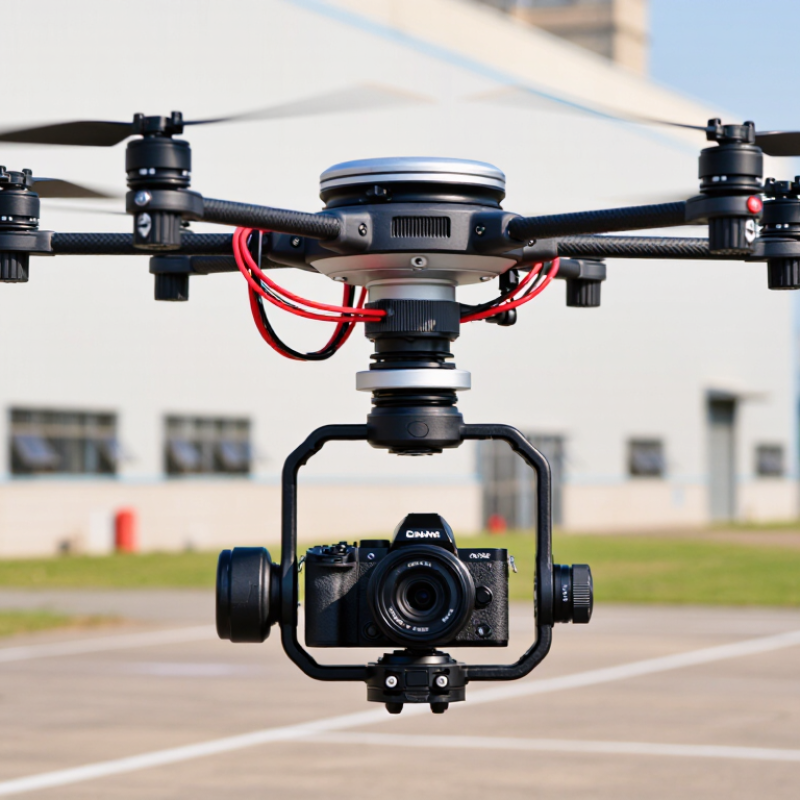
China Top Drone Camera Gimbal DIY Manufacturers?

What Is a DIY Drone Camera Gimbal?

A DIY drone camera gimbal is a small stabilization system built or customized by the user. It holds the camera steady while the drone moves, turns, or faces wind. Most systems use brushless motors, position sensors, a controller board, and a lightweight frame. Each motor corrects unwanted movement on one or more axes.

In practical testing, balance matters more than motor power. A poorly balanced camera can make motors heat quickly and drain the battery. I usually begin with a simple two-axis design for tilt and roll. A three-axis version offers smoother footage, but it requires more tuning and adds weight. The frame should be rigid, while soft vibration dampers reduce high-frequency shaking. Some results may look disappointing at first. That is normal. Small calibration errors can create visible horizon drift.

Tips: Keep the camera centered before powering the gimbal. Check motor temperature after short tests. Use matching sensor settings and secure every wire. Test indoors without propellers, then move to a controlled outdoor area. Leave enough clearance for the camera lens and moving arms. When choosing components from experienced manufacturers in China, review material details, calibration support, testing records, and replacement policies. Never judge quality from price alone. Follow local drone and radio-control regulations during every test.

Key Features of China’s Top Gimbal Manufacturers

China’s top drone camera gimbal manufacturers usually combine precision machining with practical customization. Many offer CNC aluminum frames, brushless motors, vibration dampers, and compact control boards. These features help reduce shaking during aerial photography. A strong manufacturer also matches the gimbal to the camera’s weight, lens length, and drone payload.

Experienced teams often provide three-axis stabilization, IMU calibration, and adjustable mounting plates. They may support custom wiring, communication protocols, and firmware tuning for different flight controllers. Quality control should include balance checks, vibration testing, temperature testing, and repeated movement cycles. Ask for measurable test data, not only attractive product photos. Factory inspection records and clear technical drawings improve reliability. Still, one weakness remains: a prototype may perform well indoors but struggle in wind. I have seen small alignment errors create visible horizon drift.

Tips: Confirm payload limits before ordering. Request a sample unit and test it with your actual camera. Check motor heat after extended operation. Discuss spare parts, calibration support, and realistic production timing. Keep the design simple where possible. Extra features can increase failure points. A careful manufacturer will explain those trade-offs instead of promising perfect results.

China Top Drone Camera Gimbal DIY Manufacturers? - Key Features of China’s Top Gimbal Manufacturers

Manufacturer Capability Profile Typical Drone Use Gimbal Configuration Typical Payload Range Stabilization and Control Camera Compatibility DIY/OEM Customization Quality and Delivery Features
Entry-Level OEM/ODM Profile Consumer drones, educational platforms, indoor inspection, and lightweight aerial photography Usually 2-axis or 3-axis brushless gimbals Approximately 100–500 g, depending on the motor and frame design Brushless motors, IMU-based stabilization, PWM or serial control, and basic angle or speed modes Compact action cameras, small board cameras, and lightweight mirrorless camera modules Mounting holes, cable routing, motor tuning, firmware parameters, and enclosure color Basic functional testing, sample approval, small-batch production, and standard export packaging
Professional Aerial Photography Profile Mapping, surveying, real-estate photography, media production, and commercial inspection 3-axis pitch, roll, and yaw stabilization with adjustable camera plates Approximately 500 g–2 kg High-resolution encoders, tuned PID control, vibration isolation, serial bus communication, and remote angle adjustment Action cameras, compact cameras, mirrorless cameras, and selected fixed-lens imaging modules Custom camera trays, anti-vibration mounts, quick-release systems, connector selection, and control protocol integration Incoming inspection, balance calibration, vibration testing, operating-temperature checks, and documented sample sign-off
Heavy-Payload Industrial Profile Power-line inspection, public-safety operations, infrastructure surveys, and long-endurance unmanned aircraft 3-axis systems with reinforced frames, larger motors, and payload-specific balancing Approximately 2–8 kg; higher loads require aircraft-specific engineering validation Closed-loop motor control, high-grade IMUs, vibration filtering, serial or CAN communication, and configurable stabilization profiles Professional cameras, thermal imaging modules, multispectral sensors, zoom cameras, and customized payloads Payload adapters, power regulation, data links, thermal management, waterproofing options, and aircraft-interface customization Load testing, endurance testing, vibration analysis, environmental checks, calibration records, and engineering change control
Thermal and Multisensor Profile Night inspection, firefighting support, security observation, agriculture, and environmental monitoring 3-axis gimbals with dual-sensor or multi-sensor mounting structures Approximately 300 g–3 kg, depending on the optical and thermal payload combination Independent or coordinated sensor control, stabilized line of sight, position feedback, and configurable command interfaces Visible-light cameras, thermal cores, infrared modules, multispectral sensors, and combined payload assemblies Custom optical spacing, sensor synchronization, power outputs, data connectors, and payload software integration Sensor alignment, image-axis verification, electrical safety checks, operating-temperature testing, and calibration documentation
Long-Endurance and Low-Power Profile Fixed-wing aircraft, hybrid VTOL platforms, environmental observation, and extended surveying missions Lightweight 2-axis or 3-axis configurations optimized for low power consumption Approximately 150 g–1 kg Low-power brushless drives, efficient stabilization algorithms, serial control, and aircraft autopilot integration Compact visible-light, multispectral, mapping, and lightweight inspection cameras Weight reduction, carbon-fiber or aluminum brackets, low-power electronics, custom wiring, and aircraft-specific mounting Weight verification, power-consumption measurement, balance testing, flight-vibration checks, and repeatable assembly procedures
Research and Development Integration Profile University projects, robotics research, autonomous navigation, prototype aircraft, and specialized imaging systems Configurable 2-axis or 3-axis platforms with accessible mechanical and electrical interfaces Approximately 100 g–5 kg, based on the prototype structure and selected actuators Open parameter tuning, serial protocols, CAN options, external IMU support, and integration with onboard computers Standard cameras, scientific sensors, prototype payloads, and customer-supplied imaging equipment CAD changes, custom PCBs, firmware modification, API development, prototype machining, and low-volume assembly Engineering samples, interface documentation, test reports, design revisions, and pilot-run validation

Note: Payload ranges and feature sets are typical industry capability ranges for Chinese OEM/ODM drone-gimbal suppliers. Actual performance depends on the selected camera, aircraft vibration, center of gravity, power system, control firmware, and environmental conditions.

How to Evaluate DIY Gimbal Design and Build Quality

China Top Drone Camera Gimbal DIY Manufacturers?

How to Evaluate DIY Gimbal Design and Build Quality

A capable DIY gimbal begins with a clear mechanical layout, not attractive packaging. Check the frame around the camera mount for straight edges, even spacing, and firm fasteners. Small gaps matter. The arms should move smoothly without scraping or sudden resistance. I once trusted a polished prototype, but its loose bearing created visible vibration during slow panning. That mistake taught me to inspect hidden joints, not only the outer shell.

Evaluate the motor position, load balance, and cable routing under realistic conditions. A balanced camera should remain nearly level before electronic correction begins. Hold the assembly at different angles and watch for drifting, clicking, or delayed recovery. Test it twice. Warm motors may indicate excessive friction, poor tuning, or an unsuitable load. Measure temperature after several minutes, rather than guessing from a short bench test.

Build quality also depends on repeatable assembly. Mounting holes should align without force, and replacement parts should be accessible with ordinary tools. Ask manufacturers for torque guidance, material details, testing records, and sample videos from comparable camera weights. Technical answers should be specific, not promotional. I still find small wiring errors in my own builds, especially near moving joints. That is normal, but ignoring them is not. A reliable DIY supplier welcomes inspection, documents limitations, and accepts that early designs may need revision.

China Top Drone Camera Gimbal DIY Manufacturers? How to Evaluate DIY Gimbal Design and Build Quality

This reference chart rates the most important DIY gimbal evaluation dimensions on a 100-point scale. Higher scores indicate better design readiness, mechanical stability, control performance, thermal safety, and serviceability. Validate each score with repeatable bench tests before selecting a manufacturer or building a prototype.

Leading Chinese Manufacturers and Their Product Capabilities

China Top Drone Camera Gimbal DIY Manufacturers?

China’s leading DIY gimbal manufacturers increasingly combine machining, electronics, and rapid prototyping. Their workshops commonly use CNC aluminum frames, brushless motors, encoder feedback, and three-axis stabilization systems. Some suppliers also support custom payload mounts, wiring layouts, and firmware adjustments for research teams and aerial imaging integrators.

According to Drone Industry Insights’ 2024 market report, the commercial drone sector was valued at approximately US$30 billion in 2023. This growth increases demand for lighter and more adaptable camera platforms. Chinese manufacturers respond with modular gimbals, usually supporting 500-gram to 2-kilogram payload classes. Typical production capabilities include ±0.02-degree position resolution, vibration testing, and small-batch assembly. Those figures require verification. Factory datasheets can describe ideal laboratory conditions, not field performance.

Grand View Research reported strong expansion in the global drone market, with double-digit annual growth expected through 2030. This trend supports demand for prototype-ready suppliers rather than only mass producers. Experienced buyers should inspect balancing procedures, motor temperature tests, connector quality, and sample footage during fast movement. Ask for test records. Small errors accumulate. A useful supplier should explain limitations clearly, provide replacement parts, and accept practical design revisions. Product consistency may still vary between pilot batches, so independent inspection remains sensible before larger orders.

How to Choose the Right Manufacturer for Your Drone Project

China Top Drone Camera Gimbal DIY Manufacturers?

How to Choose the Right Manufacturer for Your Drone Project

Choosing a manufacturer starts with your camera, payload, and flight conditions. A lightweight action camera needs different torque than a cinema camera. Ask for payload charts, motor specifications, and vibration test data. Reliable manufacturers should explain balancing limits in practical terms. They should also provide drawings, wiring diagrams, and communication protocols before production.

Request a small prototype before ordering a larger batch. Test the gimbal during takeoff, sharp turns, and landing vibrations. Check whether the horizon remains stable after ten minutes of operation. Ask how the supplier calibrates the IMU, encoder, and motor system. Clear calibration records show technical discipline. A factory with documented quality checks is easier to trust.

I once focused too heavily on the quoted price. The cheaper unit had loose connectors and inconsistent damping. That mistake delayed testing by several weeks. Cost still matters, but support matters more. Discuss firmware access, spare parts, repair procedures, and response times. Confirm the manufacturer can adjust mounting holes and control settings for your airframe. Ask for material certificates and inspection photos when the design includes aluminum arms or custom brackets. Some specifications may change after testing. That is normal, but every change should be recorded and approved.

Choose a global leader for your hydraulics solutions

How can we help you?

Call to 0034 943884600 Contact us
Call us Contact us

We use cookies to ensure that we give you the best experience on our website. If you continue without changing your settings, we'll assume that you agree to receive cookies on the HINE website. For more information read our cookie policy page, click the link for more information.plugin cookies

ACEPTAR
Aviso de cookies