

What Are China Top Vacuum Circuit Breaker Manufacturers?
China’s vacuum switching industry has grown from local electrical workshops into a serious global manufacturing sector. Today, many buyers ask, “What Are China Top Vacuum Circuit Breaker Manufacturers?” The answer depends on more than factory size or export volume. A reliable supplier should demonstrate technical experience, stable production, and transparent quality control.
This guide examines leading Chinese manufacturers through practical purchasing criteria. These include product range, rated voltage, breaking capacity, insulation performance, and service support. Factory certifications matter, but certificates alone cannot prove long-term field reliability. Buyers should also review test reports, production records, warranty terms, and customer references. Look closely.
A dependable Vacuum Circuit Breaker manufacturer should explain its design choices clearly. For example, it should describe contact materials, vacuum interrupter performance, mechanical endurance, and operating mechanism maintenance. Site audits can reveal details that brochures often hide, such as calibration practices, assembly cleanliness, and spare-parts availability. These small details matter.
The article also considers manufacturers serving medium-voltage distribution, industrial facilities, renewable-energy projects, and utility networks. Some companies offer competitive prices and flexible customization. Others provide stronger engineering support but require larger minimum orders. No ranking is universally correct. Market position can change quickly, and public information may remain incomplete.
Therefore, readers should treat this overview as a practical starting point, not a final purchasing decision. Comparing verified evidence, installation experience, and after-sales responsiveness will produce a more dependable result. Good equipment is important. Good judgment matters too.
What Is a Vacuum Circuit Breaker and Why Is China a Major Producer?
What Is a Vacuum Circuit Breaker and Why Is China a Major Producer?
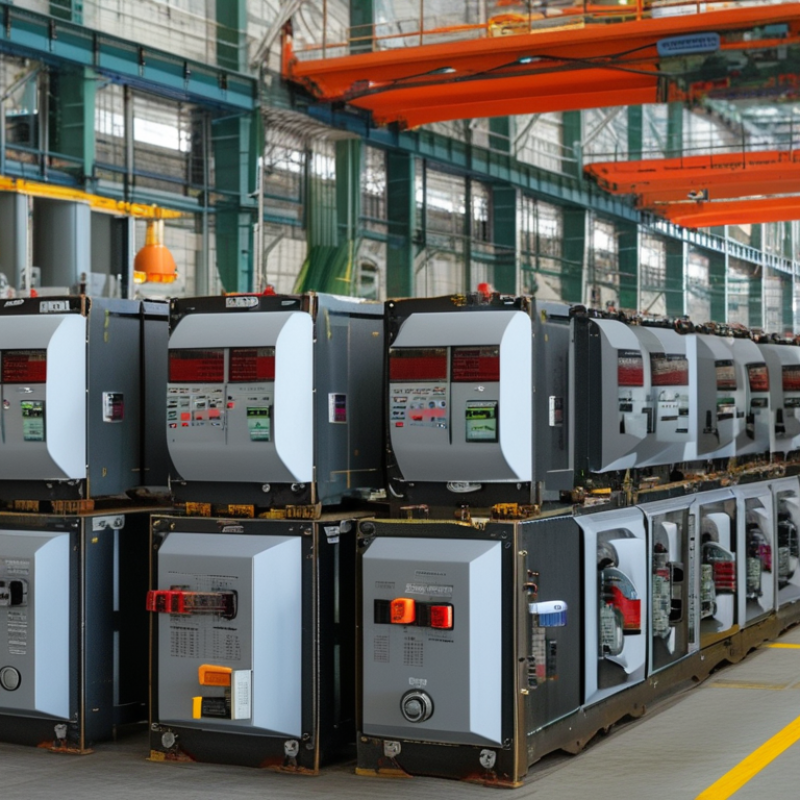
A vacuum circuit breaker interrupts current inside a sealed vacuum interrupter. When contacts separate, the arc has little gas to sustain it. It disappears quickly after the current crosses zero. This design is widely used in medium-voltage systems, commonly from 3.6 to 40.5 kV. It supports substations, factories, rail networks, and renewable-energy connections. IEC 62271-100 defines key requirements for high-voltage alternating-current circuit breakers, including testing and performance verification.
China’s production strength follows its expanding power infrastructure. The National Energy Administration reported that China’s installed power capacity reached about 3.35 billion kW by the end of 2024. Renewable capacity represented roughly 1.89 billion kW. Every new feeder and switching station needs dependable protection equipment. China also has dense supply chains for copper contacts, ceramic insulation, control electronics, steel cabinets, and precision machining. That combination reduces production time and supports large-volume orders.
Market research reports differ on market size and growth rates. However, studies from MarketsandMarkets and Grand View Research consistently identify grid expansion and industrial electrification as major demand drivers. The numbers are useful, but not perfect. Report definitions often include different voltage classes and product categories. A cheaper breaker is not automatically better. Engineers still examine interrupting capacity, mechanical endurance, insulation level, altitude, temperature, and service records. Small testing details matter.
What Are China Top Vacuum Circuit Breaker Manufacturers? - What Is a Vacuum Circuit Breaker and Why Is China a Major Producer?
| Category | Data Dimension | Typical or Standardized Data | Practical Significance |
|---|---|---|---|
| Product Definition | Switching medium | A sealed vacuum interrupter extinguishes the arc when the circuit current is interrupted. | No insulating oil or SF₆ gas is required inside the interrupter, reducing fire and gas-handling concerns. |
| Electrical Ratings | Common rated voltage classes | 3.6 kV, 7.2 kV, 12 kV, 17.5 kV, 24 kV and 36 kV are widely used medium-voltage classes. | The selected voltage class must match the system’s highest operating voltage and insulation requirements. |
| Electrical Ratings | Rated normal current | Common medium-voltage configurations typically range from 630 A to 3,150 A; higher ratings are available for specialized designs. | The rating indicates the continuous current the breaker can carry under specified service conditions. |
| Fault Protection | Rated short-circuit breaking current | Typical medium-voltage products are commonly specified from 16 kA to 50 kA, depending on voltage and construction. | This value defines the maximum symmetrical fault current the breaker is designed to interrupt at its rated voltage. |
| Operating Mechanism | Operating technology | Spring-operated mechanisms are widely used; both fixed and withdrawable arrangements are available. | Withdrawable versions simplify isolation, inspection and maintenance in metal-enclosed switchgear. |
| Service Life | Mechanical endurance | Many medium-voltage designs are rated for approximately 10,000 mechanical operating cycles; higher endurance classes may be offered. | Endurance should be checked against the required switching frequency and duty cycle. |
| Applicable Standards | International and Chinese standards | IEC 62271-100 covers high-voltage alternating-current circuit breakers; GB/T 1984 is the corresponding Chinese circuit-breaker standard. | Standards define testing, ratings, insulation coordination, breaking performance and verification requirements. |
| Manufacturing Capability | Component supply chain | China has extensive industrial capacity for vacuum interrupters, copper conductors, insulating parts, operating mechanisms, sensors and switchgear assemblies. | A broad domestic supply base supports product customization, volume production and replacement-part availability. |
| Production Advantage | Industrial manufacturing scale | Large-scale electrical-equipment manufacturing, established metalworking capacity and mature export logistics support competitive production. | Scale can reduce unit cost and shorten lead times, although quality depends on design, testing and process control. |
| Customization | Configuration options | Common options include fixed or withdrawable mounting, top or bottom cable entry, motorized operation, undervoltage release and auxiliary contacts. | Configuration flexibility helps match the breaker to distribution panels, industrial systems and renewable-energy installations. |
| Typical Applications | End-use sectors | Utility distribution, industrial plants, commercial buildings, mining, rail transit, data centers and renewable-energy collection systems. | Vacuum circuit breakers are suited to frequent medium-voltage switching and short-circuit protection. |
| Supplier Evaluation | Key qualification criteria | Verify type-test evidence, routine-test procedures, rated values, insulation levels, endurance class, service support and compliance documentation. | Technical certification and test documentation are more reliable selection criteria than price or production capacity alone. |
Note: Ratings shown as typical ranges are for general medium-voltage reference only. Actual values vary by design, voltage class, enclosure, operating mechanism and applicable standard.
Choose a global leader for your hydraulics solutions
How can we help you?
Call to 0034 943884600 Contact us