
Top 10 Hydraulic Solutions Suppliers for Global Buyers?

Choosing hydraulic solutions for an international project involves more than comparing prices and product catalogs. A reliable supplier must understand pressure ratings, flow requirements, contamination risks, installation conditions, and long-term maintenance. One small mismatch can cause overheating, leakage, or unexpected downtime on a busy production line.

Eric Lanke, President and CEO of the National Fluid Power Association, has described fluid power as “a technology that is everywhere.” That observation matters. Hydraulic systems operate inside excavators, factory presses, agricultural equipment, marine machinery, and specialized transport systems. Their importance is often noticed only after failure.

This guide examines ten hydraulic solutions suppliers serving global buyers. The comparison considers engineering capability, product range, customization, certifications, technical support, delivery performance, and after-sales service. It also considers practical details, such as response time during a valve failure and the availability of replacement seals in another region.

The ranking is not absolute. Different applications demand different strengths. A construction contractor may value rugged mobile hydraulics, while an automation manufacturer may prioritize precise control and clean-room compatibility. Buyers should verify specifications independently. Supplier websites can be incomplete, outdated, or overly optimistic.

Real purchasing experience teaches a difficult lesson. The cheapest quotation rarely represents the lowest total cost. A stronger evaluation examines documentation, testing procedures, warranty terms, and field support. It also asks uncomfortable questions about past failures. That part is easy to overlook.

The following suppliers are assessed for their ability to deliver dependable hydraulic solutions across borders, industries, and operating conditions.
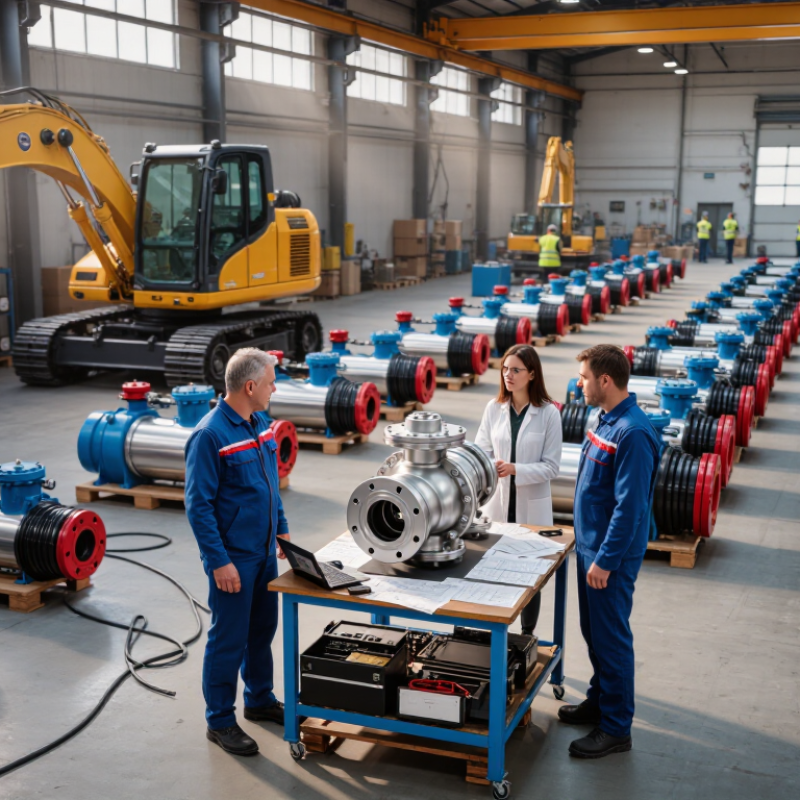
Top 10 Hydraulic Solutions Suppliers for Global Buyers?

Understanding the Global Hydraulic Solutions Supplier Market

The global hydraulic solutions supplier market is expanding with industrial automation, construction, agriculture, and energy projects. MarketsandMarkets’ 2024 Hydraulic Equipment Market report estimates a value of USD 46.7 billion in 2024. It projects the market to reach USD 61.7 billion by 2029, reflecting a 5.7% compound annual growth rate. Grand View Research also identifies construction and material handling as major demand sectors. These figures differ slightly. Market definitions are not always consistent.

Global buyers should assess more than equipment prices. A dependable supplier provides load calculations, circuit diagrams, material certificates, and documented testing procedures. Experience matters when systems operate near ports, mines, farms, or high-dust factories. Ask about cylinder life, filtration targets, fluid compatibility, and replacement-part availability. Suppliers should also demonstrate quality controls aligned with ISO 9001 and hydraulic safety practices under ISO 4413. A cheaper quotation can become expensive after repeated leakage or delayed maintenance. That risk is easy to underestimate.

Tips: Request a sample inspection report before signing a contract. Compare warranty terms, response times, and technician coverage across regions. Check whether the supplier can support commissioning in your operating language. Test pressure stability under realistic temperature and load conditions. Do not rely on brochures alone. Independent verification is better.

A useful, imperfect question is simple: “What failed in your last project, and what changed afterward?” Their answer may reveal more than a polished sales presentation.

Criteria for Evaluating Hydraulic Solutions Suppliers

Selecting the top ten hydraulic solutions suppliers requires more than comparing catalog prices. Global buyers should examine application experience, engineering depth, and verified production controls. Ask for pressure-flow curves, material certificates, cleanliness records, and factory acceptance test results. ISO 4413 provides a useful benchmark for hydraulic-system safety and risk control. Suppliers should also demonstrate quality systems aligned with ISO 9001. A certificate alone proves little. Audit the process behind it.

Energy performance deserves serious attention. The U.S. Department of Energy’s pumping-system guidance notes that pumping can consume 25–50% of electricity in some industrial facilities. Hydraulic buyers should therefore compare pump efficiency, standby losses, leakage rates, and control strategies. Request measured data, not optimistic brochures. Measure it yourself. Service capability matters equally. Check spare-parts coverage, remote diagnostics, technician response times, and training records across your operating regions. A supplier with excellent products but weak after-sales support can create expensive downtime. That gap matters.

Commercial evaluation should include total cost over five to ten years. Review warranty limits, maintenance intervals, delivery reliability, cybersecurity controls, and change-notification procedures. Reports from the International Energy Agency repeatedly emphasize efficiency and lifecycle management as practical industrial priorities. Still, every report has limits. Factory conditions, fluid contamination, and operator habits can change the result. A technically sound shortlist should include reference visits, witnessed testing, and a small pilot order. The cheapest quotation may win the spreadsheet. It may not win production.

Top 10 Hydraulic Solutions Suppliers for Global Buyers? - Criteria for Evaluating Hydraulic Solutions Suppliers

Rank Anonymous Supplier Profile Core Hydraulic Solution Typical Working Pressure Relevant Standards to Verify Customization Capability Global-Buyer Service Factors Evidence Required Before Approval Evaluation Score
1 Industrial System Integrator Complete power units, manifolds, valves, filtration, controls and commissioning for factory automation. 160–315 bar ISO 4413 ISO 12100 ISO 13849 Very high Engineering support, site commissioning, spare-parts planning and documentation in multiple languages. System drawings, pressure and flow calculations, risk assessment, FAT records and service response times. 9.4 / 10
2 Mobile Equipment Specialist Hydraulic circuits for construction, agricultural, forestry and material-handling equipment. 210–350 bar ISO 4413 ISO 6020/2 ISO 6022 High Field troubleshooting, contamination-control guidance, mobile service and replacement-part availability. Load-cycle test results, hose-routing design, cylinder ratings, warranty policy and parts lead-time data. 9.2 / 10
3 Hydraulic Cylinder Manufacturer Standard and engineered hydraulic cylinders for presses, lifting equipment and mobile machinery. 160–350 bar ISO 6020/1 ISO 6020/2 ISO 6022 Very high Application engineering, seal selection, repair support and traceable replacement components. Material certificates, weld procedures, dimensional inspection reports, pressure-test records and fatigue data. 9.0 / 10
4 Pump and Motor Specialist Fixed- and variable-displacement pumps, hydraulic motors, drive systems and efficiency optimization. 140–420 bar ISO 4413 ISO 3019 ISO 4409 High Application sizing, condition monitoring, efficiency testing and global technical support. Performance curves, volumetric-efficiency data, noise measurements, installation instructions and warranty terms. 8.9 / 10
5 Valve and Motion-Control Specialist Directional, proportional, servo, pressure-control and flow-control valve assemblies. 100–350 bar ISO 4413 ISO 10770 IEC 61508 High Control tuning, hydraulic schematic review, electronics integration and lifecycle support. Flow-pressure curves, response-time data, cleanliness requirements, EMC information and software documentation. 8.8 / 10
6 Hose and Fluid-Connection Specialist Hydraulic hoses, tube assemblies, fittings, quick couplings and contamination-control accessories. 70–700 bar ISO 18752 ISO 12151 SAE J517 Medium to high Local assembly capability, identification systems, replacement logistics and hose-management training. Impulse-test results, bend-radius data, compatibility charts, batch traceability and assembly procedures. 8.6 / 10
7 Filtration and Condition-Monitoring Provider Pressure and return-line filters, offline filtration, breathers, sensors and oil-analysis support. 10–420 bar ISO 16889 ISO 11171 ISO 4406 Medium Contamination audits, sampling programs, filter availability and predictive-maintenance support. Beta-ratio data, pressure-drop curves, cleanliness targets, media compatibility and laboratory reports. 8.5 / 10
8 Compact Power-Unit Builder Pre-engineered and custom mini power packs for lifting, clamping, steering and industrial machinery. 100–250 bar ISO 4413 IEC 60204-1 IP ratings High Rapid configuration, electrical integration, compact design support and replacement-unit supply. Hydraulic schematics, motor data, heat-balance calculations, noise measurements and enclosure ratings. 8.3 / 10
9 Marine and Offshore Hydraulic Specialist Corrosion-resistant power units, winch systems, steering systems and deck-machinery hydraulics. 140–350 bar ISO 4413 IEC 60092 Class approval Very high 24-hour technical response, inspection support, corrosion protection and port-side spare-parts planning. Material selection, environmental test reports, hazardous-area documentation and applicable marine approvals. 8.2 / 10
10 Aftermarket and Repair-Service Provider Hydraulic pump, motor, valve and cylinder repair, testing, refurbishment and emergency replacement. Up to 420 bar ISO 4413 ISO 9001 ISO 4406 Medium to high Regional workshops, exchange units, failure analysis, reverse logistics and expedited repair options. Calibration certificates, test-bench reports, repair scope, replaced-parts list and warranty conditions. 8.0 / 10

Top 10 Hydraulic Solutions Suppliers for Global Buyers

Top 10 Hydraulic Solutions Suppliers for Global Buyers

Global buyers need more than low quotations when comparing the top ten hydraulic solutions suppliers. MarketsandMarkets estimates that the hydraulic equipment market may grow from about USD 44.6 billion in 2023 to USD 56.6 billion by 2028. This growth increases supplier choices, but also raises evaluation risks. Experienced buyers should check pressure ratings, flow stability, cylinder life, filtration standards, and documented factory testing. A reliable supplier should also support ISO 9001 quality systems and ISO 4413 hydraulic safety practices. Data matters. Sales promises do not.

Tips: Request test records, component traceability, spare-parts lead times, and service coverage in your target region. Compare total ownership cost, not only purchase price. A cheaper valve can become expensive after repeated downtime.

Technical support separates strong suppliers from ordinary exporters.
Look for application engineers who can review circuit diagrams, oil temperature, duty cycles, and contamination levels. The International Fluid Power Society notes that contamination remains a major cause of hydraulic failure, so filtration advice deserves careful attention. Industry forecasts from Grand View Research also point to steady demand for efficient, connected hydraulic systems. Suppliers offering condition monitoring may reduce maintenance surprises, although the benefits depend on correct installation and operator training.

A ranking is never perfect. Local climate, transport delays, and machine design can change the result. Global buyers should request reference projects with similar pressure, workload, and operating conditions.

Inspect warranty wording closely. It often reveals more than marketing language.

Comparing Products, Services, Certifications, and Global Reach

Top 10 Hydraulic Solutions Suppliers for Global Buyers?

Comparing the top 10 suppliers requires more than checking pressure ratings. A 2024 hydraulic equipment market report estimates global value above USD 49 billion, with continued growth toward 2029. This expansion increases product choices, but also complicates technical evaluation. Buyers should compare pumps, valves, cylinders, filtration units, and control systems against actual load cycles. Service matters equally. Look for application engineers, commissioning support, spare-part availability, and clear response times. A low purchase price can become expensive after one delayed repair.

Certifications provide useful evidence, not automatic trust. ISO 9001 supports quality processes, while ISO 14001 and ISO 45001 indicate environmental and occupational management practices. ISO 4413 helps buyers assess hydraulic system safety and design principles. Compliance documents should match the supplied model, not a general company certificate. Global reach also needs careful checking. Review regional warehouses, local technicians, language support, export documentation, and warranty procedures. In practical audits, buyers often discover that “worldwide service” means only email support. That gap deserves attention.

Tips: Request three comparable quotations. Ask for tested pressure, flow, noise, efficiency, and warranty data. Check two customer references in your target region. Do not ignore lead times. One overlooked seal or connector can stop an entire production line. Market reports offer direction, but site conditions still decide performance.

Steps for Choosing the Right Hydraulic Solutions Supplier

Choosing the right hydraulic solutions supplier starts with your operating conditions. Record pressure, flow rate, fluid type, temperature, duty cycle, and installation space. A supplier cannot design reliably from a vague product request. Provide drawings, photos, and failure history when available. Small details matter.

Review technical competence before comparing prices. Ask for material specifications, pressure test records, quality procedures, and traceability documents. Confirm that components meet relevant safety and performance standards for your market. Request a sample inspection or factory video call. Test response time, too. Slow answers may become slower support after payment.

Examine the supplier’s engineering and service capacity. Can they calculate losses, select seals, and suggest maintenance intervals? Ask about spare parts, troubleshooting, warranty limits, and emergency delivery. Contact several verified customers, not only the references chosen for marketing. A low quotation can hide weak packaging, unclear tolerances, or expensive downtime. I have seen buyers focus on unit cost and overlook installation labor. That mistake is common. Compare the full ownership cost, including testing, shipping, training, and replacement intervals. Keep every requirement in the purchase contract, including acceptance criteria and change control. Then score suppliers against the same checklist, rather than choosing the most persuasive salesperson.

Choose a global leader for your hydraulics solutions

How can we help you?

Call to 0034 943884600 Contact us
Call us Contact us

We use cookies to ensure that we give you the best experience on our website. If you continue without changing your settings, we'll assume that you agree to receive cookies on the HINE website. For more information read our cookie policy page, click the link for more information.plugin cookies

ACEPTAR
Aviso de cookies