

In the rapidly evolving landscape of Industrial P, global buyers are increasingly seeking innovative products that reshape industries. According to Dr. Emily Chen, a leading expert in Industrial P, "The future of industrial products lies in sustainability and technology integration." Her insight reflects the significant shifts we witness today.
As we approach 2026, key industrial sectors will focus on smart manufacturing, eco-friendly materials, and automation. These trends promise to enhance efficiency and reduce environmental impact. Buyers must adapt to these changes, identifying solutions that align with their operational needs.
Moreover, challenges remain. The race for technological advancements can lead to a saturation of products in the market. Buyers often face difficulty discerning which innovations genuinely add value. Reflecting on these complexities, it becomes evident that informed decisions are crucial in navigating the landscape of Industrial P.
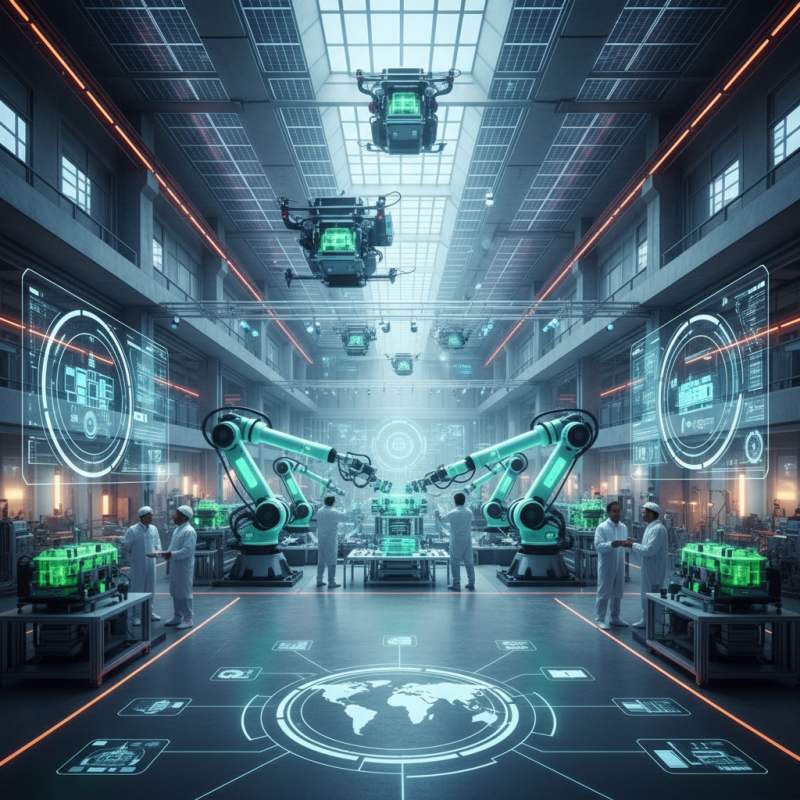
As we move towards 2026, emerging trends in industrial products are reshaping global markets. Automation technology is gaining traction. This shift aims to enhance efficiency. Manufacturers seek smarter machines that can adapt and learn. These innovations can save time and reduce costs.
Sustainability is another critical trend. More companies are focusing on eco-friendly materials. The demand for products that minimize environmental impact is on the rise. Renewable energy solutions, such as solar panels and wind turbines, are becoming essential components. Yet, the challenge lies in balancing cost with sustainability.
Digitalization is revolutionizing how businesses operate. The integration of IoT devices is enabling real-time data analysis. Companies can track production, inventory, and supply chain processes. However, there are concerns about cybersecurity risks. As industries shift, they must prioritize protection against data breaches. Continuous adaptation will be necessary for success in this evolving landscape.
The industrial landscape is evolving rapidly as we approach 2026. Key sectors are driving this change. Automation and robotics stand out as essential areas. Factories increasingly rely on intelligent systems. These innovations enhance production efficiency. They reduce human errors and increase safety. However, not all companies smoothly adopt these technologies.
Sustainable practices dominate discussions among global buyers. Industries are shifting towards eco-friendly solutions. Renewable materials gain traction, reflecting consumer demand. Yet, companies face challenges adopting these sustainable methods. Costly transitions and initial investments can be barriers. The balance between profit and responsibility remains delicate.
Digital transformation is another critical sector. IoT and big data analytics reshape how industries operate. Organizations leverage these technologies for better decisions. Real-time data improves supply chain management. Despite potential, data security issues raise concerns. Companies must navigate these risks carefully. The future holds promise, but obstacles remain.
The push for sustainability in industrial manufacturing has gained significant momentum. Many companies are exploring eco-friendly initiatives to reduce environmental impact. The focus is now on using renewable materials and energy-efficient processes. This shift is reshaping product lines and altering how industries approach production.
Innovations such as biodegradable materials and closed-loop systems are emerging. These practices minimize waste and promote recycling. However, the transition to sustainability isn’t always smooth. High initial costs and technological challenges can hinder progress. Companies often struggle to balance profitability with sustainable practices.
Moreover, regulatory compliance adds another layer of complexity. Many firms grapple with understanding and meeting new environmental standards. There are also cultural barriers within organizations that resist change. These factors can slow the adoption of greener technologies. Each step forward requires careful consideration and often, painful reflection on past practices.
The industrial landscape in 2026 promises significant changes driven by technological advancements. Automation is transforming manufacturing processes. Machines are becoming smarter and more efficient. This shift is reducing human error and increasing productivity.
Digital technology plays a pivotal role. The rise of the Internet of Things (IoT) is connecting devices like never before. This connectivity allows for real-time data analysis and informed decision-making. Companies are capturing more insights to optimize operations. However, reliance on technology raises concerns about security and data privacy.
Sustainability is also at the forefront of innovation. Many industrial products are now designed with eco-friendliness in mind. Sustainable materials are gaining traction, but still face limitations. Moreover, the transition to cleaner energy sources is a critical challenge. While advancements promise a brighter future, the pace of change can lead to uncertainty. Balancing innovation with ethical considerations remains essential for stakeholders across the globe.
As global trade dynamics evolve, buyers must adapt to changing demands by 2026. Factors influencing these shifts include technological advancements, sustainability, and geopolitical events. Companies will prioritize eco-friendly products, driven by consumers' increasing environmental awareness. Industries like renewable energy, electric vehicles, and biodegradable materials are expected to gain immense traction.
Tips: Focus on supply chain transparency. Buyers should inquire about sourcing practices to ensure products align with sustainability goals.
Moreover, geopolitical tensions can affect product availability and pricing. For instance, disruptions in trade routes may create shortages or increase costs. Companies must remain agile. Diversifying suppliers can reduce risks and stabilize supply chains.
Tips: Monitor emerging markets for growth opportunities. Expanding into new regions can mitigate disruptions and enhance profitability. Stay informed about global trade policies. Understanding these changes will enable better decision-making and strategic planning.
How can we help you?
Call to 0034 943884600 Contact usWe use cookies to ensure that we give you the best experience on our website. If you continue without changing your settings, we'll assume that you agree to receive cookies on the HINE website. For more information read our cookie policy page, click the link for more information.plugin cookies
ACEPTAR