

Top 10 Sheet Extruder Manufacturers for Global Buyers

Global buyers are no longer choosing a Sheet Extruder by price alone. Output stability, energy use, material flexibility, and after-sales support now influence the investment decision. A machine may look impressive in a showroom, yet produce uneven thickness on a real production line.

PlasticsEurope’s Plastics—the Fast Facts 2024 reports that global plastics production reached 413.8 million tonnes in 2023. This scale shows the continuing importance of reliable processing equipment. The OECD Global Plastics Outlook also warns that plastic waste could nearly triple by 2060 without stronger circular-economy measures. Therefore, modern sheet extrusion requires more than speed. Recycled-content compatibility, temperature control, and scrap reduction deserve serious attention.

Dr. Tim A. Osswald, a respected polymer-processing researcher, describes polymer processing as “the art and science of converting polymers into useful products.” That principle guides this comparison of the top 10 Sheet Extruder manufacturers for global buyers. The review considers extrusion capacity, die technology, automation, technical service, customization, and documented market experience. It also examines practical details, such as melt uniformity, roll-stack cooling, and operator access around the line.

No ranking is flawless. Supplier data can be incomplete, and regional service quality may differ. Buyers should verify references, factory trials, spare-parts availability, and total energy consumption before signing a contract. The strongest manufacturer on paper may not be the best fit for every plant. That uncomfortable point matters. A reliable choice begins with evidence, not marketing language.
Top 10 Sheet Extruder Manufacturers for Global Buyers

What Sheet Extruders Are and How They Support Global Production

Top 10 Sheet Extruder Manufacturers for Global Buyers

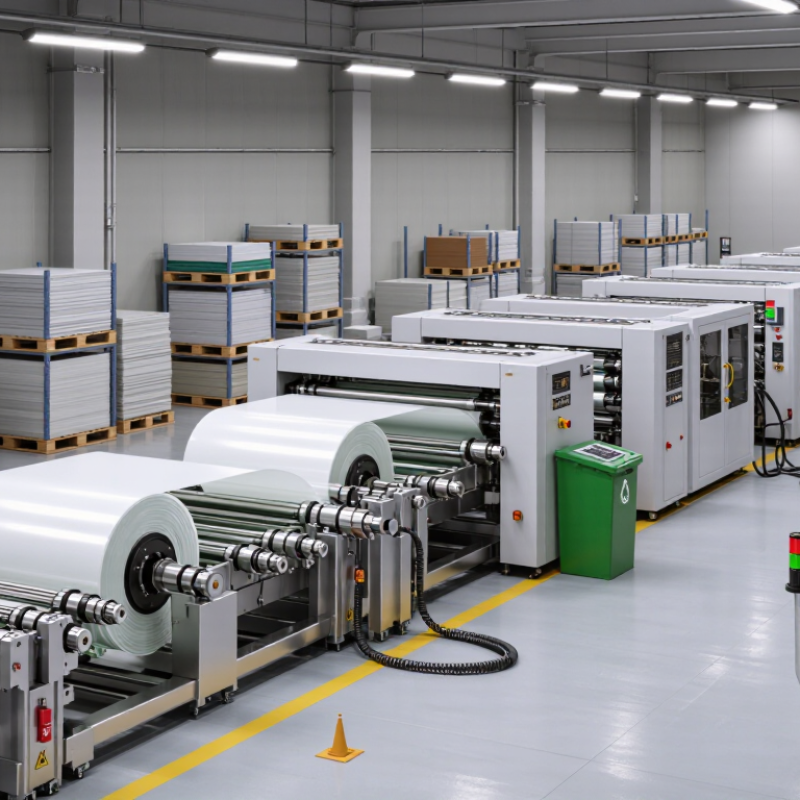
Sheet extruders convert plastic pellets into continuous, flat sheets. The process begins inside a heated barrel, where a screw melts and mixes the material. A flat die then spreads the melt across the sheet width. Cooling rolls set thickness, surface finish, and dimensional stability.

The details matter. A 2-millimeter sheet may leave the die warm, pass through three polished rolls, and emerge trimmed at both edges. Automatic thickness control can correct uneven flow before it becomes costly waste.

Grand View Research’s 2024 plastic extrusion analysis projects steady market growth through 2030, supported by packaging, construction, and transport demand. The OECD Global Plastics Outlook recorded approximately 460 million tonnes of global plastic production in 2019, showing the scale behind this equipment market.

For global buyers, machine selection should match resin type, sheet width, output rate, and local power standards.

A high-output line may appear efficient, yet poor cooling control can create warping and rejected sheets.

Energy monitoring, screw design, die cleaning access, and spare-parts support deserve equal attention. PlasticsEurope’s industry reports also show continued pressure to improve resource efficiency and increase recycled content.

That creates a practical challenge: recycled feedstock often changes viscosity during processing. Stable production is not guaranteed. Trial runs, material testing, and documented acceptance limits remain essential.

Some purchasing teams still compare only hourly output, which is a weak measure. Total yield matters more.

How the Top 10 Manufacturers Were Selected and Compared

Top 10 Sheet Extruder Manufacturers for Global Buyers

How the Top 10 Manufacturers Were Selected and Compared

The top ten were selected through a practical, evidence-based scoring model. We compared sheet width, output stability, material compatibility, energy use, delivery records, and after-sales support. Technical evidence mattered more than attractive brochures. Factory acceptance data, customer references, and published test results received higher scores.

Market context also shaped the comparison. PlasticsEurope reported global plastics production of 413.8 million tonnes in 2023. This volume increases pressure on processors to reduce waste and energy consumption. Each manufacturer was reviewed against measurable factors, including thickness tolerance, line speed, automatic control, and recycled-material handling. ISO 9001 certification supported quality assessment, but certification alone did not prove machine performance. That point is easy to miss.

Tips: Ask for a production trial using your actual resin and target thickness. Request power consumption per kilogram, not only motor capacity. Check whether spare parts are available near your plant. A low purchase price may become expensive after repeated stoppages.

The ranking also considered practical experience. We examined installation support, operator training, troubleshooting response, and maintenance access. The International Energy Agency continues to identify industrial efficiency as an important route for reducing energy demand. Therefore, energy monitoring was treated as a buying factor, not a marketing feature. Still, public data can be incomplete. Some suppliers disclose detailed figures, while others provide only estimates. Buyers should verify every claim through site visits, sample sheets, and contract-level performance guarantees.

Top 10 Sheet Extruder Manufacturers for Global Buyers

How the Top 10 Manufacturers Were Selected and Compared

The comparison framework emphasizes the factors most relevant to international sheet-extrusion buyers: technical capability, production performance, customization, energy efficiency, compliance, after-sales service, spare-parts availability, delivery reliability, total cost of ownership, and export support. The percentages represent the relative weighting used for a structured manufacturer comparison and do not disclose individual company or brand data.

Profiles of the Top 10 Sheet Extruder Manufacturers

The ten profiles examine sheet extruder manufacturers through measurable production needs, not advertising claims. PlasticsEurope reported 400.3 million tonnes of global plastics production in 2022. That scale increases pressure on stable output, energy control, and material efficiency.

Profile one focuses on wide-format lines for packaging sheets. Profile two serves recycled-content processors. Profile three targets high-speed thermoforming. Profile four develops compact systems for regional converters. Profile five emphasizes multilayer structures. Profile six supports food-contact production with documented process controls. Profile seven builds heavy-duty lines for construction sheets. Profile eight specializes in laboratory and pilot equipment. Profile nine offers modular machines for changing product recipes. Profile ten competes through service networks, spare parts, and remote diagnostics.

Specifications still need caution. A higher output rating may hide unstable thickness at the sheet edge. The European Commission’s 2023 plastics processing guidance stresses energy efficiency, process monitoring, and emissions control. Those points matter beside brochure speed. I would compare melt pumps, die-lip adjustment, cooling-roll design, and actual power use per kilogram. Ask for trial sheets. Measure thickness across the full width. Check the rejected pieces, too. This step is often skipped. It should not be. A manufacturer with excellent machinery may still struggle when local technicians lack training. Conversely, a less famous supplier may deliver stronger support and faster parts availability. Reported market data provides direction, but factory evidence remains decisive.

Key Technologies, Materials, and Production Capabilities

Top 10 Sheet Extruder Manufacturers for Global Buyers

Key Technologies, Materials, and Production Capabilities

Global buyers should assess sheet extruder manufacturers through measurable production evidence, not polished brochures. PlasticsEurope reported global plastics production of 413.8 million tonnes in 2023. That scale increases pressure for stable output, lower scrap, and reliable material control. A capable supplier should demonstrate single-screw and twin-screw systems, accurate T-dies, multi-roll calenders, and automatic thickness monitoring.

Material flexibility matters. Common lines process PP, PE, PET, ABS, PC, and recycled blends. Recycled feedstock can change melt flow and moisture levels. That detail is often underestimated. Buyers should request trial data using their actual formulation, not standard virgin pellets. The test should record throughput, sheet width, thickness variation, surface quality, and energy use. According to the Ellen MacArthur Foundation’s Global Commitment 2023 report, recycled content and circular packaging targets continue expanding across major markets.

Production capability also includes filtration, edge trimming, cooling, and downstream stacking. A line rated at 1,000 kilograms per hour may produce less under demanding recycled materials. Ask for verified output at the required thickness. Request factory acceptance records, calibration procedures, and service response times. The European Commission’s 2023 Plastics Transition Pathway highlights efficiency, circularity, and digital monitoring as industry priorities. Still, digital controls cannot repair poor screw design. That is where many comparisons become too optimistic.

How Global Buyers Can Evaluate Suppliers and Choose Equipment

Top 10 Sheet Extruder Manufacturers for Global Buyers

Global buyers should evaluate sheet extruder suppliers through verified performance, not catalog claims. The OECD’s Global Plastics Outlook reports that global plastic production reached about 460 million tonnes in 2019. That scale matters. Buyers should match machine capacity with local demand, resin availability, and planned operating hours. Request documented output tests for the exact material, width, and thickness range. A factory trial using different resin can hide serious limitations.

Check melt uniformity, die adjustment, cooling-roll control, and automatic thickness measurement. Ask for tolerance data from a signed factory acceptance test. The report should show production speed, energy use, scrap rate, and startup time. The U.S. Department of Energy identifies process heating as a major industrial energy user, so energy consumption deserves careful comparison. Request figures in kilowatt-hours per kilogram, not vague efficiency statements.

Supplier evaluation should also include service response times, operator training, spare-part availability, and software support. ISO 9001 certification can indicate controlled processes, but it does not prove extrusion quality. Visit a reference installation when possible. Speak with the production manager, not only the sales team. A polished factory tour can still mislead. I would also calculate total ownership cost over five years, including maintenance and rejected sheets. Buyers sometimes focus too heavily on purchase price. That mistake is expensive. Ask for contract terms covering acceptance criteria, warranty limits, and technical responsibilities. Reliable decisions need evidence, but evidence should still be questioned.

Choose a global leader for your hydraulics solutions

How can we help you?

Call to 0034 943884600 Contact us
Call us Contact us

We use cookies to ensure that we give you the best experience on our website. If you continue without changing your settings, we'll assume that you agree to receive cookies on the HINE website. For more information read our cookie policy page, click the link for more information.plugin cookies

ACEPTAR
Aviso de cookies