

Top WCS Warehouse Control System Providers?

Choosing among top Wcs Warehouse Control System providers requires more than comparing software features. A warehouse may look efficient during a sales demonstration, yet struggle when orders surge at 6:00 p.m. The right system coordinates conveyors, sorters, shuttles, robots, scanners, and warehouse management software with consistent timing. It should also expose delays clearly, rather than hide them behind attractive dashboards.

Industry analyst Dwight Klappich has stated, “Automation must serve the process, not distract from it.” This principle matters when reviewing vendors. Strong providers usually demonstrate proven integrations, real-time exception handling, scalable controls, and practical support models. Their systems should manage mixed equipment from different manufacturers, not only their own product families. Evidence matters. Ask for customer references, uptime records, implementation timelines, and examples from facilities with similar order profiles.

Still, no provider is perfect. That deserves attention. A platform can be technically powerful but difficult for supervisors to understand. Another may offer excellent robotics integration but weaker reporting. Pricing can also become unclear after licenses, interfaces, maintenance, and site commissioning are added. These details often shape the final result more than the product brochure.

This guide examines leading WCS Warehouse Control System providers through operational experience, technical capability, industry credibility, and long-term reliability. It considers how each vendor handles peak volume, system changes, troubleshooting, cybersecurity, and workforce training. The best choice is not always the largest brand. It is the provider that fits the warehouse’s physical flow, risk tolerance, and growth plans. Evidence should lead. Promises should not.
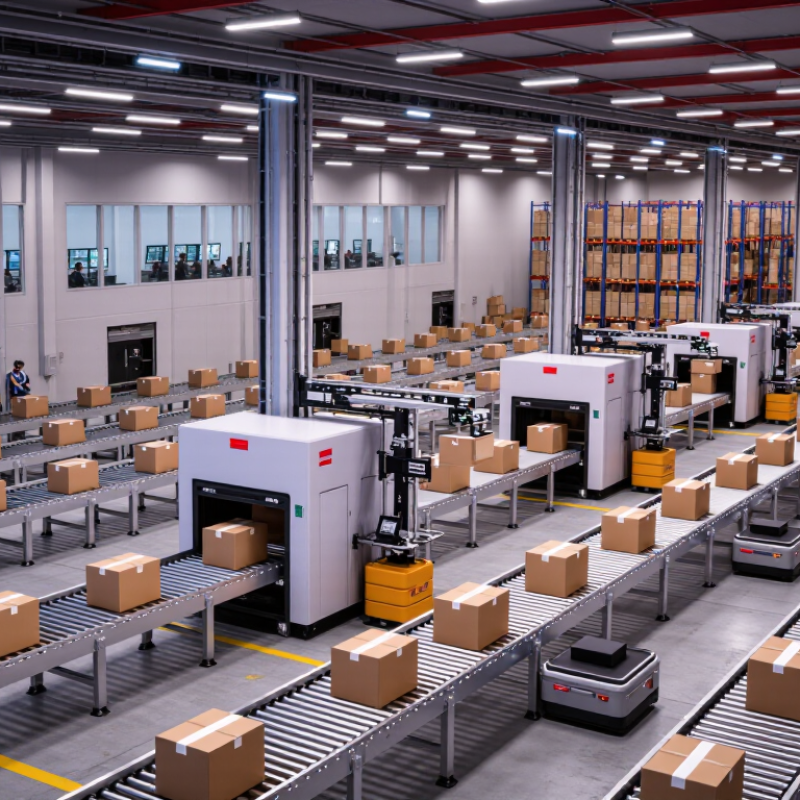
Top WCS Warehouse Control System Providers?

What Is a Warehouse Control System and How Does It Work?

What Is a Warehouse Control System and How Does It Work?

A Warehouse Control System, or WCS, coordinates automated equipment inside a distribution facility. It sits between the Warehouse Management System and physical machines. The WMS decides what must happen. The WCS determines how and when equipment should act. It receives orders, inventory details, and priority rules. Then it sends precise tasks to conveyors, sorters, storage machines, scanners, and robots.

A typical process begins when a barcode scanner confirms a carton’s location. The WCS checks available routes and equipment status. It may direct the carton to a packing station, a storage aisle, or a shipping lane. Sensors report movement continuously. If a conveyor stops, the system can pause nearby tasks and select another route. Operators usually monitor these events through live dashboards, alarms, and performance data.

Good control depends on accurate item dimensions, reliable network connections, and well-tested equipment interfaces. Small data errors can create large delays. This is where warehouse experience matters. A supervisor may notice repeated congestion near one merge point before reports reveal the pattern. Still, automation is not flawless. Unusual carton shapes, sensor dust, or poorly planned priorities can confuse the workflow. Regular testing, clear recovery procedures, and human review remain essential, especially during peak operating periods.

Key Functions and Technologies in Modern WCS Platforms

Modern Warehouse Control Systems (WCS) coordinate conveyors, sorters, shuttles, robots, and scanners in real time. Their core function is orchestration. The platform converts warehouse orders into equipment-level commands, then adjusts routing when a lane fills or a machine stops. It should connect cleanly with WMS, WES, ERP, and labor systems through secure APIs. The 2024 MHI Annual Industry Report found that 55% of supply chain leaders planned to increase technology and innovation investment. That pressure is visible on the warehouse floor.

Modern platforms also use event-driven architecture, edge computing, machine learning, and digital twins. These technologies can predict congestion, balance workloads, and test layout changes before physical installation. Yet automation data is not always trustworthy. A dirty scanner lens, delayed sensor, or weak master-data rule can produce confident but incorrect decisions. Dashboards may look intelligent. Operations still need human validation. Gartner’s 2023 technology forecast also identified intelligent automation as a major warehouse investment area, but adoption depends on integration quality, not software features alone.

Tips: Start with measurable bottlenecks, such as missed scans or blocked induction points. Require timestamped event logs and manual override controls. Test peak-season scenarios before deployment. Review exception rates weekly, not only throughput. A small pilot often reveals hidden process flaws faster than a full rollout.

Top WCS Warehouse Control System Providers? - Key Functions and Technologies in Modern WCS Platforms

WCS Capability Area Key Function Common Technologies and Interfaces Operational Data Managed Role in a Modern Warehouse
Order and Task Management Converts warehouse orders into executable equipment and material-handling tasks, while coordinating task priorities and dependencies. WMS/WES integration, REST APIs, message queues, SQL databases, event-driven workflows. Order lines, task status, priority, source location, destination location, due time, and completion confirmation. Core
Material-Handling Control Controls and sequences conveyors, sorters, lifts, shuttles, carousels, pallet systems, and other automated equipment. PLC communication, industrial Ethernet, OPC UA, equipment-control middleware, digital I/O. Equipment state, routing decision, motor status, sensor event, accumulation status, and fault condition. Core
Routing and Load Balancing Selects the most suitable path or workstation based on equipment availability, congestion, destination, and task priority. Rule engines, routing matrices, queue management, real-time event processing, optimization algorithms. Travel path, queue length, station capacity, blocked zones, throughput demand, and routing exceptions. Core
Inventory and Location Tracking Maintains the real-time location and movement status of totes, cartons, pallets, bins, and other handling units. Barcode scanners, RFID readers, photoelectric sensors, dimensioners, serialization, location databases. Handling-unit ID, SKU reference, quantity, current location, last scan, container status, and inventory movement history. Core
Robotics Coordination Assigns missions and coordinates traffic for autonomous mobile robots, robotic picking cells, and automated storage systems. Robot fleet APIs, traffic-management services, wireless networks, REST or MQTT messaging, safety interfaces. Robot position, mission status, battery level, pickup and drop-off points, blocked areas, and charging requests. Advanced
Storage and Retrieval Control Manages put-away, retrieval, replenishment, sequencing, and presentation activities for automated storage and retrieval equipment. Crane controllers, shuttle controls, lift interfaces, storage-location maps, inventory rules. Storage location, retrieval request, load dimensions, equipment position, aisle status, and mission sequence. Core
Exception Management Detects, classifies, and resolves operational exceptions such as jams, missing scans, misroutes, equipment faults, and blocked destinations. Alarm management, notification services, rule-based recovery, operator workstations, escalation workflows. Alarm code, event timestamp, affected equipment, handling-unit ID, recovery action, acknowledgment, and resolution time. Core
Monitoring and Visualization Provides live views of warehouse flow, equipment status, order progress, work queues, and system health. Web dashboards, SCADA-style visualization, KPI services, status APIs, role-based user interfaces. Throughput, cycle time, queue size, utilization, downtime, completed tasks, and active alarms. Core
Performance Analytics Analyzes historical and real-time performance to identify bottlenecks, capacity constraints, and process improvement opportunities. Time-series databases, data warehouses, business-intelligence tools, statistical analysis, event logs. Units per hour, order-cycle time, equipment utilization, error rate, downtime, backlog, and service-level performance. Advanced
Integration and Interoperability Exchanges orders, inventory updates, task results, and operational events with enterprise and automation systems. REST, SOAP, OPC UA, MQTT, TCP/IP, file exchange, database connectors, and standardized message formats. Master data, order messages, inventory adjustments, task acknowledgments, equipment events, and interface errors. Core
Cybersecurity and Access Control Protects operational systems, user accounts, interfaces, and control connections from unauthorized access and misuse. Role-based access control, authentication services, network segmentation, encryption, audit logging, secure APIs. User identity, permissions, login events, configuration changes, interface activity, and security alerts. Advanced
Scalability and Availability Supports expansion, high transaction volumes, fault recovery, and continuous operation across multiple warehouse zones. Redundant servers, containerized services, load balancing, failover databases, backup and recovery procedures. System load, service health, transaction volume, response time, failover state, backup status, and recovery events. Advanced

Leading WCS Providers and Their Core Capabilities

Top WCS Warehouse Control System Providers?

Leading WCS providers connect warehouse software with conveyors, sorters, shuttles, robots, and scanners. Their core capability is orchestration. A strong system turns real-time equipment signals into coordinated work. It can balance lanes, release orders, manage buffers, and reroute tasks during congestion. Fast decisions matter.

The 2024 MHI Annual Industry Report found that 67% of surveyed organizations expected to increase supply chain technology investment within two years. This pressure is reshaping WCS selection. Leading providers now emphasize open APIs, cloud connectivity, equipment-neutral integration, and live performance dashboards. They also support simulation, predictive maintenance, and exception management. These features help teams see why a tote stopped, not merely that it stopped.

Operational experience still exposes weaknesses. A technically advanced WCS may fail when interfaces are poorly documented or operators receive unclear alerts. Site acceptance testing should measure throughput, recovery time, order accuracy, and peak-hour stability. Security deserves equal attention, including role-based access, network segmentation, and audit trails. The 2024 Warehousing Vision Study reported that many warehouse professionals view modernization as essential for meeting service expectations, but adoption is rarely simple. Smaller facilities may need modular deployment rather than a massive platform. That is often overlooked. A useful provider should offer practical integration plans, transparent upgrade paths, and measurable support commitments. No system removes every bottleneck. Good design makes problems visible earlier.

How to Compare WCS Providers for Different Warehouse Needs

A WCS provider should be compared against workflow, not a feature list. In a high-volume operation, examine conveyor response times, order release logic, and recovery after a scanner fault. Ask for measured results from sites with similar throughput. A polished demo can hide messy handoffs. Good providers explain limits, not only strengths. That matters.

For a small warehouse, prioritize configurable rules, clear screens, and modest implementation effort. A cold-storage site needs resilient connections and alerts when conditions affect operations. E-commerce facilities may require rapid wave changes and smooth integration with WMS, robotics, and carriers. Compare API documentation, testing tools, training hours, and on-site support. Request a sample incident report. It reveals careful thinking. Include licenses, upgrades, spare equipment, and downtime risk in the cost.

During evaluations, involve supervisors and operators who use the system daily. Have them test a short pick, a blocked lane, and an inventory mismatch. Record how many steps each recovery requires. Dashboard readability at a noisy dispatch desk is easy to overlook. Shift-change training also matters. I once valued advanced analytics too highly and underestimated configuration time. That was a useful mistake. Providers should disclose implementation assumptions, security controls, service targets, and customer references. Verify claims through conversations, not slides. A scoring sheet helps, but warehouse fit is broader.

Implementation, Integration, and Evaluation Considerations

Choosing a warehouse control system provider requires more than comparing feature lists. The best fit depends on your conveyor layout, warehouse software, order volume, and operator skills.

During implementation, map every movement from receiving to shipping. A live floor walk often reveals delays that spreadsheets miss. Define measurable targets, such as reduced travel time, fewer blocked lanes, and faster exception handling.

Keep the first deployment narrow. A full-site launch may look efficient, but it can magnify small configuration errors.

Integration deserves equal attention. The control system should exchange clear, timely data with warehouse management, warehouse execution, robotics, and transport platforms.

Test message failures, network interruptions, duplicate orders, and manual overrides before production. Ask providers to demonstrate these scenarios using realistic order profiles.

Review their documentation, support coverage, training process, and change-control practices. A technically strong platform can still fail when local teams cannot maintain it. This happens more often than expected.

Tips: Request a sandbox, not just a polished presentation. Invite operators to test screens and alarms. Check how quickly a technician can trace one delayed carton.

Compare implementation assumptions with your actual shift patterns. Leave time for tuning after launch; early performance data may challenge the original design.

Also, record every exception and its cause. That record becomes valuable evidence during vendor reviews, budget decisions, and future expansion.

Choose a global leader for your hydraulics solutions

How can we help you?

Call to 0034 943884600 Contact us
Call us Contact us

We use cookies to ensure that we give you the best experience on our website. If you continue without changing your settings, we'll assume that you agree to receive cookies on the HINE website. For more information read our cookie policy page, click the link for more information.plugin cookies

ACEPTAR
Aviso de cookies