What Is an Underhood Fuse Box and What Does It Do?
An Underhood Fuse Box is a protective electrical center located beneath a vehicle’s hood, often near the battery or engine bay. Its cover may show a diagram identifying each fuse and relay. Inside, small components help control and protect circuits for systems such as the cooling fan, headlights, horn, and fuel pump. When a circuit draws too much current, its fuse is designed to break the connection. That can help limit damage to wiring and connected equipment. A relay, by contrast, acts like an electrically controlled switch, allowing a low-current signal to operate a higher-current device. Small parts. Important jobs.
The exact layout varies by make, model, and year, so the owner’s manual is the best reference before checking a fuse. A blown fuse may cause one feature to stop working, but it does not always reveal the underlying cause. Replacing it with the wrong rating can create risk; repeated failures deserve proper diagnosis rather than repeated swaps. With the ignition off, a visual check may show a broken metal link, though some failures are harder to spot. Use the specified fuse type and rating, and avoid touching components that are hot or moving. This box can look simple, almost ordinary. Yet a diagram, careful inspection, and vehicle-specific guidance matter more than guesswork. Knowing what it does makes basic troubleshooting clearer, while reminding drivers that not every electrical problem starts—or ends—at the fuse box.
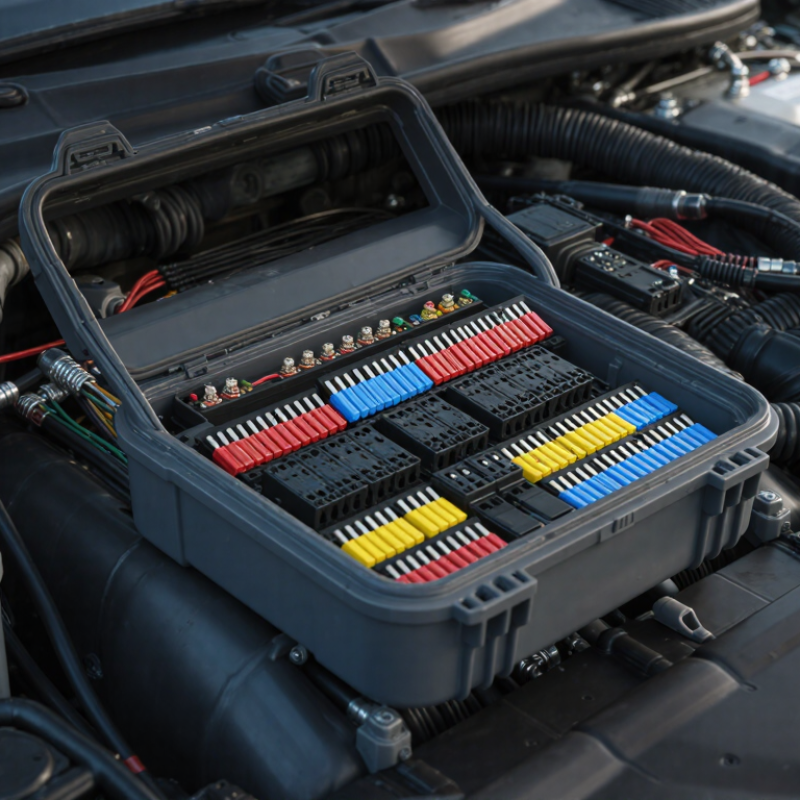
What an Underhood Fuse Box Is and Where It Is Located
An underhood fuse box is an electrical distribution enclosure in the engine compartment. It holds fuses and relays that help route power to systems such as the cooling fan, headlights, and fuel pump. A fuse opens the circuit when current becomes excessive, helping protect wiring and connected components. Relays switch higher-current devices on and off.
You will usually find the box beneath the hood, often near the battery, along a fender, or close to the firewall. Its position varies by vehicle, so a quick search may not be enough. Look for a rectangular plastic cover with clips or screws. Check the cover label. Some vehicles print a circuit diagram inside; others provide fuse locations in the owner’s manual. Even experienced drivers can mistake a nearby relay holder for the main box.
Before opening it, park safely, switch off the ignition, and let hot engine parts cool. The cover may lift off by hand, but avoid pulling at it if it resists. Use the vehicle’s diagram to identify a fuse, and match any replacement to the specified rating. A fuse box can look simple, yet its layout is specific to each vehicle.
How Its Fuses, Relays, and Other Components Are Arranged
An underhood fuse box usually sits near the battery or along an inner fender. Its molded cover often carries a small diagram showing fuse and relay positions. Inside, the components are grouped by circuit and current demand, though the exact layout varies by vehicle.
Small blade fuses often appear in neat rows. Each protects a circuit such as lighting, cooling fans, or engine controls. A fuse’s amperage rating is printed on its top, and its position should match the cover diagram. Larger cartridge fuses handle higher-current feeds. They may sit beside metal bus bars that distribute power to several circuits. That matters.
Relays are usually larger, cube-shaped components placed in dedicated sockets. They act like electrically controlled switches for loads that draw more current than a dashboard switch should carry. A cooling-fan relay, for example, may be close to related high-current fuses. The layout can look less logical than expected. Wiring routes and production choices affect where parts fit.
Some boxes also contain spare fuses, a fuse puller, or a separate power-distribution section. Not every box does. Before checking a suspected fault, compare the component with the vehicle’s diagram or service information. Replace a blown fuse only with one of the same rating; a different rating can leave wiring unprotected. A loose relay or corroded terminal may also cause trouble, so the fuse box is only one part of the diagnosis.
How the Fuse Box Protects and Controls Vehicle Circuits
An underhood fuse box distributes battery power to circuits such as engine controls, cooling fans, and exterior lights. Each fuse contains a calibrated metal link. If current rises beyond its rating, the link melts and opens the circuit, helping protect wiring from excessive heat.
Relays also sit in many fuse boxes. They let a low-current switch or control module operate a higher-current load. A small signal can switch a cooling fan. That separation matters.
The National Fire Protection Association’s Vehicle Fires report estimated an average of 171,500 highway vehicle fires annually in 2014–2016. That figure covers many causes; it does not mean fuse-box failures caused those fires.
A fuse can limit overcurrent, but it cannot repair chafed wiring, a loose connection, or a failing component. It does not diagnose the cause. When a fuse repeatedly opens, check the circuit using the correct wiring diagram and specified fuse rating rather than fitting a higher-rated fuse. Still, the box is an imperfect safeguard: corrosion or heat-damaged terminals may cause trouble without a fuse blowing.
Which Vehicle Systems It Commonly Supplies
An underhood fuse box distributes protected electrical power to many systems in the engine compartment. Its fuses interrupt a circuit when current becomes excessive, while relays switch higher-current loads. The exact layout varies by vehicle, so the cover diagram or owner’s manual matters.
Common circuits include engine controls, ignition components, the fuel pump, and the radiator cooling fan. Other fuse-box circuits may serve the anti-lock braking system, headlights, horn, or air-conditioning compressor. Not every vehicle places these circuits in the same box. Some functions use a separate interior fuse panel.
A practical clue can appear at idle: a cooling fan that never starts may point to its fuse, relay, wiring, or temperature-control circuit. The fuse is only one possibility. It is easy to blame the box itself, though a loose connector or damaged wire can cause similar symptoms. Check the listed fuse rating before replacing one; a higher-rated fuse can leave wiring unprotected. That small detail matters.
How to Identify and Inspect Underhood Fuse Box Components
An underhood fuse box is usually a black plastic enclosure near the battery, inner fender, or engine compartment edge. Its cover often has a diagram showing fuse and relay locations. Compare that diagram with the labels inside the box; layouts vary by vehicle. Small blade fuses protect circuits, while larger fuses and relays handle higher electrical loads. Some boxes also contain a fuse puller or spare fuses. Details matter.
Before inspecting, switch off the engine and let hot components cool. Remove the cover carefully and check for water, dirt, greenish corrosion, cracked plastic, or a burnt smell. Look for dark marks around fuse slots. A fuse’s thin internal link should be intact, but appearance alone cannot confirm every electrical fault. Avoid pulling fuses at random, and replace a failed fuse only with one of the same rating. If a replacement blows again, have the circuit checked by a qualified technician.
Tips: Use a flashlight and take a clear photo before removing anything. Keep hands away from belts and hot metal. If the diagram is missing or confusing, check the vehicle’s owner manual; guessing can create a second problem.