

7 Waste Water RO System Buying Tips for Global Buyers

Buying a Waste Water Ro System is not simply a matter of comparing prices and membrane ratings. Global buyers must examine feedwater quality, recovery targets, energy demand, maintenance access, and local operating conditions. A system that performs well in a coastal factory may struggle in a remote inland plant. Salt levels, temperature changes, suspended solids, and cleaning practices can alter results quickly.

Dr. Glen T. Daigger, a recognized wastewater treatment expert, has stated, “The future of water is reuse.” That idea gives this buying guide its direction. A reliable Waste Water RO System should recover useful water without creating an unmanageable concentrate stream. It should also include practical pretreatment, dependable monitoring, and parts that technicians can replace without waiting months. Small details matter. A faulty pressure sensor can stop production. An undersized cartridge filter can increase membrane fouling.

These seven buying tips focus on decisions that affect long-term performance, not only the first quotation. They cover supplier experience, membrane selection, automation, water testing, lifecycle cost, after-sales support, and commissioning. Some recommendations may seem obvious. They are still often missed. Buyers should also question optimistic recovery claims and request test data under similar conditions. No design is perfect. Even experienced teams may revise their assumptions after pilot testing. That is not failure; it is responsible engineering.
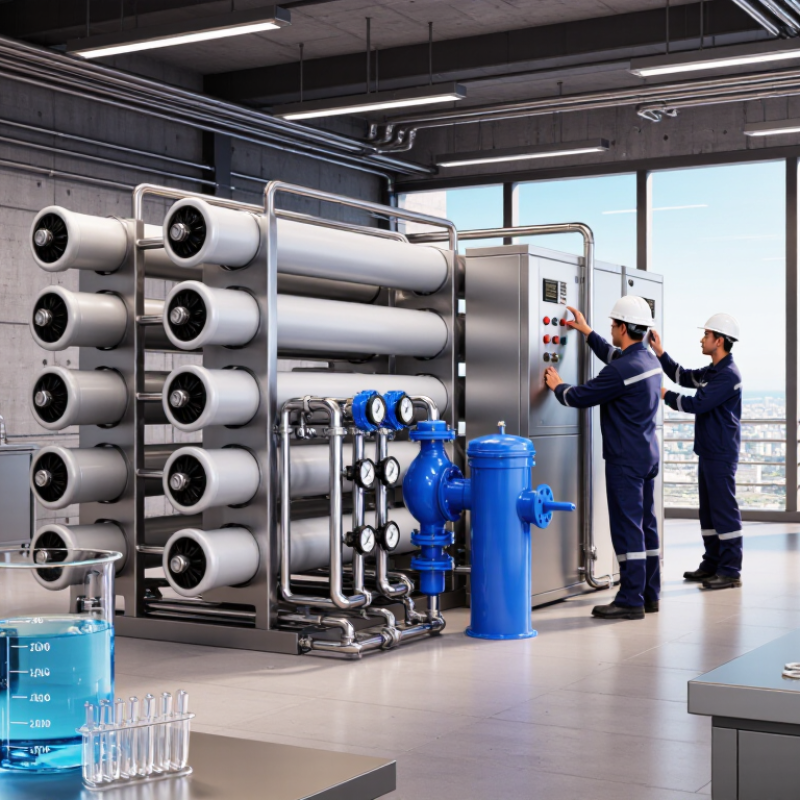
7 Waste Water RO System Buying Tips for Global Buyers

Define Wastewater RO System Requirements and Treatment Goals

Before buying a wastewater RO system, define the water source and treatment goal precisely. Measure flow, temperature, pH, conductivity, hardness, silica, oil, and suspended solids. A kitchen effluent stream needs a different design from textile or metal-finishing wastewater. UN-Water reported that agriculture represented about 72% of global freshwater withdrawals in 2022, showing why water reuse demands careful planning. The UN World Water Development Report 2024 also highlights growing pressure on freshwater supplies.

Tip: Write the target in numbers. Specify feed flow, operating hours, permeate quality, recovery rate, and discharge limits. Decide whether the permeate will support cooling, cleaning, irrigation, or process production. Each use requires different conductivity and microbiological controls. A practical design often includes screening, clarification, filtration, and cartridge protection before the RO membranes. Skipping pretreatment can cause rapid fouling and unstable performance.

Do not select a system from flow rate alone. Analyze seasonal changes and shock loads. A factory may produce clean water on Monday and oily wastewater after maintenance. That detail matters. Industry practice commonly places RO recovery around 50% to 85%, but the real figure depends on scaling risk and concentrate management. Higher recovery sounds efficient, yet it can increase silica or hardness precipitation.

I have seen specifications fail because they assumed laboratory water conditions. A pilot test may expose this weakness early. Record the laboratory method, sampling date, and detection limits. These small details make supplier comparisons more reliable and support decisions based on evidence, not attractive promises.

Evaluate Feed Water Quality and Pretreatment Needs

Feed water quality should guide every wastewater RO system purchase. A clear water sample is not enough. Industrial wastewater can change sharply after cleaning, production shifts, or heavy rain.

Request laboratory data before comparing equipment. Test pH, temperature, TDS, hardness, alkalinity, silica, iron, manganese, oil, suspended solids, and organic matter. Measure turbidity and SDI when possible. One sample can mislead. Seasonal testing is safer.

Pretreatment protects membranes and stabilizes daily operation. Multimedia filtration can reduce suspended particles. Cartridge filters provide final particle control. Softening or antiscalant dosing may limit scale from calcium and silica. Dechlorination is necessary when membrane materials are sensitive to oxidants. Oily wastewater needs special separation before standard filtration.

Do not size pretreatment from average flow alone. Peak flow, shock loads, and cleaning chemicals matter. Ask for recovery targets, concentrate limits, and operating temperature. A system designed for perfect feed water may struggle in a real plant.

Keep records.

Review the proposed process with a qualified water-treatment engineer. Check chemical storage, monitoring points, cleaning access, and operator training. These details often decide whether the RO system performs reliably after installation. Some uncertainty will remain, but acknowledging it is better than hiding it behind impressive specifications.

7 Waste Water RO System Buying Tips for Global Buyers: Evaluate Feed Water Quality and Pretreatment Needs

Feed-water TDS varies substantially by source. Identifying the water category before purchasing an RO system helps determine membrane selection, operating pressure, recovery expectations, and pretreatment requirements.

1. Test TDS and conductivity: Use laboratory data from representative feed-water samples.
2. Check turbidity and SDI: High suspended solids require multimedia or cartridge filtration.
3. Control chlorine: Remove free chlorine before polyamide RO membranes.
4. Assess hardness: Antiscalant dosing or softening may be needed to limit scaling.
5. Measure iron and manganese: Oxidized metals can foul membranes and increase cleaning frequency.
6. Review silica and alkalinity: These parameters affect scaling risk and recovery design.
7. Match equipment to source: Brackish-water and seawater RO systems require different pressure and membrane configurations.

Typical TDS ranges shown in mg/L: municipal drinking water commonly falls around 100–500, brackish groundwater around 1,000–10,000, and seawater around 30,000–45,000. Actual values vary by location and season; confirm all design parameters through water analysis.

Compare RO Membranes, Equipment, and System Capacity

Global buyers should compare RO membranes by feed-water conditions, not by price alone. Start with the water. A membrane suited to municipal wastewater may fail quickly with oily industrial discharge. Review salinity, suspended solids, temperature, and cleaning requirements before requesting quotations. Thin-film composite membranes often provide strong rejection, while low-pressure options can reduce energy use. However, lower pressure may require better pretreatment and tighter operating control.

Equipment quality affects daily reliability. Inspect cartridge filters, dosing pumps, pressure vessels, valves, and control panels as one working system. A strong membrane cannot compensate for unstable feed pressure or poor filtration. Ask for design flow, recovery rate, power demand, and automatic shutdown settings. Site experience matters here. Small details, such as accessible sample ports, can make testing much easier. Some suppliers provide impressive diagrams but vague maintenance schedules. That gap deserves attention.

Capacity should reflect real demand, not an optimistic production target. Calculate average flow, peak flow, operating hours, and future expansion. A system rated at 100 cubic meters daily may produce less when water temperature falls or membranes become fouled. Leave practical operating margin. Still, oversizing wastes capital and may create low-flow problems. Compare output at actual site conditions, including temperature and expected recovery. Request performance guarantees with measurable limits, spare-part lists, commissioning support, and operator training. I would also question any offer that avoids discussing cleaning frequency. That omission may become an expensive lesson.

Check Energy Use, Waste Management, and Operating Costs

7 Waste Water RO System Buying Tips for Global Buyers

Energy use, waste management, and operating costs can change an RO project’s real value. A low purchase price may hide expensive electricity, frequent membrane cleaning, or difficult concentrate disposal. From practical system reviews, I recommend checking energy consumption per cubic meter of treated water, not only the pump’s rated power. Ask for test data under your feedwater conditions. Laboratory figures may not match a hot, salty, or highly variable site.

Tip: Compare recovery rate, pressure requirements, and expected annual electricity use. A system recovering 75% of feedwater may reduce waste, but it can require stronger pretreatment. Poor pretreatment increases fouling and shortens membrane life. That means more cleaning chemicals, labor, and replacement costs. Small details matter.

Waste handling also needs a realistic plan. Confirm where concentrate will go, how often tanks need emptying, and whether local discharge rules apply. Do not assume evaporation or drainage is always acceptable. Operating costs should include filters, pumps, sensors, cleaning, labor, and downtime. Request a five-year cost estimate with clear assumptions. Then challenge it. Some estimates look precise but exclude maintenance visits or emergency parts. Leave room for mistakes, because actual water quality often changes by season.

7 Waste Water RO System Buying Tips for Global Buyers - Check Energy Use, Waste Management, and Operating Costs
No. Buying Tip Key Data Dimension Typical Planning Range What Global Buyers Should Check
1 Compare Specific Energy Consumption Electricity used per cubic metre of treated water Brackish-water RO: approximately 0.5–2.0 kWh/m³
Seawater RO: approximately 2.5–6.0 kWh/m³
Request test data based on the actual feed-water salinity, temperature, recovery rate, and operating pressure. Confirm whether the quoted figure includes high-pressure pumps, pretreatment, controls, and energy-recovery equipment.
2 Check Water Recovery and Concentrate Volume Percentage of feed water converted into permeate Common industrial range: approximately 50–85%
Higher recovery may require more advanced pretreatment
Calculate daily concentrate production before purchase. A system treating 100 m³/day at 75% recovery produces about 75 m³/day of permeate and 25 m³/day of concentrate. Verify scaling, fouling, and discharge constraints at the proposed recovery rate.
3 Evaluate Concentrate and Sludge Management Waste-stream handling, disposal route, and compliance risk Concentrate volume equals feed flow minus permeate flow; pretreatment may also generate chemical sludge or spent media Confirm whether the site can use sewer discharge, permitted surface-water discharge, evaporation, deep-well injection, or off-site disposal. Obtain local approval requirements for salinity, pH, metals, cleaning chemicals, and sludge classification.
4 Review Pretreatment Requirements Feed-water quality and protection of RO membranes Typical controls include filtration, cartridge filtration, antiscalant dosing, pH adjustment, and disinfection management Ask for design limits for turbidity, SDI, hardness, iron, manganese, oil, silica, chlorine, and biological activity. Free chlorine must generally be removed before polyamide membranes because it can damage the membrane material.
5 Estimate Total Operating Cost Energy, membranes, chemicals, labor, cleaning, and waste disposal Membrane replacement is often planned at roughly 3–7 years, depending on feed quality and maintenance; cleaning frequency varies from monthly to several times per year Build a five-year cost model using local electricity prices, chemical consumption, labor rates, membrane replacement, laboratory testing, scheduled maintenance, and concentrate disposal. Avoid comparing systems using purchase price alone.
6 Verify Permeate Quality and Monitoring TDS, conductivity, rejection, flow, pressure, and alarms Salt rejection commonly starts around 95–99% for many industrial RO applications, depending on membrane type and feed conditions Define guaranteed permeate limits for conductivity or TDS and specify how they will be tested. Require continuous monitoring of feed and permeate conductivity, pressure, flow, temperature, and operating hours, with automatic shutdown for critical faults.
7 Confirm Lifecycle Service and Spare Parts Maintainability, local support, and parts availability Critical consumables may include cartridge filters, seals, dosing components, cleaning chemicals, instruments, and replacement membranes Check commissioning support, operator training, remote diagnostics, preventive-maintenance schedules, spare-parts lead times, warranty conditions, and documentation. Select standard electrical components suitable for the destination country's voltage, frequency, and certification requirements.
Planning note: The ranges above are general industrial reference values, not guaranteed performance figures. Final energy use, recovery, permeate quality, waste volume, and operating cost must be confirmed through a site-specific water analysis, pilot testing where necessary, and local discharge regulations.

Verify Supplier Standards, Installation Support, and Maintenance Service

7 Waste Water RO System Buying Tips for Global Buyers

Verify Supplier Standards, Installation Support, and Maintenance Service

A reliable wastewater RO system begins with the supplier, not the stainless-steel frame. Ask for current quality certificates, factory test records, and references from similar wastewater applications. Check whether certificates match the supplier’s legal entity and the exact system model. Request feed-water limits, recovery expectations, rejection data, and testing conditions in writing. Useful evidence matters.

Installation support can decide whether the system performs beyond the sales brochure. Require a piping and instrumentation diagram, utility list, foundation dimensions, and electrical requirements. The supplier should review conductivity, hardness, silica, iron, oil, and biological loading. Ask who supervises commissioning and how operators learn flushing, pressure checks, and chemical dosing. A video call is not commissioning. On-site support may cost more, but unclear responsibility costs more later.

Maintenance service needs measurable details, not vague promises. Confirm membrane cleaning intervals, spare-part availability, response times, and warranty exclusions. Ask for logs tracking feed pressure, permeate flow, conductivity, and differential pressure. A clear maintenance schedule protects performance. Still, real water changes. Seasonal pollutants or poor pretreatment can shorten membrane life, even with careful operation. Suppliers should explain these risks and revise settings after verified data, rather than blame operators. One practical mistake is trusting projected recovery without checking disposal capacity and local discharge requirements.

Choose a global leader for your hydraulics solutions

How can we help you?

Call to 0034 943884600 Contact us
Call us Contact us

We use cookies to ensure that we give you the best experience on our website. If you continue without changing your settings, we'll assume that you agree to receive cookies on the HINE website. For more information read our cookie policy page, click the link for more information.plugin cookies

ACEPTAR
Aviso de cookies