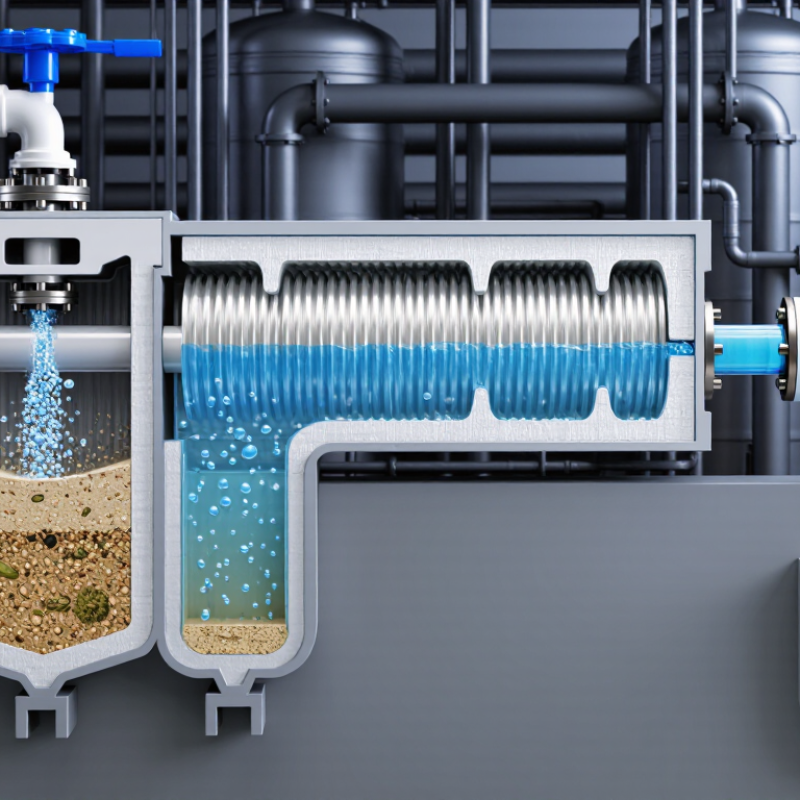
A Seawater Desalination Membrane is the working barrier inside a modern reverse osmosis system. It separates dissolved salts from seawater under high pressure. Most commercial membranes use a thin polyamide layer supported by porous materials. Water passes through this dense surface. Salt ions, microorganisms, and many dissolved contaminants remain behind.
The process looks simple. It is not. A seawater intake may carry sand, algae, oil traces, and organic matter. Pretreatment must reduce these threats before the water reaches the membrane. Inside a spiral-wound pressure vessel, feedwater moves across the membrane surface. Freshwater emerges through the membrane. Concentrated brine leaves through another path. Small design choices matter, including pressure, temperature, recovery rate, and cleaning frequency.
Professor Menachem Elimelech has warned, “Desalination is not a silver bullet for water scarcity.” His statement deserves attention. A reliable Seawater Desalination Membrane can achieve high salt rejection, but it cannot remove every environmental or operational concern. Energy consumption remains significant. Brine management also requires careful planning. Membrane fouling can slowly reduce production, even when the equipment appears normal. Operators often discover problems through rising pressure or declining permeate flow. That practical detail is easy to overlook. I may sound cautious, but caution protects drinking-water quality. The best membrane is not simply the one with the highest rejection rate. It must also deliver stable performance, manageable cleaning, long service life, and responsible brine control. This article examines how these membranes work, where they fail, and why material science matters.
A seawater desalination membrane is a selective barrier used to separate dissolved salts from seawater. Most modern systems use reverse osmosis. High-pressure pumps push seawater across a thin membrane surface. Water molecules pass through. Salt ions, microorganisms, and many impurities remain in the concentrated stream. The product water is called permeate. The remaining flow is brine.
The membrane does more than remove salt. It helps control water quality, energy demand, and recovery rates. Seawater usually requires pressures of about 55 to 70 bar, depending on temperature and salinity. Membrane performance depends on pretreatment, pressure stability, and regular monitoring. Suspended solids can block the surface. Organic matter may cause fouling. Scaling can also reduce water flow.
Plant operators often track conductivity, permeate flow, pressure differences, and salt rejection. These figures reveal gradual damage before output changes become obvious. A well-designed pretreatment stage protects the membrane from sediment and biological growth. Cleaning schedules still require judgment. Over-cleaning can shorten membrane life, while delayed cleaning may cause permanent fouling. That balance is easy to underestimate. Manufacturers publish performance data, but real sites differ in temperature, feed quality, and operating habits. Membrane selection should therefore follow verified water analysis, pilot testing, and local operating records.
A seawater desalination membrane is a selective barrier that separates fresh water from dissolved salts. Modern reverse osmosis membranes usually use a thin polyamide layer. This active layer blocks most salt ions and many dissolved impurities. Beneath it, a porous support carries water without creating excessive resistance. A fabric backing provides mechanical strength during high-pressure operation. The layers work together.
Material selection involves difficult trade-offs. Polyamide offers strong salt rejection and high water permeability, but it can react with certain oxidizing chemicals. Support layers must remain porous, stable, and tightly bonded. If their pores collapse, water flow decreases. If the surface is uneven, the active layer may become thinner and less reliable. Some membranes use surface modifications to reduce fouling, although laboratory results may not match field performance.
Structural design also controls practical efficiency. Thin active layers reduce transport resistance. Carefully shaped feed spacers improve mixing and limit stagnant zones. However, spacers can increase pressure loss and create local turbulence. Small design details matter. A membrane may perform well in controlled testing yet foul quickly in real seawater containing algae, organic matter, and fine particles. Engineers therefore examine salt rejection, permeate flow, pressure, cleaning tolerance, and long-term aging. Predictive models help, but they are not perfect. Temperature changes and uneven fouling can still challenge an otherwise careful design.
A seawater desalination membrane is a thin, semi-permeable barrier used in reverse osmosis systems. It allows water molecules to pass while rejecting most dissolved salts, minerals, and other unwanted particles. High-pressure pumps push pretreated seawater against the membrane surface. This pressure overcomes seawater’s natural osmotic pressure. Fresh water then moves through microscopic membrane layers, while concentrated brine remains on the feed side. The membrane does not “catch” salt like a filter screen. Instead, its dense structure limits the movement of hydrated ions and larger dissolved compounds.
Real operating conditions are less perfect. Temperature, pressure, water chemistry, and membrane age can change salt rejection. Pretreatment is especially important because oil, algae, sediment, and microorganisms may cause fouling. A fouled membrane produces less water and often needs more energy. Cleaning schedules must follow measured performance, not guesswork. Even careful systems may allow small amounts of salt to pass. That detail is easy to overlook.
Tips: Keep feedwater pretreatment stable. Monitor pressure, conductivity, and flow regularly. A sudden conductivity increase may indicate membrane damage or poor sealing. Avoid relying on pressure alone; excessive pressure can raise energy use without improving water quality. Record seasonal changes, too. Colder seawater usually passes through the membrane more slowly. Good records make small problems easier to find.
What Is a Seawater Desalination Membrane?
Main Membrane Technologies and Their Applications
A seawater desalination membrane is a selective barrier. It allows water molecules to pass while rejecting salts, microorganisms, and many dissolved contaminants. The most widely used technology is reverse osmosis, or RO. It uses pressure to push seawater through thin, semi-permeable layers. The process usually requires less energy than thermal desalination, although electricity demand remains significant.
The International Desalination Association and Global Water Intelligence report more than 120 million cubic metres of desalinated water capacity worldwide. Reverse osmosis supplies a growing share of this capacity. It serves coastal cities, industrial facilities, hotels, and remote communities. Pretreatment is essential. Fine screens, filters, and chemical control reduce fouling on the membrane surface. Even small particles can reduce output.
Thermal technologies, including multi-stage flash and multiple-effect distillation, use heat instead of pressure-driven membranes. They remain useful where low-cost waste heat is available. Electrodialysis is more suitable for brackish water, because its energy use rises with salinity. The International Energy Agency has noted that desalination can increase electricity demand in water-stressed regions.
No membrane works perfectly. RO systems reject most salts, but they also create concentrated brine. Poorly managed brine can damage sensitive marine habitats. Membrane life also depends on cleaning practices, feedwater quality, and operating pressure. Some project designs still underestimate maintenance. That deserves more honest attention.
| Membrane Technology | Primary Separation Mechanism | Typical Operating Pressure or Driving Force | Typical Salt Removal | Typical Energy Requirement | Main Applications | Key Advantages | Main Limitations and Pretreatment Needs |
|---|---|---|---|---|---|---|---|
| Seawater Reverse Osmosis (SWRO) | Pressure-driven solution-diffusion through a dense, semipermeable membrane. Water passes through while dissolved salts are retained. | Approximately 55–80 bar for seawater, depending on salinity, temperature, recovery, and membrane design. | Typically 99.5% or higher for total dissolved salts; boron removal is lower and may require a second pass or pH adjustment. | Typically about 2.5–4.5 kWh per cubic metre for the complete modern seawater desalination process, excluding unusual site conditions. | Municipal drinking-water supply, industrial process water, water reuse, and decentralized coastal desalination. | High salt rejection, modular equipment, mature operation, and comparatively low energy use among thermal and membrane desalination options. | Sensitive to fouling, scaling, oil, suspended solids, and biofouling. Requires effective intake screening, clarification or flotation when needed, cartridge filtration, and usually ultrafiltration or other advanced pretreatment. |
| Nanofiltration (NF) | Pressure-driven transport through a membrane with very small pores. Separation combines size exclusion and charge-based ion rejection. | Approximately 5–25 bar, depending on feed quality and target removal. | High removal of multivalent ions, hardness, sulfate, color, and many organic compounds; lower rejection of monovalent salts than reverse osmosis. | Often about 0.5–2.5 kWh per cubic metre, depending on feedwater and system configuration. | Seawater pretreatment, sulfate reduction, hardness reduction, partial desalination of brackish water, and protection of downstream reverse osmosis systems. | Lower pressure than SWRO, effective hardness and sulfate control, and useful reduction of some organic contaminants. | Usually does not produce drinking water from seawater in a single pass because sodium chloride rejection is insufficient. Membrane fouling and scaling control remain necessary. |
| Electrodialysis (ED) | An electric field drives dissolved ions through alternating cation-exchange and anion-exchange membranes. | Low hydraulic pressure; the main driving force is direct electrical voltage across the membrane stack. | Commonly suitable for partial desalination, with salt removal often around 50–90% per pass depending on configuration and feed concentration. | Approximately 0.5–2.5 kWh per cubic metre for suitable brackish-water applications; energy rises as feed salinity increases. | Brackish-water desalination, industrial water recovery, and selective removal of ionic contaminants. | Energy use is related mainly to the amount of salt removed; useful for lower-salinity feeds and can provide selective ion separation. | Generally less economical for high-salinity seawater. Does not remove uncharged dissolved substances, and the process requires control of scaling, fouling, and electrode reactions. |
| Electrodialysis Reversal (EDR) | Uses the same ion-selective membrane principle as ED while periodically reversing electrical polarity and ion flow. | Low hydraulic pressure with alternating electrical polarity, commonly reversed several times per hour. | Often about 50–90% per pass for appropriate brackish-water feeds, depending on recovery and operating conditions. | Typically around 0.5–2.5 kWh per cubic metre for brackish-water treatment. | Municipal brackish-water treatment, industrial process water, cooling-water makeup, and water reuse. | Polarity reversal helps reduce buildup of scale and foulants, allowing more tolerant operation with some difficult feeds. | Best suited to brackish water rather than open-ocean seawater. Pretreatment is still required for suspended solids, oil, biological matter, and excessive hardness. |
| Forward Osmosis (FO) | Water moves across a semipermeable membrane because of an osmotic-pressure difference created by a concentrated draw solution. | Osmotic driving force rather than high hydraulic pressure; external energy is required to regenerate or separate the draw solution. | High rejection of many dissolved salts and particulates, but actual product-water quality depends strongly on reverse solute flux and draw-solution recovery. | There is no single standard value; total energy depends mainly on draw-solution regeneration and can be significant. | Concentrating difficult industrial streams, wastewater treatment, emergency water production, and hybrid desalination systems. | Low hydraulic pressure, potentially lower fouling tendency than some pressure-driven processes, and suitability for high-osmotic-pressure feeds. | Draw solute can diffuse back into the feed, and extracting it from the diluted draw solution adds complexity. Large-scale seawater desalination remains mainly application-specific and hybrid. |
| Membrane Distillation (MD) | Water vapor passes through hydrophobic microporous membranes, while liquid water and nonvolatile salts are retained. | Low hydraulic pressure; driven by a vapor-pressure difference created by a temperature gradient. | Generally greater than 99% salt rejection when the membrane remains unwetted. | Electrical demand varies widely; thermal energy is also required. Waste heat or solar heat can improve overall efficiency. | High-salinity brines, zero-liquid-discharge systems, concentrated seawater, and desalination integrated with low-grade waste heat. | Can treat feeds near or above the osmotic-pressure limit of RO, offers very high salt rejection, and can use low-temperature heat sources. | Lower flux than RO in many systems, temperature polarization, membrane wetting, scaling, and potential heat loss. Stable hydrophobic membranes and careful pretreatment are essential. |
| Ultrafiltration (UF) | Pressure-driven size exclusion through porous membranes that retain suspended solids, colloids, bacteria, and many macromolecules. | Approximately 0.5–5 bar, depending on module design and operating mode. | Negligible removal of dissolved salts; it is a pretreatment technology rather than a standalone seawater desalination process. | Typically about 0.05–0.3 kWh per cubic metre, depending on flux, backwashing, and feedwater quality. | Seawater pretreatment before SWRO, surface-water clarification, wastewater reuse, and removal of turbidity and microorganisms. | Consistent particle and microorganism removal, compact footprint, and effective protection of downstream RO membranes. | Does not remove sodium chloride or other dissolved ions. Requires backwashing, periodic cleaning, and control of organic fouling and biofouling. |
| Microfiltration (MF) | Low-pressure size exclusion through relatively large pores that remove suspended particles and many microorganisms. | Approximately 0.1–3 bar, depending on membrane type and filtration mode. | Negligible removal of dissolved salts; used for clarification and pretreatment rather than desalination. | Typically about 0.03–0.2 kWh per cubic metre, depending on filtration conditions and cleaning requirements. | Seawater intake pretreatment, removal of suspended solids, wastewater polishing, and protection of downstream NF or RO membranes. | Low pressure, simple operation, and effective reduction of turbidity and larger particles. | Limited removal of dissolved organics, viruses, and salts. Performance can decline rapidly when exposed to high organic loads, algae, oil, or fine colloids. |

What Is a Seawater Desalination Membrane?
A seawater desalination membrane is a selective barrier used in reverse osmosis systems. It allows water molecules to pass while retaining most salts, particles, and microorganisms. Its performance depends on feed pressure, temperature, salinity, and pretreatment quality. A small temperature change can alter water output noticeably. Fouling can also raise pressure demand and reduce salt rejection. Operators should track flow, conductivity, pressure, and differential pressure together. One reading rarely explains the whole problem. Real plant data matters more than a brochure specification.
Maintenance begins before water reaches the membrane. Screens, filters, and careful chemical dosing reduce the load on the membrane surface. Cleaning should follow measured symptoms, not habit alone. Acidic cleaners may target scale, while alkaline solutions can address organic fouling. Incorrect concentration or contact time can damage membrane materials. Rushed cleaning often creates a second problem. Environmental performance also depends on energy use and brine management. Efficient pumps lower emissions, but concentrated brine still requires responsible discharge planning. Local marine conditions deserve attention.
Tips: Keep a clear operating log. Compare current readings with baseline values. Inspect sudden changes early. Do not ignore gradual conductivity increases. Review cleaning results, because weak recovery may signal deeper fouling or aging. Some maintenance decisions remain uncertain. Independent testing can prevent confident but costly mistakes.
A seawater desalination membrane is a semi-permeable barrier, most commonly used in reverse osmosis, that allows water molecules to pass while rejecting dissolved salts and many contaminants.
How can we help you?
Call to 0034 943884600 Contact usWe use cookies to ensure that we give you the best experience on our website. If you continue without changing your settings, we'll assume that you agree to receive cookies on the HINE website. For more information read our cookie policy page, click the link for more information.plugin cookies
ACEPTAR