Why Choose Milling Machinery for Global Production?
Why Choose Milling Machinery for Global Production?
Global manufacturers need equipment that performs consistently across different plants, skill levels, and supply conditions. Milling Machinery offers controlled cutting, repeatable dimensions, and flexible production for metals, plastics, and engineered materials. A properly configured machine can produce housings, brackets, gears, and precision fixtures with dependable accuracy. Its value becomes clear on the shop floor, where operators monitor tool wear, coolant flow, spindle load, and surface finish during every shift.
Consistency matters.
Modern milling systems can support both prototype work and high-volume production. CNC control reduces manual variation, while digital programs help transfer proven processes between facilities. However, automation does not remove responsibility. A poorly maintained spindle, incorrect tooling, or incomplete operator training can quickly damage quality. Experienced teams still review inspection reports, maintenance logs, and first-piece measurements before releasing production.
The best choice depends on the material, tolerance, batch size, and available technical support. Energy use, replacement parts, safety features, and local service access also deserve careful evaluation. Some buyers focus only on purchase price. That approach can fail when downtime interrupts a demanding delivery schedule. Reliable manufacturers provide documented specifications, practical training, and responsive after-sales assistance. Still, even strong equipment requires honest review. Milling Machinery is not a universal answer, but it can become a dependable production foundation when selected carefully, operated responsibly, and improved through real manufacturing experience.
What Is Milling Machinery and How Does It Support Global Production?
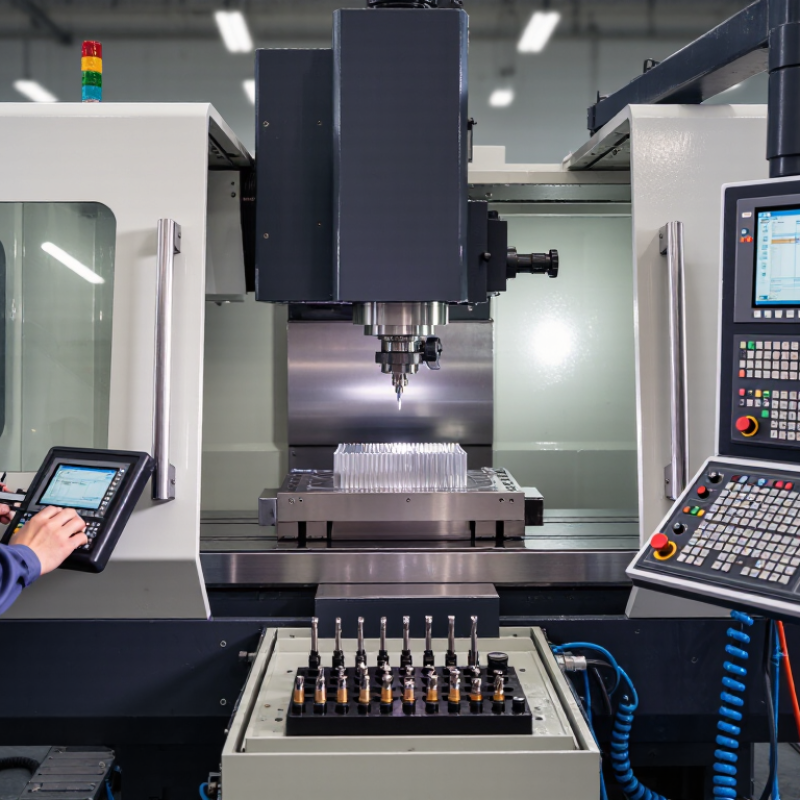
Milling machinery removes material with rotating cutters, creating slots, pockets, holes, and precise surfaces. CNC control converts digital drawings into repeatable tool movements. A typical machine combines a spindle, worktable, cutting tools, coolant, and measurement systems.
This structure supports global production in practical ways. One program can produce identical parts in different factories, provided tooling and inspection methods remain consistent. The International Federation of Robotics reported 541,302 industrial robot installations worldwide in 2023. Milling machines increasingly connect with these systems for loading, inspection, and material handling. This reduces repetitive work and supports steadier output.
Precision still depends on people. ISO 230 testing helps evaluate machine accuracy, but real production also requires calibration, fixture control, and tool-wear monitoring. A worn cutter can leave visible burrs along an aluminum pocket. Poor clamping can shift a hole by a fraction of a millimeter. Small errors become expensive across thousands of parts. UNIDO’s Industrial Development Report 2024 emphasizes productivity, digitalization, and resilient manufacturing capabilities as key industrial priorities. Milling machinery contributes to these goals, although automation alone cannot solve weak process planning. That is the uncomfortable part. Reliable global production needs disciplined operators, verified data, and maintenance budgets.
Which Milling Processes and Machine Types Serve Different Industries?
Milling machinery supports global production by shaping metal, plastic, wood, and composite parts with controlled cutting. The right process depends on geometry, material, tolerance, and production volume.
Face milling creates broad, smooth surfaces for machine bases and engine housings.
Plain milling removes material from flat horizontal areas efficiently. Simple work, sometimes.
Slot milling cuts narrow channels for keys, seals, and wiring paths.
These operations help manufacturers produce repeatable parts across different regions and supply networks.
More complex components require contour milling, pocket milling, or profile milling. CNC machining centers can move tools across several axes, creating curved surfaces and deep cavities.
Aerospace suppliers often use five-axis machines for lightweight structural parts.
Automotive factories may prefer high-speed three-axis or four-axis systems for repeated housings.
Medical equipment producers need clean finishes and careful dimensional control.
Tool and die workshops value rigid vertical mills for detailed molds.
Heavy equipment manufacturers often choose horizontal mills for large, stable workpieces.
Machine selection should include spindle speed, table capacity, tool access, and operator skill. Experience shows that a faster spindle does not always improve results.
Heat, vibration, and poor fixturing can damage accuracy. That part is easy to overlook.
Production teams should test cutting parameters on representative materials before full output.
They also need inspection equipment, maintenance plans, and documented process controls. A practical choice may be less advanced, but more reliable for local conditions.
Mistakes still happen, especially when design changes move faster than training.
How Does Milling Machinery Improve Precision, Efficiency, and Scalability?
Why Choose Milling Machinery for Global Production?
Milling machinery improves production by controlling cutting paths, tool movement, and material removal. In my experience, accurate calibration matters as much as the machine itself. A rigid setup can hold tight dimensions across repeated batches. Digital programs also reduce manual measuring and common entry errors. Small details matter.
Efficiency improves when one machine handles drilling, facing, slotting, and contouring. Fewer transfers mean less handling, shorter production time, and fewer opportunities for damage. Automated tool changes can maintain steady output during long shifts. However, speed alone is not efficiency. Poor tool selection may create heat, rough surfaces, or unexpected downtime. That is where careful process reviews become valuable.
Scalability comes from repeatable methods, not simply buying larger equipment. Standard fixtures, documented settings, and inspection records help teams reproduce parts across facilities. Tips: Check calibration regularly, monitor tool wear, and inspect the first completed part. Keep spare cutting tools available. Train operators to question unusual noise or surface marks. No process is perfect. A practical team should record failures honestly and adjust the next setup.
Why Choose Milling Machinery for Global Production?
How CNC milling improves precision, efficiency, and scalability through controlled feed rates and material removal capacity.
The values are calculated engineering scenarios using a four-flute cutter, a 5 mm axial depth of cut, and a 10 mm radial width of cut. Feed rate is calculated as spindle speed × number of flutes × feed per tooth, while material removal rate is calculated from feed rate × cutting depth × cutting width. Higher-capacity settings support scalable production while CNC control maintains consistent toolpaths and repeatable results.
What Factors Should Global Manufacturers Consider When Choosing Equipment?
Choosing milling machinery for global production requires more than comparing spindle speed or purchase price. Manufacturers should match the machine’s work envelope, axis travel, tolerance capability, and workholding system to real parts. A compact five-axis mill may reduce setups, while a larger three-axis machine can remain easier to maintain. Measure first. A small mismatch can create hours of unnecessary handling.
Energy and automation also deserve careful attention. The International Federation of Robotics reported 541,302 industrial robots installed worldwide in 2023, showing how quickly factories are adopting automated production. A milling center should therefore support reliable communication, tool monitoring, pallet handling, and safe operator access. However, automation is not automatically efficient. Poorly planned material flow can leave an expensive machine waiting beside a full storage rack.
Service conditions often decide global performance. Check local technician coverage, spare-parts lead times, training options, voltage compatibility, coolant management, and cybersecurity controls. Deloitte’s 2024 Smart Manufacturing and Operations Survey found that 86% of manufacturers expect smart manufacturing to become a major competitiveness driver within five years. That expectation is persuasive, but surveys do not replace trials. Manufacturers should cut representative materials, inspect surface finish, record cycle time, and test repeatability before purchasing. The first demonstration part may look excellent. The tenth may reveal heat growth, tool wear, or operator fatigue. ISO machine-tool measurement practices can support fair comparisons, although actual factory conditions remain messier.
How Can Companies Integrate, Maintain, and Optimize Milling Machinery Worldwide?
Why Choose Milling Machinery for Global Production?
Integrating milling machinery worldwide requires more than installing identical equipment. Plants should standardize control logic, tooling data, safety checks, and maintenance records. Local teams still need flexibility for voltage differences, coolant conditions, languages, and operator skills. The International Federation of Robotics reported 541,302 industrial robots were installed globally in 2023. This growth shows why connected production systems need clear ownership and reliable data.
A practical integration plan starts with measurable signals. Track spindle temperature, vibration, cutting load, tool life, and coolant concentration. Place sensors where technicians can inspect them easily. The U.S. Department of Energy reports that predictive maintenance can reduce maintenance costs by 25% to 30% and downtime by 35% to 45%. These figures are useful, but they are not automatic promises. Poor sensor calibration can create expensive false alarms.
Maintenance standards should travel with the machine. Use digital checklists, local spare-part limits, and remote engineering support. Deloitte’s 2024 Smart Manufacturing and Operations Survey found that 86% of manufacturing leaders view smart manufacturing as important for competitiveness. Yet a polished dashboard cannot repair a neglected spindle. Review tool-offset errors weekly, compare cycle-time changes across sites, and train operators with real machine examples. Some plants still over-automate before fixing basic lubrication and inspection habits. That deserves honest review.