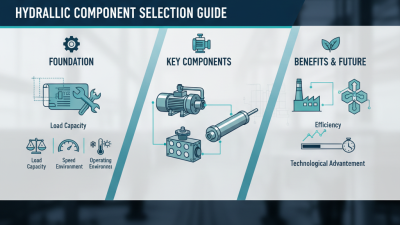

How to Choose Hydraulic Hose Fittings in 2026?

Choosing hydraulic hose fittings in 2026 is not a catalog exercise alone. A fitting must match the hose, pressure, fluid, temperature, and installation space. A mismatch can loosen under vibration or leak at the crimp. Small details matter.

The NIOSH report Preventing Injuries from High-Pressure Injection, published in 1997, describes the serious injuries that pressurized fluid leaks can cause. ISO 12151 provides a framework for hose-fitting connections, while SAE J516 covers hydraulic hose fittings. These references help narrow choices, but they do not replace checking the hose manufacturer’s specifications or the machine’s service conditions. Keep the documents beside the assembly.

Start with the system’s working and peak pressure, then verify the fitting’s rated pressure and connection type. Check fluid compatibility, temperature range, hose inside diameter, bend radius, and crimp specifications. Inspect the port thread and sealing method closely; similar-looking threads do not always connect safely. For a mobile machine, note nearby heat sources, sharp edges, and repeated movement. For a fixed power unit, allow room for installation and inspection. Exact failure rates vary by application, so broad averages can mislead. I have seen selection tables appear clear until the actual port is measured. That step is easy to skip. This guide explains how to compare fitting styles, read specifications, avoid common selection errors, and document the final choice. A careful match costs time upfront, but an avoidable leak costs more.
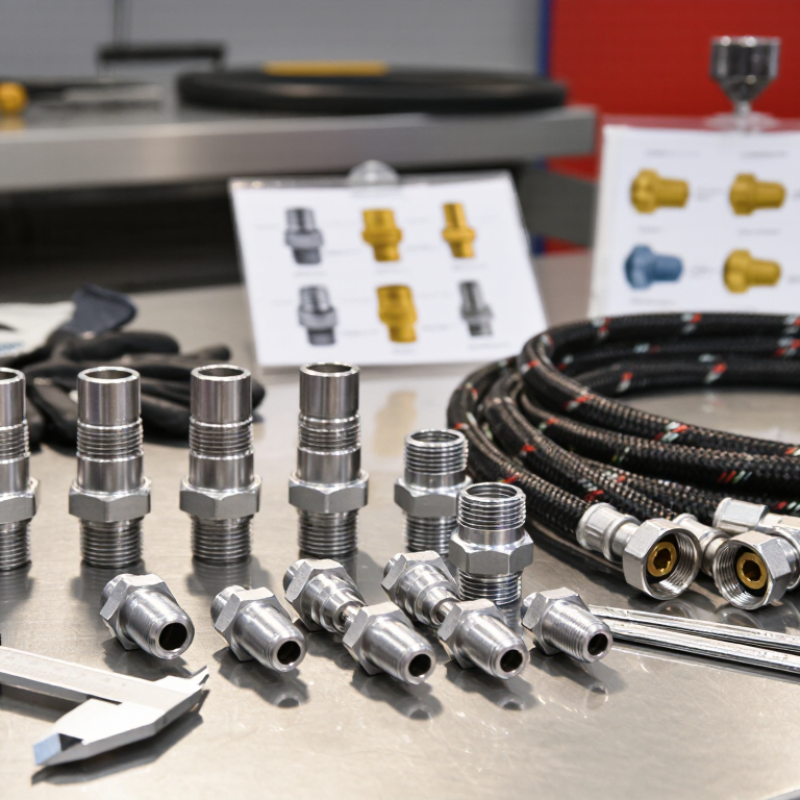
How to Choose Hydraulic Hose Fittings in 2026?

Understand the Hydraulic System’s Operating Requirements

Before choosing a fitting, map the system’s real operating conditions—not just the pump’s rated pressure. Record normal pressure, startup peaks, pressure spikes, fluid temperature, flow rate, and duty cycle. A gauge may show a steady 180 bar while brief surges push the circuit higher. Those moments count. ISO 4413:2010 requires hydraulic systems to account for pressure surges and other operating hazards; fitting selection should reflect those conditions. Small details matter.

Match the hose and fitting as a tested assembly, then check the connection type, sealing method, and fluid compatibility. ISO 18752:2017 classifies hydraulic hoses by working-pressure performance and impulse-test requirements, useful data when comparing assemblies for repeated pressure cycling. SAE J517 also sets requirements for hydraulic hose construction and performance. Neither standard replaces the equipment maker’s specifications or the circuit’s measured conditions. In practice, routing is easy to underestimate: a tight bend near a crimp can load the joint, even when pressure ratings appear adequate. I would verify bend radius and clearance on the actual machine, not only on a drawing. That extra check is not glamorous, but it can expose a poor fit before installation.

How to Choose Hydraulic Hose Fittings in 2026: Understand System Pressure

Pressure ratings shown are equivalent values using 1 bar = 14.5038 psi. Use them as a conversion reference, not as a fitting recommendation.

Choose fittings rated for the hydraulic system’s maximum working pressure, accounting for pressure surges and checking compatibility with the hose, connection type, size, fluid, and operating temperature. Always verify ratings against the equipment and component specifications.

Identify the Hose Type, Size, and Fitting Standard

How to Choose Hydraulic Hose Fittings in 2026?
Identify the Hose Type, Size, and Fitting Standard

Start with the hose itself, not the fitting. Check its construction, such as rubber with wire braid, spiral reinforcement, or thermoplastic. The material must suit the hydraulic fluid, operating temperature, pressure, and exposure to abrasion or weather. A hose that looks sound may still be wrong for hot fluid or repeated flexing. Check its markings and technical documentation; appearance alone is not enough.

Measure the hose’s inside diameter and confirm its dash size. Then identify the fitting’s connection type, thread form, and sealing face. Similar-looking threads can differ in pitch or sealing method, so do not force a fitting that resists turning. Compare the hose and fitting requirements with the relevant standard, such as an applicable SAE or ISO specification. Confirm the complete assembly’s pressure rating, not just the hose’s. This detail is easy to overlook.

Tips: Photograph the hose markings before removal. Verify size with a proper gauge, and check the seal type against the equipment documentation. If details are missing, pause and confirm them with a qualified hydraulic supplier or technician. Guessing can seem faster, but I would reconsider that shortcut around pressurized equipment.

Match Fitting Design and Material to the Application

How to Choose Hydraulic Hose Fittings in 2026?
Match Fitting Design and Material to the Application

Selecting hydraulic hose fittings starts with the working conditions, not appearance. Record operating and peak pressure, fluid type, temperature range, vibration, and exposure to water, dust, or chemicals. Match the fitting design to the hose construction and connection geometry. A crimp fitting, reusable fitting, straight end, or elbow may suit different layouts. Check the thread form and sealing method; similar-looking threads may not seal together. Thread size is easy to overvalue.

Choose materials for both the fluid and the surroundings. Carbon steel is common for many applications, while stainless steel can help where corrosion is a concern. But stainless steel is not automatically the best choice; confirm compatibility and pressure ratings for the specific assembly. The fitting, hose, and any adapters must work together as a rated system. Follow the hose and fitting manufacturer’s assembly instructions, and inspect completed assemblies for damage or leaks. Small details matter.

Tips: Verify the fitting series, thread, seal, and hose compatibility before ordering. Check clearance around bends and moving parts. If the operating conditions are uncertain, pause and confirm them rather than guessing.

How to Choose Hydraulic Hose Fittings in 2026? — Match Fitting Design and Material to the Application

Fitting Design / Standard Sealing Method Common Application Considerations Material Selection Key Checks Before Selection
37° flare (SAE J514 / JIC) Metal-to-metal seal at the 37° cone Frequently used on hydraulic lines where a detachable connection and broad component availability are useful. Carbon steel is common for general hydraulic service. Stainless steel may be appropriate for corrosive environments when the full assembly is compatible. Confirm the 37° seat, thread size, and thread form. Do not confuse it with 45° flare fittings; the angles are not interchangeable.
O-ring face seal (SAE J1453 / ORFS) An O-ring is compressed between flat mating faces Often selected where leak control and resistance to vibration are important, subject to correct assembly and system design. Choose a fitting material suited to the fluid, temperature, and external environment. Select the O-ring compound for the fluid and operating temperature. Check face condition, O-ring size and compound, and assembly torque. Replace damaged or flattened O-rings.
O-ring boss (SAE J1926) An O-ring seals against a machined port surface Used to connect fittings directly to compatible straight-thread ports in hydraulic equipment. Match fitting and port materials to pressure, fluid compatibility, corrosion exposure, and temperature requirements. Verify the port standard and thread size, and inspect the sealing surface. A straight thread relies on the O-ring for sealing.
24° cone (ISO 8434-1 / metric tube fittings) Sealing occurs at a 24° cone; the configuration may use an O-ring depending on the design Common in metric hydraulic systems and tube connections. The exact series and configuration affect suitability. Carbon steel is widely used; stainless steel can be considered for corrosive service where compatible with the mating components. Identify the exact 24° fitting series, tube outside diameter, thread, and sealing arrangement. Similar-looking fittings may not mate correctly.
Flat-face O-ring connection (ISO 8434-3 / ORFS-style) O-ring seals between flat faces Useful where a face-seal design is specified and minimizing leakage at a detachable joint is a priority. Confirm the fitting body and elastomer are suitable for the hydraulic fluid, operating temperature, and surrounding conditions. Match the applicable standard, face geometry, thread, and O-ring. Do not assume compatibility with another face-seal system based on appearance alone.
Tapered pipe thread (for example, NPT) Threads create the seal, typically with a suitable thread sealant where permitted Found on some ports and auxiliary connections. Consider vibration, repeated disassembly, and leakage requirements before using it in a hydraulic line. Use a material compatible with the port, fluid, pressure, and environment; avoid mixing dissimilar metals without assessing corrosion risk. Confirm thread standard and size. NPT and BSPT are different thread systems and should not be treated as interchangeable.
Reusable / field-attachable hose end Seals through its specified connection design and hose-gripping method Can be useful for certain repair or service situations, but only when the hose and fitting are explicitly designed to work together. Choose a fitting material and seal components compatible with the hose construction, fluid, and environment. Verify hose type, inside diameter, fitting series, assembly procedure, and pressure rating. Do not substitute for a crimp fitting unless approved for that hose.

Selection note: Confirm the hose’s working-pressure rating, fitting and adapter ratings, fluid compatibility, temperature range, bend radius, and applicable assembly instructions. The complete assembly is limited by its lowest-rated component. Fitting ratings vary by size, design, material, and manufacturer, so verify the rating for the specific configuration before use.

Check Pressure, Temperature, and Fluid Compatibility

Hydraulic hose fittings must match the system, not just the hose diameter. Check the fitting’s working-pressure rating against the circuit’s maximum pressure, including pressure spikes. The weakest component sets the limit. A fitting rated for the hose’s normal pressure may still be unsuitable during sudden load changes. Check technical specifications, and leave a sensible operating margin.

Temperature affects both strength and sealing. Consider the fluid’s temperature and the surroundings, including hot equipment nearby and cold outdoor starts. Heat can shorten seal life; cold can make some hose assemblies less flexible. The overlooked detail? Temperature ratings may change with pressure. Check the fitting and hose documentation at the actual operating conditions, rather than relying on a single headline rating.

Fluid compatibility matters just as much. Confirm that the fitting material and seal compound suit the specific hydraulic fluid; similar-looking fluids can affect seals differently. If the fluid or seal type is uncertain, verify compatibility with reliable technical documentation or a qualified supplier. It is tempting to choose by thread size alone. That shortcut can miss a mismatch. Before installation, check thread type, inspect sealing surfaces for scratches, and confirm the assembly’s pressure and temperature limits. A careful pause here is cheaper than a leak discovered under load.

Install, Inspect, and Test the Fitting for Safe Operation

Before installation, isolate the machine, release stored pressure, and confirm the hose is fully depressurized. Check the fitting’s thread, sealing face, material, and pressure rating against the hose assembly specification. A connector that threads on easily can still have the wrong seat. I still pause here. Small mismatches are easy to miss.

Inspect the hose cover, ferrule, and sealing surfaces under good light. Reject cracked covers, corrosion, damaged threads, or a ferrule that has shifted. Keep the assembly free of twist, and use the specified tightening method; excessive torque can damage sealing faces. The U.S. Bureau of Labor Statistics reported 2.6 million nonfatal workplace injuries and illnesses in private industry in 2023. That figure is not specific to hydraulic fittings, but it reinforces why routine checks matter.

After installation, test only within the assembly’s rated limits and the applicable procedure. ISO 6605 describes hydraulic hose test methods, including pressure testing; it does not set one universal test pressure for every assembly. Keep people clear during pressurization. Never search for a leak with bare fingers; use cardboard or another suitable method, then depressurize before adjustments. Recheck for seepage, movement, and unusual hose bulging. A clean first test helps, but it is not a guarantee.

Choose a global leader for your hydraulics solutions

How can we help you?

Call to 0034 943884600 Contact us
Call us Contact us

We use cookies to ensure that we give you the best experience on our website. If you continue without changing your settings, we'll assume that you agree to receive cookies on the HINE website. For more information read our cookie policy page, click the link for more information.plugin cookies

ACEPTAR
Aviso de cookies