Top 10 Hydraulic Pumps and Motors Suppliers Worldwide
Hydraulic pumps and motors are the working heart of many mobile and industrial machines. They move fluid, create pressure, and turn hydraulic energy into useful motion. You can find them in excavators, factory presses, agricultural equipment, and marine systems. A pump may determine how smoothly a machine lifts a load; a motor can affect how steadily it travels. Small details matter.
This introduction to the top 10 hydraulic pumps and motors suppliers worldwide sets the scene for comparing established manufacturers across different markets. The companies in a supplier list may offer very different strengths, from compact components for mobile equipment to heavy-duty units for continuous industrial use. The comparison should consider product range, technical documentation, service access, and application experience—not brand recognition alone. Look closely. A familiar name is not automatically the best fit.
Specifications and support can vary by model, region, and distributor. Buyers should confirm pressure ratings, displacement, operating speed, fluid compatibility, and service requirements against their own system needs. Manufacturer catalogs and technical data sheets are useful starting points, but they do not replace engineering review. No simple ranking can suit every application; even a well-regarded supplier may not offer the right configuration locally. The overview that follows is intended to help readers ask better questions and identify suppliers worth evaluating, rather than treat a top-ten list as a final purchasing decision.
Hydraulic Pump and Motor Fundamentals: Displacement, Flow, Pressure, and Torque
Hydraulic pump and motor sizing begins with displacement: the volume moved per shaft revolution, usually measured in cubic centimetres. Multiply displacement by rotational speed to estimate flow. For example, a 28 cm³/rev pump running at 1,500 rpm produces about 42 L/min theoretically. Actual flow is lower because internal clearances allow some oil to leak, especially as pressure rises or components wear. Small losses matter.
Pressure is resistance to flow, not a direct measure of how much oil a pump delivers. A relief valve, restricted passage, or loaded cylinder can raise system pressure. The pressure difference across a motor, combined with its displacement, determines torque; speed and supplied flow influence its rotation rate. At 200 bar, a 28 cm³/rev motor has roughly 8.9 N·m of ideal torque, before mechanical losses. Real output differs.
These figures help compare equipment, but they are not a complete selection method. Oil temperature changes viscosity, while hoses and filters affect pressure losses. A calculation that ignores those details can look precise and still mislead. Check operating speed, duty cycle, inlet conditions, and efficiency data against the actual machine. Then verify performance under load.
How to Compare 10 Global Suppliers by Portfolio, Applications, and Reach
Comparing ten global hydraulic pump and motor suppliers works best when the same criteria are applied to each. Treat the list as a field of candidates, not a fixed ranking. A broad portfolio may include piston, gear, and vane units, plus motors and control components. Check operating pressure, displacement range, speed limits, and fluid compatibility against the machine’s duty cycle. Small details matter. A pump sized for intermittent use may not suit a system running through long shifts.
Applications reveal how well a supplier’s range fits your equipment. Look for documented use in mobile machinery, industrial presses, marine systems, or other relevant settings. Ask for performance curves, service intervals, and guidance on contamination control. These details help buyers compare more than catalogue claims. A neat spreadsheet can still mislead if one supplier reports peak values and another reports continuous ratings. I would not treat matching product labels as proof of equivalent performance.
Reach is more than the number of countries on a website. Compare local technical support, replacement-part availability, repair options, and realistic delivery times in the regions where equipment operates. Ask who handles commissioning questions and how warranty issues are managed. Check the details. A supplier with a smaller range may be a better fit when support is close and parts arrive quickly. On the other hand, regional coverage can vary, so confirm service arrangements for the exact product line and location.
Leading Suppliers Across Gear, Vane, Axial-Piston, and Radial-Piston Designs
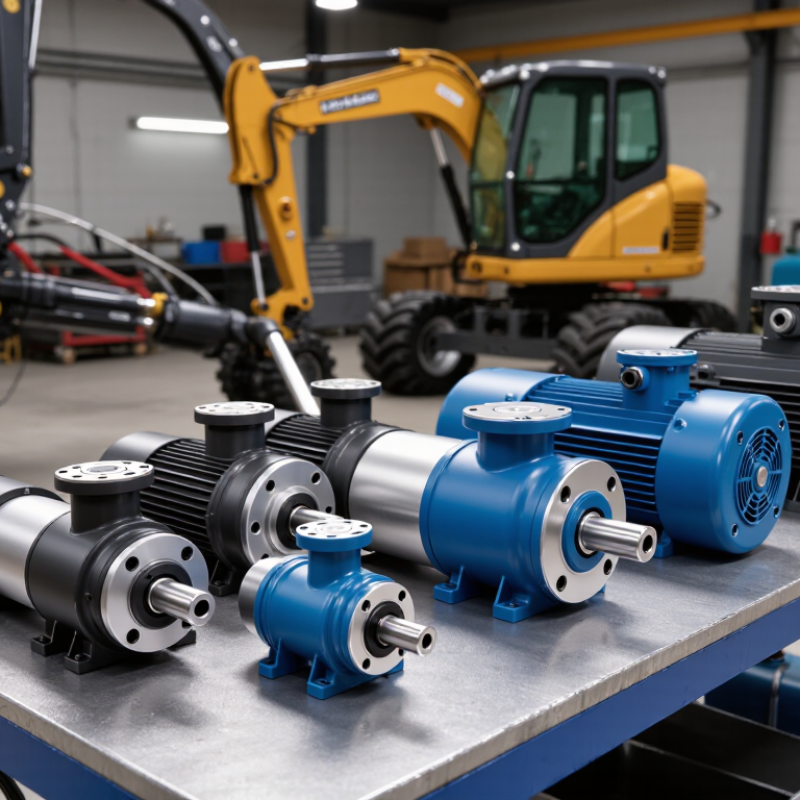
Hydraulic pump and motor suppliers serve applications ranging from compact machine tools to heavy mobile equipment. Their product families often include gear, vane, axial-piston, and radial-piston designs. Each works best under different operating conditions.
Gear units are mechanically straightforward and can suit steady, moderate-pressure service, while vane designs may offer smooth flow and relatively quiet operation. Neither choice is automatically right for every machine. Buyers should compare pressure, speed, fluid compatibility, duty cycle, and maintenance access.
Axial-piston units are commonly selected when systems need high pressure, variable displacement, or precise control. Radial-piston designs can deliver high torque at low speeds, which may fit winches, mixers, or other demanding loads.
A capable supplier should provide clear performance curves, installation limits, and guidance on filtration and fluid cleanliness. Ask how ratings change with temperature and continuous operation; a peak figure alone can mislead.
Small details matter. Port location, shaft options, and replacement-part availability can shape a project’s real cost. Supplier data still deserves scrutiny, and even experienced teams sometimes overlook noise or heat during early testing. A test under realistic load can reveal issues that a catalog cannot.
Performance Benchmarks: Q = Vg × n × ηv; T = Δp × Vg/(2π × ηm)
A useful supplier comparison starts with the operating point, not a headline capacity figure. Flow is estimated by Q = Vg × n × ηv, where Vg is displacement per revolution, n is rotational speed, and ηv is volumetric efficiency. Keep units consistent: cubic centimetres per revolution and revolutions per minute produce cubic centimetres per minute. Small losses matter. A pump rated at 100 cm³/rev and 1,500 rpm would theoretically displace 150 L/min before leakage losses.
Torque needs equal care. The stated relationship, T = Δp × Vg/(2π × ηm), estimates required input torque for a pump when ηm represents mechanical efficiency. For a hydraulic motor, delivered shaft torque is commonly estimated with ηm multiplied instead. That distinction can change a comparison substantially. Check each supplier’s definitions; efficiency symbols are not always used consistently.
Benchmark figures should include pressure, speed, fluid temperature, viscosity, and measurement method.
A cold-fluid test may look excellent, then disappoint after the machine warms up. Ask for measured flow and torque across several operating points, plus case-drain data where relevant. I would not rank suppliers from one efficiency number alone. Test conditions are often incomplete, and that weakness deserves attention. A clean table can still hide messy assumptions.
Selection and Reliability: ISO 4406 Cleanliness Codes, Efficiency, and Service
When comparing hydraulic pump and motor suppliers, check more than rated pressure and displacement. Ask for efficiency maps at your actual speed, load, and oil temperature; peak figures can hide losses at everyday operating points. The U.S. Department of Energy’s Improving Pumping System Performance guide estimates that pumping systems use nearly 20% of global electricity. That figure covers pumping broadly, not hydraulic units alone, but it shows why operating efficiency deserves close scrutiny. Small losses add up.
Cleanliness is a reliability requirement, not a paperwork detail. ISO 4406:1999 codes particle counts at 4, 6, and 14 micrometres; each code step represents roughly a doubling of particle concentration. A clean oil sample at commissioning is useful, but one reading cannot reveal contamination spikes during filter changes or component wear. Ask suppliers for recommended cleanliness targets, sampling methods, and service intervals for the specific circuit. A code alone can mislead.
Tips: Request a sample analysis plan and confirm where samples should be taken. Compare service access, spare-part lead times, and repair guidance alongside efficiency data. A practical test: inspect the filter and oil sample after a warm operating cycle, then track the results over time. In the field, maintenance records are sometimes incomplete; treat that as a gap to resolve, not proof of reliability.