
Top 10 Fluid Power Companies in China

China’s fluid power sector serves factories, construction sites, agricultural equipment makers, and mobile machinery builders. Its companies supply hydraulic pumps, valves, cylinders, motors, and complete systems. The market is broad, but a company’s scale alone does not tell buyers whether its products fit a particular machine or operating environment.

Andrea Vacca, a professor of mechanical engineering at Purdue University and director of its Maha Fluid Power Research Center, offers a useful engineering perspective. A paraphrase of his research focus: “Fluid-power performance depends on how components and controls work together.” That principle helps frame this overview. It considers product range, manufacturing capabilities, application experience, technical support, and evidence of quality management. Buyers should still verify specifications, certifications, and service coverage directly with each supplier. Details can change.

This Top 10 guide is a starting point, not a final verdict. Some firms focus on components; others build integrated systems or serve specific industries. A polished catalogue may not reveal how a valve performs after long shifts, under heat, or amid vibration. That matters. Rankings can also reflect available public information, which is uneven across companies. The comparison therefore has limits, and readers should weigh their own requirements carefully. The strongest choice is not always the best-known name. It is the supplier whose engineering, delivery capacity, and after-sales support match the real workload.
Top 10 Fluid Power Companies in China

How China’s Fluid Power Industry Is Structured

China’s fluid power industry is best understood as a network of suppliers, not a single chain. Component manufacturers produce pumps, valves, cylinders, seals, filters, and hydraulic fittings. Some focus on standard parts, while others build to customer drawings or operating conditions. Small details matter: a valve’s response time, a cylinder’s seal material, or a filter’s rated capacity can affect an entire machine.

System integrators combine these components into hydraulic or pneumatic circuits. They design power units, manifolds, control systems, and hose assemblies for machinery used in construction, agriculture, manufacturing, and other sectors. Equipment makers then install these systems into finished machines. Distributors and service firms connect the layers by holding inventory, sourcing replacements, and helping customers diagnose failures. The map is not perfectly neat. Some firms make components and assemble complete systems, so categories can blur.

Regional manufacturing clusters support dense supplier networks, but capability varies from one factory to another. Buyers often assess machining accuracy, material traceability, pressure testing, and access to technical support—not price alone. A clear drawing and realistic duty cycle help suppliers select suitable parts. Still, specifications can leave gaps; heat, vibration, or contaminated fluid may reveal problems that a bench test misses. Field feedback matters. So does maintenance history. These practical links explain how China’s fluid power industry is structured beyond any simple list of leading companies.

Criteria for Selecting Leading Fluid Power Companies

Choosing among the top 10 fluid power companies in China requires more than comparing catalog prices. A capable supplier should demonstrate proven experience with pumps, valves, cylinders, filtration, and control systems. Field evidence matters. Ask for project references from factories with similar pressure ranges, duty cycles, and working environments. A company serving mining equipment may not fit a precision automation line.

Technical expertise should be visible in engineering documents, not only sales presentations. Check hydraulic calculations, material specifications, test procedures, and failure-analysis records. Reliable manufacturers usually provide traceability for critical components and clear inspection reports. Certifications can support credibility, but they should match the product and market requirements. A certificate alone proves little. Site audits can reveal calibration practices, cleanliness levels, training quality, and actual production capacity.

Service reliability deserves equal attention. Review response times, spare-parts availability, commissioning support, and warranty terms before signing an agreement. Ask how the supplier handles pressure loss, leakage, noise, or temperature changes after installation. These details expose practical competence. Total cost should include energy use, maintenance intervals, downtime, and replacement difficulty. The lowest quotation may become expensive after six months.

No scorecard is perfect. I would leave room for judgment when records are incomplete but technical teams are transparent and responsive. Still, vague answers deserve caution. Select companies that communicate limits honestly, document their process, and adapt solutions without weakening safety or performance.

Profiles of Ten Major Fluid Power Companies in China

China’s fluid power sector includes manufacturers, system integrators, and precision component specialists. These profiles focus on practical capabilities, published product information, and visible industrial applications.

The first manufacturer serves construction equipment with hydraulic pumps and valves. Its strength lies in rugged housings and steady output. The second supplies mobile machinery, emphasizing compact cylinders and easier maintenance. The third develops hydraulic motors for mining and material handling. Dust protection matters here. The fourth focuses on pneumatic control units for automated factories. It combines modular design with quick replacement. The fifth produces seals and fluid connectors for demanding industrial systems.

The sixth profile covers a company specializing in servo-hydraulic testing equipment. Its laboratories support pressure, fatigue, and leakage assessments. The seventh supplies filtration products for steel, energy, and processing facilities. Clean fluid improves service life, although installation quality can still weaken results. The eighth develops custom power units for machine builders. Its engineering teams often adjust tank size, cooling, and control logic. The ninth manufactures precision cylinders for injection molding and metal forming. Repeatability is a clear selling point. The tenth integrates complete fluid power systems, including sensors, pumps, and remote monitoring. This broader approach can simplify procurement, but it may increase commissioning demands. Some published specifications need independent verification, especially when operating conditions differ from laboratory tests.

Key Products and Industrial Applications

Fluid power companies in China serve equipment makers across construction, agriculture, manufacturing, and energy. Their key products include hydraulic pumps, cylinders, valves, motors, and pneumatic actuators. These components turn pressurized oil or compressed air into controlled movement. A cylinder lifting a loaded excavator boom is a familiar example.

Applications differ by operating conditions. Construction machinery needs high force and impact resistance; factory automation often prioritizes repeatable motion and compact valve assemblies. The China Construction Machinery Association reported 195,018 excavator sales in 2023, including domestic sales and exports. This scale indicates substantial demand for hydraulic components, though sales figures alone do not show component quality or service life. Buyers should compare pressure ratings, leakage control, duty cycles, and maintenance access against actual operating conditions.

Tips: Check performance under heat, dust, and continuous loading—not only catalogue ratings. Ask for test methods and service intervals. Small details matter. A poorly specified seal can cause downtime, and I may be underweighting local repair capacity here. When comparing suppliers, review documentation, field support, and compatibility with existing systems alongside product specifications.

Technology and Market Trends in China’s Fluid Power Sector

China’s fluid power sector is moving from volume growth toward measurable performance. The leading ten companies compete in hydraulics, pneumatics, seals, pumps, valves, and control systems. Their customers include construction machinery producers, factory automation firms, agricultural equipment makers, and energy projects.

Technology is becoming more connected. Pressure sensors now support real-time monitoring on production lines. Digital controllers can adjust flow before overheating damages a system. Variable-speed pumps also help reduce energy waste during low-load operation. In many workshops, engineers still check leakage with simple visual inspections. That practice remains useful, but it cannot replace recorded data.

Electrification is reshaping product design. Compact electro-hydraulic units are appearing in mobile machinery and automated warehouses. Pneumatic systems remain attractive where clean operation, fast motion, and lower maintenance matter. Local supply chains are improving delivery times and customization. However, component consistency can still vary between production batches. This creates testing pressure for buyers. They need endurance trials, contamination checks, and clear service records before large-scale adoption. Standards are advancing, yet field execution is uneven. That gap deserves more attention.

Top 10 Fluid Power Companies in China — Technology and Market Trends

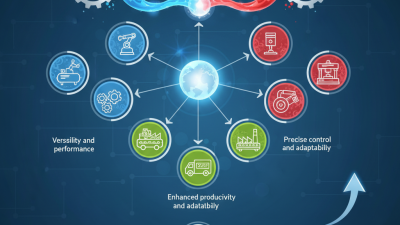
China’s fluid power sector is increasingly shaped by energy efficiency, smart manufacturing, electrification, and demand from mobile equipment and industrial automation. The chart presents a sector-level technology adoption index, with 2020 set as the baseline year.

Index methodology: 2020 = 100. Values represent normalized sector trend indicators rather than company revenue or brand-level performance. The index combines reported developments in energy-saving hydraulics, digital condition monitoring, electro-hydraulic systems, intelligent manufacturing, and domestic supply-chain development.

Choose a global leader for your hydraulics solutions

How can we help you?

Call to 0034 943884600 Contact us
Call us Contact us

We use cookies to ensure that we give you the best experience on our website. If you continue without changing your settings, we'll assume that you agree to receive cookies on the HINE website. For more information read our cookie policy page, click the link for more information.plugin cookies

ACEPTAR
Aviso de cookies