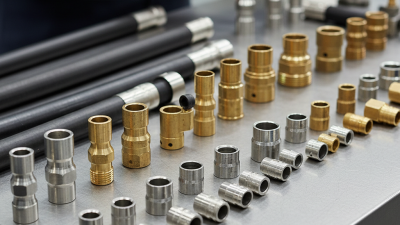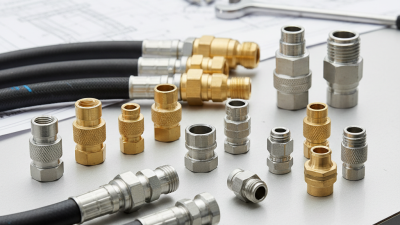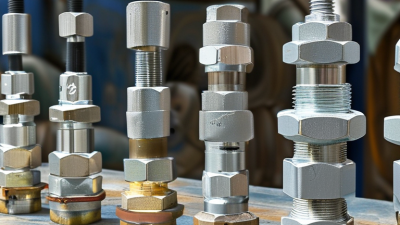

Hydraulic hose fittings are small components with major consequences. They connect hoses to pumps, valves, cylinders, and other hydraulic equipment. A poorly selected fitting can cause leakage, pressure loss, abrasion, or sudden hose separation. That risk becomes serious near excavators, presses, agricultural machinery, and mobile lifting systems.
Recent market analyses support the sector’s importance. Grand View Research’s Hydraulic Hoses Market Size, Share & Trends Analysis Report identifies construction, agriculture, and industrial equipment as major demand areas. MarketsandMarkets also reports continued growth in hydraulic hose applications, driven by machinery automation and infrastructure investment. These reports do not make fittings interchangeable. They show why correct selection deserves closer attention.
This guide examines the top types of hydraulic hose fittings, including crimp fittings, reusable fittings, flange connections, adapters, and quick-connect couplings. It considers thread standards, pressure ratings, temperature limits, sealing methods, and installation conditions. ISO 12151 and SAE J517 provide useful technical references for hose and fitting compatibility, while ISO 4413 emphasizes safety principles for hydraulic systems.
Details matter. A JIC flare fitting may suit a high-pressure connection, while an O-ring face seal can reduce leakage in demanding installations. A quick coupling may improve maintenance speed, but contamination can damage its sealing surfaces. Field experience often exposes weaknesses that catalogs hide. Still, this overview has limits. Fitting choice must follow the hose manufacturer’s data, equipment requirements, and qualified engineering judgment. The strongest connection is not always the largest one. It is the correctly matched one.
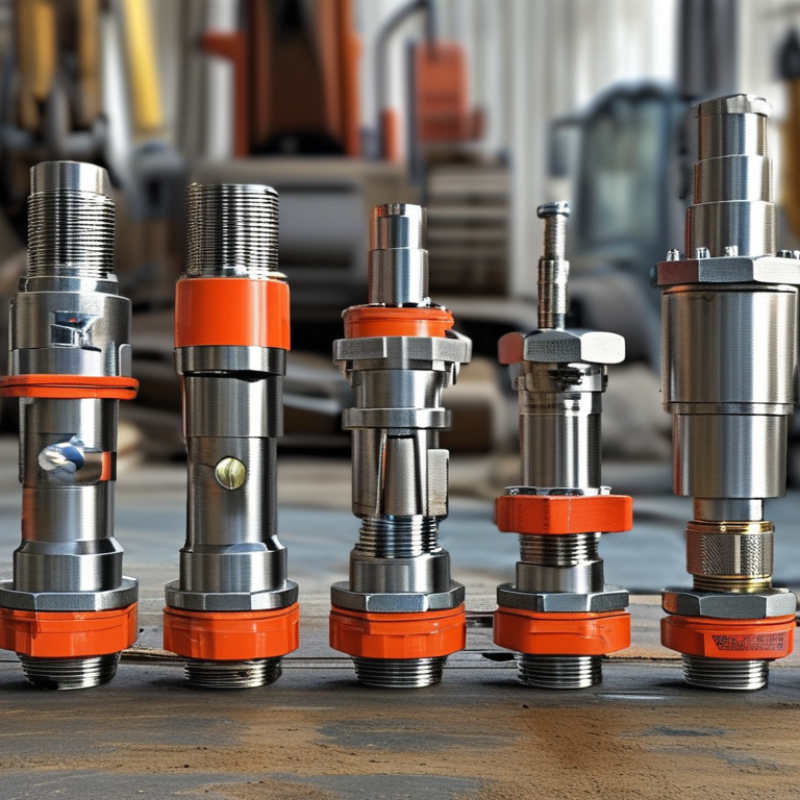
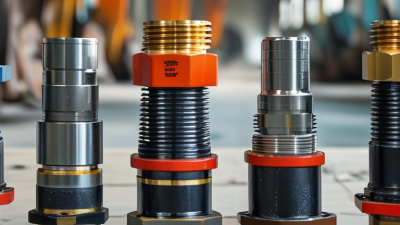
Hydraulic hose fittings connect flexible hoses to pumps, valves, cylinders, and rigid piping. Their structure usually includes a hose socket, an insert or nipple, and a sealing interface. The socket grips the hose, while the insert supports the inner tube under pressure. Common types include crimp fittings, reusable fittings, push-on fittings, flange fittings, and quick-connect couplings. They are also classified by sealing design, such as O-ring face seals, cone seals, and threaded seals. This classification matters because thread size alone does not confirm compatibility.
A 2024 Grand View Research report valued the global hydraulic equipment market at approximately USD 49 billion in 2023. It also projected continued growth through 2030, driven by construction, manufacturing, and material-handling equipment. More equipment means more connection points and more potential leakage risks.
SAE J516 provides dimensional guidance for hydraulic hose fittings, while SAE J517 addresses hydraulic hose performance. Still, field installations are rarely perfect. A fitting may match the thread but fail because of the wrong seal, hose material, or pressure rating. That mistake is surprisingly common.
Tips: Check the hose’s inside diameter, working pressure, temperature range, and fluid compatibility before selecting a fitting. Compare the sealing face, not only the thread profile. Use calibrated crimping equipment for permanent fittings. Inspect for twisted hoses, damaged ferrules, and small oil stains. A clean installation helps, but it does not replace pressure testing. Even experienced technicians should recheck measurements.
What Are the Top Types of Hydraulic Hose Fittings?
Crimped fittings are designed for permanent hydraulic hose connections. They use a controlled sleeve compression process, creating even contact around the hose and fitting tail. This differs from reusable fittings, which can be installed without specialized crimping equipment. In high-pressure systems, that difference matters. A properly crimped assembly has fewer loose parts and less risk of thread-related leakage.
A 2023 Grand View Research report estimated the global hydraulic hose market at about USD 1.6 billion in 2022. MarketsandMarkets projected the market could reach roughly USD 2.8 billion by 2027. These figures vary because each report defines the market differently. Still, both indicate sustained demand for reliable fluid-power connections. ISO 18752 classifies hydraulic hoses by pressure performance, supporting more consistent fitting and hose selection. Crimp specifications must match the hose construction, not only the thread size.
Field experience often exposes the weak point. A fitting may look secure while the hose is slightly under-inserted. That small gap can become a leak under pulsation. Technicians should verify insertion depth, crimp diameter, and post-assembly cleanliness. They should also inspect for cover damage near the ferrule. One mistake remains common: treating a crimped fitting as automatically permanent. It is only dependable when the correct tooling, dimensions, and inspection records are used.
| Crimped Fitting Type | Typical Configuration | Primary Connection or Routing Function | Common Hose Application | Main Advantages | Important Selection Considerations |
|---|---|---|---|---|---|
| Straight Fitting | Inline body with a straight outlet | Connects a hose directly to a port without changing the flow direction | General hydraulic circuits, manifolds, pumps, valves, and cylinders | Simple installation, low flow disturbance, compact layout, and reliable permanent connection | Match the hose bore, fitting series, thread type, sealing method, and pressure rating to the system |
| 45-Degree Elbow | Angled outlet at approximately 45 degrees | Provides a moderate change in hose direction while reducing sharp bends | Compact machinery, mobile equipment, and hose routing around frames or guards | Helps improve routing and can reduce excessive bending stress compared with forcing a straight fitting | Confirm the bend radius, orientation, clearance, and final crimp position before assembly |
| 90-Degree Elbow | Perpendicular outlet at approximately 90 degrees | Changes the hose direction sharply at a port or connection point | Hydraulic power units, cylinders, compact valve blocks, and confined installations | Saves installation space and helps prevent hose kinking near ports | Check elbow orientation and allow enough room for assembly; avoid using the fitting to compensate for an undersized bend radius |
| Tee Fitting | Three-port branch connection, commonly in a straight or side-outlet arrangement | Splits one hydraulic flow path into two branches or combines two paths into one | Branch circuits, pressure-test points, auxiliary actuators, and return-line layouts | Creates an integrated branch connection without adding multiple adapters | Verify flow direction, branch-port size, pressure rating, and whether the circuit requires a valve or flow-control device |
| Cross Fitting | Four-port intersection | Connects or distributes hydraulic flow among four hose or pipe paths | Multi-branch circuits and specialized manifold arrangements | Provides several connection points in a single fitting body | Use only where the circuit design supports the intended flow paths; check pressure drop and service access |
| Reducer Fitting | Different inlet and outlet sizes | Connects hoses or ports with different nominal inside diameters or thread sizes | Transitions between hydraulic components with unequal connection sizes | Allows size changes without replacing connected components | Do not select a reducer solely by thread diameter; verify flow capacity, sealing method, hose compatibility, and rated pressure |
| Bulkhead Fitting | Threaded or flanged body secured through a panel or frame | Routes a hydraulic hose through a wall, bracket, or equipment partition | Machine enclosures, vehicle frames, control panels, and equipment boundaries | Provides a fixed connection point and supports organized hose routing | Check panel thickness, locking-nut engagement, sealing surfaces, clearance, and vibration exposure |
| Swivel Fitting | Rotating connection section with a fixed crimped hose end | Permits controlled angular positioning during installation or service | Moving equipment, articulated assemblies, and connections requiring easier alignment | Can reduce installation torque and help position the hose without twisting it | A swivel does not eliminate hose bend-radius limits; confirm rotational capability, leakage-control requirements, and pressure rating |
| Flange-Style Fitting | Crimped hose end with a flange connection, commonly split or one-piece | Connects large-bore or high-pressure hoses to flanged ports | Heavy machinery, hydrostatic drives, construction equipment, and high-flow circuits | Handles high flow and can provide a robust connection where threaded ports are unsuitable | Match flange size, pressure class, port standard, bolt pattern, sealing surface, and tightening procedure |
| Test-Point Fitting | Small diagnostic port integrated into a hose or adapter assembly | Provides access for pressure measurement, bleeding, or system diagnostics | Preventive maintenance systems, mobile hydraulics, and commissioning applications | Supports troubleshooting without disconnecting the main hose line | Use a test fitting rated for the measured pressure and protect the port from contamination when not in use |
Reusable fittings are a practical choice when hydraulic hoses fail far from a workshop. They support field repairs and flexible installation needs. Unlike permanent crimped fittings, these fittings use a socket and nipple. A technician can cut away damaged hose and rebuild the connection with portable tools. This reduces equipment downtime, especially on construction, agricultural, and material-handling sites.
The MarketsandMarkets Hydraulic Hose Market report estimates growth from about USD 1.8 billion in 2023 to USD 2.4 billion by 2028. That 5.8% projected annual growth reflects stronger demand for reliable fluid-power maintenance. Reusable fittings contribute to this trend, but they are not universal. Hose construction, working pressure, temperature, and fluid compatibility must match. A fitting may look correct and still fail under vibration. I have seen rushed repairs become costly because measurement was treated as optional.
Tips: Match the fitting to the hose specification. Measure the hose outside diameter carefully. Inspect the cover for cuts, swelling, or exposed reinforcement. Clean every thread before assembly. Use the specified tightening method, not guesswork. After installation, test the assembly at low pressure first. Then check for leaks while wearing suitable protective equipment. Do not reuse damaged fittings or contaminated hose. A short repair is useful, but a careful repair protects people and machinery.
What Are the Top Types of Hydraulic Hose Fittings?
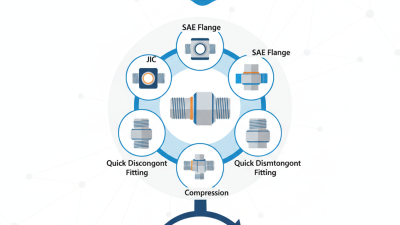
Quick-connect fittings allow fast hose changes without complex tools. They suit maintenance areas where equipment stops often. Their internal valves can reduce fluid loss during disconnection. However, dirt inside the coupling may prevent complete sealing. Clean caps and regular inspection remain essential.
Flange fittings handle high pressure, vibration, and larger hose sizes effectively. Their bolted connection spreads force across a wider sealing surface. They work well near pumps, cylinders, and heavy machinery. Push-to-connect fittings offer rapid installation on compatible low-pressure or control lines. The tube enters the fitting and locks with an internal grip. Correct tube cutting matters. A rough edge can damage the seal.
Tips: Match pressure, temperature, fluid type, and hose material before selecting a fitting. Check the thread, flange size, and sealing method carefully. Never force a mismatched connection. In field work, I have seen fittings appear tight while leaking under pressure. A visual check alone is not enough. Apply system pressure gradually, then inspect for movement, noise, or seepage. Replace damaged seals instead of tightening endlessly. Over-tightening may distort threads or crack the fitting body. One detail is easy to miss: hose bending near the fitting can create side loads. Use proper support and allow natural movement. My earlier inspections sometimes focused on the fitting, not the hose alignment. That mistake can shorten service life.
Representative working-pressure ranges by fitting type
Flange fittings are commonly selected for high-pressure hydraulic systems, with SAE J518 Code 61 and Code 62 assemblies commonly rated around 207–414 bar. Quick-connect couplings cover a broad range depending on the coupling series and application. Push-to-connect fittings are generally used for low-pressure pneumatic or fluid-control lines rather than high-pressure hydraulic hose assemblies.
What Are the Top Types of Hydraulic Hose Fittings?
How to Choose the Right Hydraulic Hose Fitting for Each Application
Hydraulic hose fittings include crimp fittings, reusable fittings, quick-connect couplers, and flange fittings. Each type suits different working conditions. Crimp fittings provide strong, permanent connections for demanding hydraulic systems. Reusable fittings can help during repairs, but correct assembly requires careful measurement. Quick-connect couplers support frequent equipment changes. Flange fittings handle high pressure and larger hose sizes effectively.
Choosing the right fitting starts with the hose, not the fitting shelf. Check the hose size, pressure rating, temperature range, and fluid compatibility. Then confirm the thread type, sealing method, and connection standard. A fitting may appear to fit. That does not make it safe. Thread angle and pitch differences can cause leakage or sudden separation. Use verified specifications, not visual guesses. Applicable standards, such as ISO or SAE requirements, should guide the selection.
Consider movement and the installation environment. A hose near a cylinder may need an elbow fitting to prevent sharp bending. Equipment exposed to moisture, dust, or chemicals may require suitable corrosion-resistant materials. Keep the bend radius within the hose manufacturer’s limit. Excessive twisting is a quiet failure risk. Field inspections often find another problem: fittings are tightened too aggressively. Follow the specified assembly method and inspect for damaged threads, cuts, or exposed reinforcement. The perfect choice on paper can still fail when routing is poor. Recheck the design under real operating movement.
How can we help you?
Call to 0034 943884600 Contact usWe use cookies to ensure that we give you the best experience on our website. If you continue without changing your settings, we'll assume that you agree to receive cookies on the HINE website. For more information read our cookie policy page, click the link for more information.plugin cookies
ACEPTAR