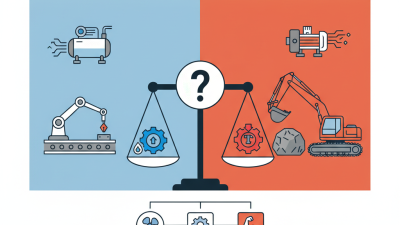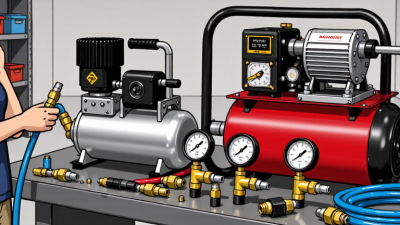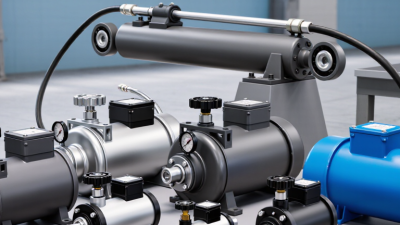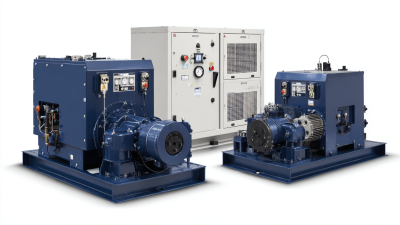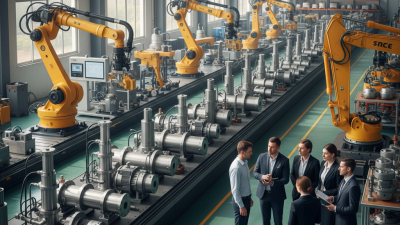

China’s manufacturing sector supplies a wide range of pneumatic and hydraulic equipment, from compact air cylinders to heavy-duty hydraulic power units. These products support automation, construction machinery, material handling, and factory operations. Choosing a supplier can affect more than purchase price. Component consistency, technical documentation, delivery times, and after-sales support all matter.
This guide introduces ten Chinese manufacturers relevant to buyers comparing pneumatic and hydraulic solutions. It is intended as a starting point, not a universal ranking. Company capabilities and product ranges can change, and a strong catalog does not always reveal how a product performs in a specific application. Details matter.
For a practical comparison, look at each manufacturer’s core products, customization options, quality controls, export experience, and service resources. Ask for current specifications, material details, operating-pressure ranges, and clear guidance on installation and maintenance. Where possible, match those details to your equipment’s actual working conditions rather than relying on a broad product label. A cylinder or valve that looks suitable on paper may still require closer review.
The companies covered here serve different markets and production needs, so the best fit depends on your project. Verify claims directly with suppliers and request documentation before making a decision. This step takes time. It can prevent costly mismatches later.
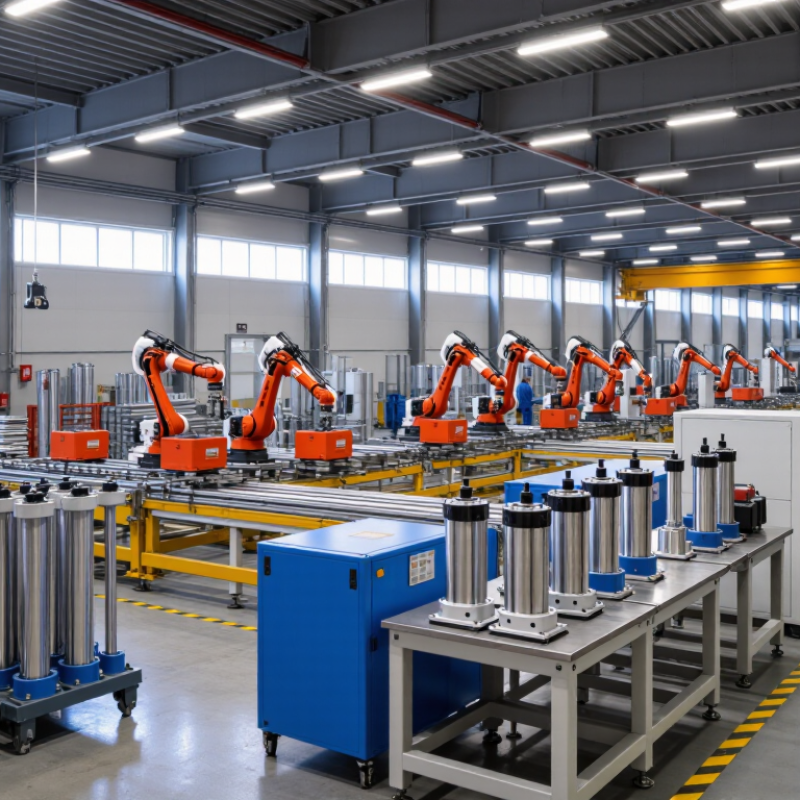
China’s pneumatic and hydraulic manufacturing industry supports factory automation, construction equipment, agricultural machinery, and vehicle production. Its products turn compressed air or pressurized fluid into controlled motion: a cylinder extends beside an assembly line, while a hydraulic valve meters flow inside a machine. Demand is closely tied to equipment investment and the need for reliable, repeatable movement.
Automation provides a useful indicator of this demand, though it is not a direct measure of component sales. The International Federation of Robotics reported 276,288 industrial robots installed in China in 2023, equal to 51% of global installations. This scale creates opportunities for suppliers of actuators, pumps, valves, seals, and control components. Buyers still need to assess operating pressure, cycle frequency, temperature, leakage tolerance, and service access. A technically impressive part may perform poorly if its seals are mismatched or replacement stock is hard to obtain. Market growth is not uniform, either; smaller workshops may face tighter budgets and uneven automation needs.
Tips: Check flow and pressure requirements against real operating conditions, not only catalogue ratings. Ask for test records, material specifications, and maintenance guidance. A short installation trial can reveal noise, heat, or leakage issues before wider deployment.
Identifying China’s leading pneumatic and hydraulic manufacturers requires factory evidence, not export volume alone. The U.S. Department of Energy’s Improving Compressed Air System Performance sourcebook reports that compressed air can account for about 10% of industrial electricity use. Efficiency therefore deserves scrutiny. Ask for measured airflow, pressure stability, leakage rates, and test conditions, not just a catalogue rating. Short tests matter. For hydraulic equipment, request pressure-cycle records, operating-temperature limits, cleanliness controls, and endurance-test duration. Figures without test methods offer little assurance.
Check traceable quality records: calibration dates, incoming-material inspections, corrective actions, and batch-level results. ISO 8573-1 provides a framework for classifying compressed-air purity; suppliers should state the required class and explain how they verify it. For hydraulic products, examine filtration and sealing choices alongside pressure ratings. Service capacity matters too: spare-part lead times and technical response can affect downtime more than a low purchase price. Request a recent test report and, if possible, observe a witnessed run. One factory visit cannot represent every shift. The evidence may still be incomplete.
Profiles of ten major Chinese manufacturers are most useful when they compare capabilities, not just factory size. The ten profiles can cover hydraulic pumps and motors, cylinders, directional valves, proportional controls, mobile machinery systems, industrial press systems, pneumatic cylinders, solenoid valves, air-preparation units, and integrated motion systems. Each profile should note practical details: pressure range, materials, testing capacity, and typical lead times. A catalog alone is not enough.
Grand View Research’s Pneumatic Equipment Market Size, Share & Trends Analysis Report estimates the global market at US$13.8 billion in 2022, with a 7.1% forecast CAGR for 2023–2030.
MarketsandMarkets’ Hydraulic Equipment Market report projects growth from US$42.8 billion in 2023 to US$51.5 billion by 2028.
These estimates suggest continued demand, but they do not prove that every supplier can meet it. Look for documented endurance tests, clear component specifications, and traceable quality checks. Small details matter. A missing test condition can weaken an otherwise strong profile. The comparison should also admit gaps: public data may not reveal failure rates or after-sales response times. That is worth checking directly.
Across the top ten pneumatic and hydraulic manufacturers, product ranges often cover pumps, cylinders, valves, compressors, air-preparation units, and fittings.
Hydraulic pumps convert motor power into fluid flow, while cylinders deliver force for lifting, clamping, or controlled movement. Pneumatic cylinders use compressed air for quick, repeatable strokes. Simple on paper.
Valve technology shapes how smoothly these systems respond. Proportional valves adjust flow or pressure in measured steps, while directional valves route fluid between ports. Many modern products add sensors that monitor pressure, temperature, or position. On a production line, a small pressure change can affect a gripper’s hold or a press cycle’s consistency. Filtration and sealing matter too; contamination can shorten component life, even when the main unit is well specified.
Manufacturers also invest in compact designs, lower energy use, and easier system monitoring. Variable-speed drives can reduce compressor power when demand changes, and diagnostic tools can flag unusual vibration or pressure loss. These features help maintenance teams investigate problems before a shutdown, though sensor data still needs skilled interpretation.
In practice, selecting a component means checking duty cycle, operating pressure, fluid or air quality, and available space. Catalog ratings are useful, but real installations can behave differently. I would treat them as a starting point, not the whole answer.
Pneumatic and hydraulic equipment serves different needs across factories, construction sites, and processing lines. Pneumatic systems use compressed air for fast, clean movement, such as operating a sorting gate. Hydraulic systems deliver greater force for lifting platforms or pressing components. When comparing China’s top manufacturers, buyers should match the product to the actual duty cycle, not just its advertised pressure or output.
Tips: Check working pressure, flow rate, operating temperature, and connection size. Confirm seal materials suit the fluid or air quality in your system. Ask for test records and spare-part details. Small details matter. A fitting mismatch can delay installation.
Selection also depends on environment and support. Dust, moisture, vibration, and frequent starts can affect service life. Request clear specifications and verify that quoted values match your operating conditions. Test under load, where practical. A catalogue rarely captures every real-world variation; even experienced buyers may need to revise a specification after installation. Compare lead times, documentation, and technical response alongside price, and leave room for maintenance access.
A practical comparison of ten common supplier specializations in China’s fluid-power market. Company names and brands are intentionally omitted.
| No. | Supplier Specialization | Typical Products | Common Applications | Operating Medium / Design Reference | Key Buyer Selection Considerations |
|---|---|---|---|---|---|
| 1 | Pneumatic cylinders and actuators | Profile cylinders, compact cylinders, rodless cylinders, guided actuators, rotary actuators | Packaging machinery, assembly lines, material handling, and general automation | Compressed air; many industrial systems operate around 0.4–0.7 MPa, subject to the component rating and system design. | Check bore, stroke, load, speed, mounting style, cushioning, seals, and cycle life. Confirm dimensional compatibility, such as applicable ISO 15552 or ISO 21287 series requirements. |
| 2 | Pneumatic valves and control components | Directional-control valves, solenoid valves, manual valves, proportional valves, valve manifolds | Machine sequencing, pick-and-place systems, production equipment, and pneumatic control panels | Compressed air; allowable pressure, flow, and air-quality limits depend on the specific valve. | Compare valve function, port size, flow capacity, response time, voltage, connector, manual override, and manifold interface. Ensure the valve’s rated pressure and flow meet the circuit requirements. |
| 3 | Air preparation and pneumatic accessories | Filters, regulators, lubricators, dryers, silencers, fittings, and tubing | Compressed-air treatment and distribution for factory machinery and pneumatic tools | Compressed air; filtration, pressure regulation, and drying requirements are determined by the equipment and air-quality target. | Size components for peak and continuous flow. Consider inlet pressure, pressure drop, filter element rating, condensate drainage, connection type, and whether downstream equipment requires lubricated or oil-free air. |
| 4 | Hydraulic pumps | Gear pumps, vane pumps, piston pumps, and pump assemblies | Construction machinery, agricultural equipment, industrial power units, and mobile hydraulics | Hydraulic oil or another specified hydraulic fluid; pressure and speed limits are model-specific. | Match displacement and shaft speed to required flow; verify continuous and peak pressure, drive power, fluid viscosity range, inlet conditions, rotation direction, and mounting interface. |
| 5 | Hydraulic cylinders | Tie-rod cylinders, welded cylinders, telescopic cylinders, and custom actuators | Presses, lifting equipment, machine tools, agricultural machinery, and material handling | Hydraulic fluid; use the cylinder’s rated pressure and temperature limits rather than assuming a universal operating range. | Specify bore, rod diameter, stroke, mounting, load direction, buckling risk, cushioning, seal material, port position, and corrosion protection. Check duty cycle and side-load exposure. |
| 6 | Hydraulic valves and manifolds | Directional, pressure-control, flow-control, proportional, and cartridge valves | Industrial hydraulic circuits, mobile equipment, clamping systems, and load-control applications | Hydraulic fluid; permissible pressure, flow, and contamination level depend on valve design. | Review circuit function, rated flow and pressure, leakage, response, control method, port or cavity standard, and electrical requirements. Confirm compatibility with the fluid and operating temperature. |
| 7 | Hydraulic power-unit manufacturers | Reservoirs, pump-motor assemblies, cooling systems, manifolds, and complete power packs | Machine tools, presses, lifting platforms, production lines, and test equipment | Hydraulic fluid supplied by a system designed for the required pressure, flow, and duty cycle. | Define simultaneous actuator demand, cycle profile, motor supply, reservoir volume, heat rejection, noise limit, filtration, service access, and control interface. Ask for a circuit diagram and component list. |
| 8 | Hydraulic motors and rotary drives | Gear, gerotor, vane, and piston hydraulic motors | Winches, conveyors, mixers, agricultural machinery, and mobile equipment drives | Hydraulic fluid; torque and speed depend on displacement, pressure drop, flow, and motor efficiency. | Compare required starting and continuous torque, speed range, displacement, pressure limits, case-drain requirements, shaft and mounting dimensions, and expected operating duty. |
| 9 | Hydraulic filtration and fluid-conditioning suppliers | Pressure-line, return-line, and suction filters; breathers; filter elements; contamination monitors | Hydraulic power units, mobile machinery, industrial circuits, and fluid-maintenance programs | Hydraulic fluids; cleanliness targets should be set for the system’s most contamination-sensitive components. | Check required cleanliness level, filter location, flow capacity, pressure drop, bypass setting, element compatibility, dirt-holding capacity, and replacement availability. ISO 4406 is commonly used to express fluid-particle cleanliness codes. |
| 10 | Integrated pneumatic and hydraulic system builders | Engineered circuits, control panels, manifolds, packaged systems, and commissioning services | Automated production lines, special-purpose machines, process equipment, and retrofit projects | Compressed air, hydraulic fluid, or both, as specified by the machine design. | Evaluate engineering capability, documentation, component traceability, safety provisions, testing, installation support, and spare-parts service. Check relevant machine and fluid-power safety requirements, including ISO 4414 for pneumatic systems and ISO 4413 for hydraulic systems where applicable. |
Buyer note: This table compares product specializations rather than ranking or identifying individual companies. Pressure, flow, temperature, cleanliness, and performance values must be verified against the current datasheet and operating conditions for each selected component or system.
How can we help you?
Call to 0034 943884600 Contact usWe use cookies to ensure that we give you the best experience on our website. If you continue without changing your settings, we'll assume that you agree to receive cookies on the HINE website. For more information read our cookie policy page, click the link for more information.plugin cookies
ACEPTAR