2026 Best Pneumatic and Hydraulic Equipment for Buyers?
Choosing the right pneumatic and hydraulic equipment can shape a workshop’s productivity, operating costs, and maintenance schedule. In 2026, buyers will compare more than price. They need to match each system to its actual workload, available power, operating environment, and service capabilities. A compact air compressor may suit a packaging line, while a hydraulic power unit can deliver controlled force for heavy lifting. The details matter.
This guide explores equipment categories, practical selection criteria, and features worth checking before purchase. It considers air compressors, cylinders, valves, pumps, hoses, filtration, and control systems. Buyers should review pressure and flow requirements, duty cycles, connection sizes, and compatibility with existing machinery. A rating on a product sheet is only part of the picture. Noise, heat, leaks, and access to replacement parts can affect daily use.
Small details count.
Reliable decisions also depend on asking suppliers specific questions and checking technical documentation. Confirm how equipment should be installed, inspected, and maintained, and whether support is available after delivery. Compare total operating needs, not just the initial quote. No single setup fits every facility, and even a well-chosen system can disappoint if its conditions are misunderstood. That point deserves a second look. The sections ahead offer a practical starting point for buyers seeking dependable performance without overlooking the realities of their workplace.
Pneumatic vs. Hydraulic Equipment: Operating Principles and Core Components
Pneumatic systems use compressed air to create motion. A compressor supplies air to a receiver, while filters and regulators help control moisture and pressure. Directional valves route air into a cylinder, where a piston extends or retracts. Air then exits through an exhaust port. Listen for leaks; a faint hiss can waste energy and reduce performance.
Hydraulic equipment uses pressurized liquid, usually oil, to move a load. A pump draws fluid from a reservoir and sends it through hoses or rigid lines. Relief valves limit excessive pressure, while directional valves guide flow to a cylinder or hydraulic motor. Because liquid compresses very little, hydraulic systems can deliver steady force for lifting heavy loads. A clogged filter, however, may cause heat, slow movement, or component wear. Small details matter.
The difference is not simply power versus precision. Pneumatic systems are often lighter and cleaner around work areas, but their compressible air can make motion less rigid. Hydraulics provide strong, controlled movement, yet leaks and fluid temperature need close attention. Match the system to the load, duty cycle, and operating environment. It is easy to overlook noise, air quality, or maintenance access during selection. Check those conditions before sizing components.
Pneumatic vs. Hydraulic Equipment: Operating Principles and Core Components
Pneumatic systems use compressed gas, while hydraulic systems use pressurized liquid. The chart shows representative industrial operating-pressure ranges; actual values vary by application and equipment design.
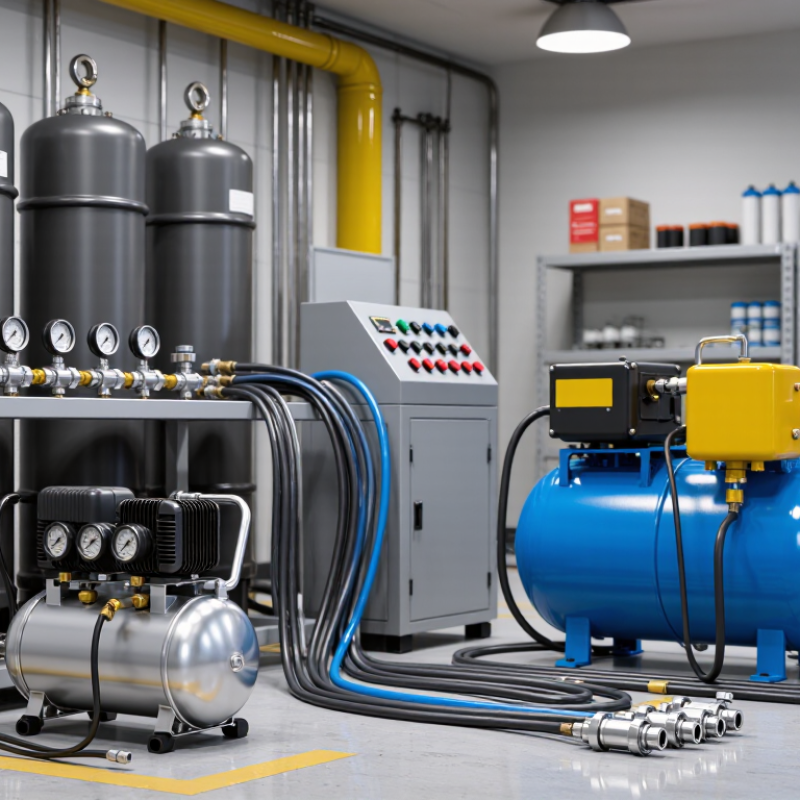
Pneumatic core components: compressor, air receiver, filter-regulator-lubricator unit, directional control valves, and actuator.
Hydraulic core components: reservoir, pump, filter, pressure-control and directional valves, and hydraulic cylinder or motor.
Compare Typical Working Pressures: 6–10 bar Air and 100–350 bar Hydraulics
For 2026 equipment buyers, working pressure is a practical starting point, not a complete selection rule. Pneumatic tools and actuators commonly operate around 6–10 bar, with clean, regulated air supplied through correctly sized hoses. That range suits many clamping, conveying, and light assembly tasks. Small details matter. A long, narrow hose can reduce pressure at the tool, even when the compressor gauge looks healthy. Check the required pressure while equipment is operating, not only at rest.
Hydraulic systems often work around 100–350 bar, delivering greater force from compact cylinders. Actual requirements vary by machine, load, and duty cycle; never assume every component can handle the system’s maximum pressure. Verify ratings for hoses, fittings, valves, and cylinders, and allow for pressure spikes where relevant. Pressure alone does not determine performance: flow rate affects speed, while fluid temperature and contamination influence reliability. A pressure gauge helps, but it cannot diagnose every problem. I would also compare service access and seal replacement intervals. Buyers sometimes focus on peak pressure and overlook everyday maintenance. That is an easy mistake.
Match Equipment to Load, Speed, Precision, Duty Cycle, and Operating Environment
Match the actuator to the load before comparing its speed. Hydraulic equipment suits heavy, sustained force in a compact space, such as lifting a loaded fixture. Pneumatic equipment often works well for quick, repetitive movements where modest force is enough. But compressed air is not automatically the cheaper choice. The U.S. Department of Energy’s Improving Compressed Air System Performance: A Sourcebook for Industry reports that compressed air can account for about 10% of industrial electricity use. It also notes that leaks may waste 20–30% of compressor output.
Precision changes the decision. Air compresses, so pneumatic cylinders can feel springy under variable loads and may struggle with exact mid-stroke positioning. Hydraulics can deliver smoother force, but oil temperature, contamination, and seal condition affect performance. For either system, check the required repeatability, cycle rate, and load variation—not just the maximum pressure on a specification sheet. Small details matter.
Duty cycle and surroundings deserve equal attention. A unit cycling every few seconds needs different cooling and maintenance planning than one used occasionally. Dust, moisture, washdown, heat, and noise can narrow equipment choices. Match seals, filtration, tubing, and enclosure protection to actual conditions. ISO 4413 and ISO 4414 provide safety guidance for hydraulic and pneumatic systems. A spreadsheet still misses real installation quirks. Measure air leaks, operating temperature, and cycle time on site; estimates alone can mislead.
Evaluate 2026 Equipment Types: Compressors, Cylinders, Pumps, and Actuators
2026 Best Pneumatic and Hydraulic Equipment for Buyers?
Evaluate 2026 Equipment Types: Compressors, Cylinders, Pumps, and Actuators
Choose equipment by matching its output to the actual job. Compressors supply air, so compare required pressure and flow with peak demand, not just average use. A small receiver tank may help handle brief surges, but it cannot fix an undersized compressor. Pneumatic cylinders suit quick, repetitive movement where clean operation matters. Hydraulic cylinders deliver greater force in compact spaces, though hoses and seals need regular inspection. Measure the stroke and load carefully. A few millimeters can matter.
Tips: Check duty cycle, operating temperature, and available space before comparing models. Ask for performance data at your working pressure. A quick bench test helps, but it may not predict every installation.
Pumps move hydraulic fluid, and their flow rate affects how quickly a system responds. Match pump capacity to the actuator and confirm the fluid suits the seals and temperature range. Actuators convert pressure into movement; choose linear or rotary motion based on the machine’s task. Include mounting, controls, noise, and maintenance access in your comparison. Buyers sometimes focus too much on peak force. That’s understandable, but efficiency and service life can matter just as much. Check the full system, not only the equipment label.
Verify Air Quality and Safety: ISO 8573-1, ISO 4414, and ISO 4413
For pneumatic equipment, clean air is a buying specification, not a finishing touch.
ISO 8573-1:2010 classifies compressed-air purity by particles, water, and total oil. Ask suppliers to state the required class at the point of use, not just at the compressor outlet. A dry-air reading near the machine can differ from one taken upstream. Check filters, drains, dryers, and sampling locations. A small water slug in a valve can cause sticking or corrosion. Not theoretical. Yet a certificate alone cannot show how air quality changes during a busy shift.
Safety needs equal scrutiny.
ISO 4414 addresses pneumatic systems; ISO 4413 covers hydraulic systems. Both provide design and safety requirements, but buyers should verify how these apply to the actual installation, including pressure relief, isolation, hose routing, and maintenance access. Ask for schematics and documented risk assessments, then inspect whether workers can safely release stored pressure before service. The U.S. Department of Energy’s Improving Compressed Air System Performance sourcebook estimates compressed air uses about 10% of industrial electricity. That figure varies by facility, but leaks and poor controls can make energy costs climb. Still, air quality and safety checks are often treated as paperwork. That deserves a second look. A useful acceptance test records pressure, dew point, and contamination at the tool during real operating conditions.